
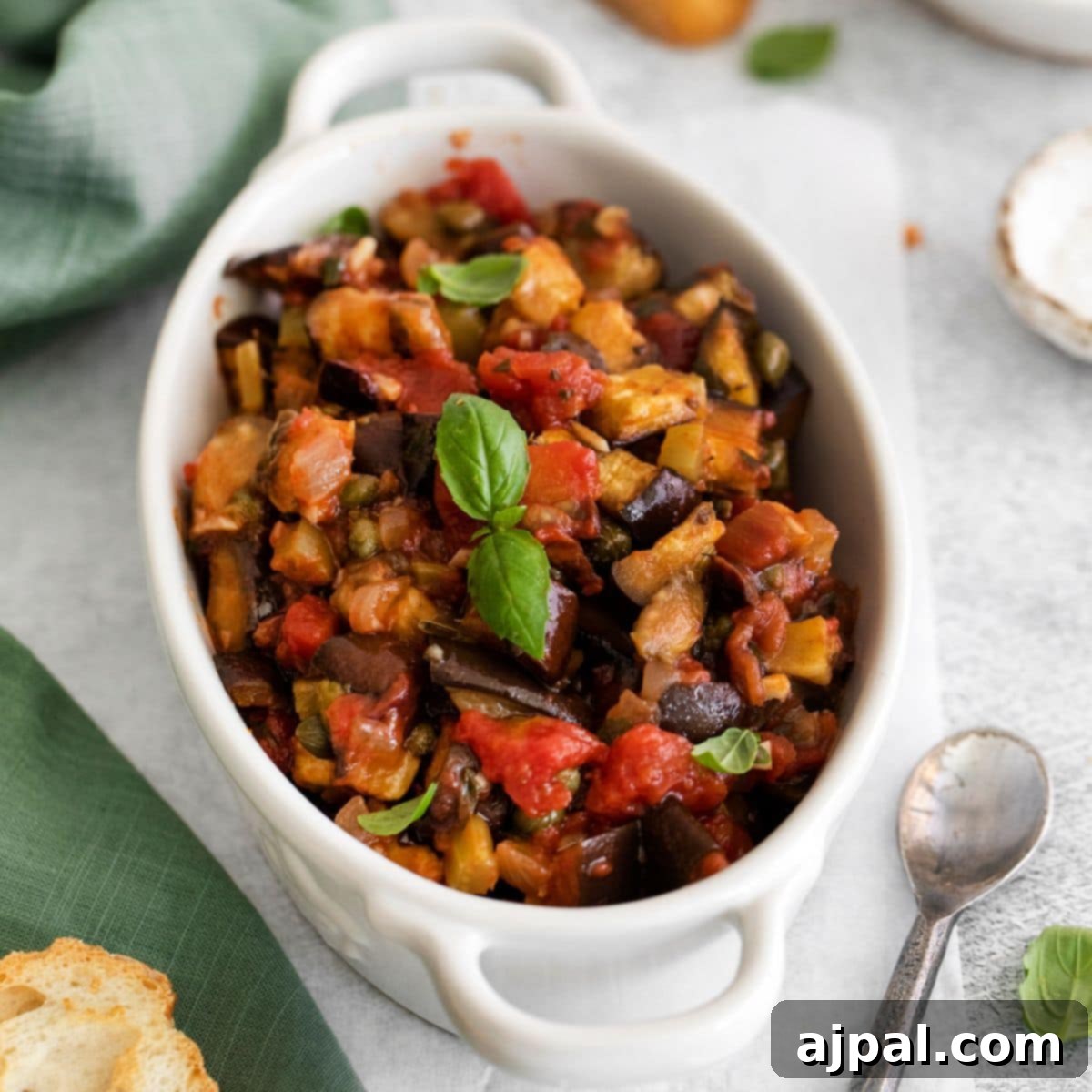
Welcome to a culinary journey celebrating Eggplant Caponata, a truly delightful and versatile Mediterranean classic that promises to bring a touch of Sicilian sunshine to your kitchen. This robust dish, with its vibrant colors and complex flavors, effortlessly transitions from a satisfying vegetarian main course to an unforgettable side dish for a grand roast dinner or a simple pasta supper. Its rich, savory profile, balanced with a subtle sweetness and tang, makes it a perennial favorite for both everyday meals and special gatherings.
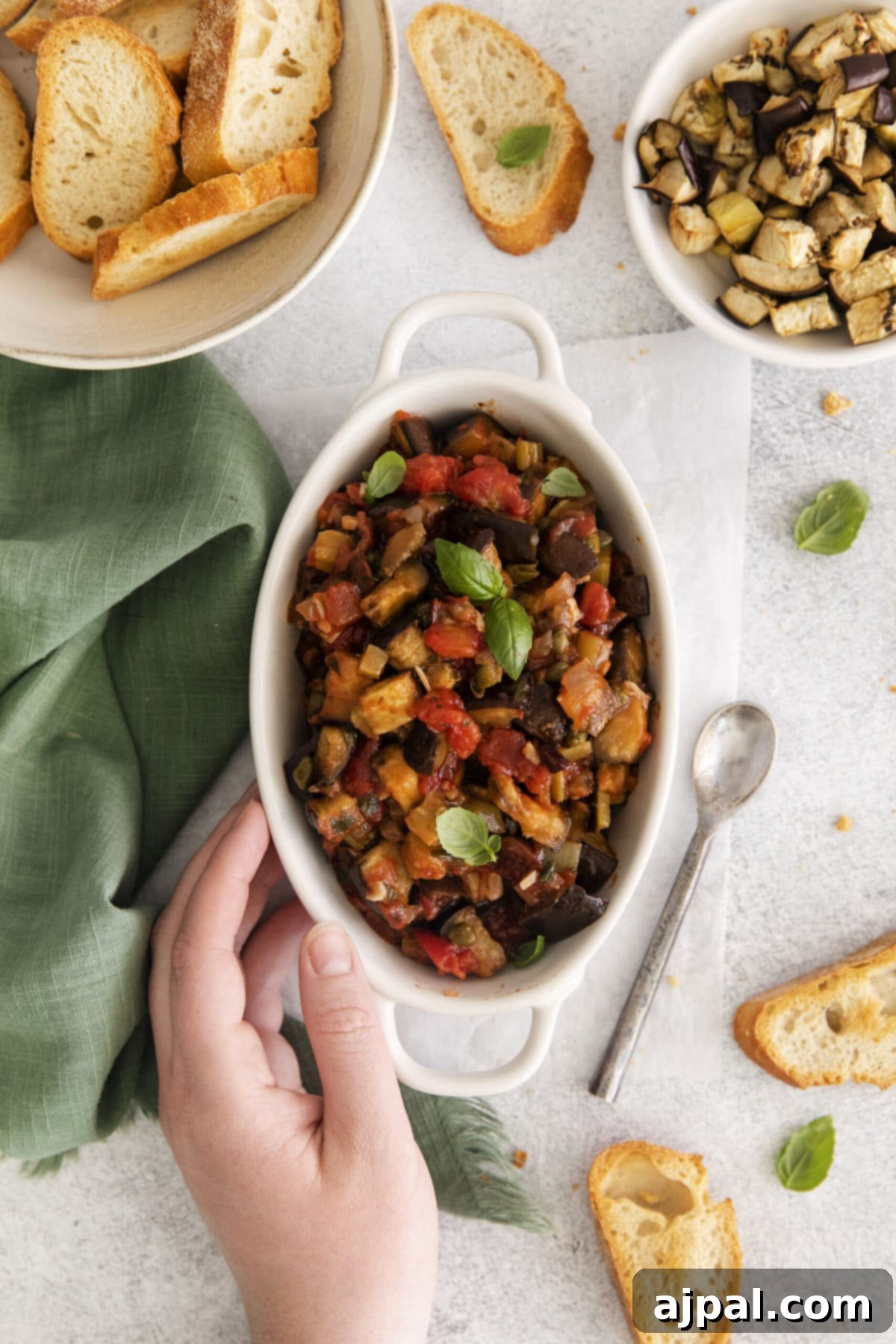
Here at Sweet C’s, we believe that cooking should be an empowering and enjoyable experience for everyone, regardless of skill level. As a home cook with no formal culinary training, I understand the value of clear, comprehensive guidance. That’s why I infuse all my recipes with practical tips and insights, explaining not just the ‘how’ but also the ‘why’ behind each step and ingredient. My aim is to build your confidence, helping even the most novice home chef feel like a seasoned pro in the kitchen.
Table of contents
- What is Eggplant Caponata?
- The Essence of Easy Eggplant Caponata
- Key Ingredients for Authentic Flavor
- How to Make Perfect Eggplant Caponata
- Expert Tips and Tricks for Caponata Perfection
- Frequently Asked Questions
- Serving Suggestions for Eggplant Caponata
- More Delicious Recipes
- Easy Eggplant Caponata Recipe Card
What is Eggplant Caponata?
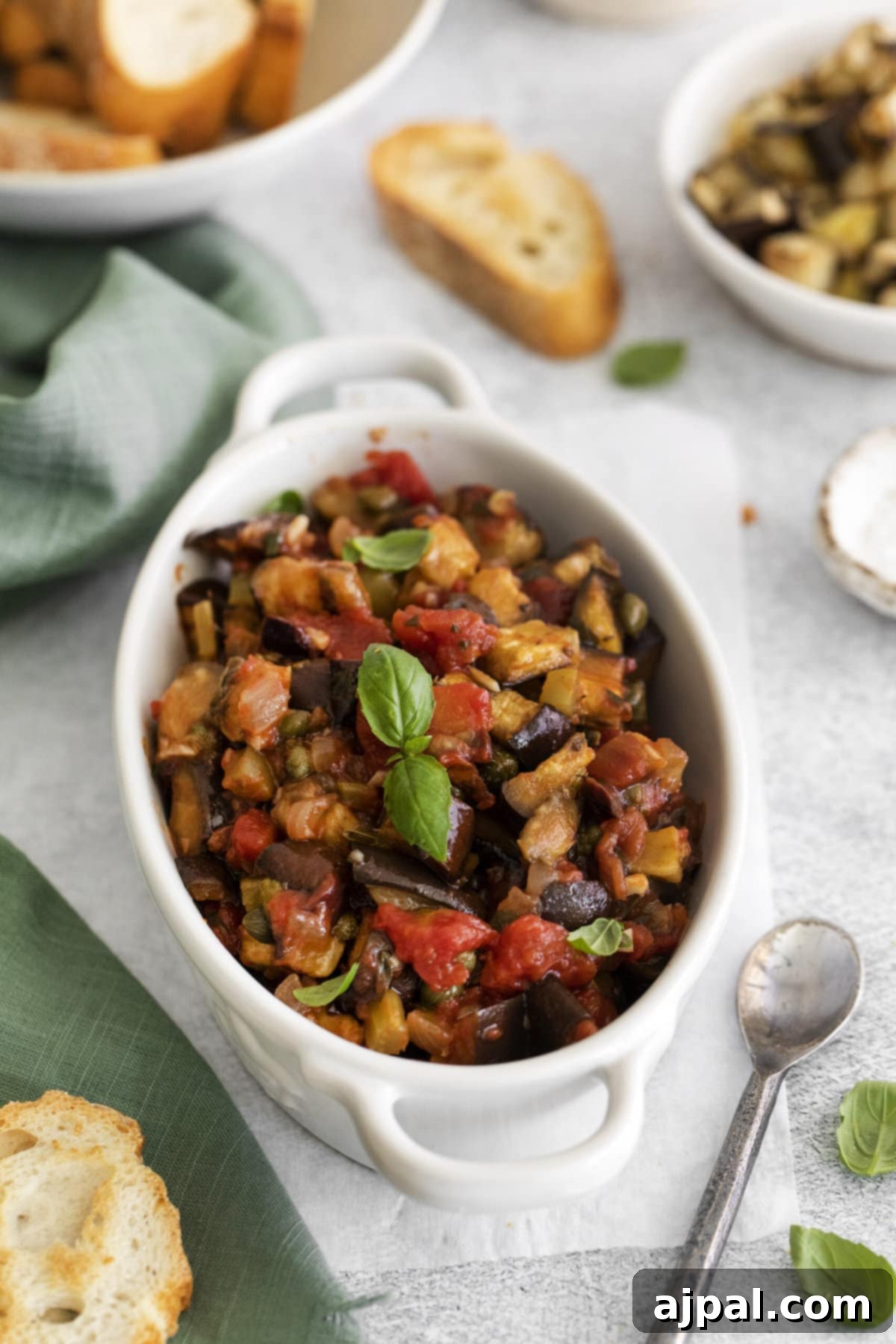
Caponata is an iconic Sicilian dish, a vibrant vegetable stew or relish renowned for its exquisite balance of sweet, sour, and savory notes. At its heart, it’s a medley of tender eggplant, often roasted or fried, combined with a rich sauce made from ripe tomatoes, pungent onions and garlic, and briny capers. This rustic yet refined dish is a staple of Mediterranean cuisine, beloved for its depth of flavor and incredible versatility.
The origins of Caponata trace back to Sicily, an island famous for its diverse culinary traditions. While the version featuring eggplant is most widely known today, historical accounts reveal interesting regional variations. For instance, the city of Palermo boasts a unique caponata that incorporates octopus, adding a seafood dimension. Sicilian nobility, known for their lavish feasts, would elevate the dish further by including luxurious ingredients like lobster and swordfish, often garnished with delicate wild asparagus. Even within local communities, you might find caponata variations featuring carrots, bell peppers, potatoes, pine nuts, or sweet raisins, each addition contributing its own distinct character to this classic.
What makes Caponata truly exceptional is its adaptability. It’s hearty enough to shine as a standalone vegetarian main course, offering a fulfilling and nutritious meal. Yet, it also excels as a robust accompaniment to other dishes. Imagine it spooned over al dente pasta, served alongside succulent roast meats, or as a vibrant appetizer spread on crusty bread. Its complex flavor profile deepens and melds beautifully over time, making it an ideal candidate for meal prep or entertaining.
The Essence of Easy Eggplant Caponata
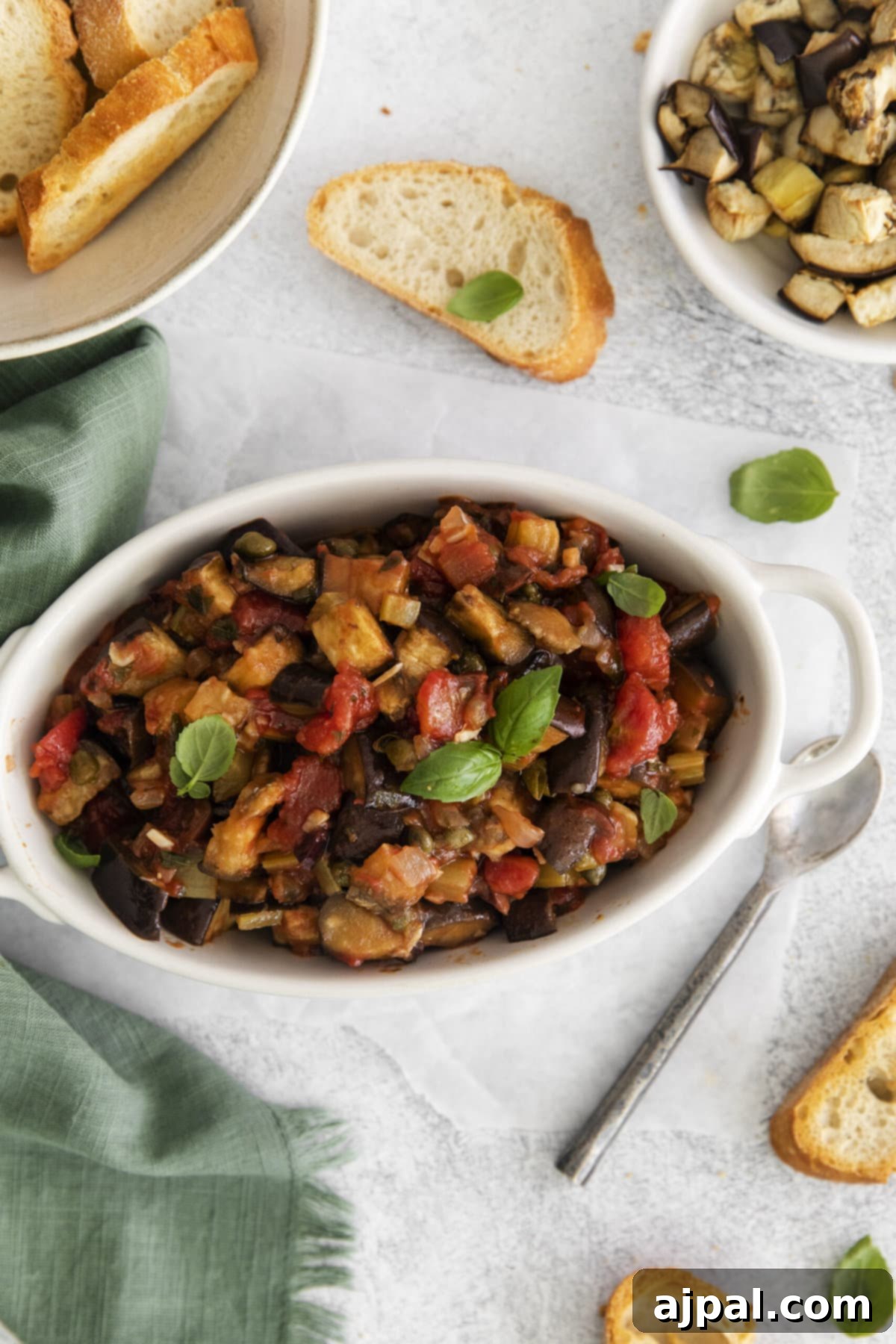
This recipe focuses on creating a flavorful Eggplant Caponata with minimal fuss, ensuring that even busy weeknights can be graced with its Mediterranean charm. The secret to its “easiness” lies in smart preparation and the use of readily available ingredients. By roasting the eggplant, we avoid the mess and excess oil often associated with frying, resulting in a lighter, yet equally flavorful, texture. The sauce then comes together quickly on the stovetop, blending the ingredients into a harmonious symphony of taste.
Beyond its simple preparation, Eggplant Caponata offers numerous benefits. It’s naturally vegetarian and can easily be adapted to be vegan, making it a fantastic option for plant-based diets. Eggplant itself is a good source of fiber, vitamins, and minerals, while olive oil provides healthy monounsaturated fats. Tomatoes are packed with antioxidants like lycopene. This dish is not only delicious but also contributes to a balanced and wholesome diet. Moreover, caponata tastes even better the next day, allowing you to prepare it in advance and enjoy its enhanced flavors without any last-minute stress.
Key Ingredients for Authentic Flavor
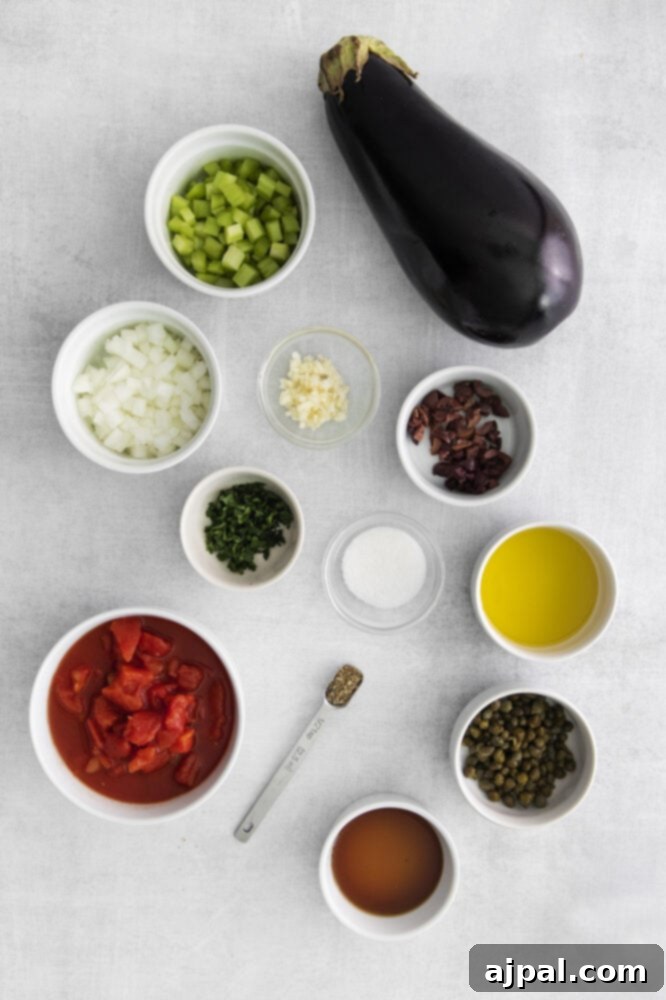
Crafting a truly memorable Eggplant Caponata starts with selecting quality ingredients that each play a crucial role in building the dish’s signature taste. Here’s a closer look at what you’ll need:
- Eggplant: The star of the show! Eggplants are culinary chameleons, celebrated in vegetarian cuisine for their ability to absorb flavors and fats, providing a satisfying, meaty texture. Though botanically a berry, it’s treated as a vegetable in the kitchen. Look for firm, shiny eggplants without blemishes.
- Olive Oil: A cornerstone of Mediterranean cooking, extra virgin olive oil imparts a rich, nutty, and slightly peppery flavor that beautifully complements the eggplant and other vegetables. It’s not just a cooking fat but a flavor enhancer.
- Celery: Don’t underestimate the humble celery! It contributes a crucial salty, fresh, and slightly bitter vegetal note that balances the sweetness of the cooked onions and the richness of the other ingredients.
- Onion: When sautéed, onions develop a beautiful sweetness and depth, providing an earthy foundation that harmonizes perfectly with the acidic elements like vinegar and capers.
- Garlic: The pungent and aromatic cousin of the onion, garlic delivers an essential umami kick and aromatic richness that is indispensable in Mediterranean dishes. Freshly minced garlic offers the best flavor.
- Canned Tomatoes: Opt for high-quality canned diced tomatoes. They offer consistent sweetness and acidity, and their skinless nature makes incorporating their deep, rich flavor into the sauce incredibly easy without extra prep.
- Olives: Another Mediterranean classic, olives (such as Kalamata or Castelvetrano) contribute a salty, briny, and often fatty element that cuts through the sweetness and enriches the overall profile. Pit and chop them for the best experience.
- Capers: These small, brined flower buds are essential to Caponata, bringing a bright, tangy, and acidic punch that elevates the entire dish and is characteristic of Sicilian cuisine.
- Red Wine Vinegar: A splash of red wine vinegar is key to achieving caponata’s signature agrodolce (sweet and sour) balance. It brightens the flavors and enhances the acidity of the tomatoes.
- Sugar: Just a touch of granulated sugar is necessary to perfectly balance the acidity of the tomatoes, vinegar, and capers, creating that delightful sweet-sour complexity without making the dish overly sweet.
- Fresh Parsley: Used as a garnish and stirred in at the end, fresh parsley adds a burst of clean, herbaceous flavor and a vibrant green color that contrasts beautifully with the rich stew.
- Italian Seasoning: A convenient blend typically featuring oregano, basil, thyme, rosemary, and marjoram, Italian seasoning infuses the caponata with warm, aromatic notes that tie all the Mediterranean flavors together.
How to Make Perfect Eggplant Caponata
Once you’ve gathered your fresh ingredients, preparing this flavorful Caponata is a straightforward process. Here’s a detailed guide to achieve culinary excellence:
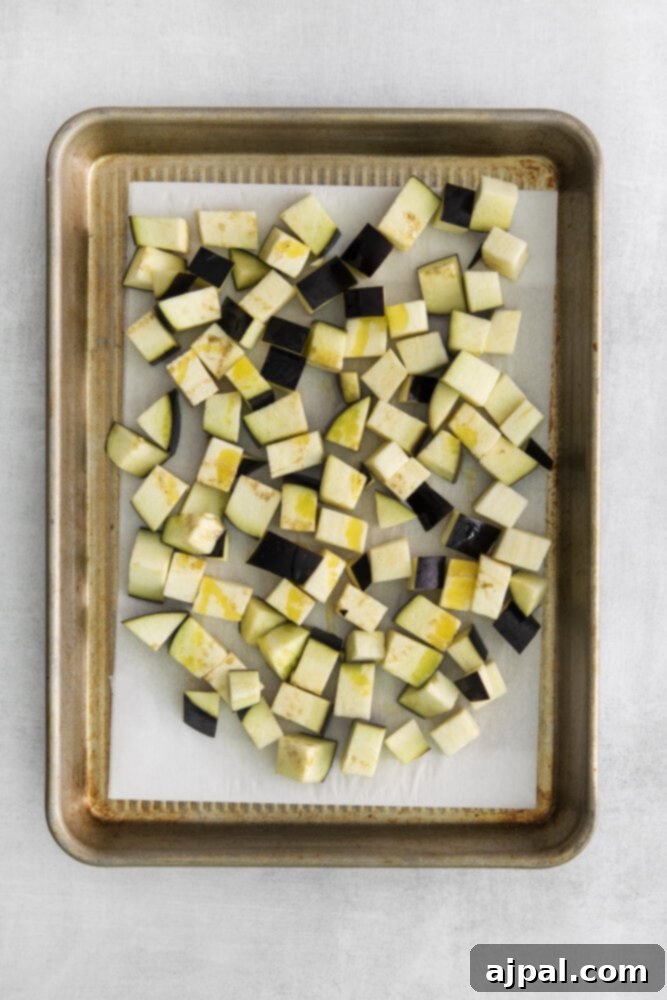
- Prepare Your Ingredients: Begin by carefully cutting your eggplant into uniform ½-inch cubes. Uniformity ensures even cooking. Set these aside. Next, dice the celery, onions, olives, and capers (if not already chopped) into small, manageable pieces. Organize them individually so they are ready to be added at the correct stage. This mise en place is key to a smooth cooking process.
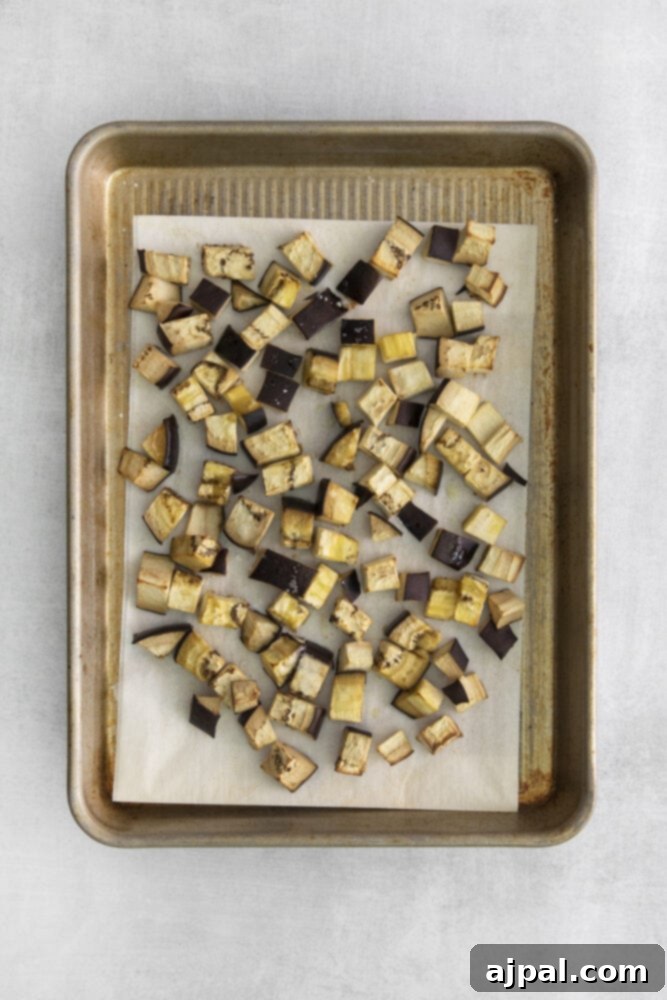
- Roast the Eggplant to Perfection: Preheat your oven to a robust 400°F (200°C). Line a large baking sheet with parchment paper to prevent sticking and make cleanup a breeze. Spread the cubed eggplant in a single layer on the prepared baking sheet. Drizzle generously with a tablespoon of olive oil, then season lightly with salt and freshly cracked black pepper. Roast for approximately 18-20 minutes, or until the eggplant is beautifully tender and slightly golden brown. Roasting instead of frying absorbs less oil and enhances the eggplant’s natural sweetness.
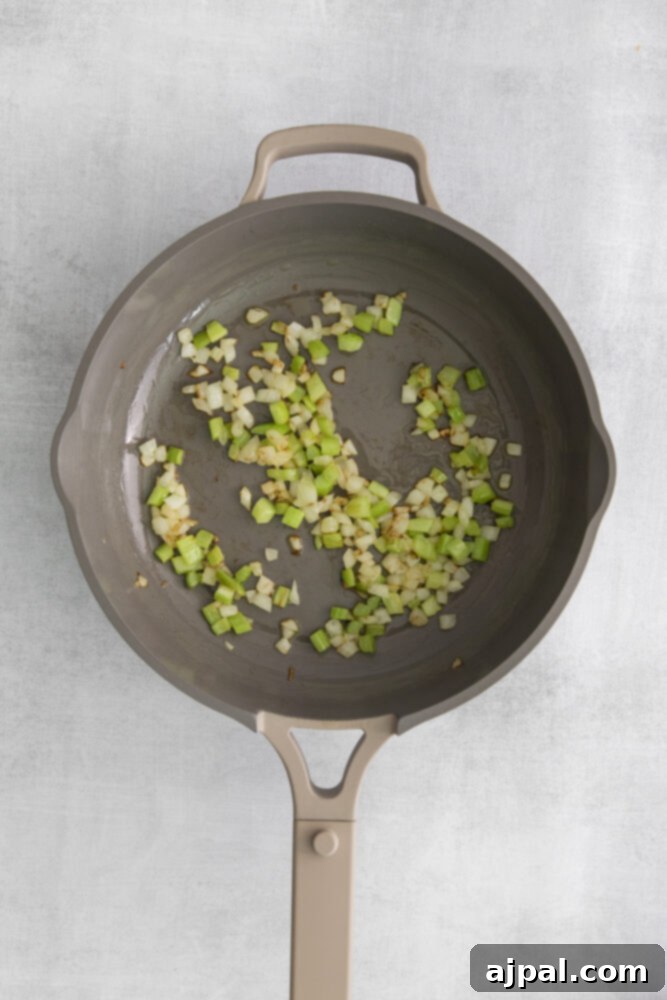
- Build the Flavorful Sauce: While the eggplant roasts, heat a large, heavy-bottomed skillet or Dutch oven over medium heat. Add the remaining two tablespoons of olive oil. Introduce the diced onions and celery, sautéing them gently for 5-7 minutes until they soften and become translucent. This step is crucial for developing the foundational sweetness and aroma of the caponata. Then, add the minced garlic and cook for just another minute until fragrant, being careful not to burn it.
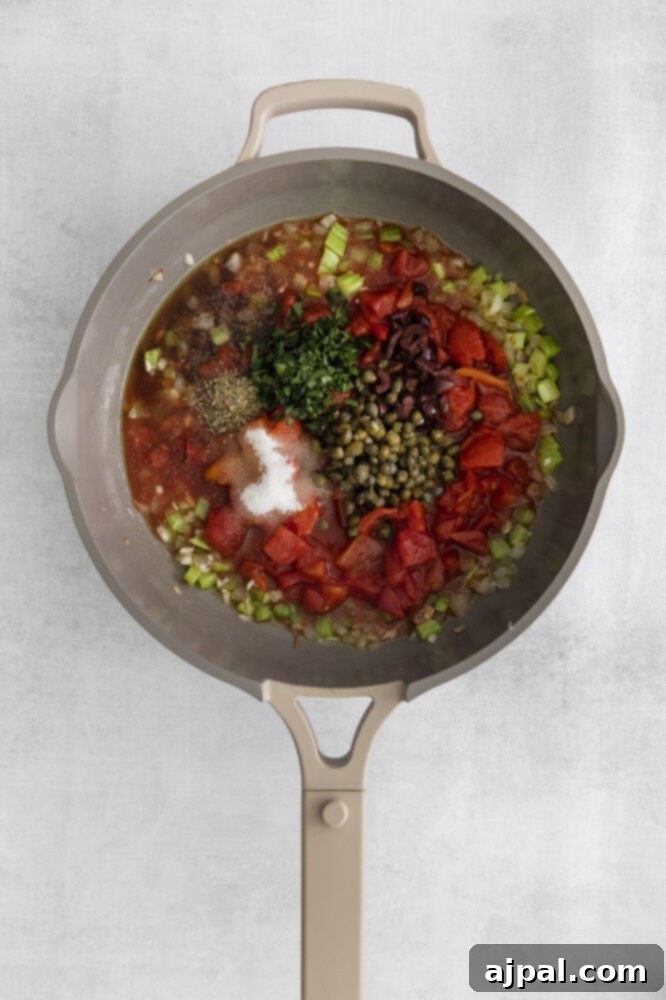
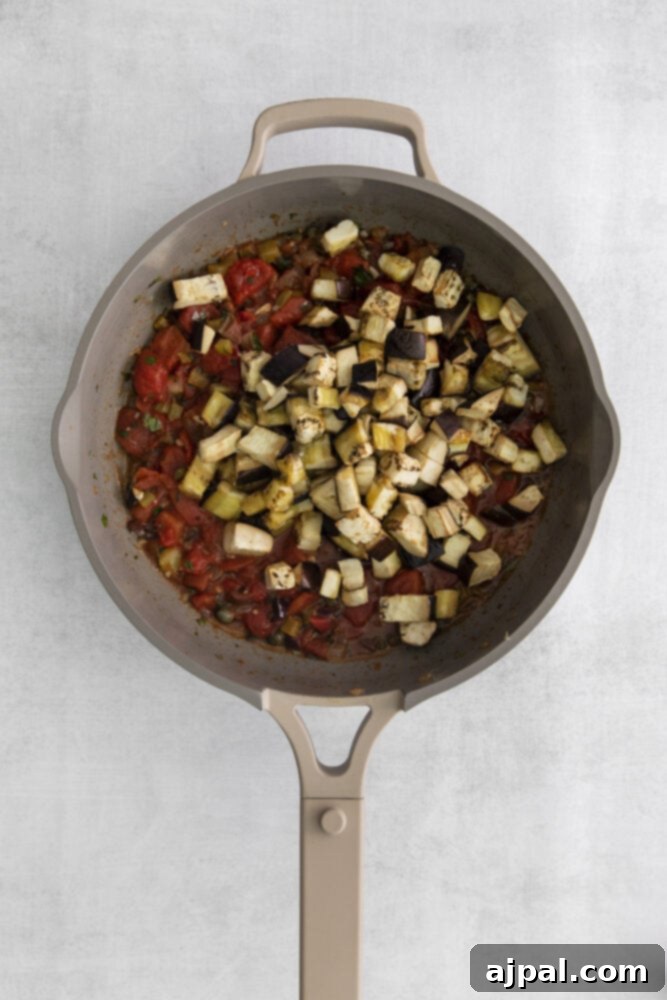
- Combine and Simmer: To the softened vegetables, add the canned diced tomatoes (undrained), chopped olives, drained capers, red wine vinegar, granulated sugar, fresh chopped parsley, and Italian seasoning. Stir all these wonderful ingredients together until well combined. Allow the sauce to simmer gently for 1-2 minutes, letting the flavors marry and deepen.
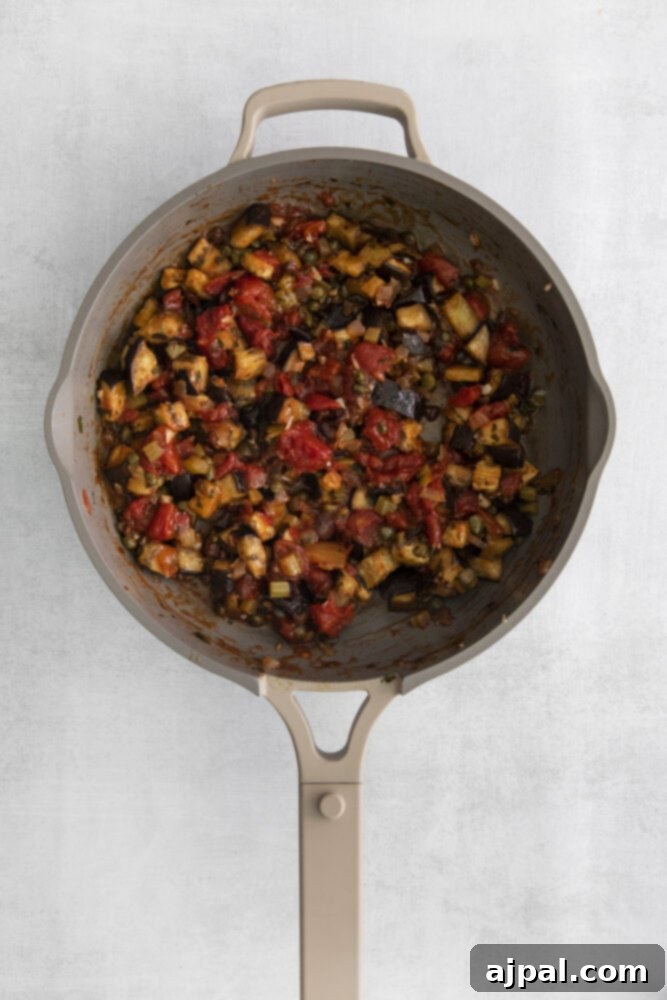
- Add Eggplant and Finish: Finally, incorporate the tender, roasted eggplant into the simmering sauce. Stir gently to coat all the eggplant cubes. Continue to cook for another 4-5 minutes, allowing the caponata to bubble and thicken slightly. Taste and adjust seasoning with salt and pepper as needed. Serve warm or at room temperature, garnished with a sprinkle of fresh chopped parsley and a final grind of black pepper.
Expert Tips and Tricks for Caponata Perfection
While Eggplant Caponata is inherently simple, these tips will elevate your dish from good to absolutely unforgettable:
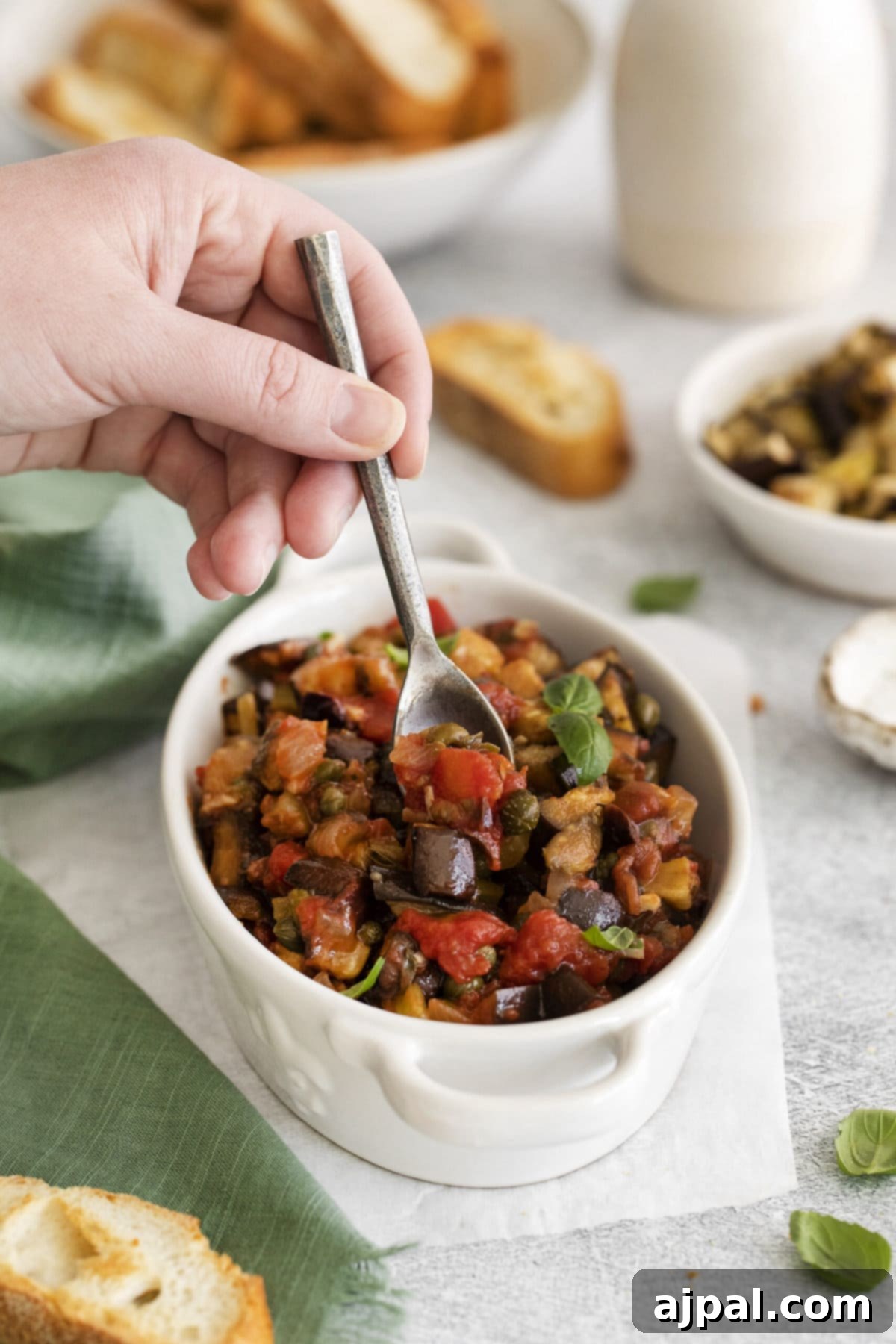
- Tip 1 – Utilize a Dutch Oven for Superior Simmering: For cooking the caponata sauce and combining ingredients, a 10-inch or larger enamel or cast iron Dutch oven is an invaluable tool. Its heavy construction and high sides ensure even heat distribution and allow for gentle simmering, which is ideal for allowing the complex flavors to meld beautifully without scorching. The Dutch oven also retains heat exceptionally well, keeping your caponata warm if serving immediately.
- Tip 2 – Embrace the Skin (or Don’t!): Leaving the skin on the eggplant adds extra texture, a slightly deeper color, and a touch of earthy flavor to the caponata. I prefer to leave it on for these reasons. However, some individuals find eggplant skin to have a slight bitterness when cooked. If you are sensitive to this flavor, or if you prefer a silkier texture, feel free to peel the eggplant before cubing and roasting. The choice is yours and won’t significantly impact the overall deliciousness of the dish.
- Tip 3 – The Magic of Resting: Like many stews and braised dishes, Caponata often tastes even better the next day. The flavors have time to fully meld and deepen, creating a more harmonious and complex profile. If possible, make your caponata a day in advance and allow it to rest in the refrigerator overnight. Gently reheat or serve at room temperature for the best experience.
- Tip 4 – Don’t Skip the Sweet-Sour Balance: The agrodolce flavor (sweet and sour) is characteristic of authentic Caponata. The combination of red wine vinegar and sugar is crucial for achieving this. Taste and adjust these elements to your preference; you might want a bit more tang or a touch more sweetness depending on the natural acidity of your tomatoes.
- Tip 5 – Quality Matters for Canned Tomatoes: Since tomatoes form the backbone of the sauce, investing in good quality canned diced tomatoes can make a significant difference. Look for brands that offer vine-ripened tomatoes, preferably organic, for the freshest and most robust flavor.
Frequently Asked Questions
Eggplant Caponata stores exceptionally well! You can keep it in an airtight container in the refrigerator for up to seven (7) days. In fact, many people find its flavors deepen and improve after a day or two, making it an excellent dish for meal prepping. For longer storage, particularly in traditional Sicilian households, caponata is often pressure-canned to preserve it through the winter months, ensuring a delicious taste of summer anytime.
Absolutely! Caponata is wonderfully adaptable. While eggplant is traditional, you can certainly add or substitute other vegetables based on your preferences or what’s in season. Common additions include diced bell peppers (red, yellow, or orange), zucchini, carrots, or even mushrooms for extra umami. For a richer flavor, some variations include pine nuts or a handful of plump raisins, which enhance the sweet-sour profile. Feel free to experiment and make it your own!
Yes, Caponata freezes beautifully! Once cooled completely, transfer it to freezer-safe containers or heavy-duty freezer bags. It can be stored in the freezer for up to 3 months. Thaw overnight in the refrigerator before gently reheating on the stovetop or in the microwave. Freezing can sometimes slightly alter the texture of the eggplant, making it a little softer, but the flavors remain robust and delicious.
Agrodolce is an Italian culinary term that literally translates to “sour-sweet.” It refers to a traditional sweet and sour sauce or flavor profile often found in Italian cuisine, particularly Sicilian dishes like Caponata. This balance is achieved by combining acidic ingredients (like vinegar or lemon juice) with sweet ones (like sugar, honey, or sometimes even dried fruit), creating a complex and highly addictive taste that is a hallmark of Caponata.
Serving Suggestions for Eggplant Caponata
The beauty of Easy Eggplant Caponata lies in its incredible versatility. It can effortlessly take center stage or complement a wide array of dishes:
- As a Vegetarian Main Dish: Serve Caponata warm or at room temperature as a robust and satisfying vegetarian meal. Pair it with good, crusty bread to soak up all the delicious juices. Our homemade no-knead bread or jalapeño cheese bread would be phenomenal choices. For an international twist, consider serving it with Khachapuri Georgian Cheese Bread.
- Delicious Side Dish: Caponata makes an excellent side for various protein-rich main courses. It pairs wonderfully with roasted meats like garlic lemon chicken breasts, classic lemon chicken, or succulent crispy baked pork shoulder. Don’t forget to try it with my herb butter baked pork loin and potatoes for a complete and flavorful meal.
- Pasta Partner: Toss warm Caponata with your favorite pasta for a quick and flavorful meal. A sprinkle of freshly grated Parmesan or Pecorino Romano takes it to the next level.
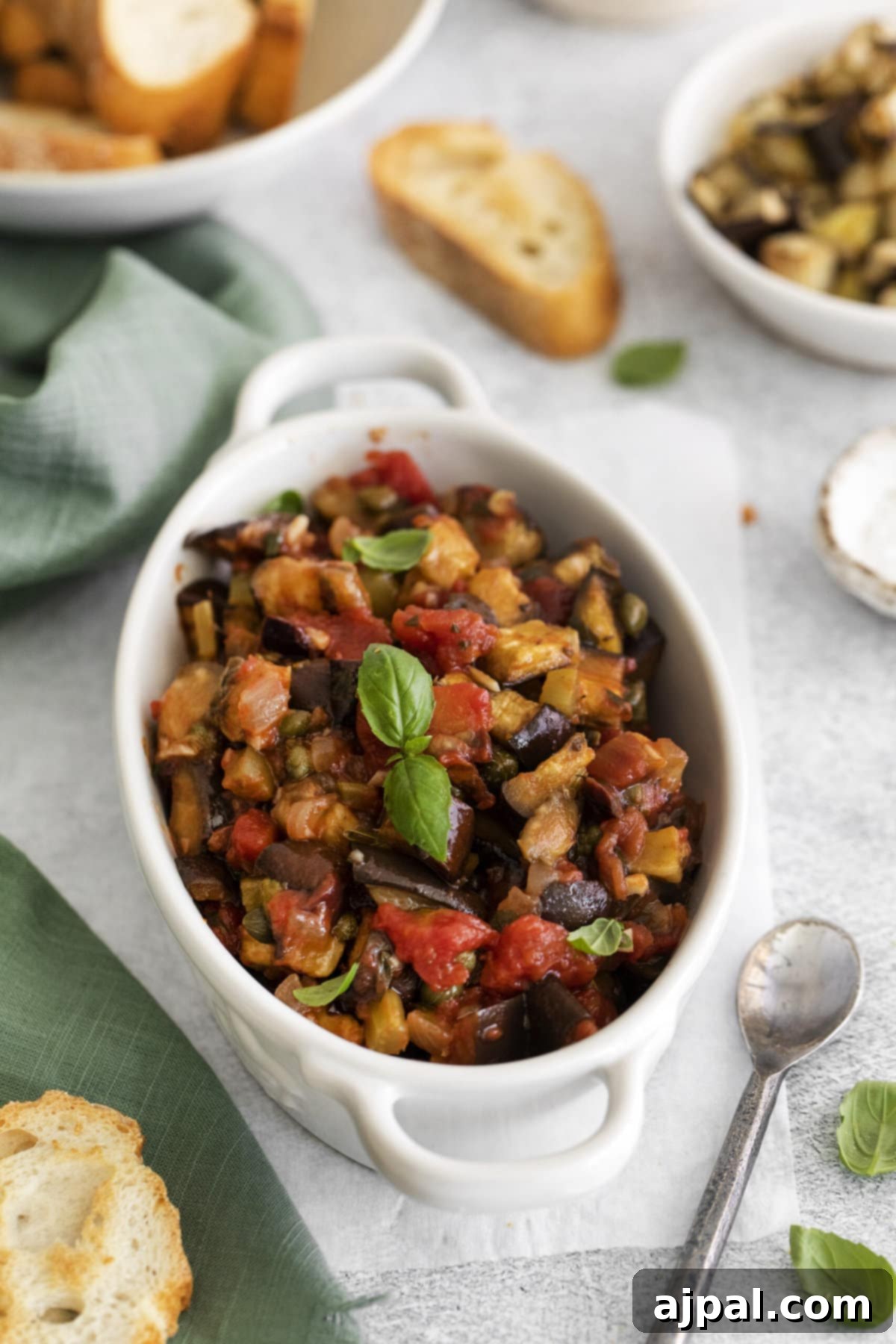
- Appetizer or Bruschetta Topping: Caponata is a fantastic appetizer. Serve it chilled or at room temperature with crostini, crackers, or fresh bread. It also makes a superb topping for bruschetta, perhaps with a dollop of ricotta cheese.
- With Grilled Fish or Seafood: The bright, tangy flavors of Caponata beautifully complement grilled white fish, salmon, or shrimp.
- Eggplant Caponata Salad: Serve it over a bed of fresh greens for a light yet satisfying salad.
More Delicious Recipes
Herb Roasted Turkey in a Bag
Easy Cranberry Fluff Salad
Cranberry Bars
Dilly Bread Recipe
Cabbage and Noodles
Lemon Chicken Tortellini Soup
Cranberry Chutney
Bacon Rye Stuffing
For more inspiring culinary ideas featuring fresh produce, explore our collection of amazing vegetable recipes!
Easy Eggplant Caponata Recipe Card
If you cherish this easy and flavorful recipe, please consider rating it with five stars below and leaving a comment! Your feedback truly helps. Don’t forget to share your creations on Instagram, Facebook, and Pinterest, tagging @sweetcsdesigns so we can see your delicious results!
Share on Facebook
Share
Pin this now to find it later
Pin It
Follow on Instagram
Follow
Only have 30 minutes to get dinner on the table? Sign up for my 30-minute dinner plans delivered straight to your inbox!
Discover and shop my favorite kitchen products in my Amazon storefront here!
Eggplant Caponata
Courtney O’Dell
4
servings
5
35
40
Share by Email
Print Recipe
Equipment
-
Organic Black Kalamata Olives – NON-GMO – Gluten Free – Large – Pitted – USDA Certified Organic (13.1 oz)
-
Pompeian Gourmet Red Wine Vinegar, 30 Ounce
-
Mina Capers Non Pareil, 33.5 oz
-
365 by Whole Foods Market, Organic Extra Virgin Olive Oil, 33.8 Fl Oz
-
Calphalon Cast Iron Skillet, Pre-Seasoned Cookware, 12-Inch
-
Amazon Basics Silicone, Non-Stick Baking Mat – Pack of 2
-
Reynolds Kitchens Parchment Paper Roll, 60 Square Feet
-
USA Pan Bakeware Quarter Sheet Pan, Aluminized Steel
Ingredients
- 1 large eggplant, seeded and cut into ½” cubes
- 3 tablespoons olive oil, divided
- ½ cup diced celery
- ½ cup diced onion
- 2 cloves garlic, minced
- 1 14 ounces can of diced tomatoes
- ¼ cup olives pitted and roughly chopped
- 2 tablespoons capers, drained
- 2 tablespoons red wine vinegar
- 1 tablespoon granulated sugar
- 1 tablespoon chopped parsley
- ½ teaspoon dried Italian seasoning
Instructions
-
Preheat the oven to 400°F (200°C). Line a large baking sheet with parchment paper.
-
Place the cubed eggplant on the baking sheet and drizzle over 1 tablespoon of olive oil. Season with a pinch of salt and pepper.
-
Roast the eggplant for 18-20 minutes, or until it is fork tender and slightly golden.
-
Heat a large skillet or Dutch oven over medium heat and add the remaining olive oil. Next, add the celery and onion. Cook for 5-7 minutes, or until the vegetables are soft and translucent.
-
Add the minced garlic and cook for an additional minute until fragrant, being careful not to burn it.
-
Next, add the diced tomatoes (undrained), olives, capers, red wine vinegar, sugar, parsley, and Italian seasoning. Stir to combine all ingredients thoroughly.
-
Add the roasted eggplant to the tomato sauce and cook for another 5-7 minutes, or until the sauce is thick and bubbling. Season with salt and pepper to taste.
-
While delicious hot, this Caponata is traditionally served at room temperature, allowing its complex flavors to fully develop.
Nutrition
Calories: 198kcal
Carbohydrates: 24g
Protein: 3g
Fat: 12g
Saturated Fat: 2g
Polyunsaturated Fat: 10g
Sodium: 232mg
Fiber: 6g
Sugar: 11g
Nutrition information is automatically calculated, so should only be used as an approximation.
Additional Info
Side dishes
Italian
Tried this recipe?
Mention @sweetcsdesigns or tag #sweetcsdesigns!