
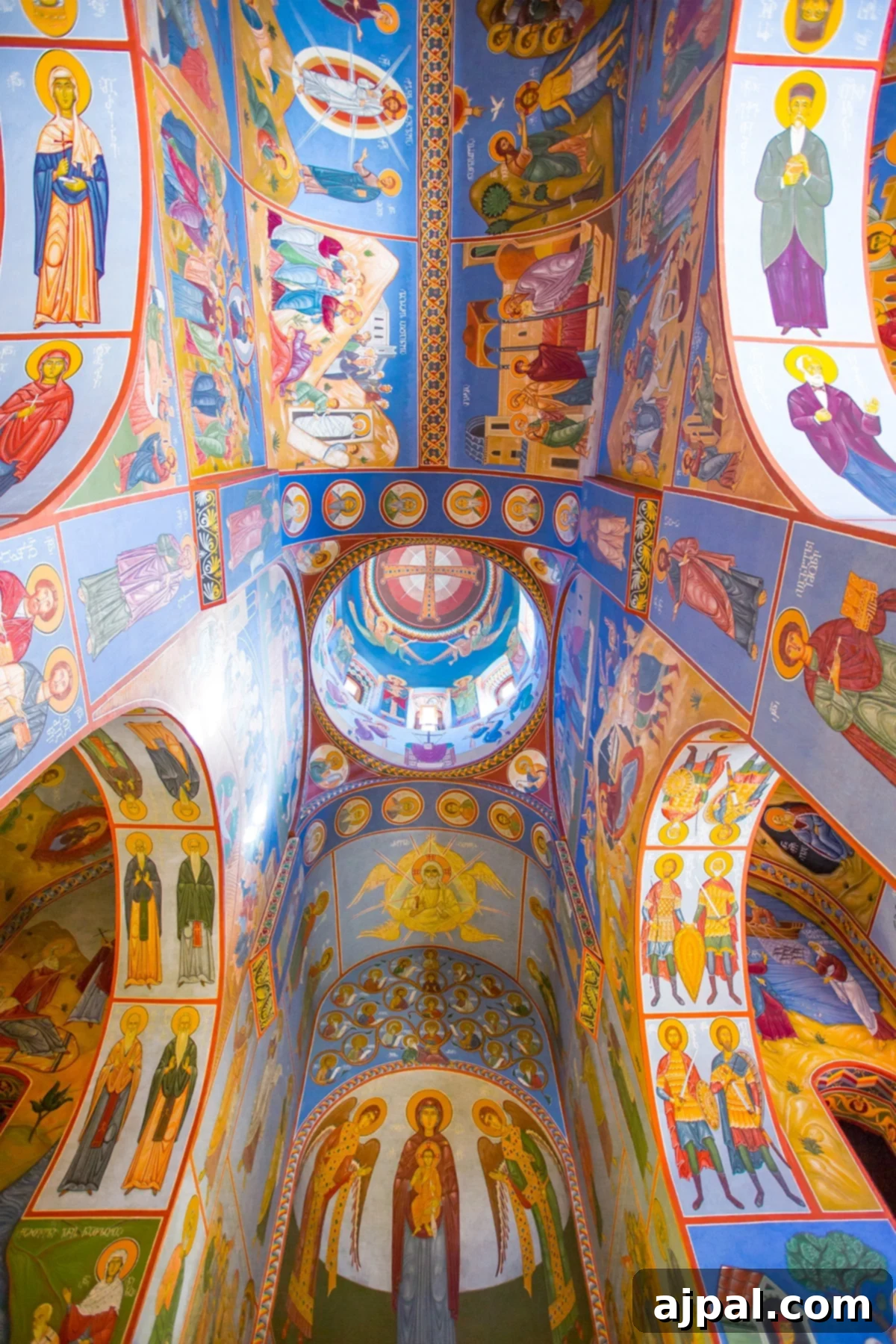
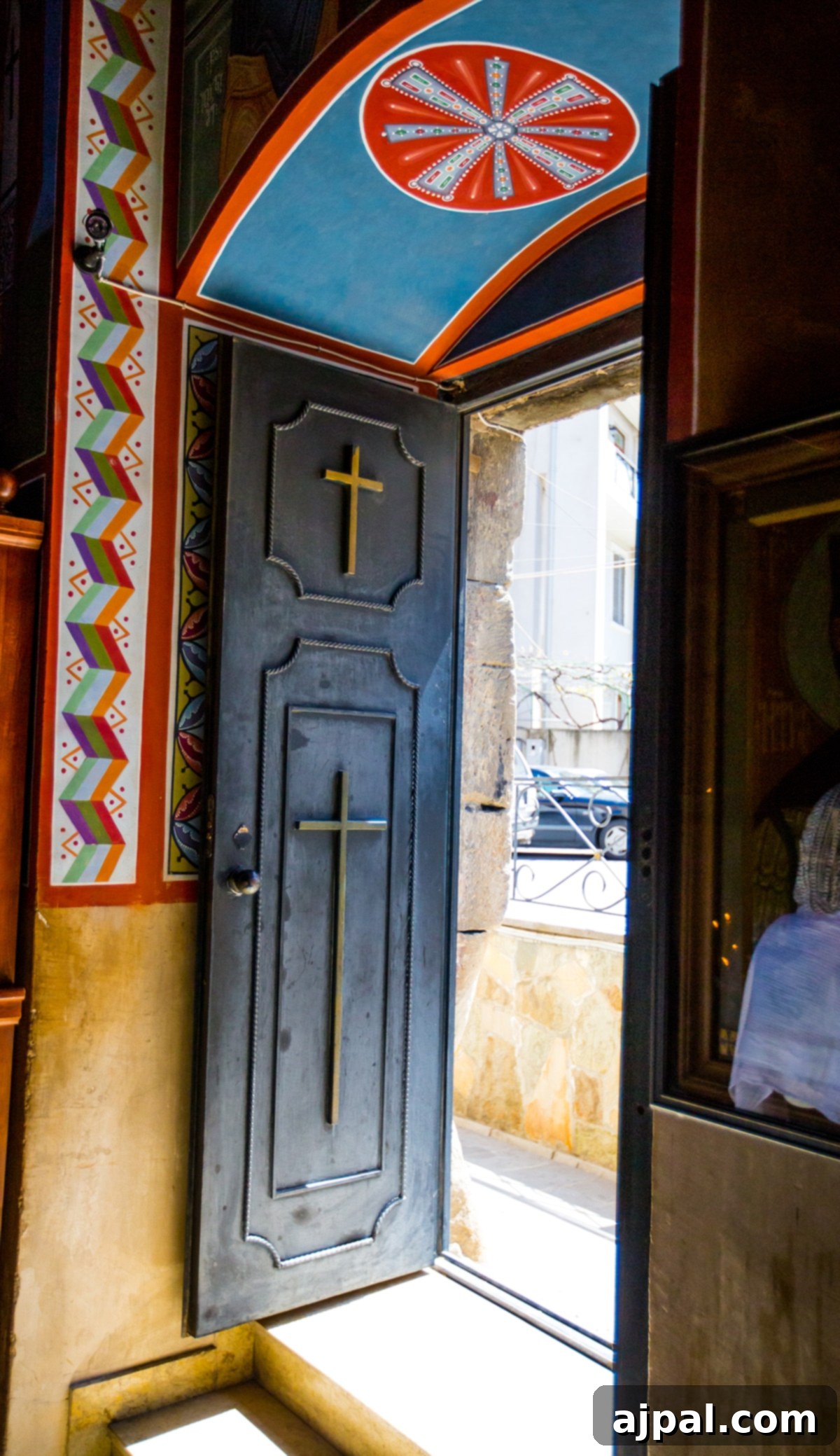
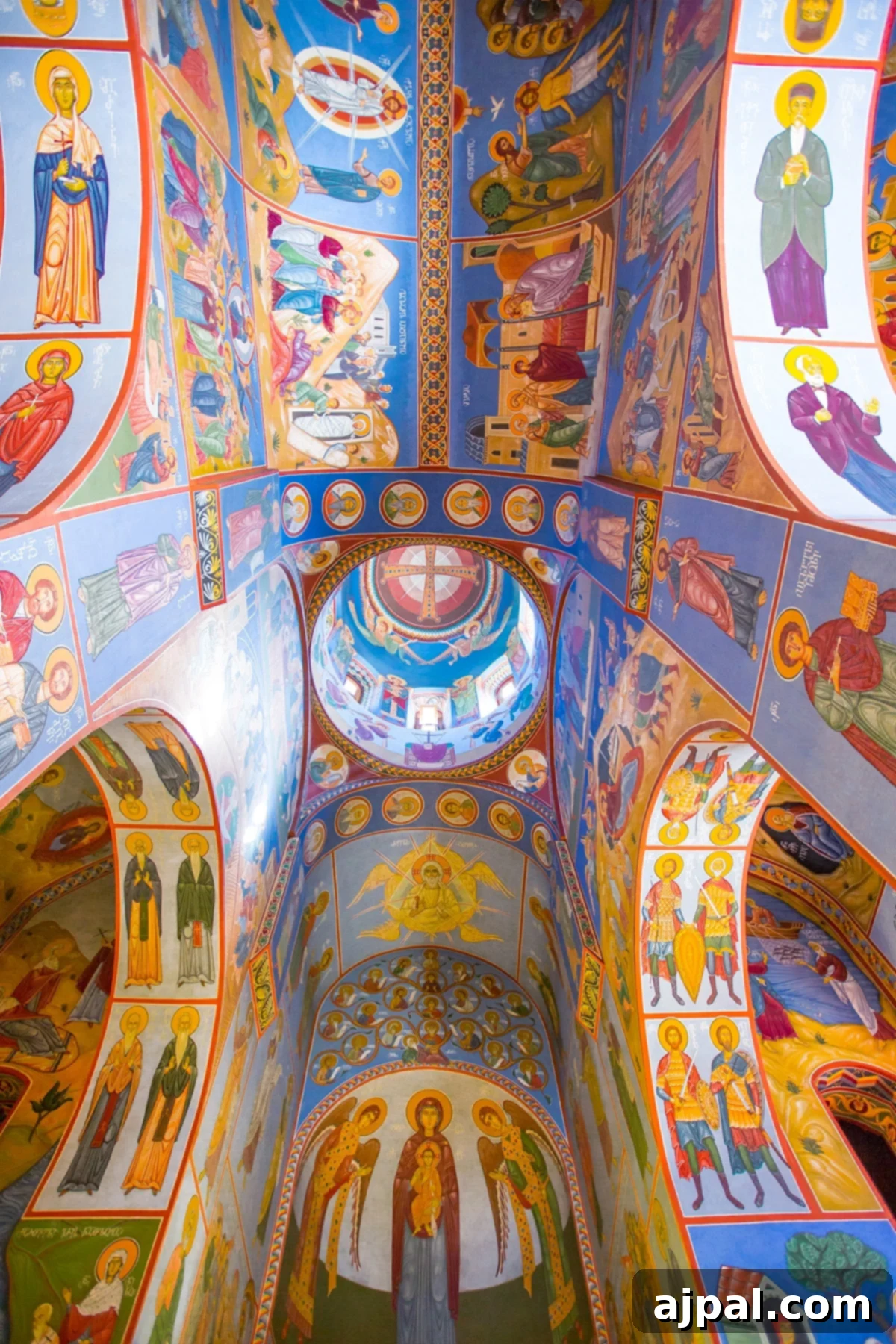
Views from inside the Lurji Monastery, also referred to as “Blue Church”, in Tbilisi Georgia.
Lurji Monastery: Unveiling the Spiritual Majesty of Tbilisi’s Blue Church
Nestled in the vibrant heart of Tbilisi, Georgia, stands a beacon of spiritual and architectural wonder: the Lurji Monastery. Often affectionately known as the “Blue Church” due to its distinctive blue-tiled dome, this historic monastery offers an unforgettable glimpse into Georgia’s deep-rooted Christian heritage. More than just a place of worship, Lurji Monastery is a living testament to centuries of faith, art, and tradition, providing a profoundly moving experience for every visitor.
Discovering the Enchantment of Tbilisi’s Blue Church
My first encounter with the Lurji Monastery was during a truly special occasion – my brother and sister-in-law’s wedding. The journey to this sacred site, however, proved to be an adventure in itself. Tbilisi, with its winding streets and hidden gems, can be a delightful maze. We initially took a wrong turn from our hotel, the Radisson, mistakenly walking a block away from the Mtkvari River instead of along its picturesque banks. This navigational mishap led to an unexpected hike in high heels, which, while not ideal for comfort, certainly added a memorable anecdote to our visit!
Despite its somewhat tucked-away location, and perhaps being slightly overshadowed by the grandeur of the neighboring St. John the Theologian Church, the Lurji Monastery possesses an undeniable charm that draws you in. Its humble exterior belies the breathtaking splendor found within, creating a sense of anticipation that only heightens the awe once you step through its ancient doors. The very act of seeking out this spiritual sanctuary makes its discovery all the more rewarding.
A Kaleidoscope of Faith: The Exquisite Interior of Lurji Monastery
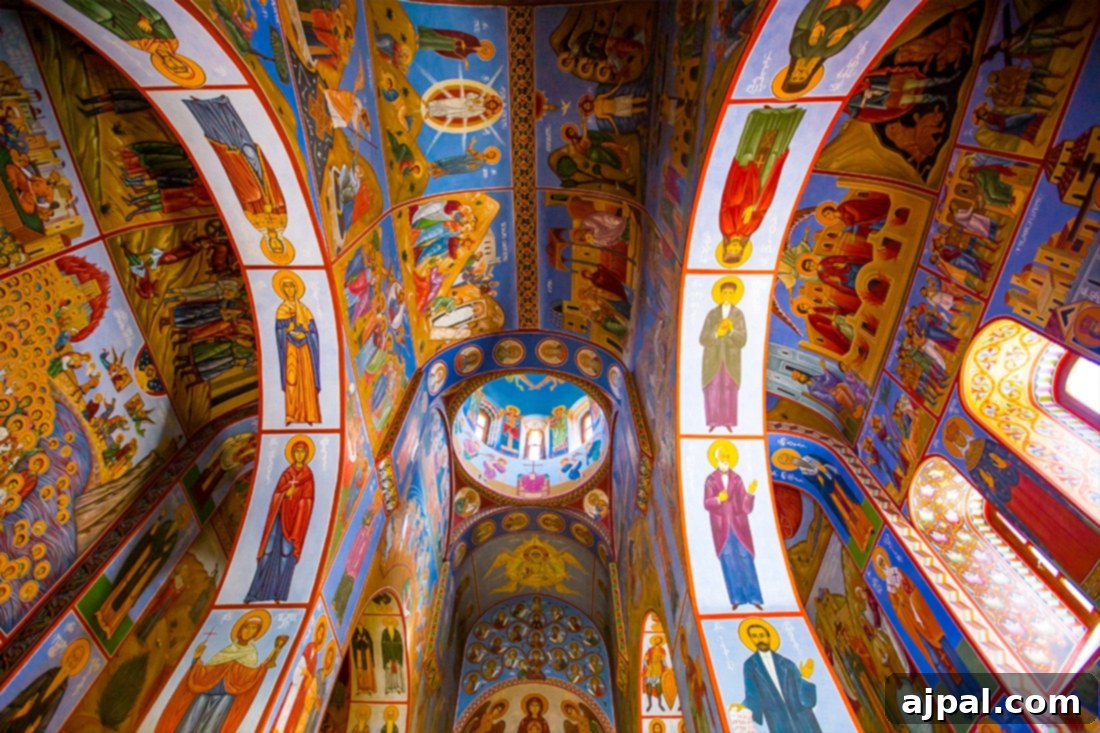
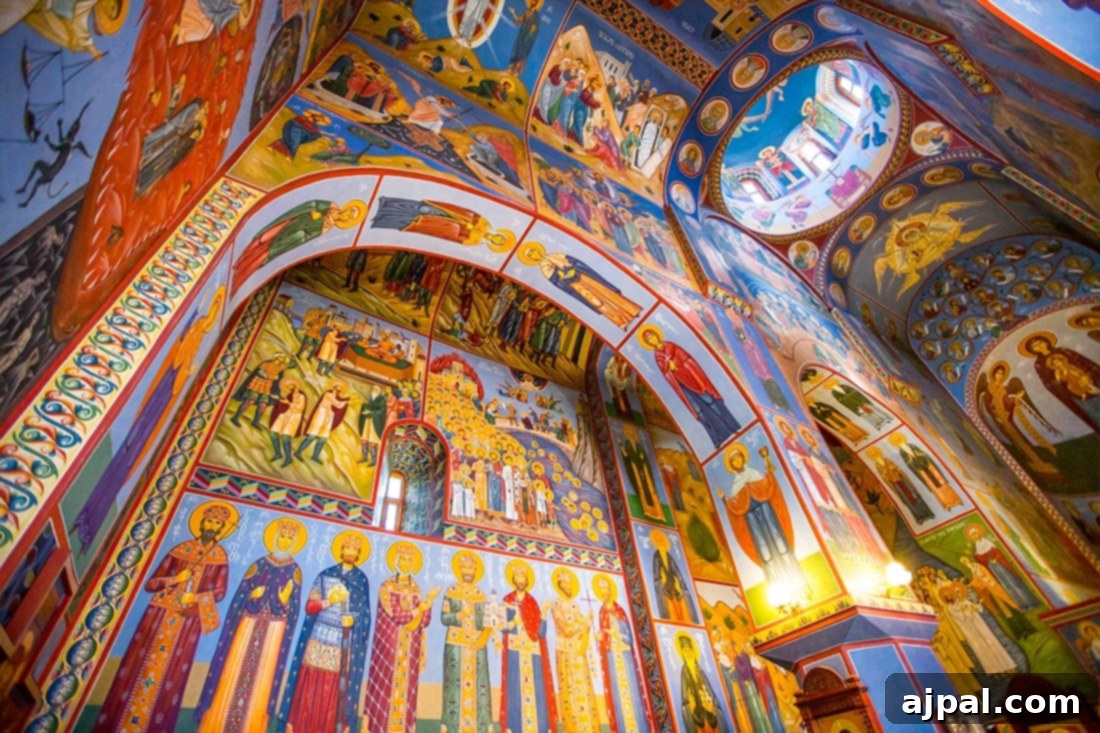
Once inside, Lurji truly shines. It’s an immersion into a world where every surface tells a story. The monastery is adorned with an intensity that leaves no inch untouched, a visual feast of bright, beautiful icons that surround you from floor to ceiling. These aren’t merely decorative elements; they are profound expressions of faith, crafted with meticulous detail and vibrant colors that have stood the test of time. The air itself seems to hum with history and spirituality, enhanced by the remarkable acoustics that amplify every whispered prayer and chanted hymn.
As you gaze upon the intricate frescoes and icons, you’ll embark on a journey through Georgia’s rich and often turbulent past. Some depictions portray serene saints, their faces radiating peace and devotion, while others are strikingly powerful, illustrating moments from Georgia’s long and often bloody history. These include vivid, sometimes graphic, scenes of martyrdom and even decapitations, serving as stark reminders of the sacrifices made for faith and freedom. Each image, whether depicting peaceful contemplation or intense struggle, is imbued with a compelling narrative, inviting contemplation and reflection on the human spirit’s resilience and unwavering belief.
Architectural Grandeur and Historical Significance
The Lurji Monastery, or “Blue Church” (also known as the Church of Saint George in Lower Bethlemi), dates back to the 12th century. Its original construction is attributed to Queen Tamar’s reign, a golden age in Georgian history. While its current form reflects subsequent reconstructions and renovations, particularly after periods of invasion and destruction, it retains key elements of medieval Georgian ecclesiastical architecture. The blue-tiled dome, a prominent feature that gives the monastery its popular moniker, is a later addition but blends harmoniously with the historic stone structure, making it a unique landmark in Tbilisi’s skyline.
Throughout its long history, Lurji Monastery has witnessed countless pivotal moments, serving as a steadfast spiritual center amidst the ebb and flow of empires and conflicts. Its resilience and enduring presence are a testament to the strength of Georgian Orthodox Christianity and the determination of its people to preserve their cultural and religious identity. The monastery’s walls themselves could tell tales of prayer, celebration, and endurance through centuries of change.
A Sacred Union: Celebrating an Orthodox Wedding in Tbilisi
Attending a wedding in such a magnificent space was an experience unlike any other. It was genuinely challenging to focus solely on the ceremony, as my gaze was constantly drawn upwards, captivated by the glorious surroundings. The monastery’s grandeur truly enveloped us, making the occasion feel even more profound and sacred. Thankfully, my brother-in-law had arranged for a choir of men whose resonant chanting filled the air, creating an atmosphere so deeply moving that it anchored our attention back to the beautiful ceremony unfolding before us.
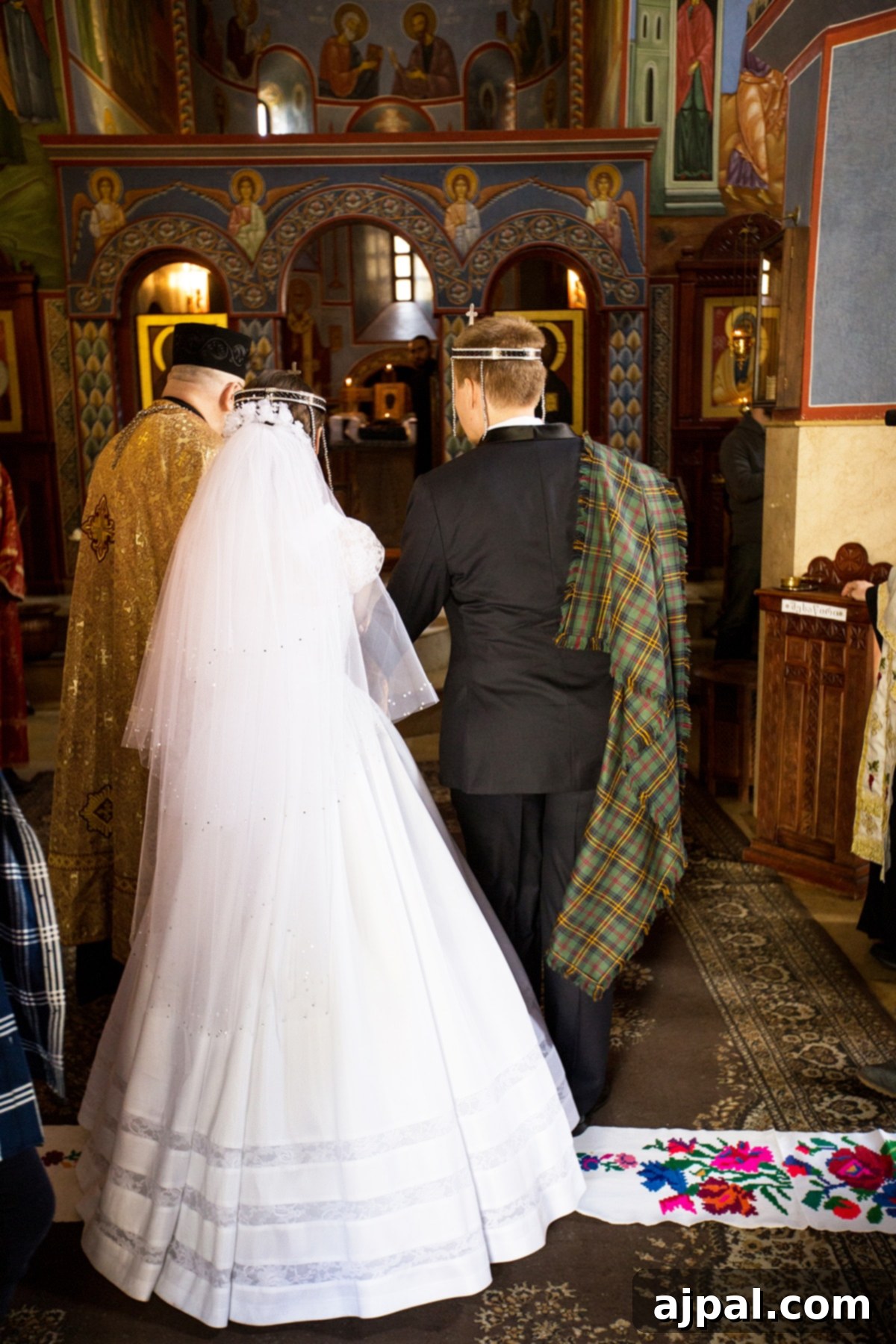
The wedding itself was intensely interesting, a beautiful tapestry of cultures and languages. The officiating clergy included a local Georgian priest fluent in English, Georgian, and Russian; our own priest from Colorado who spoke English and Greek; and a friend who is an Orthodox monk, contributing with Russian and English. This multilingual approach was incredibly helpful, especially since the bride’s family, hailing from Belarus, primarily spoke Russian, while none of the American guests spoke Russian. Such linguistic diversity ensured that everyone present could follow and appreciate the sacred rites.
While sharing personal wedding photos can feel somewhat intrusive, even for family, I wanted to share one powerful image of the couple approaching the altar after being crowned. This moment encapsulates the profound beauty and symbolism of an Orthodox Christian wedding, a visual representation of their new spiritual kingdom together. The crowns symbolize royalty and martyrdom, signifying that they are the king and queen of their home, ready to sacrifice for each other.
The Enduring Beauty of Orthodox Wedding Traditions
One of the most remarkable aspects of Orthodox ceremonies, irrespective of where they are held globally, is their unwavering consistency. They are “exactly the same” – a testament to traditions preserved for hundreds, even thousands of years. This ancient constancy means that even when I didn’t understand every word spoken by the priests due to language barriers, I instinctively knew which part of the wedding they were in. The rituals, the prayers, the symbolic actions – they mirrored the very same ceremony my husband and I had experienced almost six years prior.
This sense of familiarity, juxtaposed with being halfway across the world in a town many have never heard of, attending a truly multilingual wedding, was profoundly beautiful. It underscored the universal nature of faith and tradition, demonstrating how deeply connected we are through shared spiritual experiences. The timelessness of the Orthodox wedding ceremony, with its roots stretching back to early Christianity, provides a powerful link across cultures and generations, making each celebration a living bridge to the past.
Planning Your Visit to Lurji Monastery
For anyone planning a trip to Tbilisi, a visit to Lurji Monastery is highly recommended. To ensure a smooth experience, consider its location near the Mtkvari River; navigating along the riverbank can help avoid detours. The monastery is typically open to visitors, but it’s always advisable to check local schedules, especially around religious holidays. When entering, respectful attire is encouraged, and maintaining a quiet demeanor allows both you and others to fully appreciate the serene and spiritual atmosphere.
Beyond its religious significance, Lurji Monastery is a cultural treasure. It serves as a reminder of Georgia’s enduring artistic legacy and its deep connection to Orthodox Christianity. Whether you are drawn by its captivating frescoes, its ancient history, or simply the desire to experience a moment of peace amidst the bustling city, the Blue Church promises an enriching and unforgettable encounter with the heart of Georgian heritage.
An Unforgettable Georgian Experience
The Lurji Monastery stands as a poignant symbol of Tbilisi’s multifaceted identity—a city where ancient history gracefully intertwines with vibrant modern life. My personal experience, enriched by the beauty of a family wedding, only deepened my appreciation for this magnificent structure. It’s a place where art, history, and profound spirituality converge, offering more than just sightseeing; it offers an emotional and reflective journey. The “Blue Church” is not merely a destination; it is an experience that lingers long after you’ve left its sacred halls, a testament to the timeless allure of Georgia’s spiritual and cultural landscape. It truly is one of the most amazing churches I have ever stepped foot in, a must-visit for anyone seeking the soul of Tbilisi.