
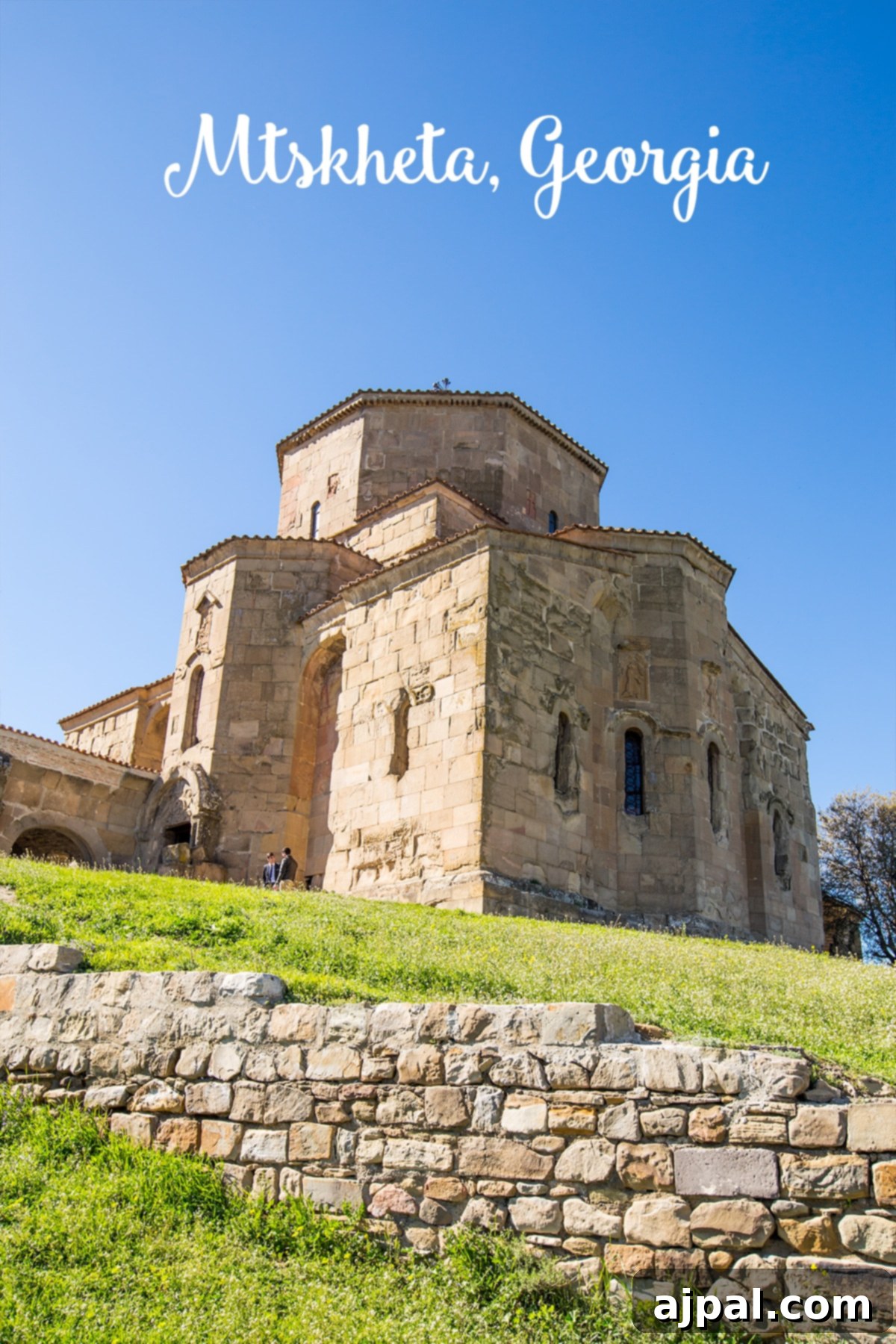
Discover Mtskheta: Georgia’s Ancient Capital and Spiritual Heart
Embark on a captivating journey to Mtskheta, one of the world’s oldest continuously inhabited cities and Georgia’s revered Holy City. Nestled just a short 30-minute drive from the vibrant capital, Tbilisi, Mtskheta offers a profound glimpse into centuries of history, rich spiritual traditions, and breathtaking landscapes. As a UNESCO World Heritage site, Mtskheta stands as a living testament to Georgia’s enduring legacy, its ancient churches dating back to the 6th and 11th centuries, and archaeological remains tracing back to 1000 B.C.
For centuries, Mtskheta served as the ancient capital of the Kingdom of Iberia, a pivotal hub where kings and queens presided over their domain. It is also the cradle of countless significant Orthodox Christian stories, most notably those surrounding Saint Nino, the Cappadocian enlightener who brought Christianity to Georgia in the 4th century. Her profound impact transformed the region, making Mtskheta the spiritual epicenter of the nation and influencing cultural norms, including the deep connection between wine and the Georgian Orthodox Church.
Jvari Monastery: A Symbol of Faith Above Mtskheta
Our exploration of Mtskheta typically begins with the majestic Jvari Monastery. Perched high above the city at the confluence of the Mtkvari and Aragvi rivers, this 6th-century monastic complex remains an active spiritual site. The drive to Jvari Monastery, though winding, offers increasingly spectacular views of the surrounding valleys and the city below. For those accustomed to mountain roads, the ascent is manageable, but for visitors, it’s a thrilling prelude to the spiritual elevation awaiting them.
One of the most charming and vibrant aspects of visiting Jvari, especially on a weekend, is witnessing traditional Georgian wedding celebrations. In the Georgian Orthodox Church, it is customary for newlywed couples to journey directly from their ceremony to a monastery, like Jvari, to receive a special blessing. Our visit coincided with a busy April Saturday, treating us to an unforgettable spectacle of wedding parties. Brides adorned in elaborate gowns and sky-high heels, accompanied by celebratory entourages, created a joyous atmosphere. It’s common to see men driving enthusiastically down the winding roads, honking horns and leaning out of car windows in sheer exuberance – a unique and lively cultural experience that truly highlights the Georgian spirit of celebration.
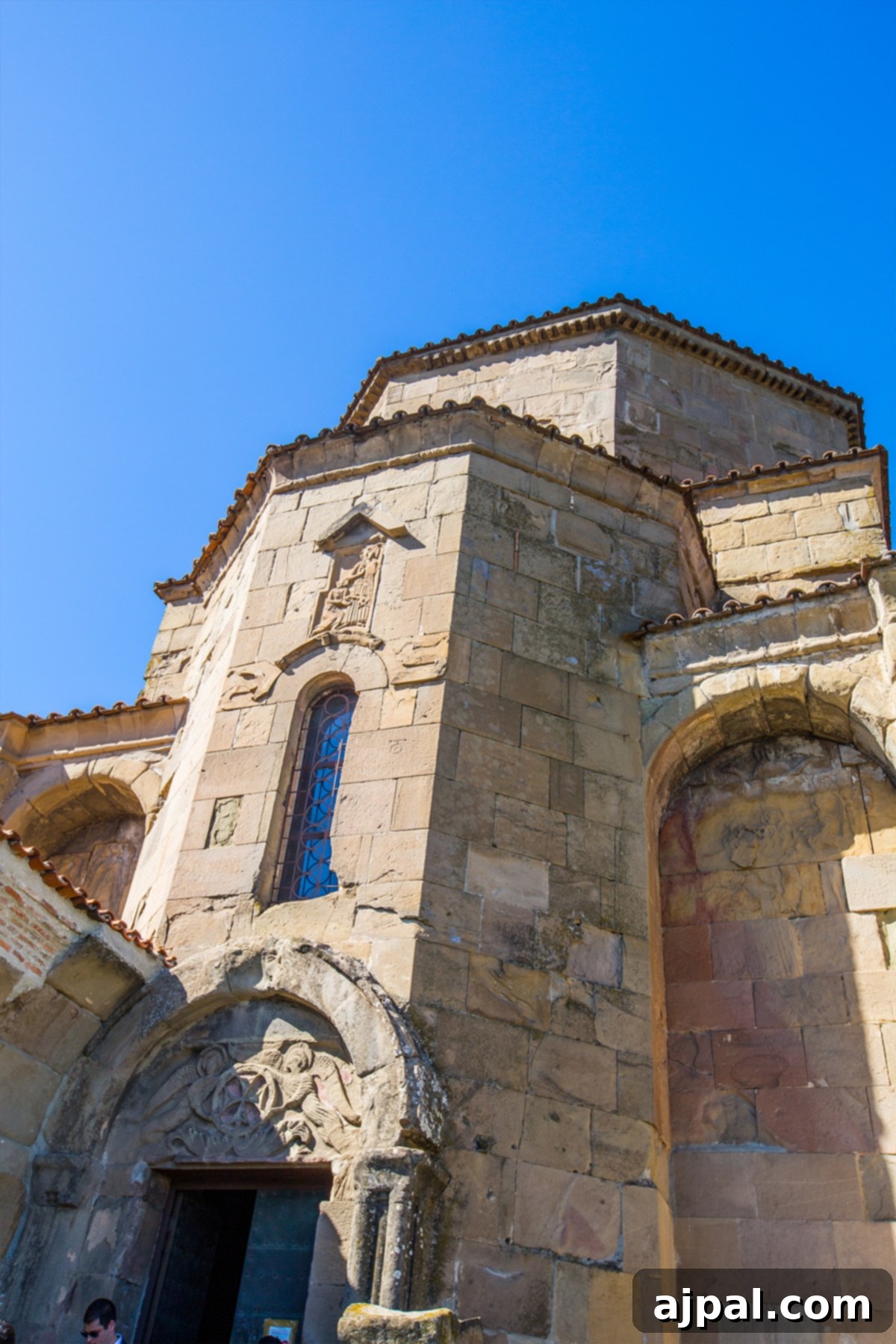
Upon arriving at Jvari, we took a moment to absorb the serene beauty of the grounds and steal a quick peek inside the ancient stone edifice. The monastery, despite its age, exudes a timeless sanctity. However, due to the sheer number of wedding parties seeking blessings, the interior was quite crowded, resembling a sardine can at times. Capturing photographs inside proved challenging amidst the throngs of people. For a more tranquil and intimate experience, a weekday visit is highly recommended, allowing for a deeper appreciation of Jvari’s historical and spiritual essence without the weekend rush.
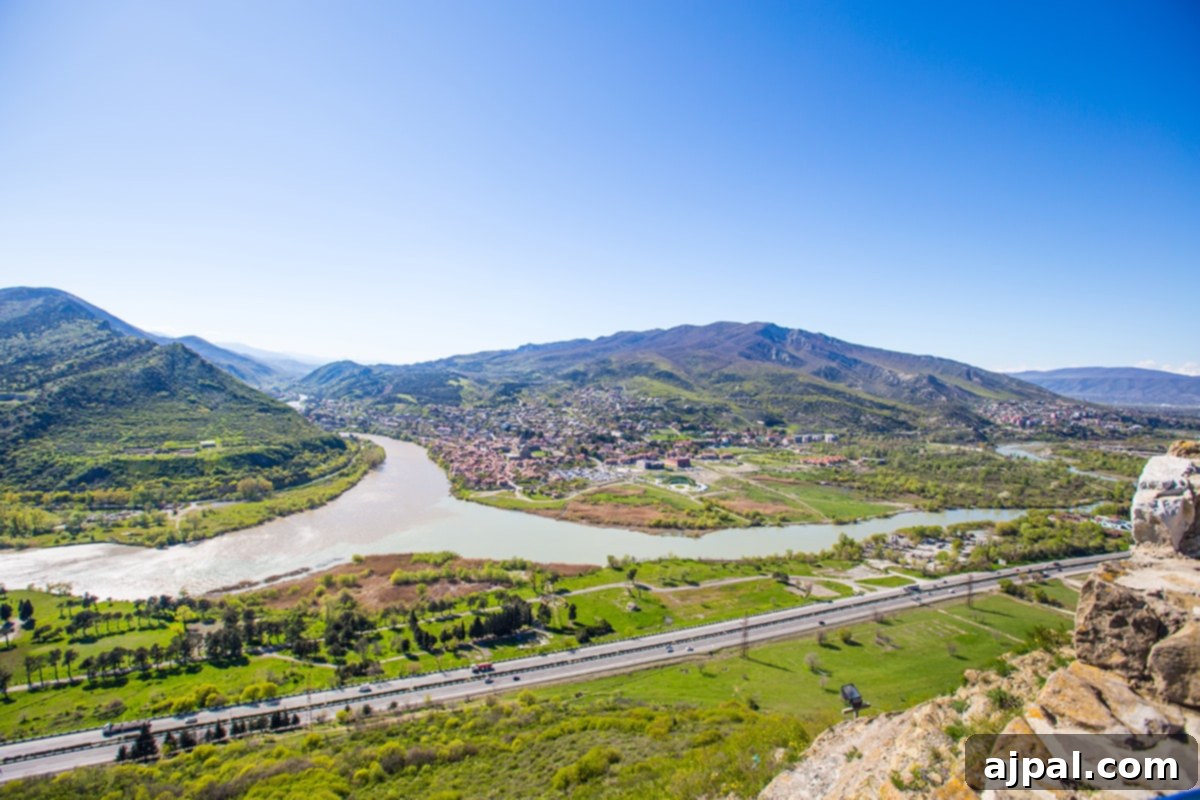
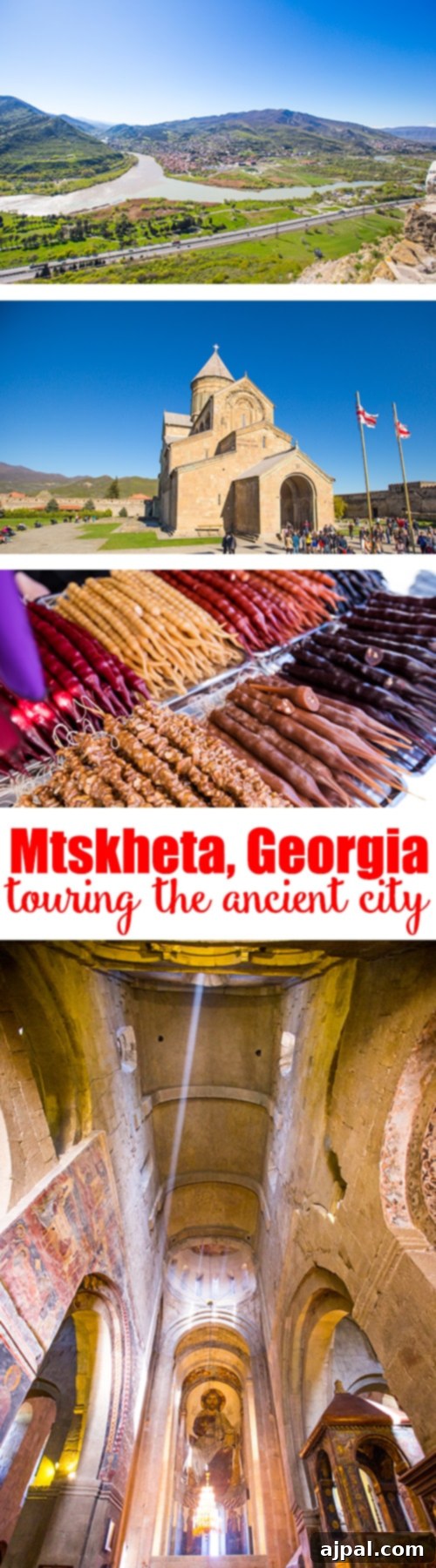
From its elevated position, Jvari offers an unparalleled panoramic vista of Mtskheta. Below, the ancient city unfolds, framed by the majestic confluence of the Mtkvari and Aragvi rivers, where their waters merge before continuing their journey towards Tbilisi. This picturesque meeting point is not just a geographical feature but also holds symbolic significance in Georgian folklore and history, representing the unity and strength of the nation.
Journey to the Heart of Mtskheta: Svetitskhoveli Cathedral
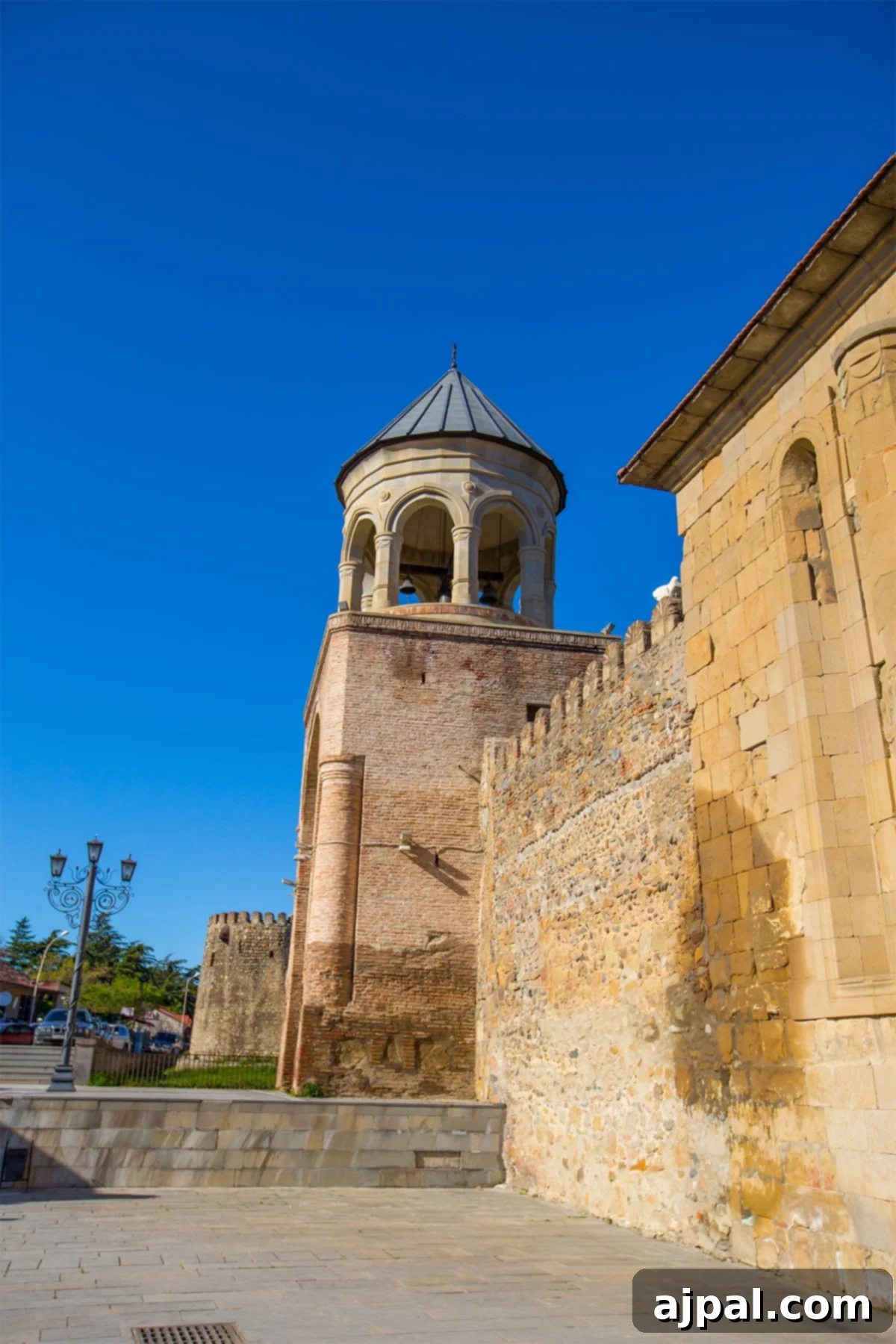
After soaking in the spiritual ambiance and breathtaking views from Jvari, our journey continued down into the heart of Mtskheta town. Our next destination was the magnificent Svetitskhoveli Cathedral, an architectural marvel dating back to the 11th century. This grand cathedral is not only an active church but also holds immense historical and spiritual importance, recognized as a UNESCO World Heritage site.
Approaching Svetitskhoveli, visitors are greeted by a bustling, walled maze of vendors surrounding the cathedral. This vibrant marketplace is a sensory delight, offering a diverse array of Georgian treasures. Stalls overflow with holy icons, intricately crafted trinkets, traditional Georgian coats, and an assortment of local delicacies. Here, you can find everything from sweet treats to powerful local spirits, along with several quaint restaurants serving traditional Georgian fare, making for a lively prelude to the spiritual sanctuary within.
Amidst the cheerful clamor of the market, we discovered a charming shop exclusively dedicated to churchkhela – Georgia’s beloved national candy. This delicious, semi-sweet, and chewy treat is made by dipping strings of walnuts or other nuts into thickened grape juice, then drying them until they form a candle-like shape. It’s a delightful and energy-boosting snack, deeply intertwined with Georgian winemaking traditions, and a must-try for any visitor.

Svetitskhoveli Cathedral: A Monument of Georgian Heritage
Stepping through the ancient walls of Svetitskhoveli Cathedral, one immediately feels a sense of awe and reverence. The grandeur of this 11th-century masterpiece is palpable, its intricate carvings and towering spires speaking volumes of Georgia’s rich history and profound devotion. As a sign of respect for this sacred site, visitors are kindly requested to adhere to a specific dress code. Women must cover their heads with scarves, and if wearing pants, it is customary to wrap a scarf or apron around them to form a skirt. This tradition is a beautiful reflection of Georgian cultural reverence, and for those unprepared, baskets of complimentary scarves and aprons are usually available at the entrance.
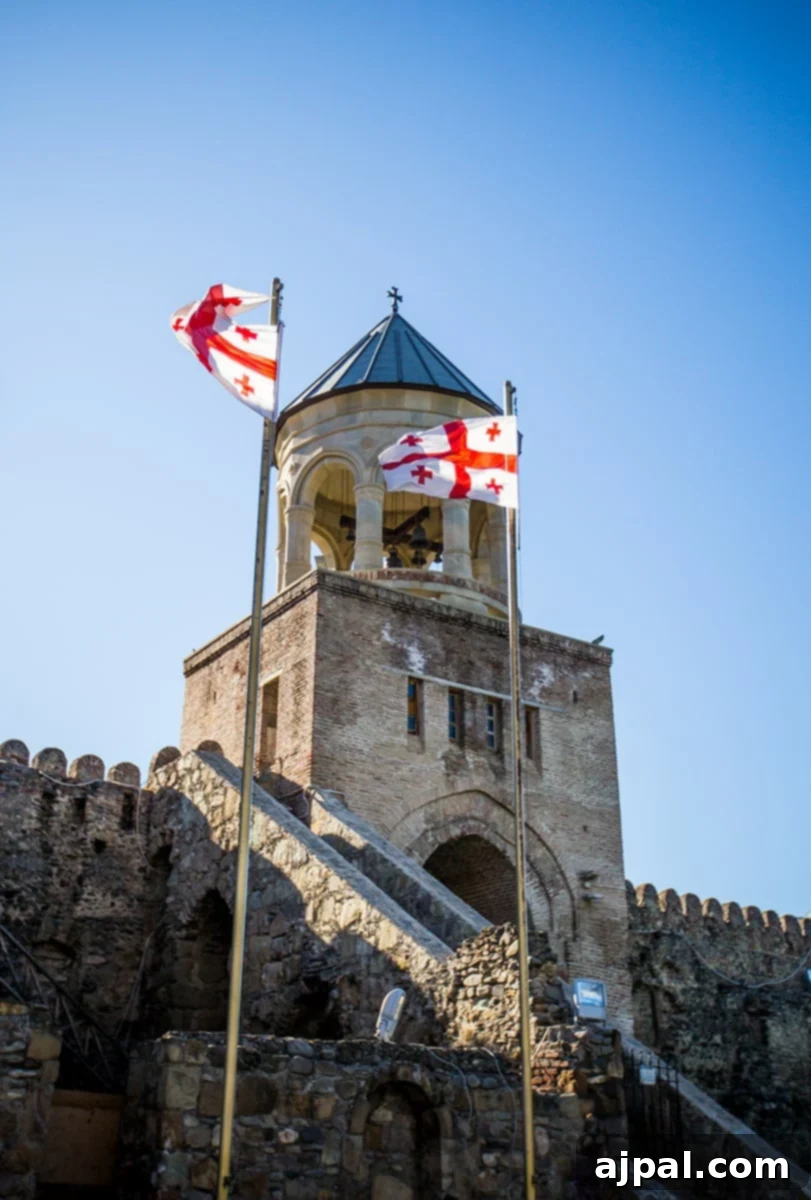
The extensive grounds surrounding the cathedral are a joy to explore, offering peaceful courtyards and ancient facades. However, the true spiritual heart of Mtskheta lies within the cathedral itself, home to some of Georgia’s most sacred relics. Inside Svetitskhoveli, a central pillar marks the spot believed to be the burial place of Jesus’s robe. According to legend, the robe was brought to Iberia in the 3rd century by a Jewish traveler from Jerusalem, coinciding with the era of Saint Nino’s mission to evangelize Georgia. This makes Svetitskhoveli an exceptionally significant pilgrimage site, attracting devotees and historians alike.
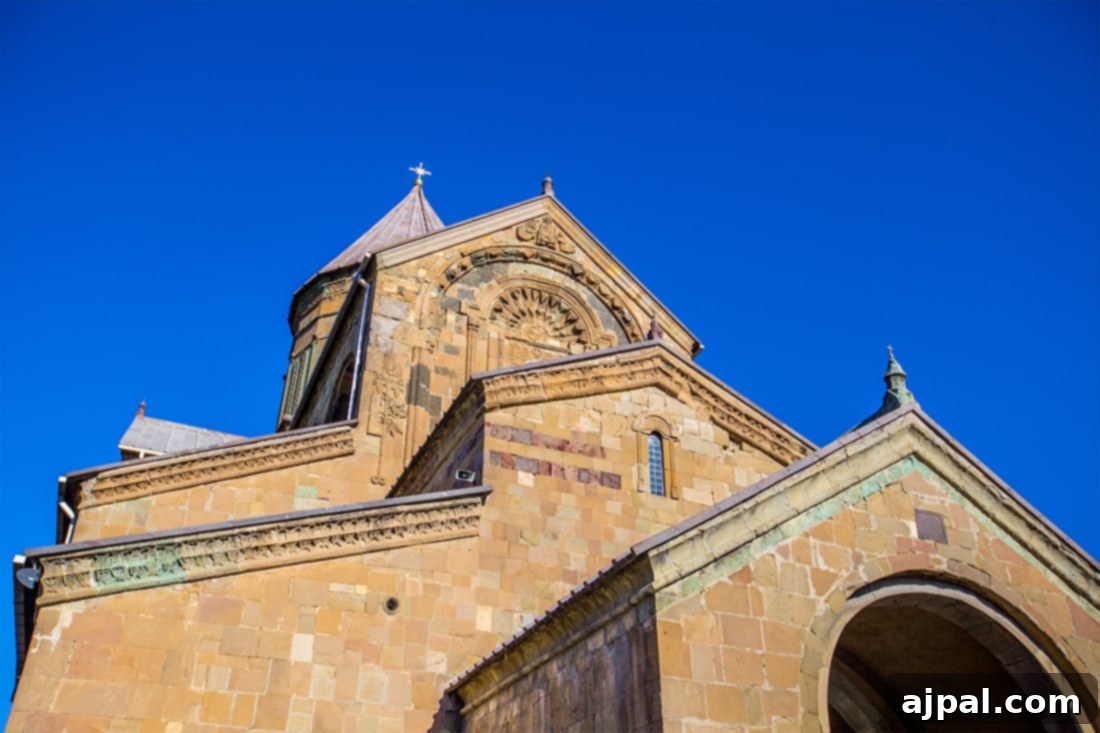
The cathedral’s architecture itself is a marvel, featuring unique stones imbued with copper, which reveal lovely green accents that shimmer under the light. This distinctive coloring adds to the cathedral’s ancient charm. Just a few days after our Mtskheta visit, we encountered another church near the Armenian border that was almost entirely green from this very stone, highlighting the beautiful and characteristic use of local materials in Georgian ecclesiastical architecture.
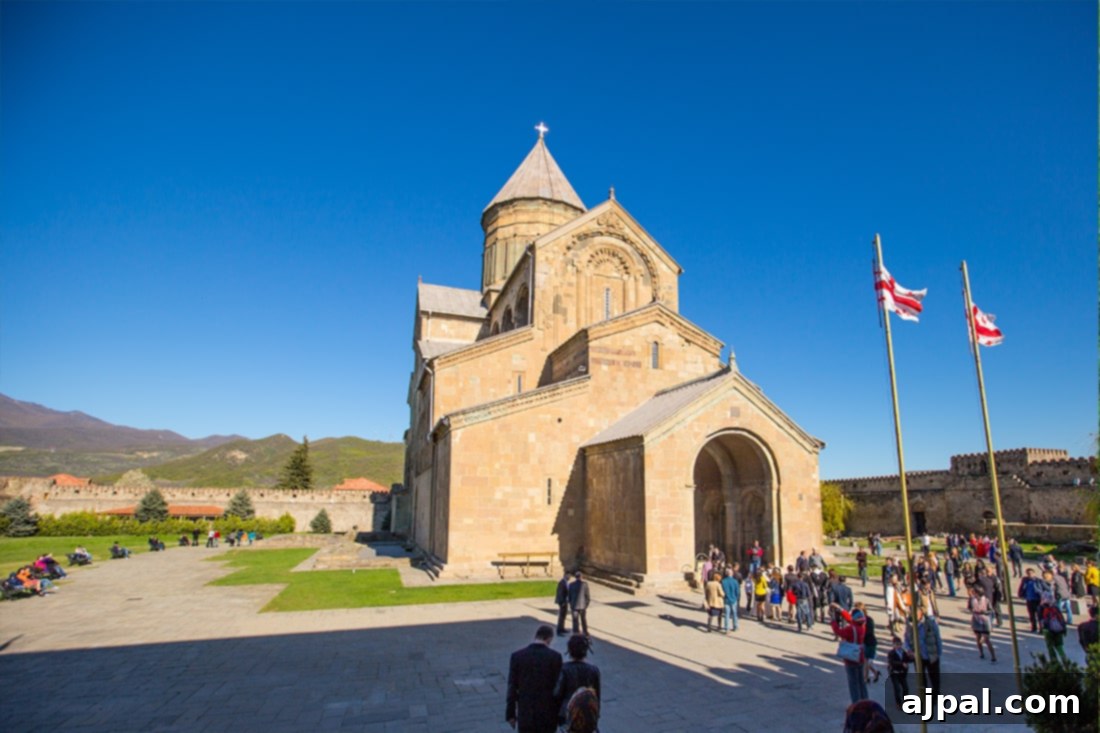
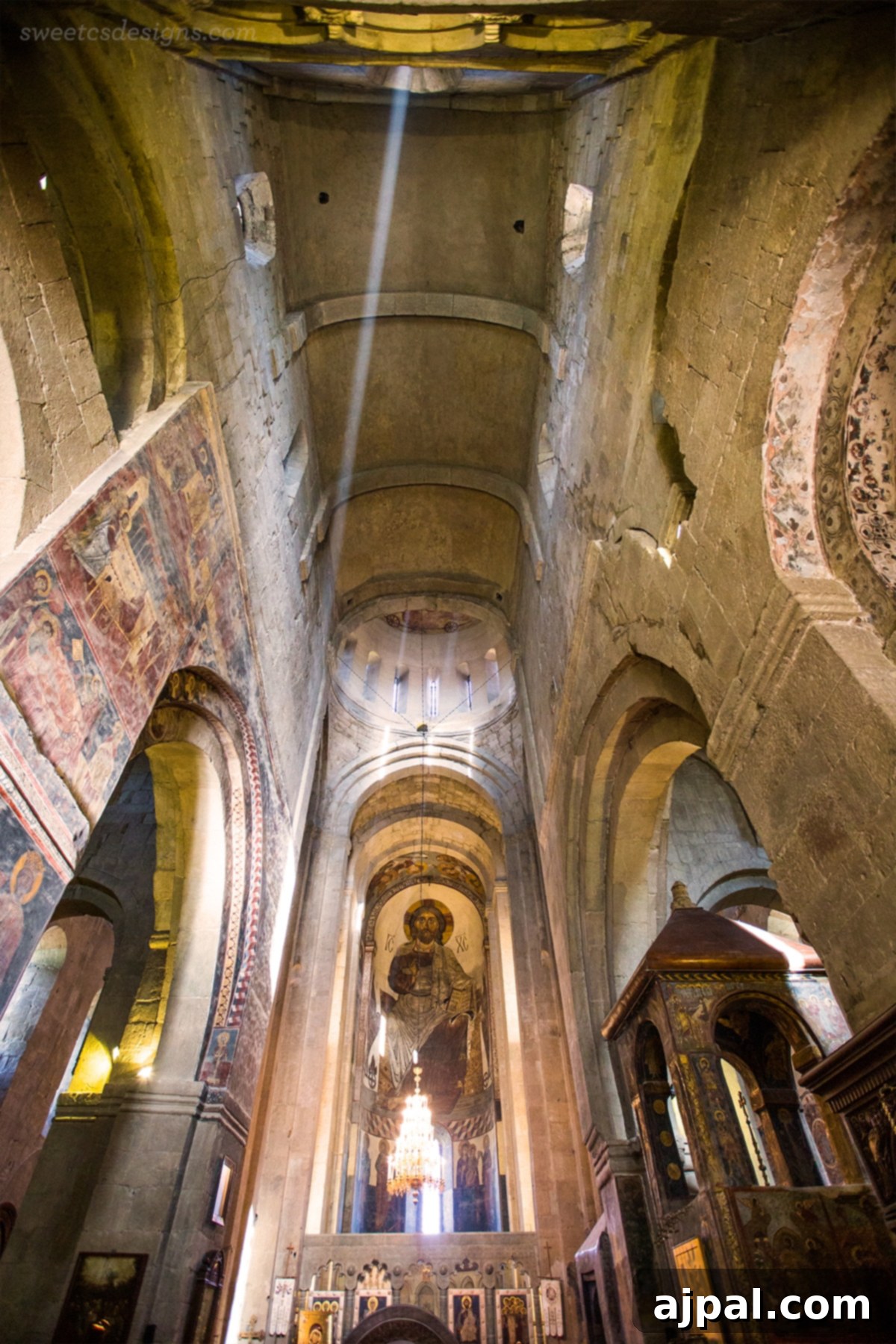
While photography inside the cathedral is generally not strictly prohibited, and many visitors freely capture images, discretion is advised. During my visit, after taking a particular shot, a monk gently requested that I refrain from further photography. I suspect the loud “beep beep” my camera made when focusing (a setting I have since silenced) and its distinct shutter sound might have been a bit disruptive in the solemn atmosphere. Nevertheless, even a quick glance reveals the breathtaking beauty of the ornate, centuries-old icons adorning the cathedral walls, offering a profound sense of the devotion and artistry that has graced this sacred space for generations.
Beyond the Main Attractions: Other Mtskheta Treasures
While Jvari Monastery and Svetitskhoveli Cathedral are undoubtedly Mtskheta’s crown jewels, the city offers other fascinating sites that further illuminate its ancient past. The **Armaztsikhe acropolis**, with remains dating back to 1000 B.C., provides archaeological evidence of Mtskheta’s incredibly long history as a significant settlement. Exploring these older ruins offers a different perspective on the city’s origins, predating its Christian monuments.
Beyond the main religious sites, a leisurely stroll through Mtskheta’s charming town center is highly recommended. The quaint streets, traditional houses, and riverside views offer a peaceful retreat and a chance to absorb the local atmosphere. You can find small craft shops, cafes, and simply enjoy the ambiance of a city steeped in history.
Plan Your Visit to Mtskheta: A Comprehensive Guide
Mtskheta is an essential destination for anyone visiting Georgia, offering a blend of ancient history, profound spirituality, and vibrant culture. To make the most of your trip, here’s a guide to what to see, what to eat, and useful tips for a memorable experience.
Must-See Attractions in Mtskheta:
- Jvari Monastery: Experience the stunning panoramic views and witness the confluence of the Mtkvari and Aragvi rivers. Delve into the 6th-century architecture and soak in the spiritual atmosphere.
- Svetitskhoveli Cathedral: Explore this magnificent 11th-century UNESCO World Heritage site, home to sacred relics and an enduring symbol of Georgian Orthodoxy. Don’t miss the bustling market surrounding its walls.
- Armaztsikhe Acropolis: For history enthusiasts, explore the ancient remains of this acropolis, offering insights into Mtskheta’s pre-Christian past, dating back to 1000 B.C.
Culinary Delights of Mtskheta:
- Churchkhela: A traditional Georgian “snickers” – a sweet, chewy candy made from walnuts (or other nuts) threaded onto a string and dipped in thickened grape juice, then dried. It’s an iconic snack deeply tied to Georgia’s wine culture.
- Chacha: Sample homemade flavored chacha from local vendors. This potent Georgian grape brandy, often referred to as “grape moonshine,” is a strong alcoholic spirit, best enjoyed responsibly.
- Local Restaurants: Indulge in traditional Georgian cuisine at one of the several restaurants within Mtskheta, especially around the Svetitskhoveli Cathedral area. Look for authentic Khachapuri, Khinkali, and local stews.
Essential Travel Tips for Mtskheta:
- Dress Code Compliance: When visiting monasteries and cathedrals, women must carry scarves to cover their heads and, if wearing pants, use another scarf or an apron to create a skirt, as a sign of respect. Baskets with communal scarves and aprons are often available at church entrances.
- Photography Guidelines: Always look for signs indicating where photography is permitted or restricted. Even where allowed, be mindful of the solemnity of sacred spaces and consider turning off camera sounds to avoid disturbance.
- Navigating Wedding Convoys: Especially on weekends, be aware of celebratory wedding convoys. These can be quite boisterous, with cars driving enthusiastically and sometimes erratically. Drive cautiously and enjoy the spectacle of Georgian joy.
- Best Time to Visit: For a less crowded experience, consider visiting Mtskheta on a weekday. Weekends, particularly Saturdays, attract numerous wedding parties and local tourists, creating a more bustling environment.
- Getting There from Tbilisi: Mtskheta is easily accessible from Tbilisi. You can take a marshrutka (mini-bus) from Didube Station, hire a private taxi, or join an organized tour, making it a perfect day trip destination.
Mtskheta truly is a gorgeous city, brimming with churches that chronicle centuries of faith and history, vibrant markets reflecting Georgian culture, and breathtaking natural beauty. Its enduring charm and profound spiritual significance make it an unforgettable destination for any traveler seeking to connect with the soul of Georgia.