
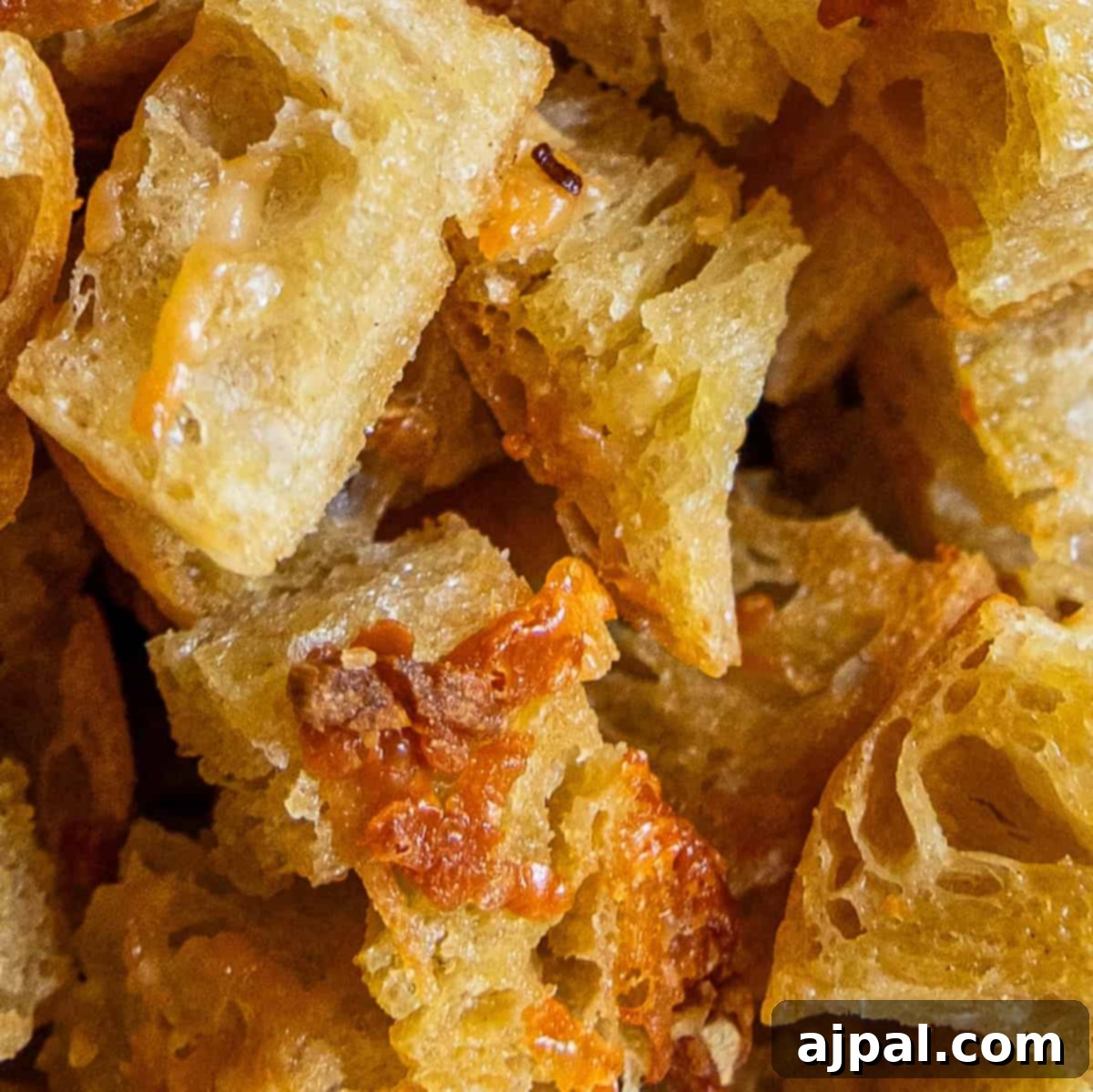
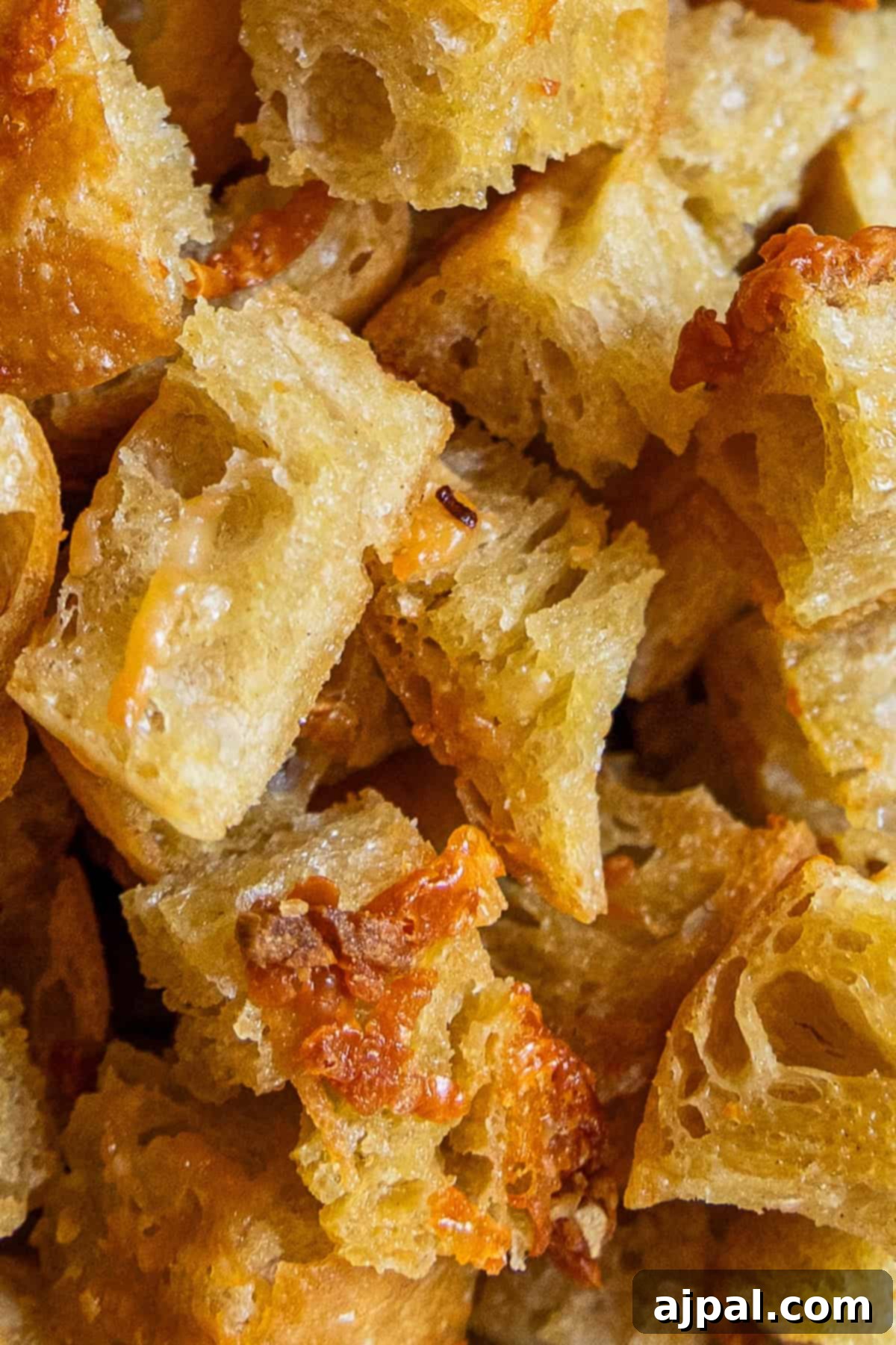
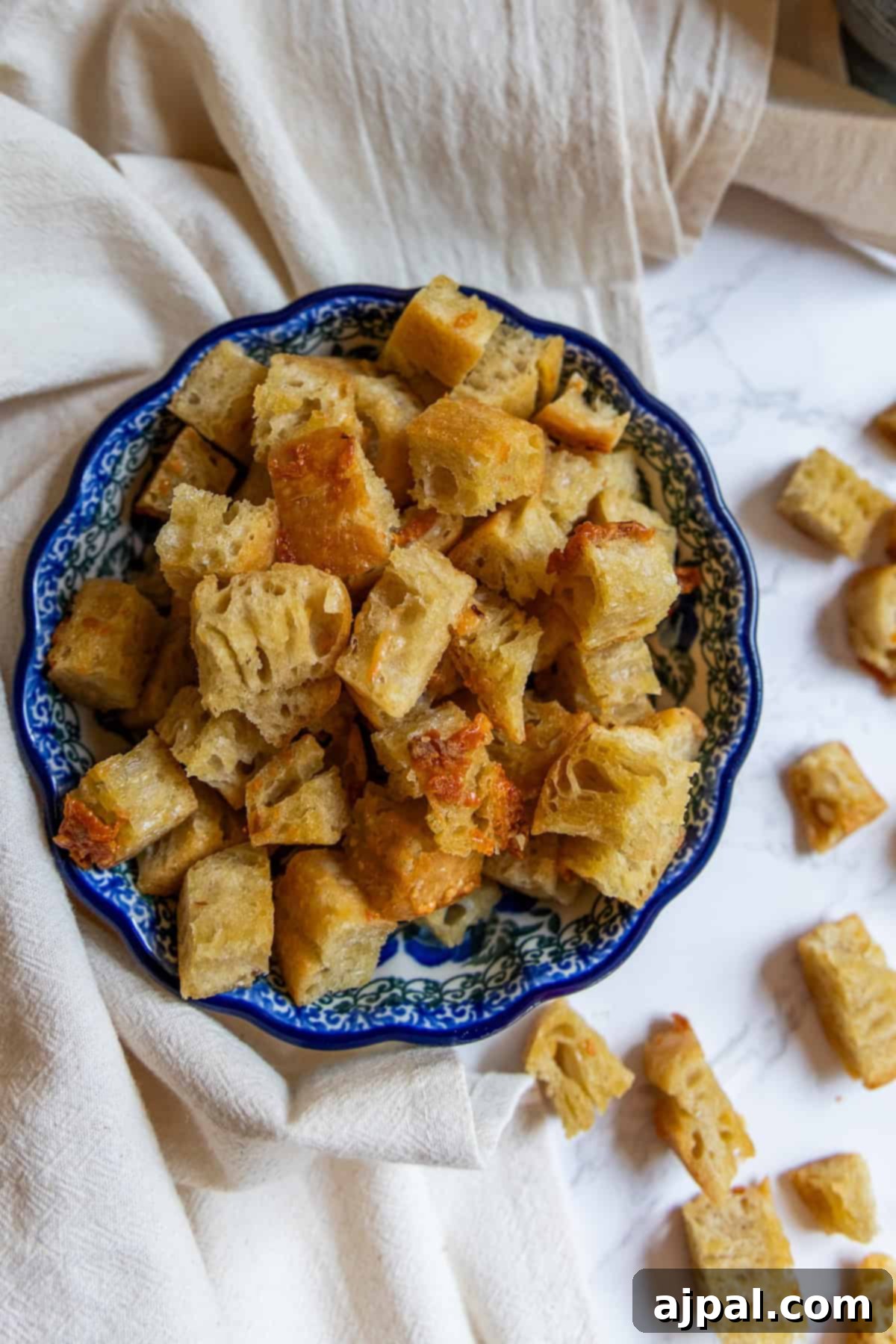
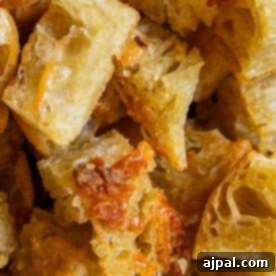
Say goodbye to bland, crumbly store-bought versions and hello to irresistibly delicious Homemade Croutons! This foolproof recipe is your secret weapon for transforming ordinary day-old bread into golden, crunchy bites bursting with savory garlic and rich Parmesan flavor. Incredibly quick and easy to make, these homemade croutons are not only superior in taste and texture but also a fantastic way to minimize food waste. They’re so utterly satisfying, in fact, that you might find yourself snacking on them straight from the baking sheet before they even make it to your salad bowl or soup. Prepare to elevate every meal with this simple yet spectacular addition that your entire family will adore and request again and again.
Here at Sweet C’s, we believe that cooking should be an empowering and enjoyable experience for everyone, regardless of their culinary background. As a home cook with no formal training myself, I know the value of understanding not just *what* to do, but *why* each step and ingredient is important. That’s why I pack all my recipes with detailed tips, tricks, and explanations. My goal is for even the most beginner home cook to feel completely confident and inspired in the kitchen. To help you navigate this comprehensive guide, we’ve provided a clear table of contents below, allowing you to easily jump to the sections most relevant to your needs.
Table of Contents
- How to Make Homemade Croutons
- Homemade Croutons Recipe Card
- Tips and Tricks for Perfect Parmesan Croutons
- Frequently Asked Questions (FAQs)
- Serve Croutons with These Delicious Salads
How to Make Homemade Croutons: A Simple Guide to Crispy Perfection
There’s a certain magic in transforming ordinary day-old bread into extraordinary homemade croutons. This process is not only incredibly satisfying but also yields results far superior to anything you can buy in a bag. When you make croutons from scratch, you gain complete control over the flavor, seasoning, and level of crispness, ensuring a fresh, robust taste that enhances any dish. Whether you’re aiming to add a delightful crunch to a vibrant green salad, provide textural contrast to a creamy soup, or simply enjoy a savory, addictive snack, these crispy bites are an absolute game-changer. Let’s delve into the essential ingredients and straightforward steps to craft your very own batch of the best garlic parmesan croutons.
Essential Ingredients for Your Crispy Croutons
Crafting the perfect batch of homemade croutons requires just a few basic ingredients. Each component plays a crucial role in achieving that coveted golden crispness, aromatic depth, and savory flavor that defines a truly great crouton. Here’s a closer look at what you’ll need to gather:
- French Baguette (1/2 loaf): This is your ideal canvas. A day-old French baguette offers the perfect firm yet airy crumb structure that crisps up beautifully in the oven without becoming excessively hard or dense. Its neutral flavor profile allows the seasonings to truly shine. While a baguette is highly recommended, other sturdy, slightly stale breads like sourdough, ciabatta, or even rustic artisan loaves will also yield fantastic results. The key is using bread that isn’t too fresh and soft.
- Extra Virgin Olive Oil (3 tbsp): The golden elixir. High-quality extra virgin olive oil is indispensable here. It not only facilitates even browning and helps create that desirable crispy texture but also infuses your croutons with a rich, fruity, and distinctly savory flavor. The type of olive oil you choose can significantly impact the final taste, so opt for one you genuinely enjoy.
- Minced Garlic (1 tsp): For an aromatic burst. Freshly minced garlic is paramount for delivering a pungent, fragrant, and vibrant garlic flavor that permeates the bread cubes as they bake. While garlic powder can be used in a pinch, fresh garlic offers a superior, more authentic taste that truly elevates these homemade croutons.
- Sea Salt (1/8 tsp): The flavor amplifier. A small amount of sea salt works wonders to enhance and balance all the other flavors. It provides a crucial saline counterpoint to the richness of the olive oil and the sharpness of the garlic. Remember that Parmesan cheese also contributes saltiness, so it’s always easier to add more later than to correct an overly salty batch.
- Parmesan Cheese (2 tbsp, finely grated, optional but highly recommended): The secret to savory crispness. Finely grated Parmesan cheese is a game-changer for these croutons. As it bakes, it melts slightly, adhering to the bread cubes and forming an irresistible, cheesy crust. This adds an extra layer of salty, nutty flavor and a beautiful golden hue. For the best melting and flavor, always opt for freshly grated Parmesan rather than the pre-shredded varieties, which often contain anti-caking agents that can hinder smooth melting.
Step-by-Step Homemade Crouton Method
Making your own crispy, flavorful croutons is a straightforward process that requires minimal effort and delivers maximum deliciousness. Follow these simple steps to create a batch of perfect garlic parmesan croutons that will impress everyone.
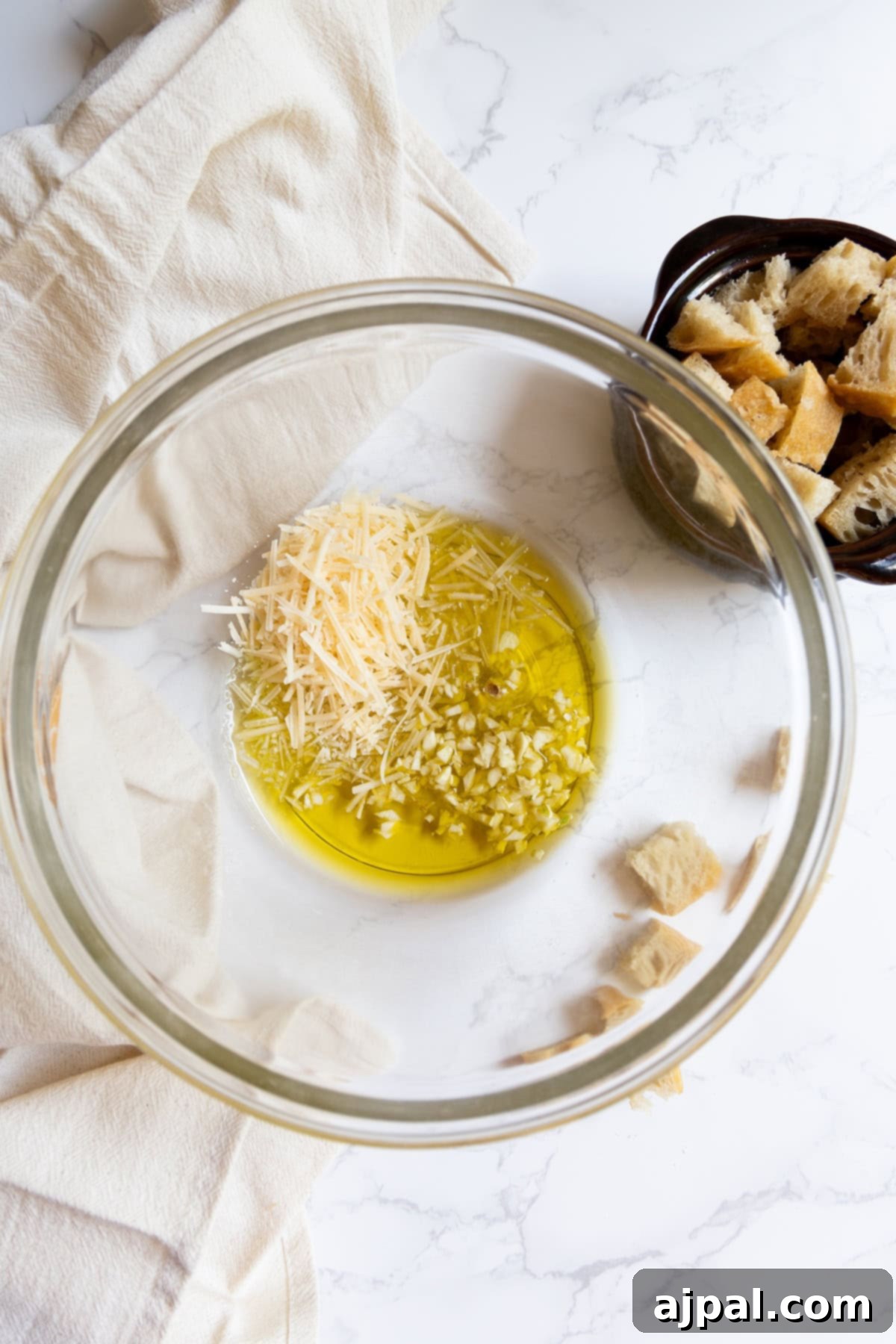
1. Prepare Your Ingredients and Preheat Oven
Begin by gathering all your ingredients and equipment. Take your day-old French baguette and cut it in half lengthwise, then slice it into even 1/4-inch to 1/2-inch cubes. Precision in size is beneficial here, as uniform pieces ensure all your croutons bake evenly. Preheat your oven to a steady 350°F (175°C).
In a medium-sized bowl, combine the extra virgin olive oil, freshly minced garlic, and sea salt. If you’ve decided to include Parmesan cheese, add it to this mixture now. Stir everything together thoroughly until you have a fragrant, well-blended seasoning oil. This is the aromatic base that will infuse your bread cubes with incredible flavor.
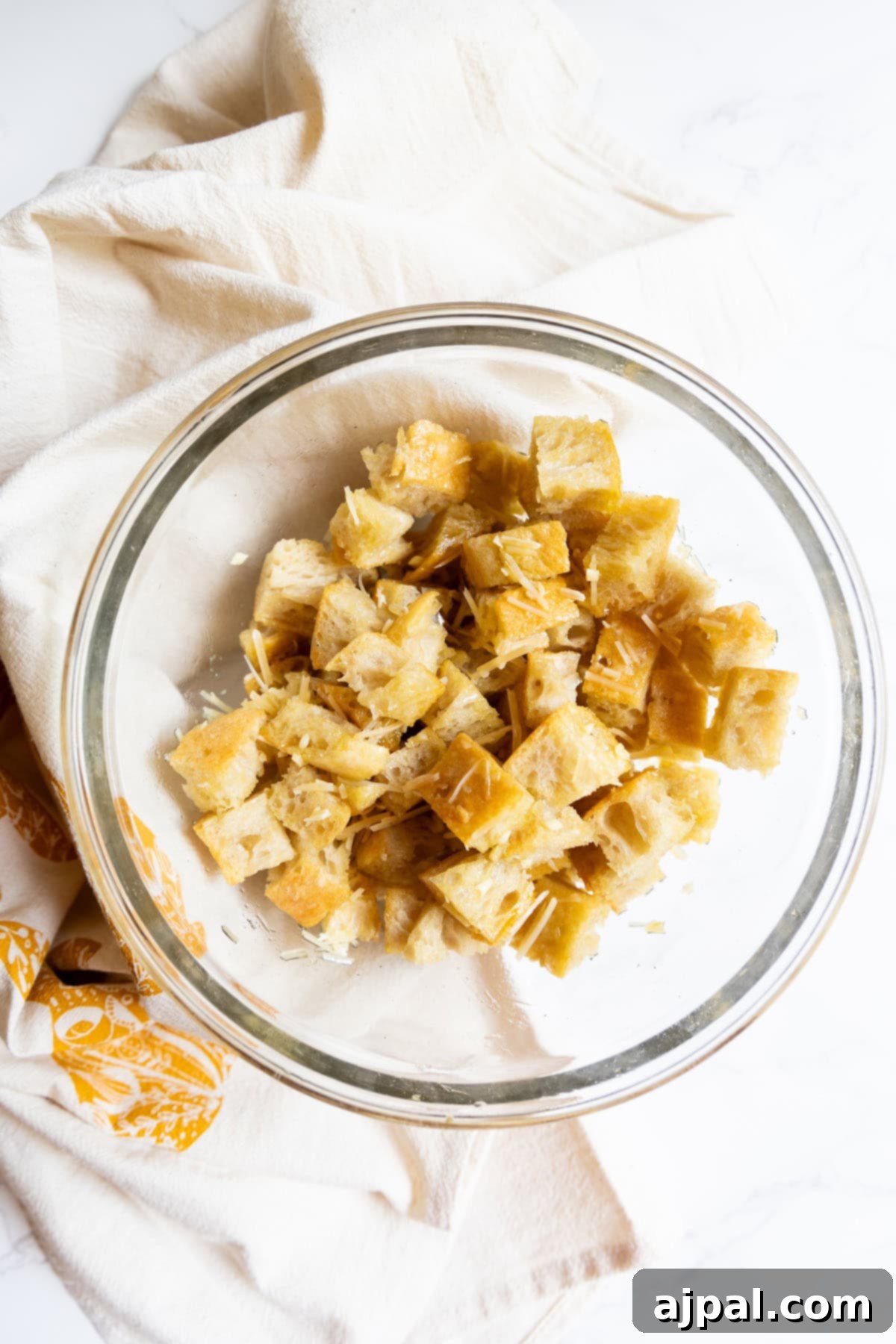
2. Mix and Coat the Bread Cubes
Add the prepared bread cubes to the bowl containing the olive oil mixture. Toss them thoroughly and gently, ensuring that each cube is lightly and evenly coated with the seasoned oil. The goal is a light coating, not saturation; overly drenched bread can result in greasy or soggy croutons. Using your hands to gently massage the mixture into the bread cubes is often the most effective way to guarantee an even distribution of flavor without crushing the bread.
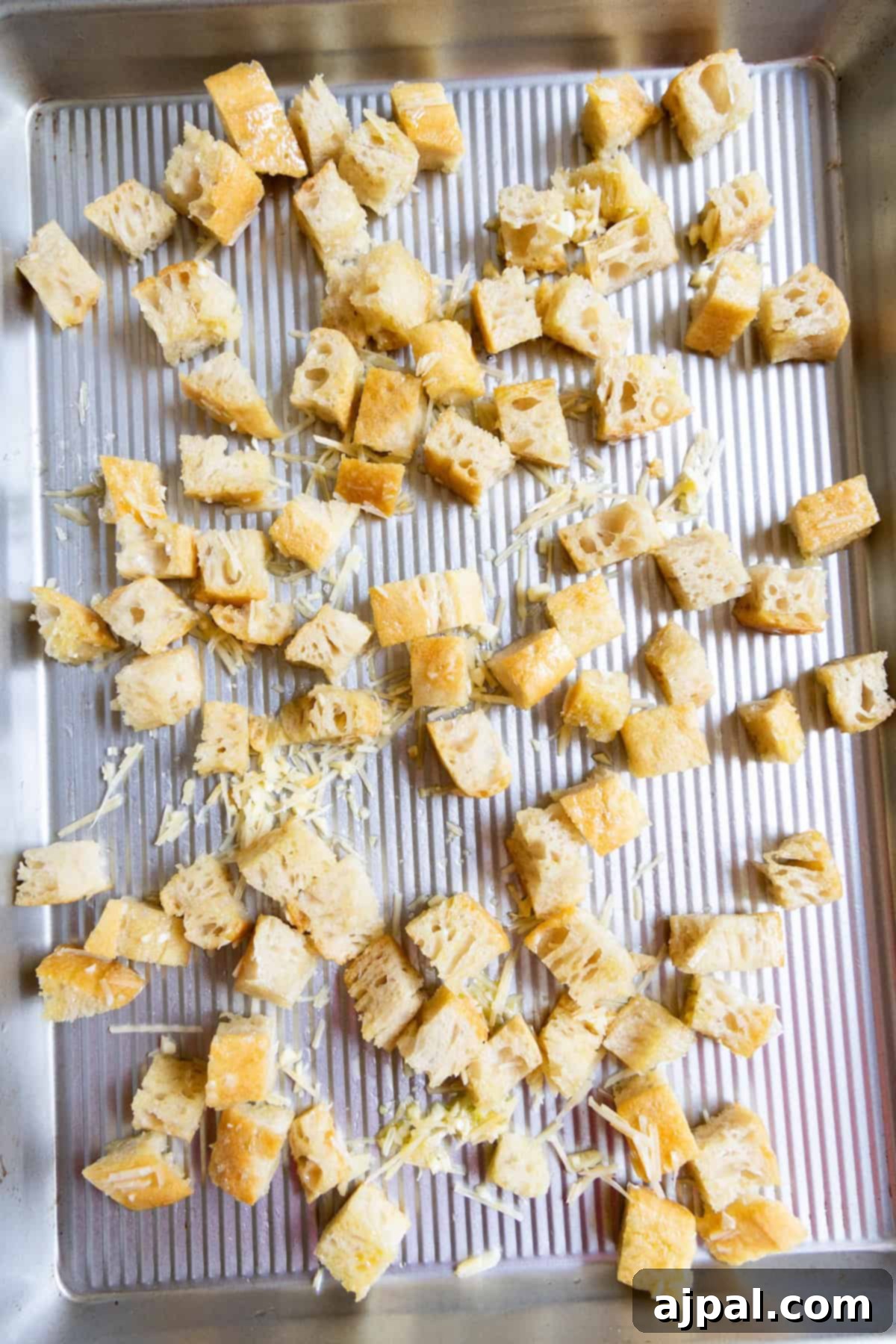
3. Bake to Golden Perfection
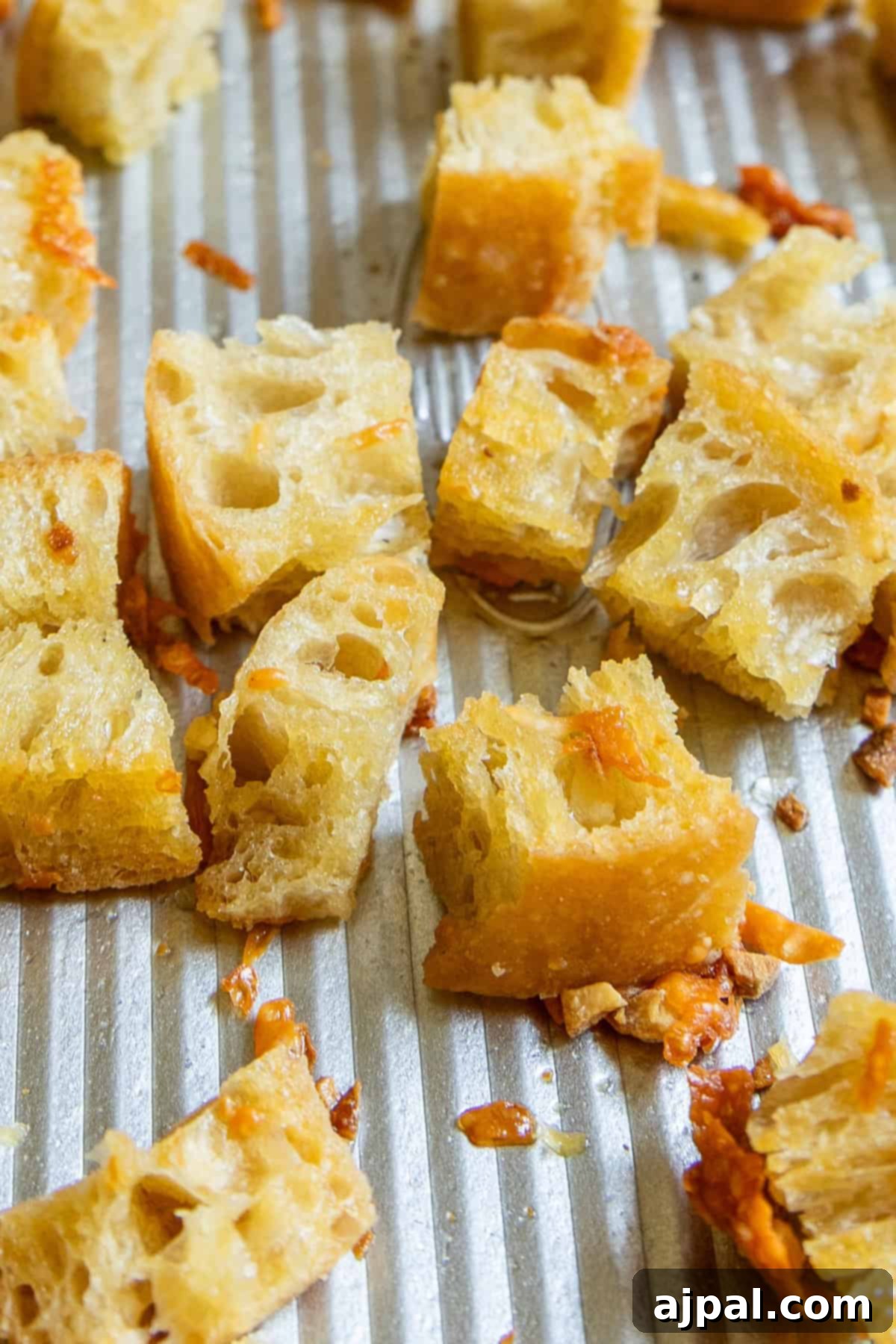
Once coated, spread the bread cubes in a single layer across a large baking sheet. It’s crucial to avoid overcrowding the pan; if the croutons are too close together, they will steam instead of crisping, leading to a softer texture. If necessary, use two baking sheets to give them ample space. Place the baking sheet in your preheated oven and bake for approximately 10-12 minutes. During this time, be sure to toss or flip the croutons once halfway through to ensure even browning and crispness on all sides. They should turn a beautiful light golden brown and feel firm to the touch.
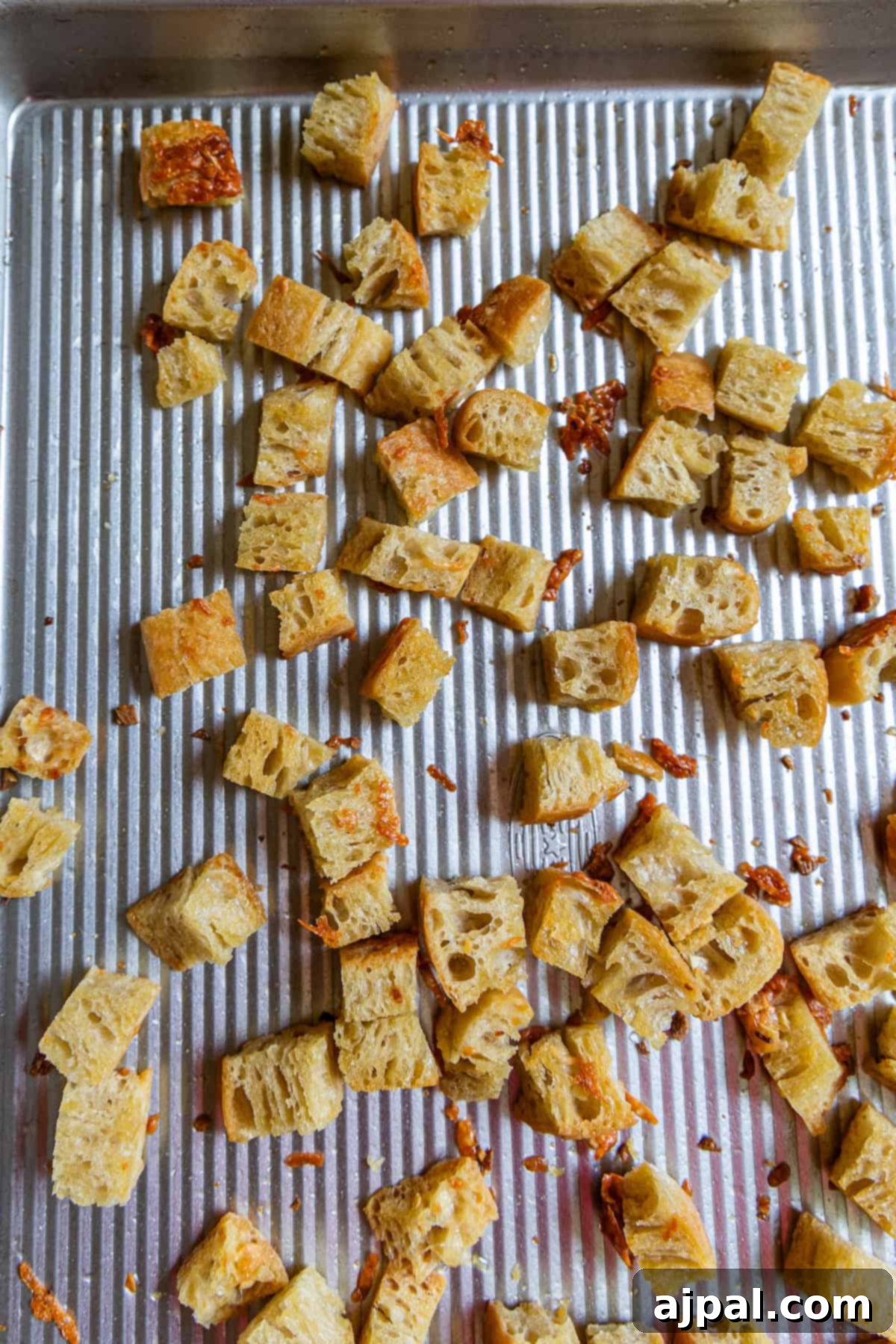
4. Cool and Store for Optimal Crispness
Once your croutons have reached that perfect golden-brown hue and crisp texture, remove the baking sheet from the oven. Allow the croutons to cool completely on the baking sheet, ideally placed on a wire rack. This cooling process is vital, as croutons continue to crisp up as they come to room temperature. Once fully cooled, they are ready to be enjoyed immediately! Sprinkle them generously over your favorite salads, soups, or even enjoy them as a standalone snack. For optimal freshness and to maintain their delightful crunch, transfer cooled croutons to an airtight container and store them at room temperature for 3-4 days.
If you loved this simple recipe for crafting the best homemade croutons, we would be incredibly grateful if you could share your experience! Please consider giving it a five-star rating by clicking the stars below and leaving a comment to tell us how it turned out. Your feedback not only helps us improve but also assists other home cooks in discovering delicious recipes. Additionally, we’d love for you to share your delicious creations on Instagram, Facebook, and Pinterest – tag @sweetcsdesigns and use #sweetcsdesigns so we can see your amazing work!
Share on Facebook
Share
Pin this now to find it later
Pin It
Follow on Instagram
Follow
Homemade Croutons
Katherine
6
servings
5
mins
12
mins
Email Recipe
Print Recipe
Equipment
-
USA Pan Bakeware Half Sheet Pan, Set of 2, Aluminized Steel
Ingredients
- ½ French baguette, sliced into 1/4″ cubes, use day old bread for a better crunch
- 3 tbsp extra virgin olive oil
- 1 tsp garlic, minced
- ⅛ tsp sea salt
- 2 tbsp parmesan cheese, grated (optional)
Instructions
-
Preheat oven to 350°F (175°C).
-
In a small bowl, combine the olive oil, minced garlic, sea salt, and grated Parmesan cheese (if using). Stir well to combine all ingredients.
-
Add the cubed bread pieces to the oil mixture and toss thoroughly. Ensure each bread cube is lightly and evenly coated with the seasoning.
-
Spread the coated bread cubes in a single layer on a baking sheet, making sure not to overcrowd the pan. Bake for 10-12 minutes, tossing once halfway through, until the croutons are light golden brown and crisp to your liking.
-
Remove from oven and let the croutons cool completely on the baking sheet. This allows them to crisp up further. Use immediately or store for up to 3-4 days in an airtight container at room temperature.
Nutrition
Carbohydrates: 10g
Protein: 3g
Fat: 8g
Saturated Fat: 1g
Polyunsaturated Fat: 1g
Monounsaturated Fat: 5g
Cholesterol: 1mg
Sodium: 204mg
Potassium: 29mg
Fiber: 0.4g
Sugar: 1g
Vitamin A: 13IU
Vitamin C: 0.2mg
Calcium: 43mg
Iron: 1mg
Nutrition information is automatically calculated, so should only be used as an approximation.
Additional Info
Salads, Snacks
American
Tried this recipe?
Mention @sweetcsdesigns or tag #sweetcsdesigns!
Tips and Tricks for Perfect Parmesan Croutons
Achieving the ideal homemade crouton is an art form, but one that is easily mastered with a few simple techniques and considerations. Follow these expert suggestions to ensure your garlic Parmesan croutons are consistently crispy, bursting with flavor, and truly irresistible every single time:
- Embrace Day-Old or Stale Bread: This is arguably the most crucial tip for perfect croutons. Bread that is a day or two old has lost a significant amount of its moisture content, making it firm and ideal for absorbing the olive oil and seasonings. This allows it to crisp up beautifully in the oven. Fresh, soft bread, by contrast, tends to become chewy or greasy rather than delightfully crunchy.
- Achieve Uniformity in Cubes: Precision matters when cutting your bread. Aim for evenly sized 1/4-inch to 1/2-inch cubes. This consistency is vital because it ensures that every single crouton toasts at the same rate, preventing some pieces from burning while others remain disappointingly soft. A sharp serrated knife is your best friend for clean, even cuts.
- Don’t Overcrowd the Baking Sheet: When spreading the seasoned bread cubes on your baking sheet, make sure they are arranged in a single layer with a little breathing room between each piece. Overcrowding the pan restricts air circulation, which can cause the croutons to steam instead of toasting, resulting in a less-than-crisp texture. If necessary, use two baking sheets to accommodate all the bread.
- Flip or Toss Halfway Through: For a perfectly golden and crisp texture on all sides, it’s essential to toss or flip your croutons about halfway through the baking time. This ensures that all surfaces are exposed to the direct heat of the oven, promoting even browning and crunchiness.
- Cool Completely for Maximum Crispness: Patience is a virtue when it comes to croutons! While they may seem crisp directly out of the oven, croutons actually continue to firm up and crisp as they cool. Resist the urge to dive in immediately (as tempting as it may be!). Allow them to cool completely on the baking sheet, ideally on a wire rack, before serving or storing.
- Proper Storage is Key to Longevity: To maintain their crunch and freshness, always store fully cooled homemade croutons in an airtight container at room temperature. They should remain wonderfully crisp for up to a week. Avoid placing them in the refrigerator, as the moisture and humidity can quickly make them soft and stale.
- Get Creative with Flavorings: While garlic and Parmesan create a classic and incredibly delicious combination, don’t hesitate to experiment with other seasonings! Consider adding a pinch of smoked paprika for a warm, earthy note, a sprinkle of dried herbs like oregano, basil, or Italian seasoning blend, a dash of onion powder, or even a hint of lemon zest for a bright, citrusy finish. Spice it up with a pinch of red pepper flakes for a subtle kick.
- Explore Different Bread Varieties: While a French baguette is a stellar choice, other breads can lend unique flavors and textures to your homemade croutons. Sourdough offers a tangy depth, ciabatta provides a rustic chew, and challah can add a slightly richer, sweeter note. Just remember to avoid very soft, fluffy sandwich bread, as it tends to become greasy and lacks the structural integrity for ideal croutons.
- Avoid Over-Soaking: Your bread cubes should be lightly and evenly coated in the olive oil mixture, not saturated or drenched. Too much oil can lead to greasy, heavy croutons that don’t crisp up properly. A good toss ensures an even, thin layer of seasoning on each piece.
- More Than Just a Salad Topping: Homemade croutons are incredibly versatile! Beyond topping salads, they are fantastic additions to creamy soups (think a rich tomato or broccoli cheddar soup), an unexpected crunchy element in vegetable gratins, a savory garnish for roasted vegetables, or simply a delicious and satisfying snack on their own.
Frequently Asked Questions (FAQs) About Homemade Croutons
For the best homemade croutons, day-old sourdough, French bread, ciabatta, or any rustic, crusty loaf works exceptionally well. These types of bread possess a firm internal structure that holds up beautifully during the baking process and develops that delightful crunch we all love. It’s best to steer clear of overly soft sandwich bread, as it tends to absorb too much oil and can become greasy or tough rather than achieving a desirable crisp texture.
While you *can* use fresh bread if that’s all you have on hand, slightly stale or day-old bread is highly recommended for optimal results. Stale bread has naturally lost some of its moisture, which allows it to absorb the olive oil and seasonings more effectively and crisp up much better in the oven. If you’re using fresh bread, you might need to extend the baking time slightly to thoroughly dry it out before it achieves the desired level of crispness.
Technically, you don’t *have* to, but using a fat like olive oil or melted butter is strongly encouraged and highly recommended. The fat not only adds incredible depth of flavor (especially with olive oil and garlic) but is also crucial for achieving that beautiful golden-brown color and the satisfying crisp texture that defines a good crouton. Without it, your bread cubes would primarily dry out and become hard and dry, rather than developing into delicious, crunchy, and flavorful croutons.
To ensure your homemade croutons remain wonderfully crisp, it’s vital to let them cool completely to room temperature before storing. Once cooled, store them in an airtight container. Avoid placing them in the refrigerator, as the excess moisture and humidity inside can quickly lead to sogginess. For serving, always add croutons to your salad or soup just before you plan to eat to maintain their maximum crunch.
Absolutely! Making skillet croutons is an excellent option, especially if you’re preparing a smaller batch or prefer not to turn on your oven. To do so, heat a tablespoon or two of olive oil or butter in a large skillet over medium heat. Add the seasoned bread cubes and cook, stirring frequently and consistently, for about 5-8 minutes or until they turn golden brown and delightfully crisp. Be sure to keep a close eye on them, as stovetop croutons can brown quickly.
When stored correctly in an airtight container at room temperature, homemade croutons will generally stay fresh and crunchy for 3-4 days. While they might technically last a bit longer, their peak quality and crispness are best enjoyed within this timeframe. For longer storage, you can indeed freeze them. Place cooled croutons in a single layer on a baking sheet to freeze, then transfer to a freezer-safe bag or container for up to a month. To serve, re-crisp them in a warm oven for a few minutes before use.
Yes, absolutely! Making these croutons gluten-free is very straightforward. Simply substitute the traditional French baguette with your favorite sturdy, day-old gluten-free bread. Ensure it’s a loaf that has a good structure and isn’t too soft for the best results. The rest of the recipe’s ingredients and method for seasoning and baking remain exactly the same, allowing everyone to enjoy delicious homemade garlic parmesan croutons.
Serve Croutons with These Delicious Salads
Homemade croutons are the perfect crunchy complement to almost any salad, adding texture, flavor, and an irresistible gourmet touch. Here are some of our favorite vibrant and fresh salad recipes that are just waiting for a generous sprinkle of your freshly made garlic parmesan croutons:
Crunchy Lemon Parmesan Salad
Salmon Caesar Salad
Chopped Italian Salad
Strawberry Crunch Salad