
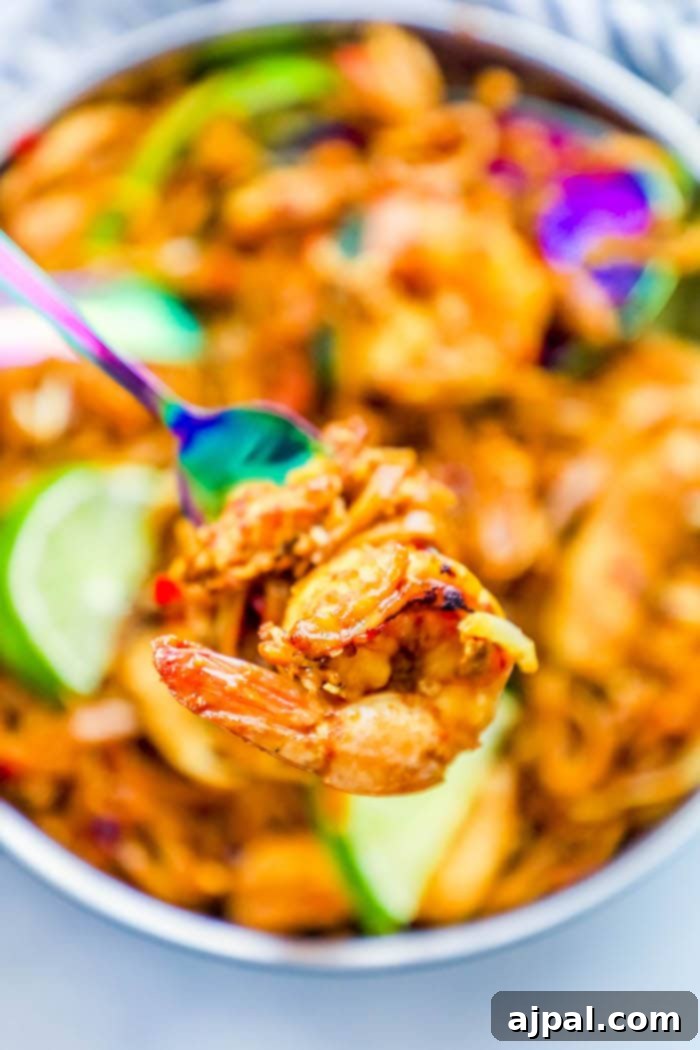
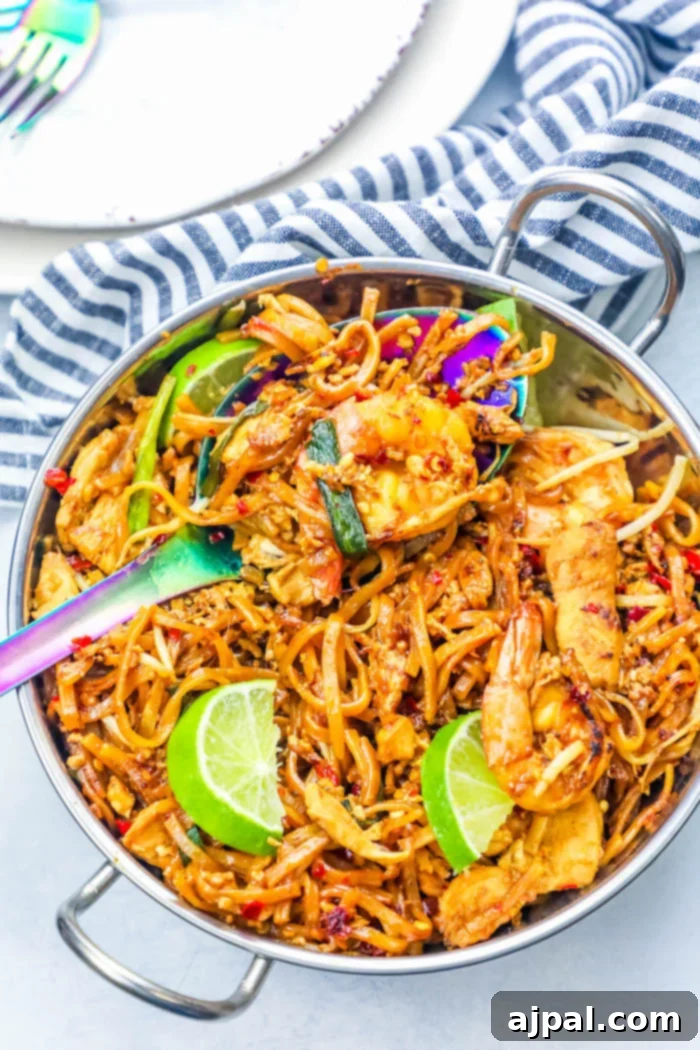
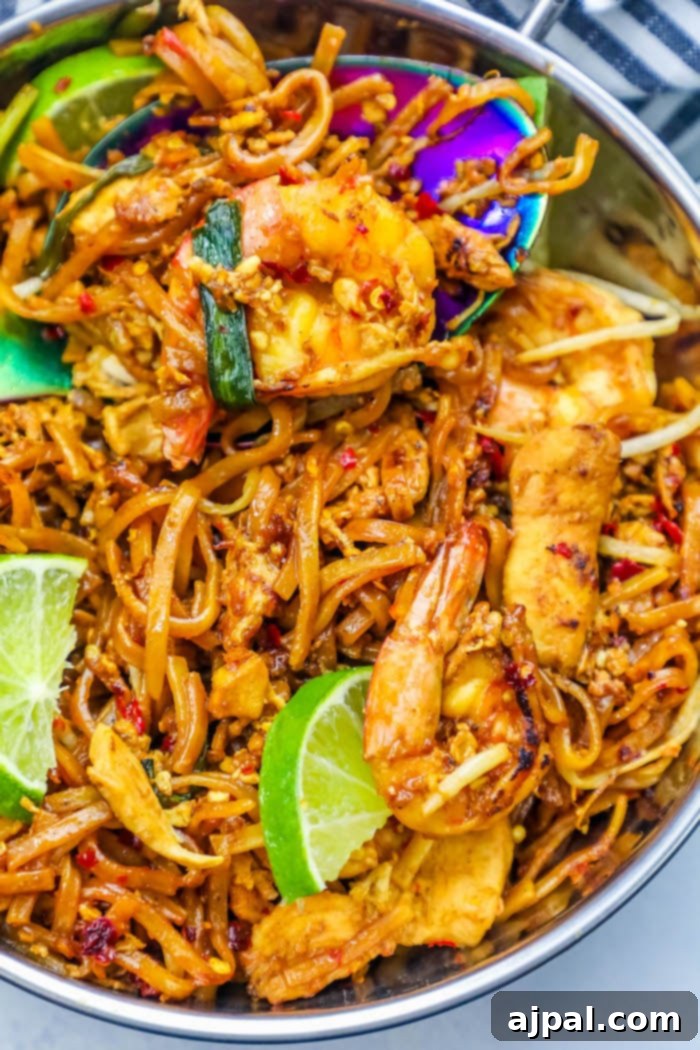
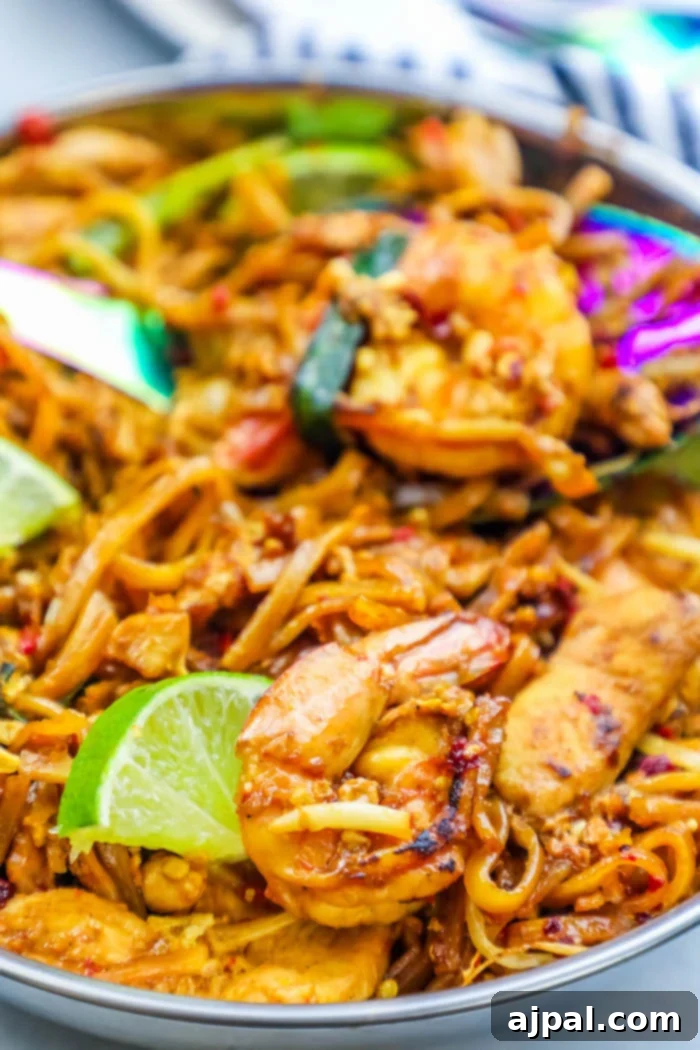
Welcome to the ultimate guide for crafting the most incredible **Chicken and Shrimp Pad Thai** right in your own kitchen! Forget about expensive takeout or complicated restaurant recipes. This easy-to-follow method delivers an authentic, bursting-with-flavor Pad Thai that rivals your favorite Thai eatery, all within a quick 20-minute cooking time. Whether you’re a seasoned home chef or a beginner looking for an impressive yet simple meal, this recipe for **Homemade Chicken and Shrimp Pad Thai Noodles** is designed for success. We’ll also explore fantastic options for those following a **Keto Pad Thai** or **Low Carb Pad Thai** diet, ensuring everyone can enjoy this classic Thai noodle dish.
Pad Thai holds a special place in the hearts of food lovers worldwide. Its irresistible blend of sweet, sour, salty, and spicy notes, coupled with the satisfying texture of rice noodles, succulent shrimp, and tender chicken, makes it a truly iconic dish. For many, it’s the go-to comfort food from their local Thai restaurant. The convenience of simply ordering in is undeniable, but imagine being able to whip up that same deliciousness, fresh and hot, whenever the craving strikes – and even better, tailored exactly to your taste preferences!
Why Make Homemade Chicken and Shrimp Pad Thai?
There’s a unique satisfaction that comes from creating a beloved dish like Pad Thai from scratch. Beyond the sheer joy of cooking, preparing this **easy Pad Thai recipe** at home offers numerous advantages:
- Unmatched Freshness: You control the quality and freshness of every ingredient, from the crisp bean sprouts to the plump shrimp and tender chicken.
- Customization is Key: Love extra spice? Crave more peanuts? Want to load up on vegetables? Making it yourself means you can adjust every element to suit your personal palate.
- Speed and Efficiency: Despite its complex flavor, this Pad Thai comes together remarkably fast. With minimal prep, you can have a gourmet-level meal on the table faster than most delivery services.
- Cost-Effective: Enjoying restaurant-quality Thai food regularly can add up. Cooking at home is significantly more budget-friendly, allowing you to indulge more often.
- Dietary Control: For those with specific dietary needs, like gluten-free, low-carb, or keto, homemade Pad Thai ensures you know exactly what goes into your meal.
Crafting the Perfect Keto & Low Carb Pad Thai
For those mindful of carbohydrate intake, transitioning to a low-carb or keto diet can be incredibly beneficial for energy levels and overall well-being. While traditional Pad Thai features rice noodles, a simple and delicious transformation allows this favorite to fit perfectly into a ketogenic lifestyle. The key lies in intelligent noodle and sauce substitutions that maintain the dish’s essential flavors and textures without the carb load.
Low Carb Noodle Swaps for Keto Pad Thai:
- Zucchini Noodles: A fantastic, light, and refreshing alternative.
- **Preparation:** Simply spiralize 2-3 medium zucchini (approximately 1 lb) into thin “zoodles.” Many grocery stores now offer pre-spiralized zucchini for ultimate convenience.
- **Cooking:** Add zucchini noodles to the wok during the last few minutes of cooking, allowing them to soften slightly but still retain a pleasant bite. Avoid overcooking to prevent them from becoming watery.
- Spaghetti Squash Noodles: Offers a slightly firmer texture and a mild, earthy flavor.
- **Preparation:** Halve a spaghetti squash, scoop out the seeds, and bake cut-side down at 400°F (200°C) for 30-45 minutes until tender. Use a fork to scrape out the spaghetti-like strands.
- **Cooking:** Integrate spaghetti squash into the recipe when you would typically add rice noodles. It holds up well to stir-frying.
- Beet Noodles: A vibrant, earthy option that adds a beautiful pop of color.
- **Preparation:** Often available pre-spiralized in health food stores or larger supermarkets. If making at home, use a spiralizer on raw beets.
- **Cooking:** Add beet noodles alongside the sauce, cooking until they are just tender. Their natural sweetness can complement the Pad Thai flavors beautifully.
- Shirataki Noodles: Also known as konjac noodles, these are virtually carb-free and have a neutral flavor.
- **Preparation:** Rinse thoroughly under cold water, then boil for a few minutes or dry-fry in a pan to remove excess moisture and improve texture.
- **Cooking:** Add them at the same stage as rice noodles. Their texture is unique but readily absorbs the Pad Thai sauce.
Keto-Friendly Sauce Adjustments:
- Sugar-Free Ketchup: Traditional ketchup often contains a significant amount of sugar. Opt for a low-sugar or keto-friendly ketchup to keep your carb count down without sacrificing that tangy depth.
- Sweetener Alternatives: If your Pad Thai sauce recipe calls for added sugar, substitute with erythritol, stevia, monk fruit, or another keto-approved sweetener to taste.
- Tamarind Paste: While the base recipe uses ketchup for tang, authentic Pad Thai often features tamarind paste. Ensure any tamarind paste used is unsweetened or adjusted for carb content if you’re strictly keto.
Embracing these swaps allows you to enjoy the rich, satisfying flavors of Pad Thai while staying true to your low-carb or keto dietary goals. The vibrant medley of proteins and vegetables paired with these innovative noodle alternatives makes for a truly delightful and guilt-free meal.
Mastering Your Pad Thai: Essential Cooking Tips
Achieving restaurant-quality Pad Thai at home is simpler than you think, especially when you understand a few core principles of stir-frying. These tips will help you create a dish with perfectly cooked ingredients and that signature balance of flavors and textures.
- Embrace High Heat: This is crucial for stir-frying. Cooking on high heat ensures your ingredients sear quickly, developing a beautiful caramelization and preventing them from steaming or boiling. A lower heat will result in soggy noodles and less flavorful proteins. Don’t be shy with the flame!
- Use a Generously Sized Pan or Wok: Overcrowding is the enemy of good stir-fry. When too many ingredients are crammed into a small pan, the temperature drops rapidly, leading to steaming instead of searing. A large wok or a heavy-bottomed skillet with ample surface area allows ingredients to cook evenly and quickly, ensuring tender chicken, perfectly cooked shrimp, and distinct noodle texture.
- Don’t Skimp on the Oil: A sufficient amount of hot oil is key to preventing sticking and achieving that characteristic sheen and flavor in Pad Thai. It also aids in quick cooking and helps the sauce coat everything beautifully. Peanut oil is traditional and recommended for its high smoke point and subtle nutty flavor, but other high-smoke-point oils like canola or vegetable oil work well too.
- Stir Continuously and Vigorously: Given the high heat, constant stirring is essential to prevent burning and ensure all ingredients cook uniformly. This technique also helps distribute the sauce evenly, coating every strand of noodle and piece of protein. Use a long-handled spatula or tongs to make this easier and safer.
- Mise en Place (Preparation is Paramount): Before you even turn on the stove, have all your ingredients prepped and ready. This means chopping vegetables, dicing chicken, peeling shrimp, mixing the sauce, and cooking the noodles. Stir-frying is a rapid process, and you won’t have time to chop or measure once you start cooking. This organized approach ensures a smooth and stress-free cooking experience.
- Perfect Your Noodles: For rice noodles, cooking them al dente (slightly firm) before adding to the wok is crucial. They will continue to cook in the sauce. Rinsing them after draining removes excess starch, preventing them from clumping together and ensuring they are “slippery” as described.
- Balance the Sauce: Pad Thai is known for its harmonious blend of sweet, sour, salty, and spicy. Taste your sauce mixture before adding it to the wok and adjust as needed. Fresh lime juice at the end brightens all the flavors.
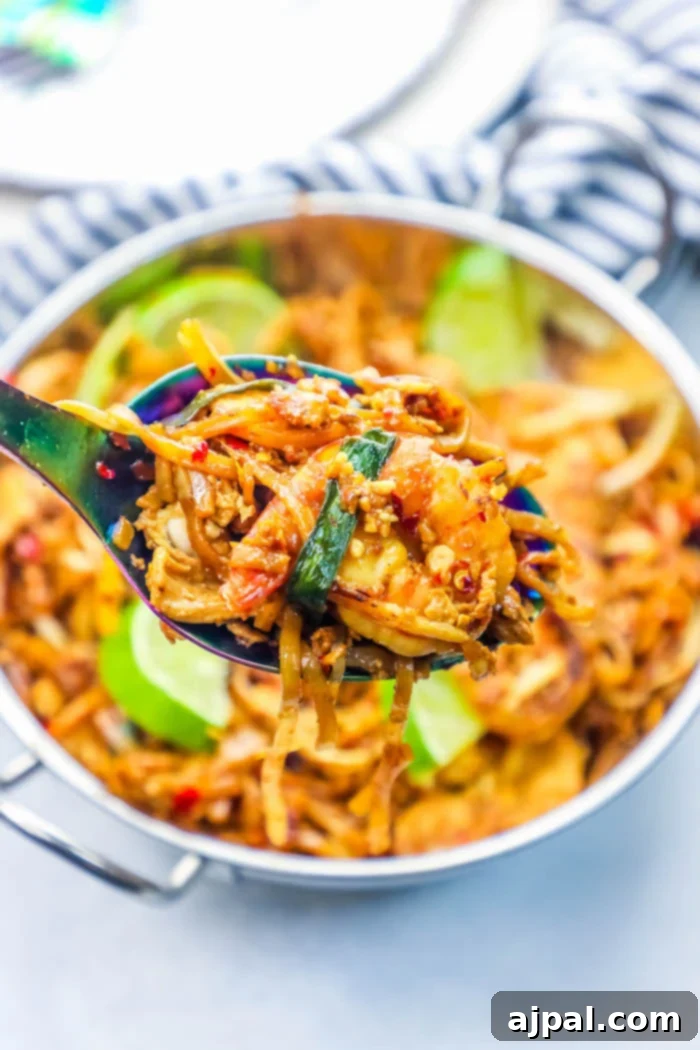
Essential Equipment and Ingredients for Authentic Flavor
You don’t need a professional kitchen to make amazing Pad Thai. Many of the tools and ingredients are likely already in your pantry or easily accessible. However, having the right ones can elevate your dish significantly.
Key Equipment:
- Large Pan or Wok: While a traditional carbon steel wok is ideal for stir-frying due to its heat distribution and non-stick properties when seasoned, a large, heavy-bottomed skillet or a spacious non-stick pan will also work effectively. The key is size to avoid overcrowding.
- Long-Handled Tongs or Spatula: Essential for efficiently stirring and tossing ingredients at high heat without burning your hands.
Flavor-Defining Ingredients:
- Peanut Oil: With its high smoke point and mild, nutty flavor, peanut oil is perfect for stir-frying.
- Fish Sauce: This is the cornerstone of Thai cuisine, providing essential umami and saltiness. Don’t skip it; a good quality fish sauce makes all the difference.
- Chili Garlic Sauce: Adds a fantastic blend of heat and garlic flavor. You can adjust the amount to control the spice level.
- Ketchup: While not traditionally Thai, ketchup in this recipe adds a touch of sweetness and tomato tang that provides a unique depth, especially in quicker versions of Pad Thai. For a more authentic (and often more sour) flavor, tamarind paste can be used.
- Worcestershire Sauce: Provides another layer of umami and a subtle savory depth to the sauce.
Having these key components ready ensures your Pad Thai will have that distinctive, complex flavor profile everyone loves.
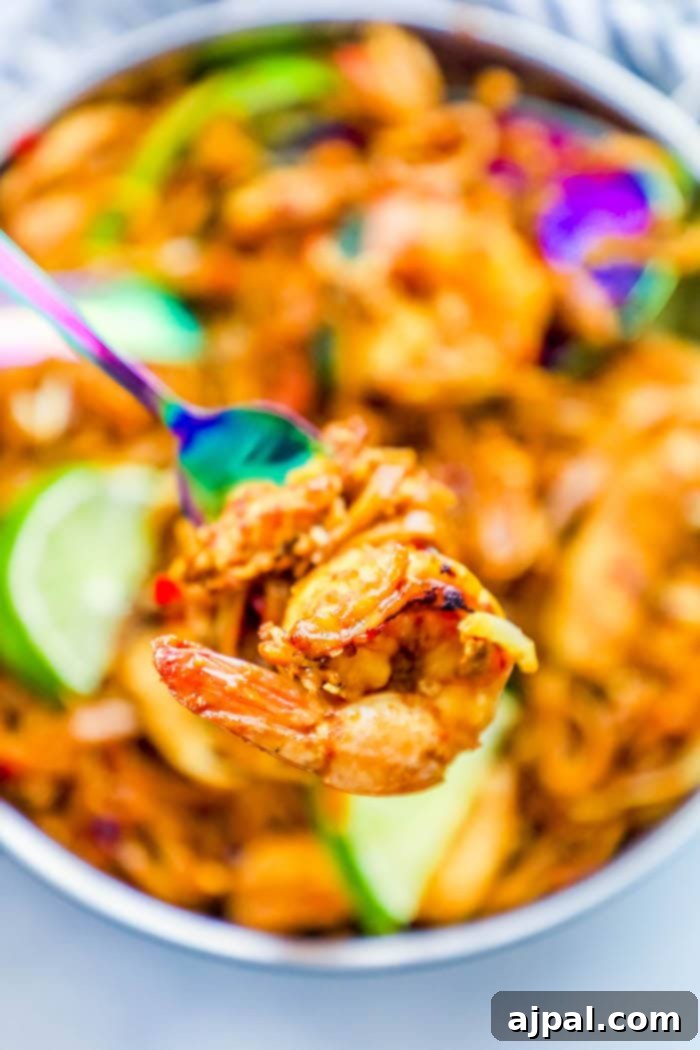
Serving and Customizing Your Pad Thai
Once your delectable Pad Thai is cooked, the presentation and final touches are just as important as the cooking process. Transfer your piping hot noodles, chicken, and shrimp mixture to a large serving platter or individual bowls. The vibrant colors and aromatic steam will immediately whet appetites.
Garnish for Perfection:
- Fresh Lime Wedges: A squeeze of fresh lime juice just before eating is non-negotiable! It brightens all the flavors and adds a crucial tangy finish.
- Chopped Peanuts: These add a delightful crunch and nutty flavor, essential for that authentic Pad Thai experience.
- Fresh Cilantro: A scattering of fresh cilantro leaves adds a refreshing herbaceous note and a pop of green.
- Additional Bean Sprouts & Green Onions: For extra freshness and crunch, add a few more raw bean sprouts and sliced green onions as a garnish.
- Chili Flakes or Sriracha: For those who love extra heat, offer a side of red pepper flakes or sriracha sauce.
Variations and Additions:
- Protein Swaps: While chicken and shrimp are classic, feel free to experiment. Tofu (firm or extra-firm, pressed and fried until crispy), thinly sliced pork, or even beef can be excellent substitutes or additions.
- Extra Vegetables: Enhance the nutritional value and texture by adding other quick-cooking vegetables like julienned carrots, bell peppers, or snow peas during the stir-fry process. Add them after the chicken but before the shrimp to ensure they cook through without becoming mushy.
- Sweetness Adjustment: If you prefer a sweeter Pad Thai, a touch more sugar or a drizzle of maple syrup or honey (for non-keto versions) can be added to the sauce.
This recipe is not just about a meal; it’s about the experience of creating something truly special and delicious at home. Enjoy the process, savor the flavors, and delight in sharing this wonderful dish with family and friends.
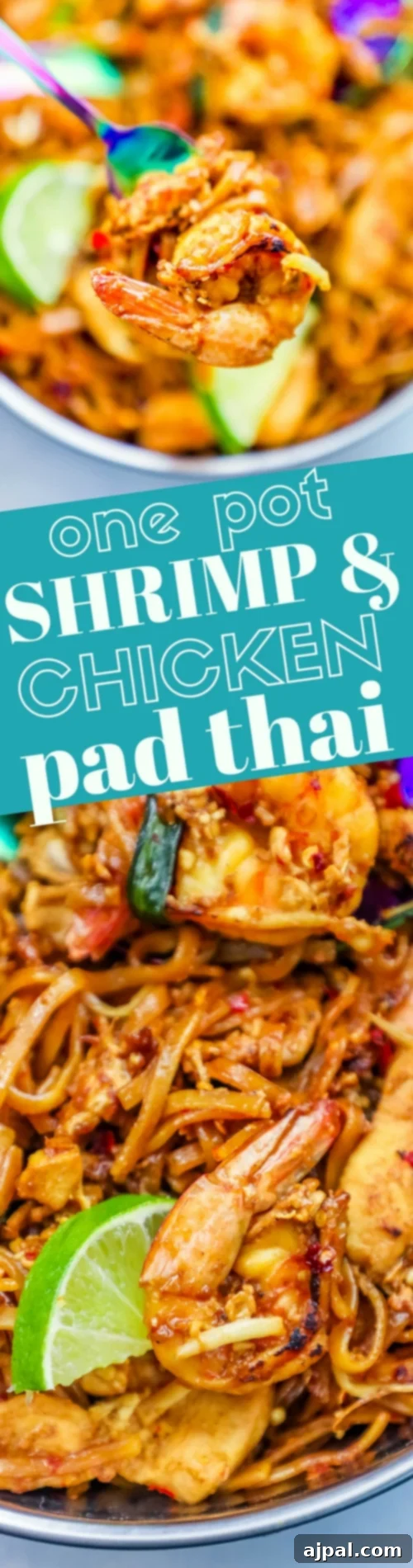
Craving delicious dinners in a flash? Discover quick meal ideas to streamline your cooking routine!
Explore a curated selection of culinary tools and ingredients for your kitchen adventures!
The Best Easy Chicken and Shrimp Pad Thai Noodles Recipe
Equipment
-
Thai Kitchen Premium Fish Sauce
-
Thai Kitchen Gluten Free Stir Fry Rice Noodles
-
Made In Cookware – 12″ Blue Carbon Steel Wok
Ingredients
- ½ lb rice noodles
- 3 tbsp fish sauce
- 2 tbsp ketchup
- 1 tbsp worcestershire sauce
- 2 tsp chili garlic sauce
- 2 tbsp sugar
- 2 tbsp peanut oil
- 1 lb chicken, diced into 1″ cubes
- ½ lb shrimp, peeled and de-veined
- ¼ cup garlic, diced
- ½ tsp red pepper flakes
- 2 eggs, beaten until foamy
- 2 cups bean sprouts
- 5 green onions
- 1 cup cilantro, chopped
- 3 limes
- ¼ cup peanuts, chopped coarsely
Instructions
-
Cook rice noodles according to package instructions, then drain and rinse well to remove excess starch. Set aside.
-
In a small bowl, whisk together the fish sauce, ketchup, Worcestershire sauce, chili garlic sauce, and sugar until well combined. Set aside.
-
Heat peanut oil in a large, heavy pan or wok over medium-high heat until it begins to shimmer.
-
Add the diced chicken to the hot pan and cook, stirring frequently, until it is lightly browned and cooked through. Avoid burning.
-
Stir in the minced garlic, peeled and de-veined shrimp, and red pepper flakes.
-
Continue to cook, stirring often, until the shrimp turns opaque and pink, indicating it’s fully cooked.
-
Pour the prepared sauce mixture over the chicken and shrimp, and stir for approximately 3 minutes, allowing the flavors to meld and the sauce to thicken slightly.
-
Add the beaten eggs to the pan with the chicken, shrimp, and sauce. Stir constantly for 1 minute, scrambling the eggs into small pieces throughout the mixture.
-
Add the drained noodles to the pan and toss vigorously until they are thoroughly coated with the sauce and all ingredients are well combined.
-
Stir in the fresh cilantro, chopped peanuts, bean sprouts, and sliced green onions.
-
Cook for another 1-2 minutes, stirring gently, until the green onions are slightly softened and the Pad Thai is heated through.
-
Transfer the Pad Thai to a large serving bowl or individual plates. Garnish with additional fresh chopped peanuts, cilantro, and fresh lime wedges for squeezing.
-
Serve immediately and enjoy your homemade restaurant-quality Pad Thai!
Video
A video tutorial for this recipe would typically be embedded here, offering visual guidance for each step of preparation and cooking.
Nutrition
Nutrition information is automatically calculated, so should only be used as an approximation.