Pizza
Best Pizza Dough
Pizza dough, with its subtle yeasty flavor and adaptable texture, serves as an ideal base for a myriad of culinary creations, ranging from traditional pizzas with various toppings to innovative baked goods like garlic knots and calzones
- Serves 2 (8″ – 10″) pizza doughs
- Prep 15 minutes
- Cook 1 hour
- Total 1 hour
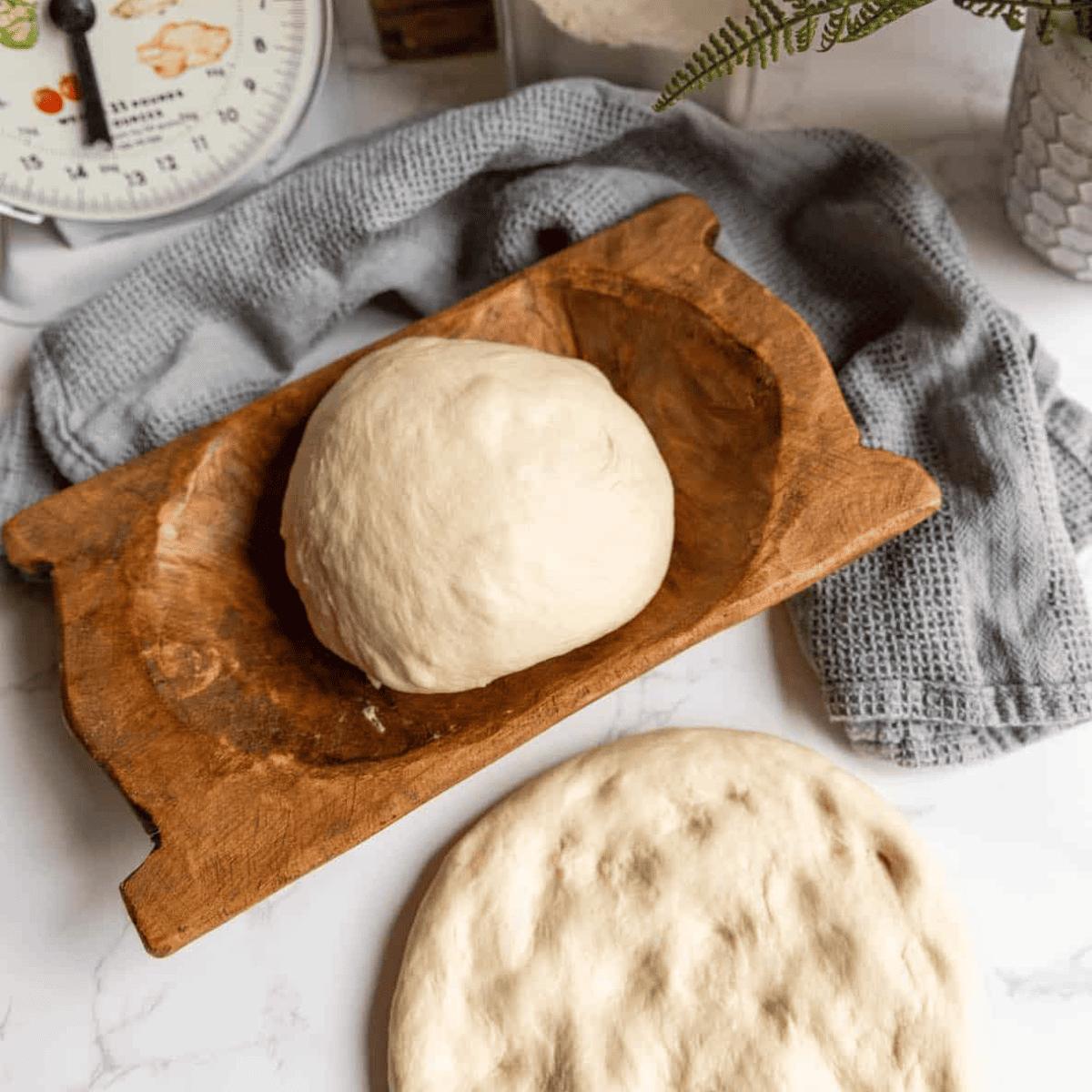
Pizza dough, with its slightly yeasty and subtly sweet flavor, serves as a foundational element in a wide array of dishes, from classic pizzas to creative flatbreads, calzones, and even some types of breadsticks.
At Ajpal, I add lots of tips in all of my recipes – because I am a home cook without any formal training, and I find I am more confident making dishes when I understand why it works, and what each ingredient means to the flavor of a recipe. My goal is for even the most beginner home cook to feel empowered in the kitchen.
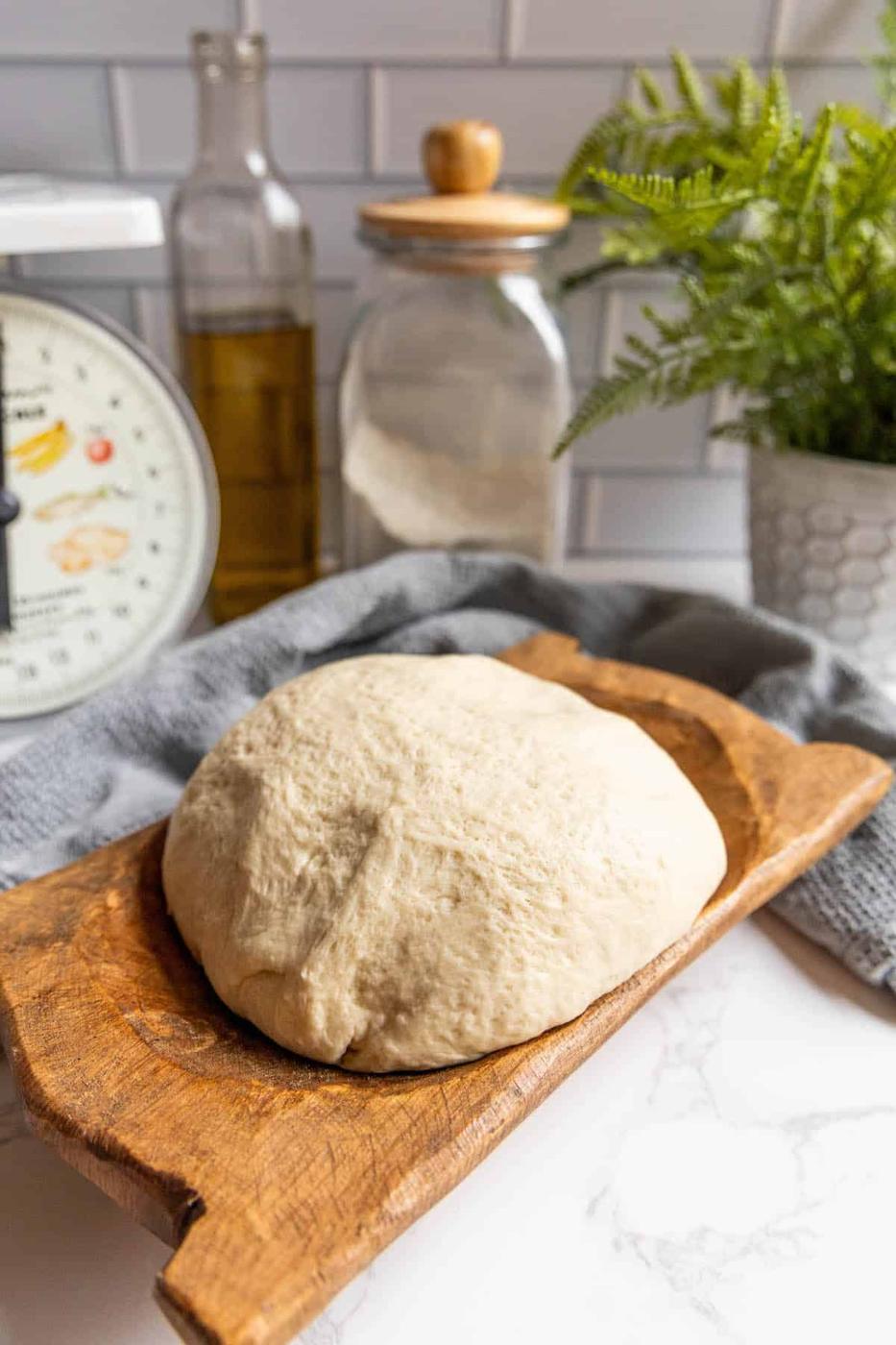
Easy Simple Pizza Dough
If there is one dinner that unites picky kids, it’s pizza. It’s tasty, cheesy, comforting, and delicious – it’s the one thing I know my kids will always (happily!) eat, and ask for more and more.
I love making pizza for my kids, but really hate the taste of storebought pizza crust, especially the premade kind. It’s fine in a pinch, but the flavor of fresh dough just can’t be beat! This recipe is simple, easy to make in big batches (it freezes fantastically!) and perfect for making pizza at home.
While acountertop pizza oven or outdoor pizza oven can give fabulous results – this homemade pizza dough recipe is designed to make perfect pizza on a simple oven pizza stone or pizza pan. For wood fired pizza, we love our Kamado Joe pizza stone.
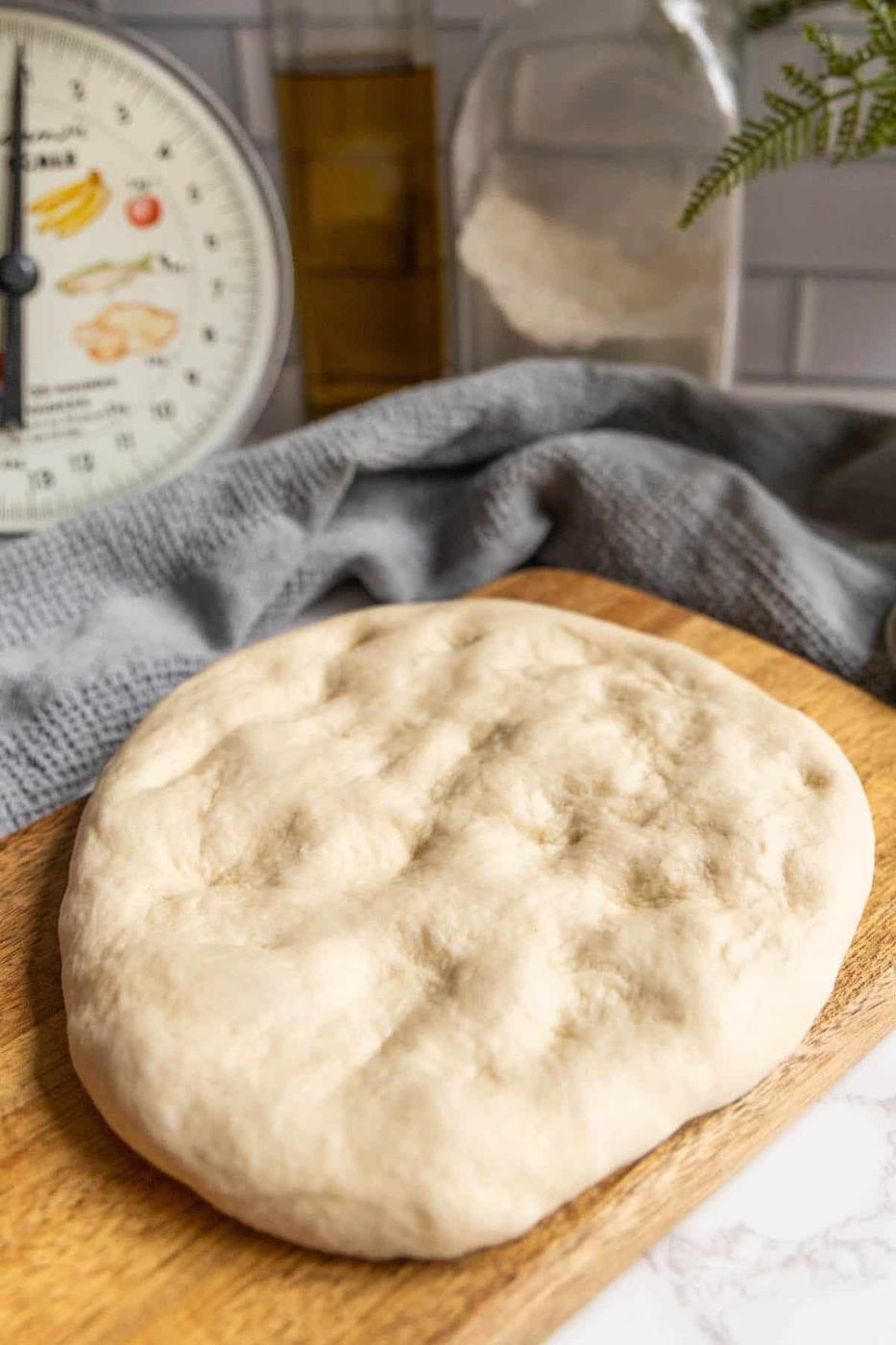
How to Make Simple Pizza Dough
First assemble the following ingredients:
- Warm water (1 cup) – Activates the yeast and hydrates the flour, creating the right environment for dough development.
- Active dry yeast (2 ¼ tsp) – Responsible for fermentation, it helps the dough rise and adds a subtle yeasty flavor.
- Sugar (1 tsp) – Feeds the yeast to enhance rising, and adds a slight sweetness to the dough.
- Olive oil (¼ cup) – Adds moisture and richness, contributing to the dough’s flavor and tender texture.
- All-purpose flour (3 cups) – Provides the structure for the dough through its gluten content, making it malleable and elastic. Use bread flour for chewy crust.
- Sea salt (1 ¾ tsp) – Enhances flavor and regulates yeast activity, balancing the dough’s taste and texture.
Use this Method:
- Activating the Yeast:
- In a small bowl, dissolve the sugar in warm water.
- Sprinkle the yeast over the top and let it sit for about 5 minutes, until the mixture is frothy. If it doesn’t froth, the yeast may be inactive, and you’ll need to start over with new yeast.
- Mixing the Dough:
- In a large mixing bowl, combine the flour and salt.
- Add the yeast mixture and olive oil.
- Stir everything together until a rough dough starts to form.
- Kneading the Dough:
- Turn the dough out onto a floured surface.
- Knead for about 10 minutes, or until the dough is smooth and elastic. Add more flour if the dough is too sticky.
- First Rise:
- Lightly oil a clean bowl and place the dough in it. Turn the dough around in the bowl to ensure it’s coated with oil.
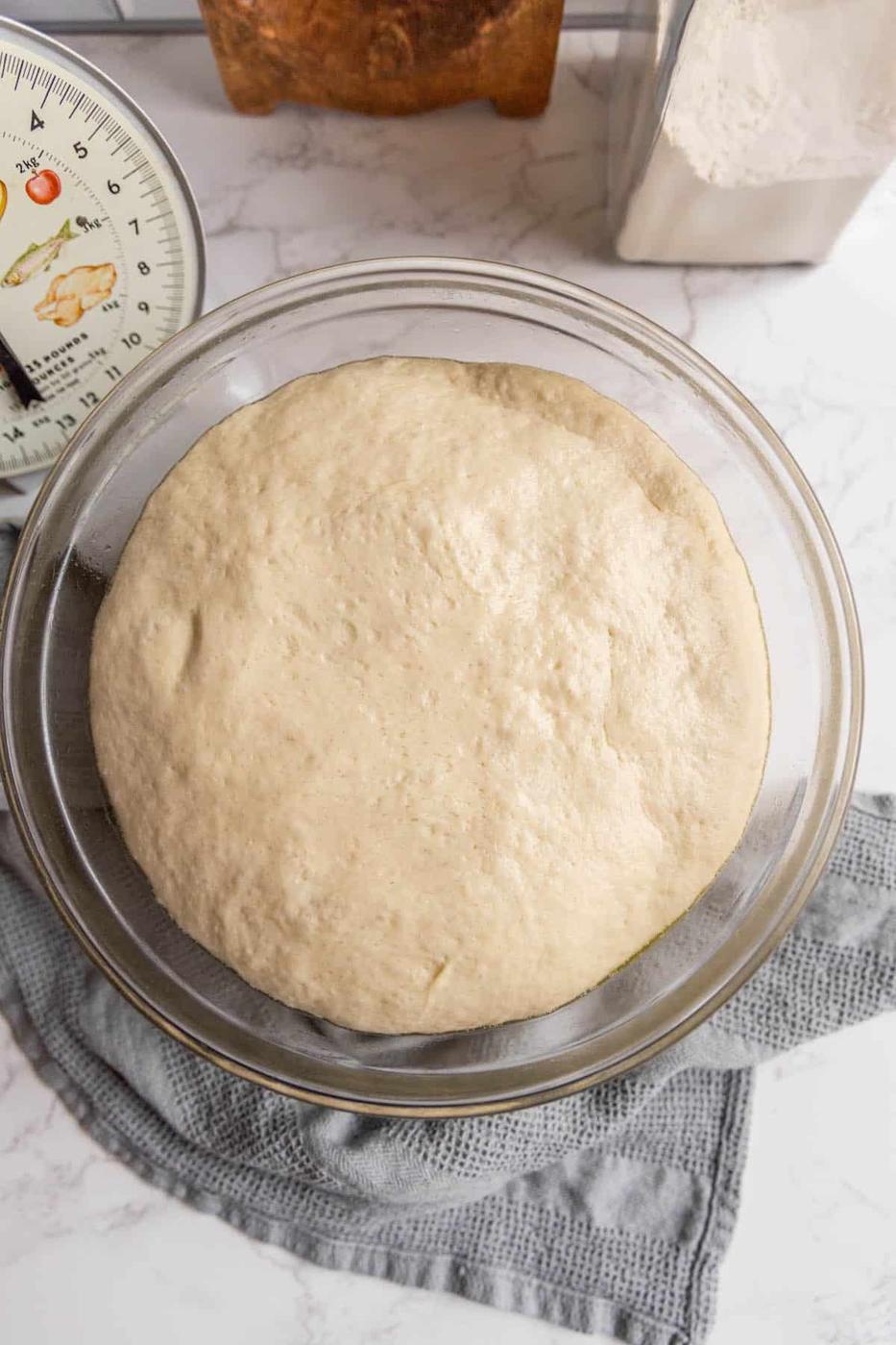
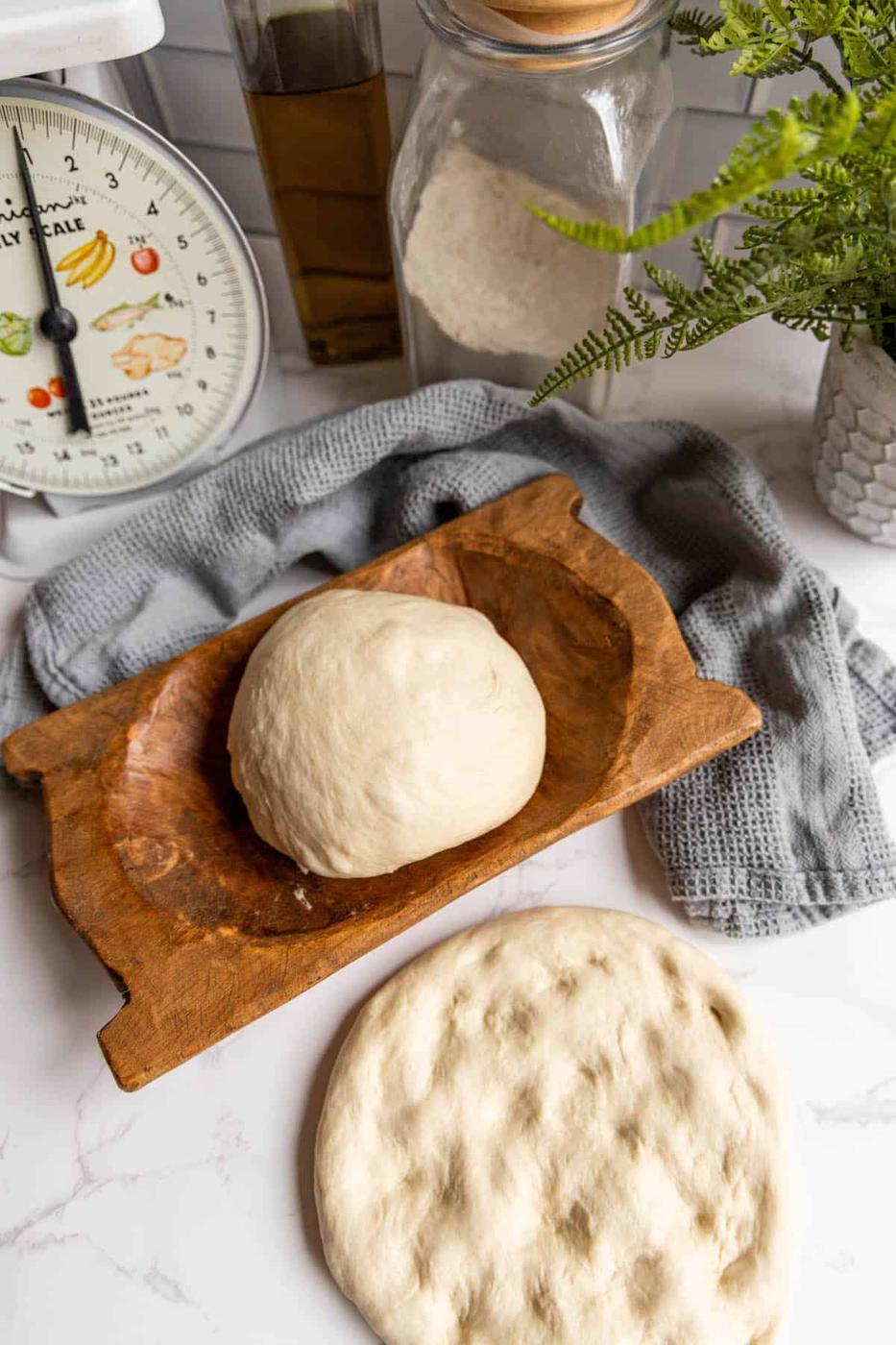
- Cover the bowl with a damp cloth or plastic wrap and let it rise in a warm, draft-free area for about 1 hour, or until it doubles in size.
- Use immediately or freeze!
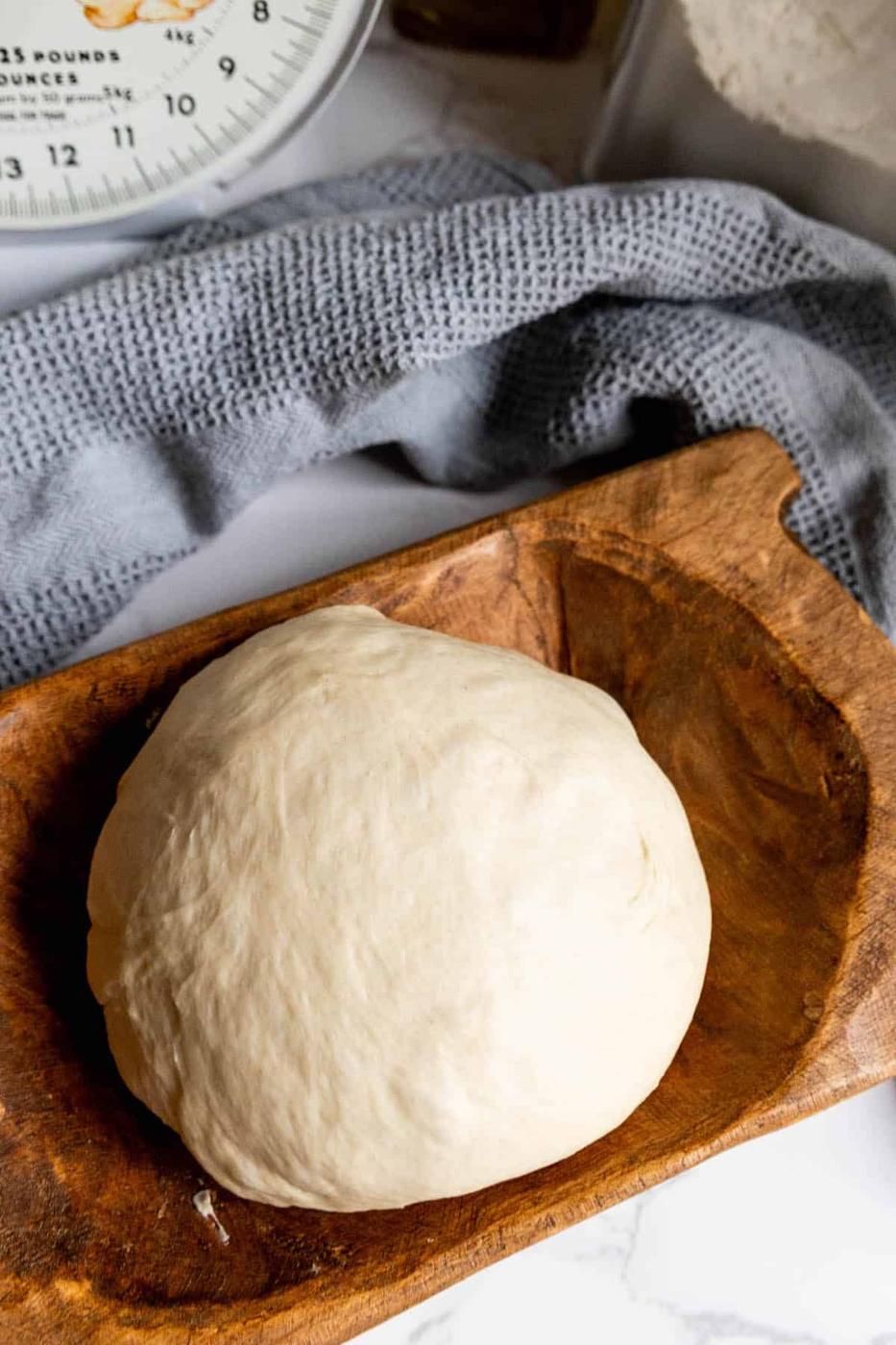
Tips and Tricks for Making this Simple Dough
Water Temperature: Use lukewarm water (around 110°F) to activate the yeast. Too hot water can kill the yeast, and too cold won’t activate it.
Proofing the Yeast: Make sure the yeast is active before you mix it with flour. It should become frothy after mixing with warm water and sugar. If it doesn’t, the yeast may be old or inactive.
Flour Type: While all-purpose flour works fine, using bread flour can give your dough more chewiness due to its higher protein content. For a crispier crust, try adding some semolina flour.
Kneading: Proper kneading is crucial. Knead until the dough is smooth and elastic. It should spring back when poked. Under-kneaded dough won’t rise well, and over-kneaded dough can become tough.
Rising Time: Be patient with the rising process. A longer rise at a cooler temperature can develop better flavors. Some pizza dough recipes even call for an overnight rise in the refrigerator.
Oil the Bowl: Lightly oil the bowl before the first rise to prevent the dough from sticking and to add a subtle richness to the dough.
Handling the Dough: Handle the dough gently when shaping it for pizzas. Overworking the dough at this stage can make it tough.
Thickness: Roll or stretch the dough to your preferred thickness. Thinner crusts will be crisper, while thicker crusts will be more bread-like.
Preheating the Oven: A very hot oven is key. Preheat your oven to the highest temperature, ideally with a pizza stone inside, for at least 30 minutes before baking.
Using a Pizza Stone or Steel: These retain heat and help achieve a crispy crust. If you don’t have one, a preheated upside-down baking sheet can work as a substitute.
Toppings: Don’t overload the dough with toppings, as this can make it soggy. Pre-cooking moisture-heavy toppings like vegetables can help avoid this.
Cornmeal or Parchment Paper: Use cornmeal or parchment paper underneath the dough to prevent sticking and to easily transfer the pizza to and from the oven.
Experimentation: Don’t be afraid to experiment with adding herbs or spices to the dough for extra flavor.
Resting Before Baking: Let the shaped dough rest for a few minutes before adding toppings and baking. This helps the dough puff up nicely.
Storage: Unused dough can be refrigerated for a couple of days or frozen for future use. Thaw and bring to room temperature before using.
FAQs
Yes, resting the dough for about 30 minutes after kneading and before rolling out can make it easier to shape and improve the texture.
This could be due to over-kneading, not enough hydration, or using a flour with too high of a protein content.
Yes, you can freeze pizza dough. Wrap it tightly in plastic wrap and store it in a freezer bag. Thaw in the refrigerator overnight before using.
This depends on your preference. For a thinner, crispier crust, roll it out to about 1/4 inch thickness. For a thicker, chewier crust, leave it around 1/2 inch thick.
Yes, there are yeast-free recipes using baking powder or self-rising flour, but they will have a different texture and flavor compared to traditional yeast dough.
While all-purpose flour works, many prefer using bread flour or 00 flour for a better texture. These flours have higher protein content, which helps develop gluten.
Kneading time can vary, but generally, you should knead the dough for about 7-10 minutes until it’s smooth and elastic.
What to Make with Pizza Dough
Pizza dough is incredibly versatile and can be used to make a variety of delicious dishes beyond traditional pizza. Here’s a list of creative and tasty options:
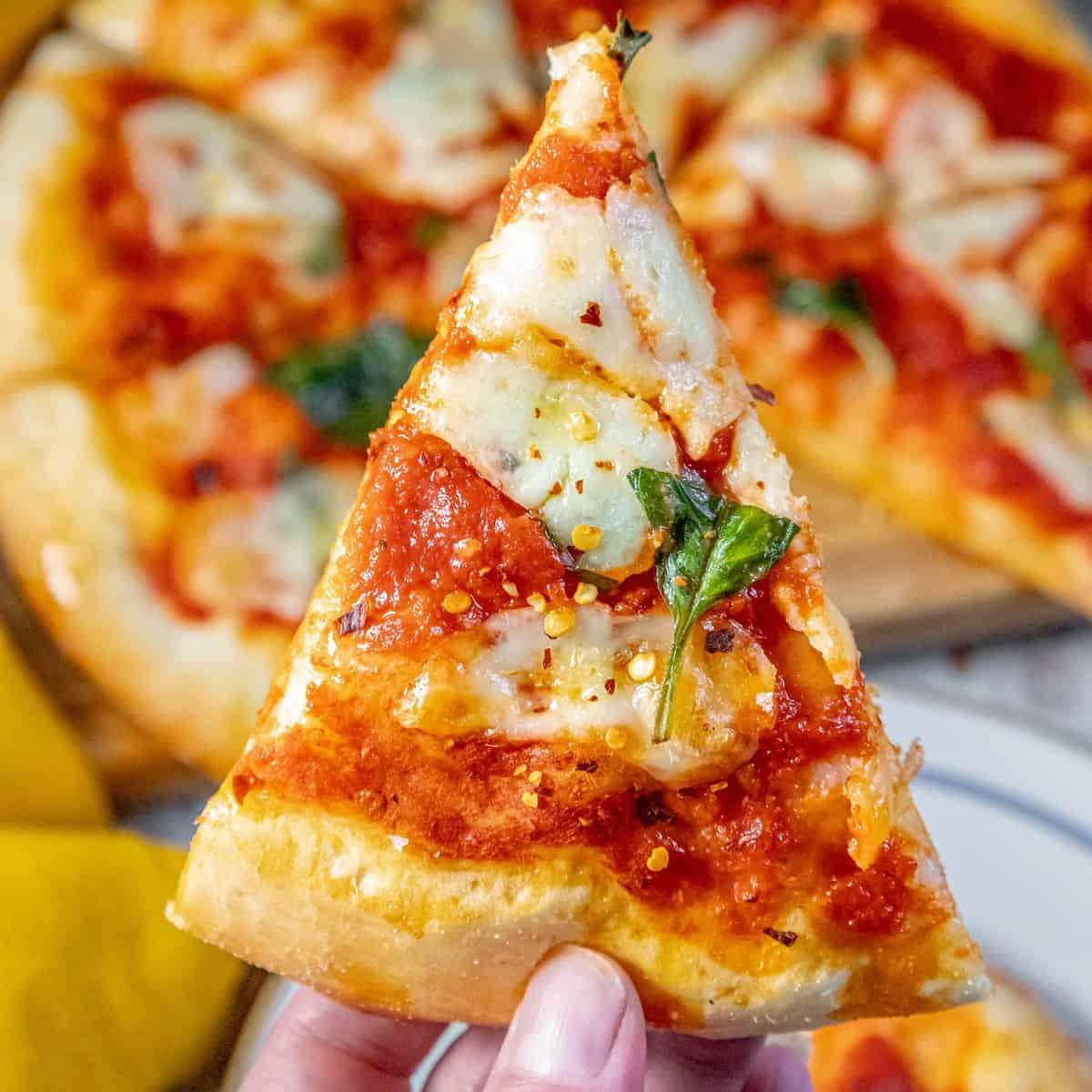
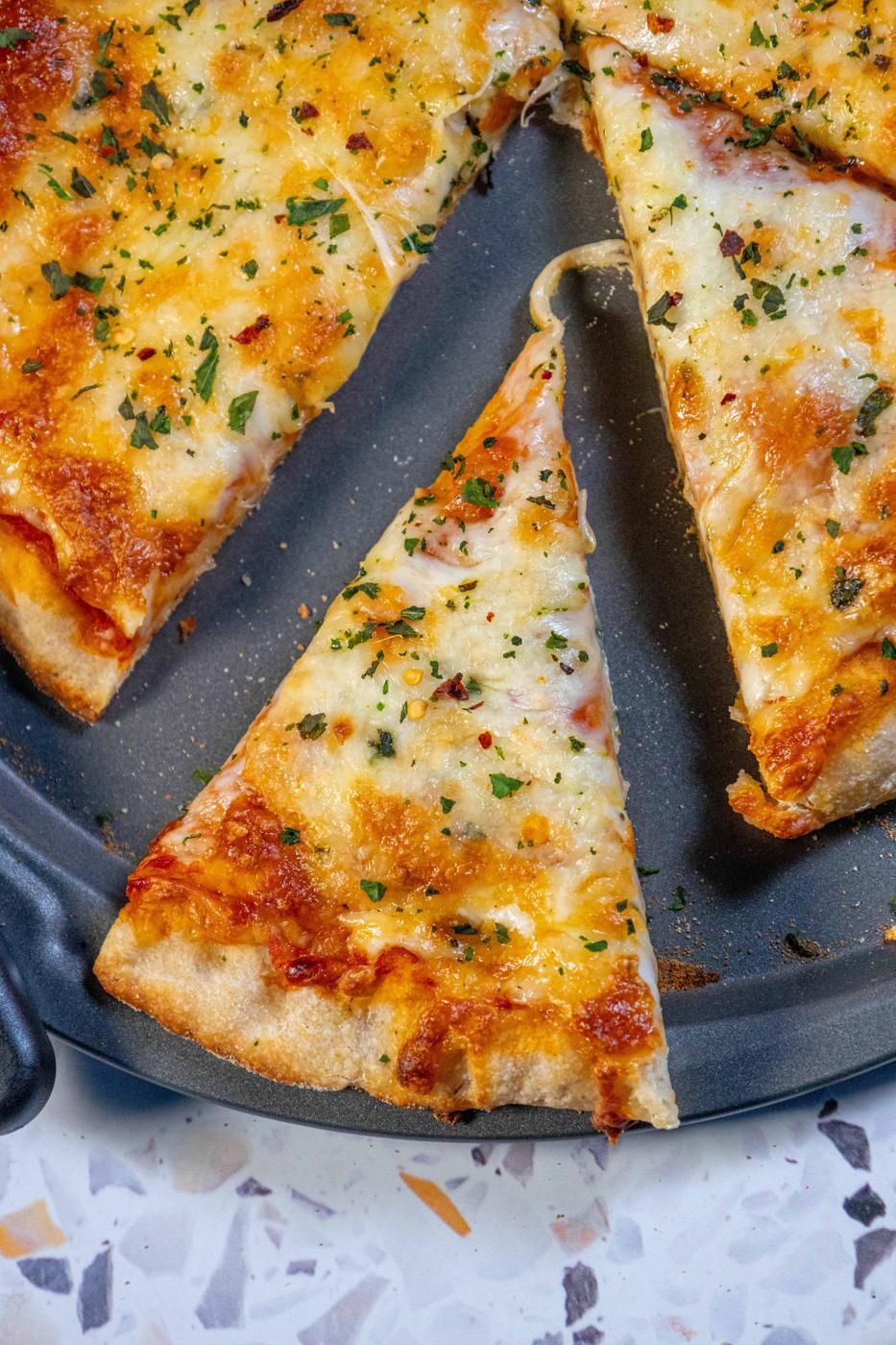
Classic Pizza: Top with your favorite sauce, cheese, and toppings.
Calzones: Fill with cheese, meats, vegetables, and sauce, then fold and bake.
Stromboli: Roll up ingredients inside the dough and bake.
Garlic Knots: Tie dough into knots, bake, and brush with garlic butter.
Breadsticks: Roll out, slice into strips, season, and bake.
Pizza Rolls: Cut small circles, add toppings, roll up, and bake.
Focaccia: Flatten dough, dimple with fingers, add herbs and olive oil, and bake.
Pita Bread: Roll out and bake in a hot oven until puffed.
Cheese-Stuffed Crust Pizza: Wrap cheese sticks around the edge and top as a regular pizza.
Dessert Pizza: Top with sweetened cream cheese and fruits, then bake.
Pretzels: Shape into pretzels, boil briefly in baking soda water, and bake.
Panzerotti: Deep-fried or baked turnovers filled with cheese, sauce, and other toppings.
Savory Twists: Twist dough with cheese and herbs, then bake.
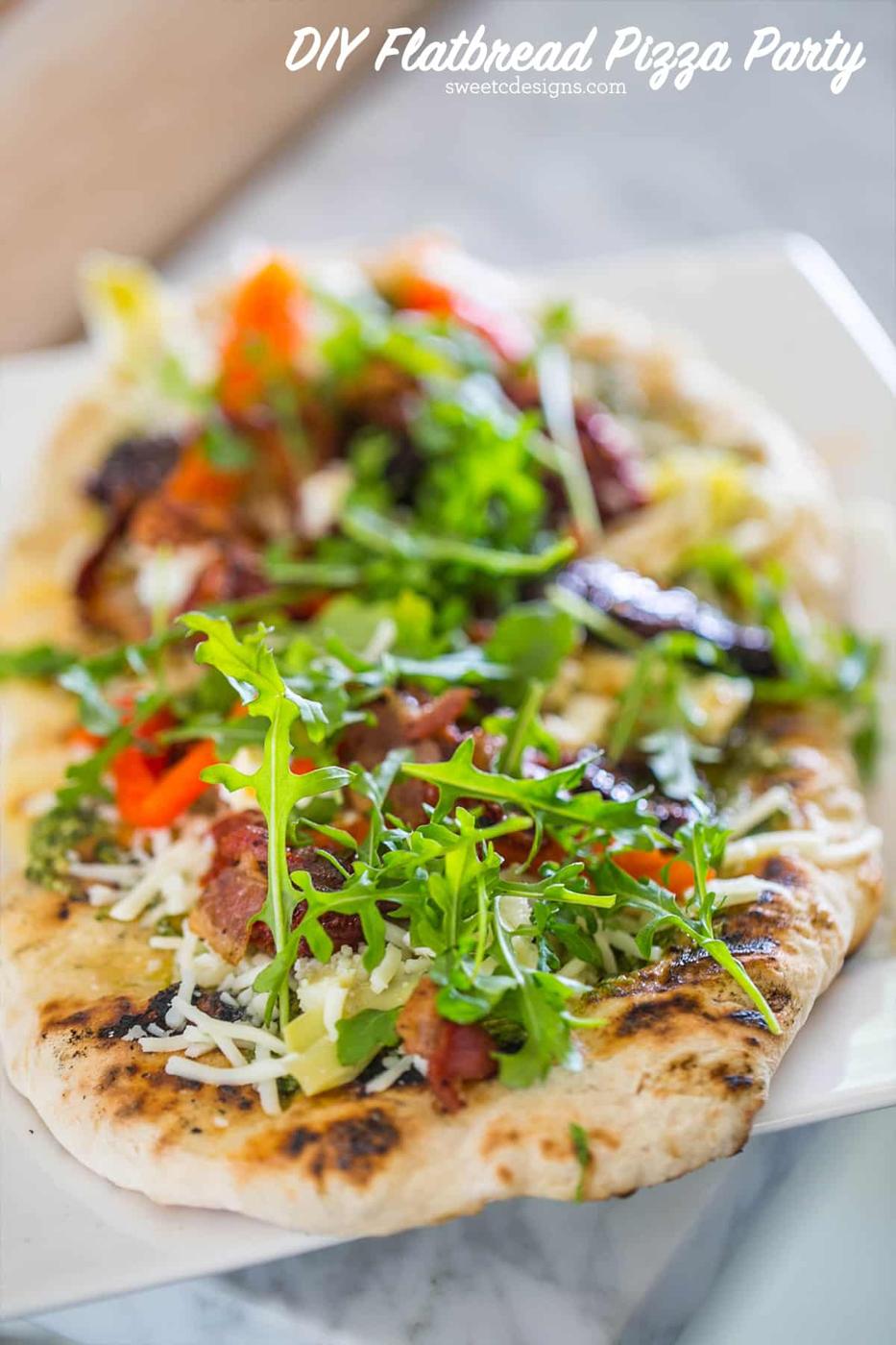
Flatbreads: Roll out thinly and top with herbs and spices.
Bagels: Shape, boil in water with baking soda, then bake.
Doughnuts: Shape into rings, let rise, then deep fry and glaze or sugar coat.
Cinnamon Rolls: Roll out, spread with butter, cinnamon, and sugar, roll up, slice, and bake.
Monkey Bread: Cut into small pieces, roll in butter and sugar, pile into a pan, and bake.
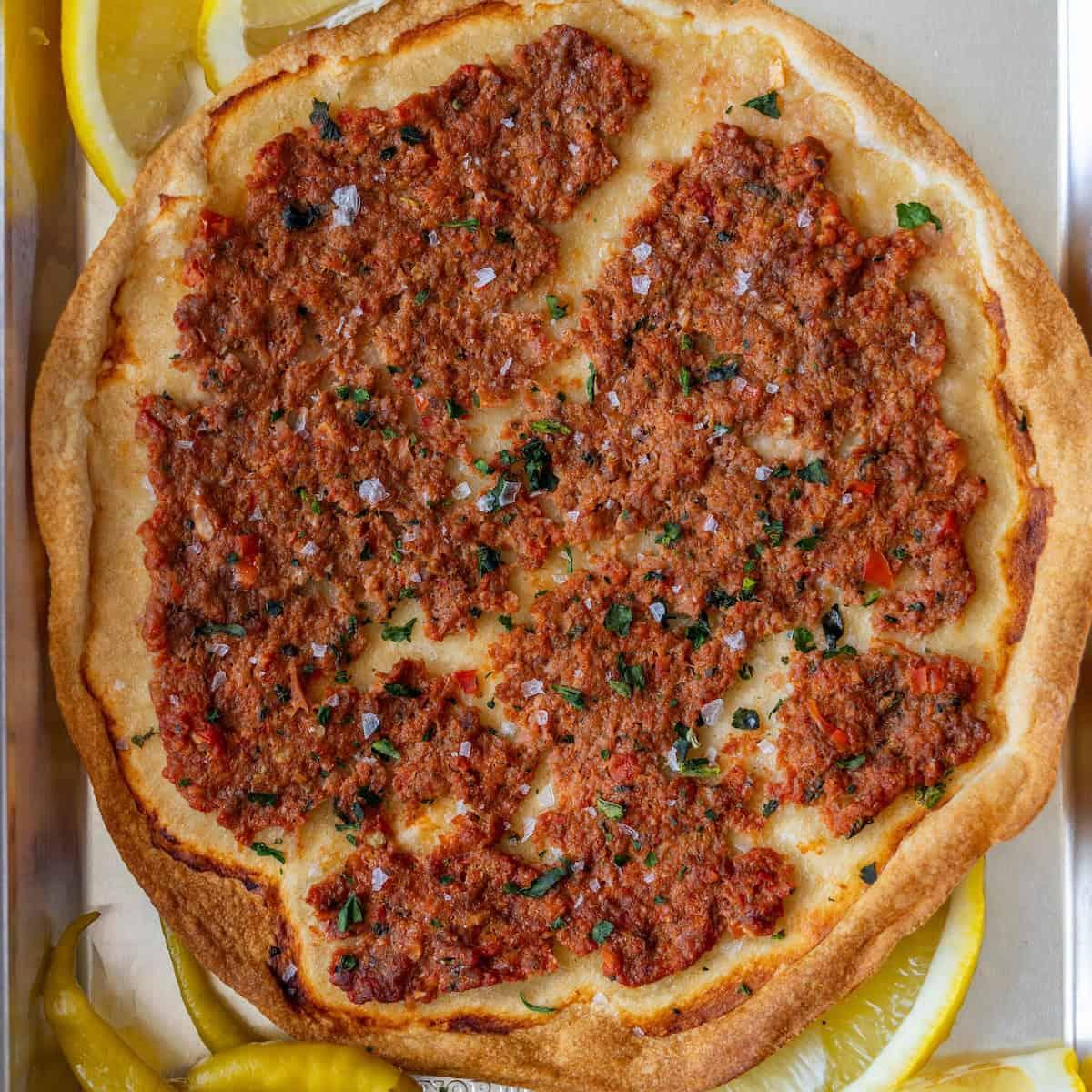
Easy Lahmajoun
Easy Homemade Pizza
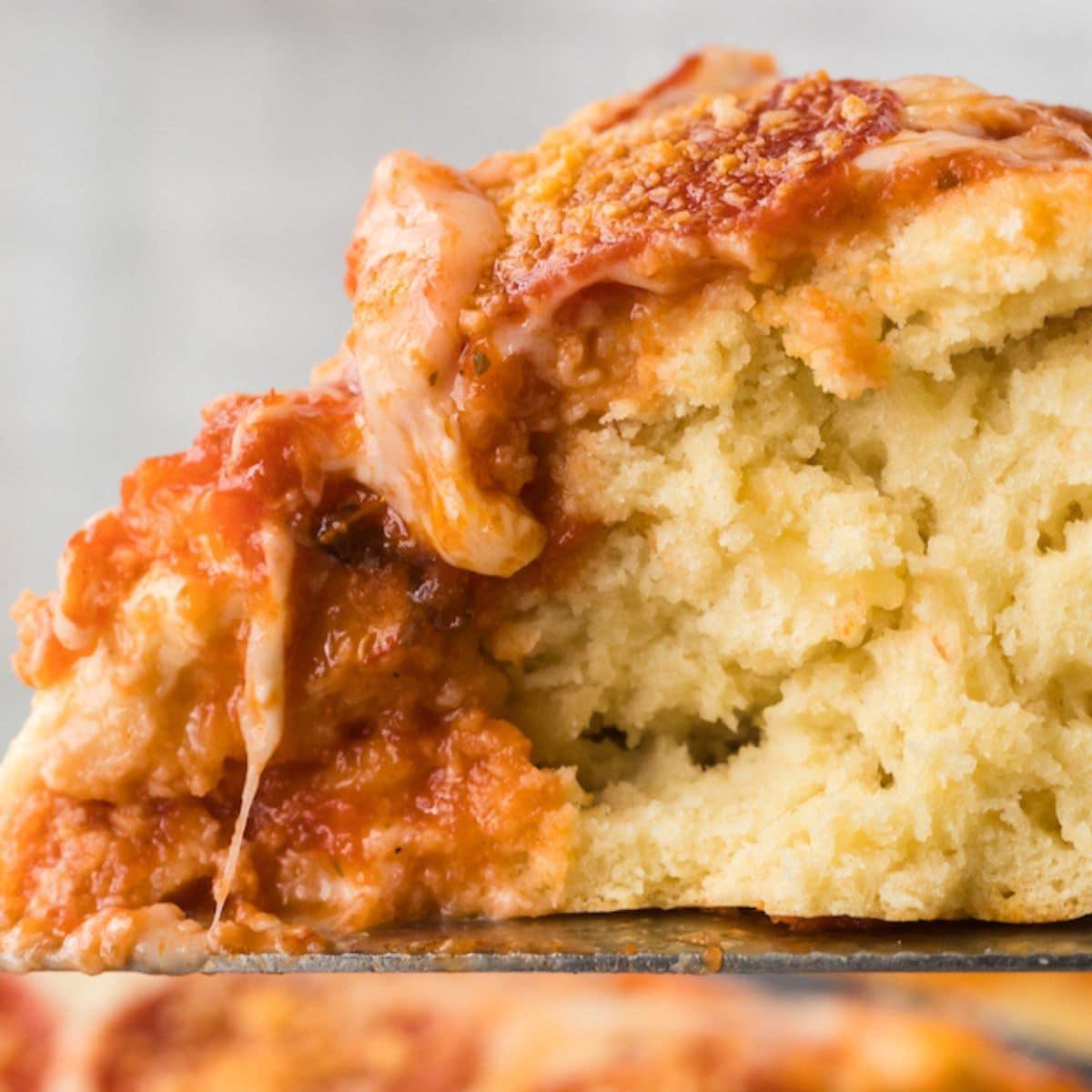
Easy French Bread Pizza Recipe
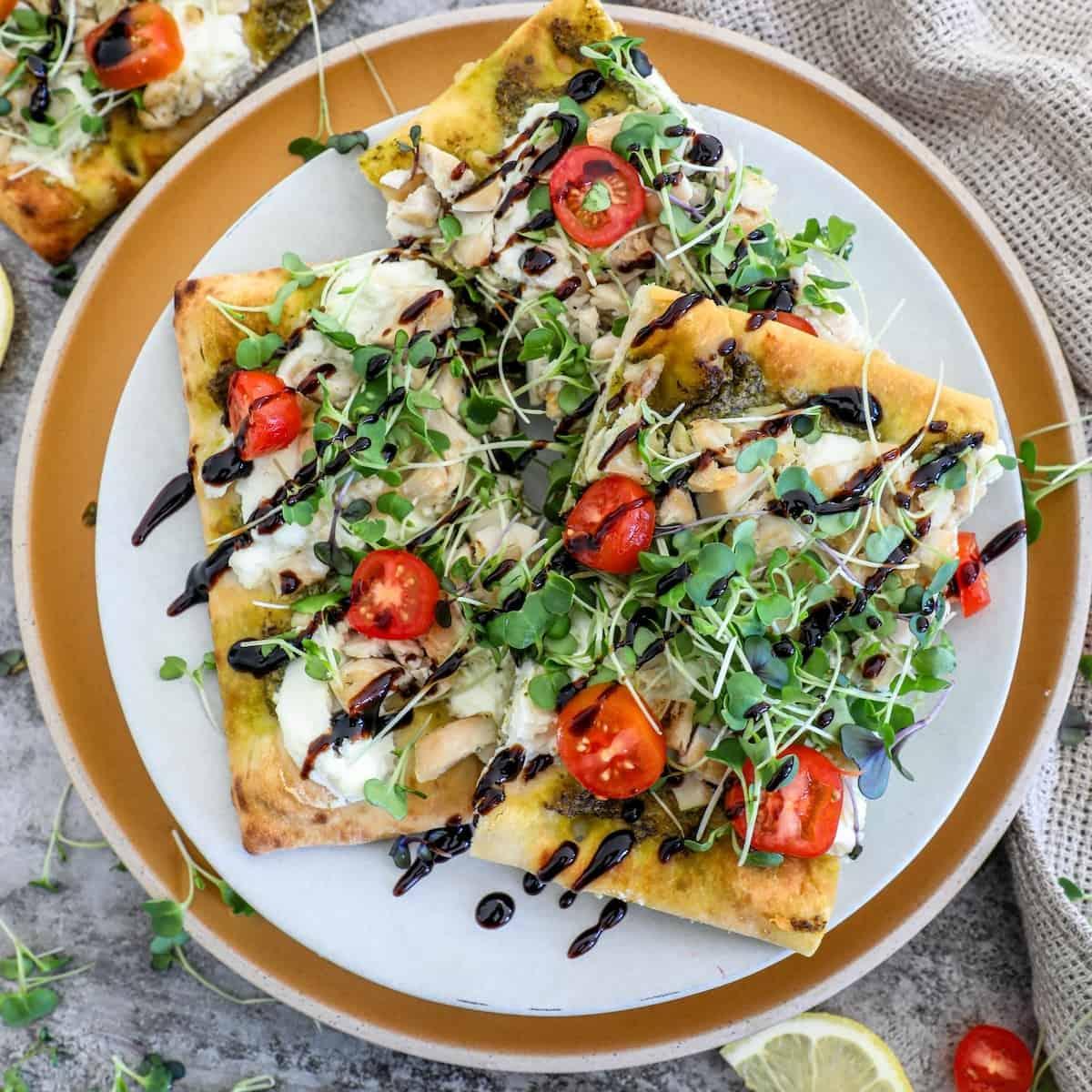
Flatbread Chicken Pesto Pizza
Best Pizza Dough Recipe

Share on Facebook
Pin this now to find it later
The recipe
Best Pizza Dough
Pizza dough, a simple yet versatile blend of flour, water, yeast, and salt, serves as the foundation for an array of delicious, globally-loved dishes, transforming with each topping into unique culinary creations.
- Serves 2 (8″ – 10″) pizza doughs
- Prep 15 minutes
- Cook 1 hour
- Total 1 hour
Ingredients
- 1 cup warm water (110F -115F degrees)
- 2 ¼ tsp active dry yeast
- 1 ? tsp sugar
- ¼ cup olive oil (plus more for oiling bowl)
- 3 cups all-purpose flour (plus more as needed (use bread flour for chewy crust))
- 1 ¾ tsp sea salt
Method
- 1
Pour warm water into a bowl. Sprinkle the sugar and then the yeast on top, stir then cover and let sit about 5 minutes.
- 2
In a large bowl combine the flour and salt.
- 3
After yeast has sat it should be bubbly and frothy if it is activated. If it isn’t activated, start over.
- 4
Add the olive oil to the activated yeast mixture.
- 5
Pour wet ingredients into the flour mixture and stir till well combined.
- 6
Sprinkle some flour on a clean surface and knead the pizza dough about 15 minutes.
- 7
Oil a large bowl. Add the kneaded dough and flip to coat in oil. Cover with plastic wrap and a clean kitchen towel and place in a warm place. Let rise for about 1 hour or until doubled.
- 8
Divide into two pieces and roll out to make pizza or wrap in plastic wrap and freeze up to 3 months.
Equipment
- Pyrex 4-Cup Glass Measuring Cup For Baking and Cooking, Dishwasher, Freezer, Microwave, and Preheated Oven Safe, Essential Kitchen Tools
- FLAIROSOL OLIVIA. The Original Advanced Oil Sprayer for Cooking, Salads, BBQs and More, Continuous Spray with Portion Control, Trusted by Chefs. Patented Technology. (Glass Bottle) (Gold Print)
- Norjac Pizza Screen, 14 Inch, 2 Pack, Seamless Rim, Restaurant-Grade, 100% Aluminum Pizza Pan, Oven-Safe, Rust-Free.
- Ooni Karu 12 Multi-Fuel Outdoor Pizza Oven – Portable Wood Fired and Gas Pizza Oven – Outdoor Cooking Pizza Maker – Pizza Oven For Authentic Stone Baked Pizzas – Countertop Pizza Oven
- CHEFMAN Indoor Pizza Oven – Makes 12 Inch Pizzas in Minutes, Heats up to 800°F – Countertop Electric Pizza Maker with 5 Touchscreen Presets, Pizza Stone and Peel Included – Stainless Steel
Nutrition
- Serving1 g
- Calories237 kcal
- Carbohydrates37 g
- Protein5 g
- Fat7 g
- Saturated Fat1 g
- Polyunsaturated Fat6 g
- Sodium512 mg
- Fiber2 g
- Sugar1 g
Questions
Is it necessary to let the dough rest before rolling?
Yes, resting the dough for about 30 minutes after kneading and before rolling out can make it easier to shape and improve the texture.
Why is my pizza dough tough or chewy?
This could be due to over-kneading, not enough hydration, or using a flour with too high of a protein content.
Can I freeze pizza dough?
Yes, you can freeze pizza dough. Wrap it tightly in plastic wrap and store it in a freezer bag. Thaw in the refrigerator overnight before using.
How thin should I roll out the dough for the crust?
This depends on your preference. For a thinner, crispier crust, roll it out to about 1/4 inch thickness. For a thicker, chewier crust, leave it around 1/2 inch thick.
Can I make pizza dough without yeast?
Yes, there are yeast-free recipes using baking powder or self-rising flour, but they will have a different texture and flavor compared to traditional yeast dough.
Do I need to use a specific type of flour?
While all-purpose flour works, many prefer using bread flour or 00 flour for a better texture. These flours have higher protein content, which helps develop gluten.
How long should I knead the dough?
Kneading time can vary, but generally, you should knead the dough for about 7-10 minutes until it’s smooth and elastic.