
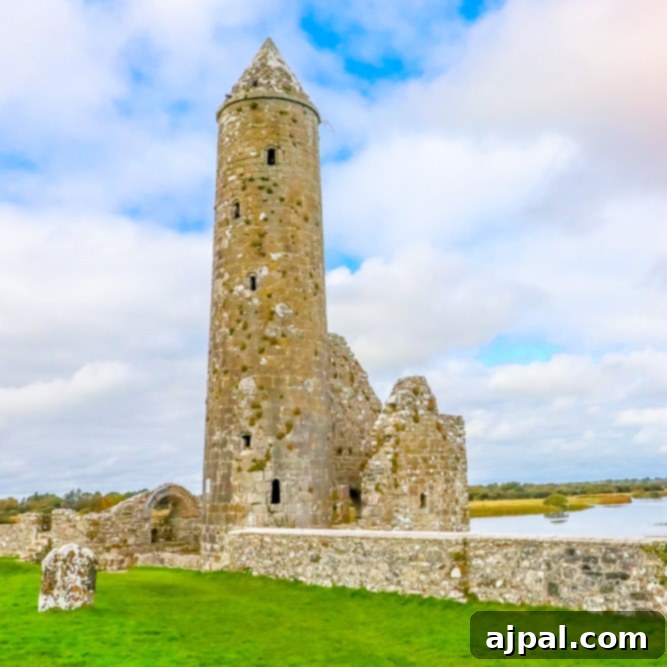
Clonmacnoise Ireland: Exploring Ancient Christian Heritage in the Heart of the Midlands
Ireland, a land steeped in ancient lore and breathtaking landscapes, offers travelers a unique journey through time. While iconic destinations like the Cliffs of Moher and Blarney Castle draw crowds, the tranquil Midlands region holds a treasure trove of history, particularly its profound Early Christian sites. Among these, Clonmacnoise stands out – a tiny yet profoundly significant ancient Christian abbey nestled gracefully along the banks of the mighty Shannon River in County Offaly. Located roughly an hour from Limerick, two hours from Dublin, and a mere half-hour from Athlone, Clonmacnoise is an accessible yet serenely “off the tourist path” destination waiting to be discovered.
For many avid travelers, the true joy of exploration lies in immersing oneself in the very places where history unfolded. Ireland, with its rich tapestry of culture and tradition, has always held a special allure for me. My own family roots, deeply entwined with the Emerald Isle on both my mother’s and father’s sides, amplify this connection. This profound sense of belonging often explains my irresistible draw to Ireland, a country I consider one of the most enchanting places on Earth.
During a conference last fall, I seized the opportunity to extend my stay and venture solo into the Irish Midlands. This region, known for its quieter charm and authentic feel, proved to be a perfect escape from the more bustling tourist routes. It’s an area rich in pivotal Early Christian sites and priceless artifacts, a field of history that has always fascinated me. My particular interest lies in the foundational work of the ‘Twelve Apostles of Ireland,’ key figures in the widespread dissemination of Christianity across Ireland, the UK, and even parts of mainland Europe. Indeed, my admiration runs so deep that my children are named after two of these revered saints: Saint Brigid of Kildare and Saint Finian of Clonard. So, when I stumbled upon images of Clonmacnoise during my planning, I knew instinctively that a visit was imperative.
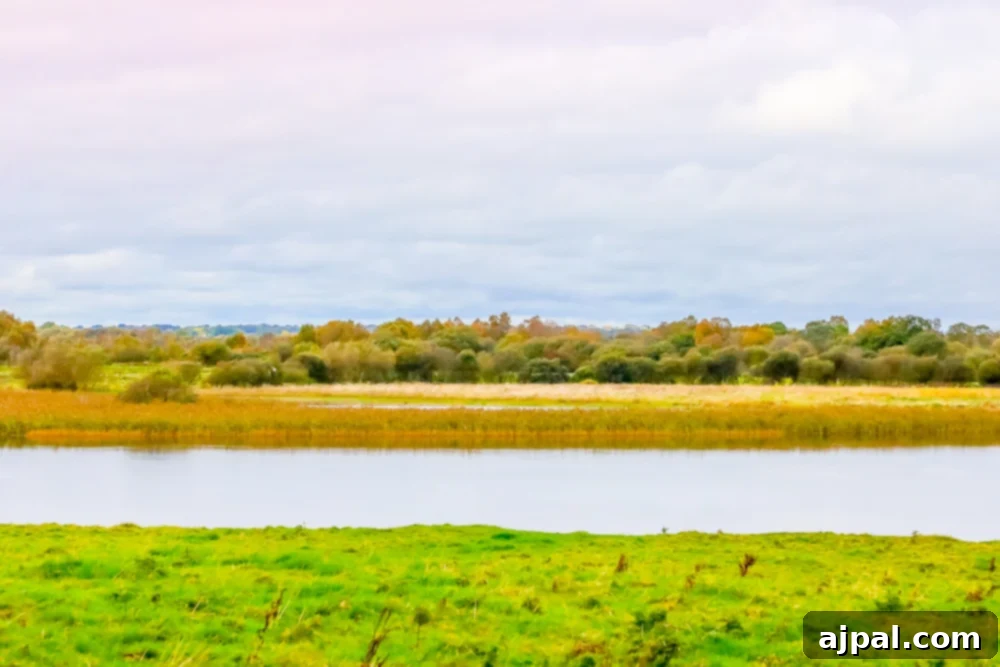
My journey to Clonmacnoise began after renting a car in Shannon. I headed east towards Dublin, soon veering off into the picturesque Irish countryside. The drive itself was a delightful experience, winding through quaint towns and past lush, rolling hills, all alongside the serene flow of the Shannon River. Clonmacnoise emerged just outside Athlone, a truly gorgeous lakeside town. Athlone is remarkably affordable, exuding a laid-back charm that makes it an ideal stopover between Dublin and the west coast hubs like Limerick or Galway.
While Ireland’s Midlands may not boast the same immediate recognition as world-famous attractions like Blarney Castle, the dramatic Cliffs of Moher, or the expansive Killarney National Park, their significance should never be underestimated. These winding lanes lead to some of the most captivating and historically rich destinations in the country, especially for those with a passion for early church history and a desire to witness ancient relics of Irish Saints. Clonmacnoise proved to be the quintessential location to delve into this profound chapter of Irish heritage. You can easily spend hours absorbing its history through detailed exhibits, or opt for a quicker, yet equally impactful, visit. Its relatively uncrowded nature – I even found myself almost entirely alone in the monastery during part of my autumn visit – makes for a remarkably peaceful and intimate experience, perfect for a solo female traveler like myself.
In the following sections, I will share some of the most fascinating insights I gained at Clonmacnoise. Whether you’re planning a dedicated trip to Ireland’s heartland or simply seeking an enriching stop on your drive between Dublin and Shannon, Killarney, or Galway, this guide will provide ample tips for a truly memorable visit, including recommendations for dining, local pubs, and nearby attractions.
Clonmacnoise Ireland: Unearthing Early Christian Sites in the Midlands
One of the most compelling reasons to explore Ireland, particularly its Ancient East and Midlands, is the opportunity to visit the remarkable early Christian sites where the seeds of Christianity were first sown and nurtured across the island and beyond. While Saint Patrick’s legacy is widely celebrated, fewer people are familiar with the equally incredible history of how Christianity permeated and flourished throughout the Emerald Isle, thanks to the efforts of lesser-known, but equally important, saints.
Clonmacnoise, though not as globally renowned as some of Ireland’s more prominent historical landmarks, is unequivocally a must-visit destination for anyone with a keen interest in Ireland’s ancient past. It offers a tangible connection to a pivotal era, allowing visitors to walk in the footsteps of early saints and scholars who shaped the spiritual and intellectual landscape of the nation.
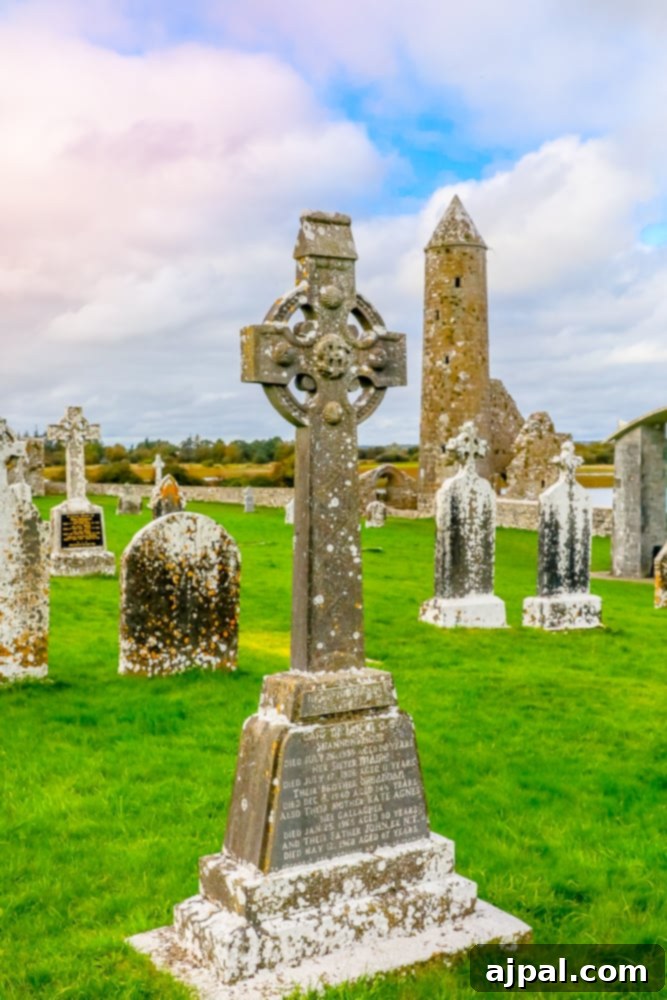
Clonmacnoise: A Glimpse into its Illustrious Past
The Clonmacnoise Monastery holds a foundational place in Irish history, established in 544 AD by Saint Ciaran. Accompanied by seven companions, Ciaran met with Diarmait mac Cerbaill, who would later become the first Christian High King of Ireland, and together they laid the foundations of the first wooden church on this sacred site. Ciaran was part of the esteemed ‘Twelve Apostles of Ireland,’ a group tasked with establishing monastic centers that would serve as major schools, missionary bases, and strategic outposts, particularly along vital waterways like the Shannon River.
Tragically, Saint Ciaran succumbed to the plague a mere five years after founding the monastery. He is believed to be buried beneath the site of the original wooden church, which was later replaced by a 9th-century stone oratory. The monastery experienced its most significant period of growth and influence between the 8th and 12th centuries. During this era, Clonmacnoise evolved into a beacon of learning, artistry, and spirituality, attracting scholars and pilgrims from across Europe. Artisans from Clonmacnoise were celebrated for their exceptional craftsmanship, producing enduring works such as the intricate Clonmacnoise Crozier (a stunning Viking-style gilded staff now housed in the National Museum of Ireland), the magnificent Cross of the Scriptures, and the revered Book of the Dun Cow, a vellum manuscript dating back to the 12th century.
The site’s strategic location along the Shannon River, while vital for trade and communication, also made it a frequent target for raids. Over centuries, Clonmacnoise endured numerous attacks from Vikings, various Irish factions, and later, the Normans. Despite these challenges, the monastery persevered, evolving from its initial wooden structures to robust stone buildings by the 9th century. Its population also swelled dramatically; from just a few dozen residents in its early years, the community grew to an estimated 1,500-2,000 inhabitants by the 11th century. This population included not only monks, scholars, and students but also a thriving supporting town of farmers, craftsmen, and traders.
However, as the 12th century progressed and the nearby town of Athlone began to flourish, Clonmacnoise gradually experienced a decline in its prominence and activity. It was eventually designated as the seat of a small, impoverished diocese. The monastery’s long and illustrious history came to a tragic end in 1552 when the English garrison from Athlone launched a devastating assault, looting and destroying the monastery and leaving it in ruins. Despite this destruction, the profound spiritual legacy of Clonmacnoise endured. The site was transferred from the Church of Ireland to the Irish Government in 1995, and its modern visitor center opened in 1993, allowing a new generation to connect with its powerful history. Notably, Pope John Paul II even visited the Clonmacnoise Monastery site in 1979, a testament to its enduring religious significance. The cemetery on the grounds remains in use to this day, and religious services are still held regularly during the summer months, preserving its sacred purpose.
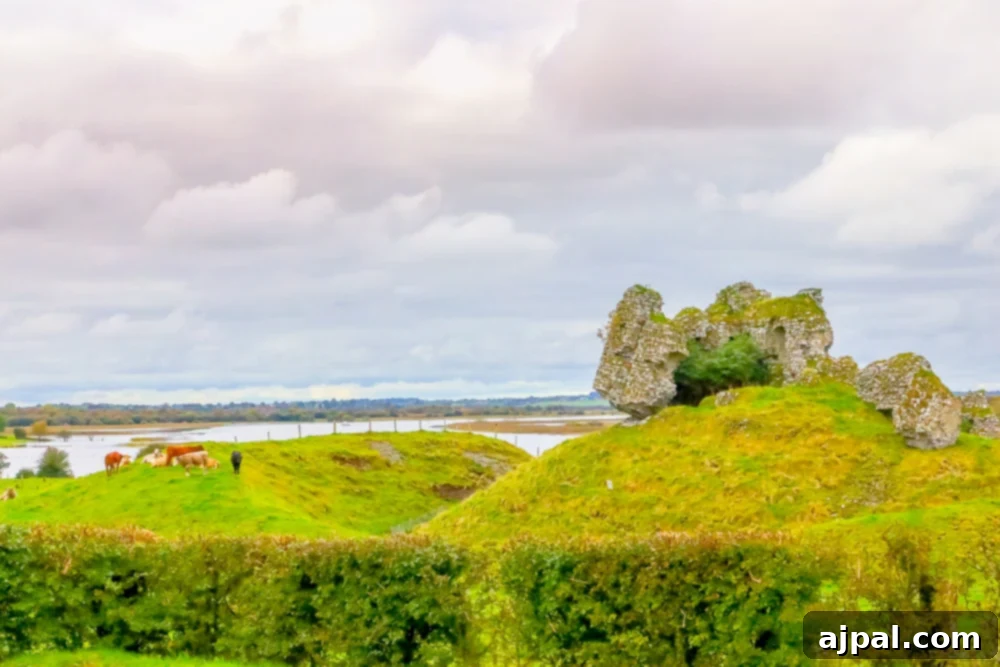
Saint Ciaran and the Foundation of Clonmacnoise Abbey
Born around 516 AD in County Roscommon, Saint Ciaran is a deeply revered figure, recognized as a saint in both the Roman Catholic and Eastern Orthodox Churches. He is celebrated as one of the ‘Twelve Apostles of Ireland,’ a pivotal group of saints instrumental in spreading Christianity across the island. The establishment of Clonmacnoise Monastery in 544 AD by Saint Ciaran and his seven companions was a direct fulfillment of the mission given to these Twelve Apostles: to construct significant monastic centers throughout Ireland. These monasteries were not merely places of worship but served as crucial hubs for education, missionary endeavors, and strategic bases, especially along the Shannon River, Ireland’s longest waterway.
The original monastery buildings were crafted from wood, a common practice for early Irish monastic settlements. As the community grew and faced increasing threats, these structures were gradually replaced by more durable stone architecture, a process that began in the 9th century. Clonmacnoise swiftly became a powerhouse of learning and culture, a “city of scholars” that drew students and monks from across Ireland and continental Europe. Its scriptorium produced exquisite illuminated manuscripts, and its schools preserved classical knowledge during a period often referred to as the Dark Ages in mainland Europe. This intellectual vibrancy cemented Clonmacnoise’s reputation as one of the most important monastic sites in Europe, playing a critical role in the Golden Age of early Irish Christianity.
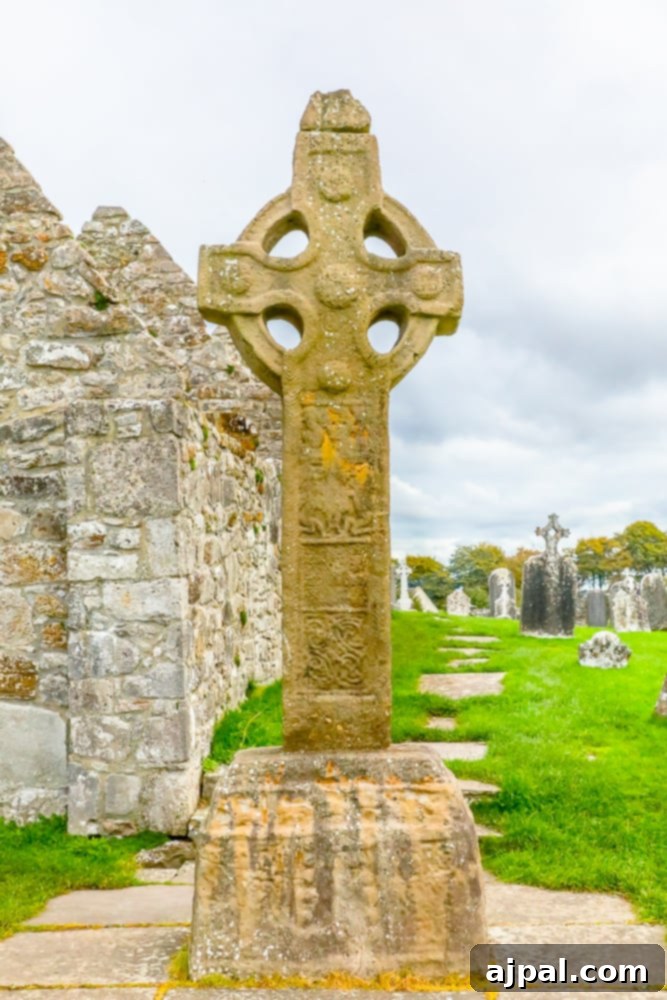
Treasured Works and Architectural Wonders of Clonmacnoise
The legacy of Clonmacnoise extends beyond its historical narrative to its tangible artistic and architectural contributions. The artisans of Clonmacnoise left behind a remarkable collection of works that showcase their extraordinary skill and the profound spiritual depth of the period:
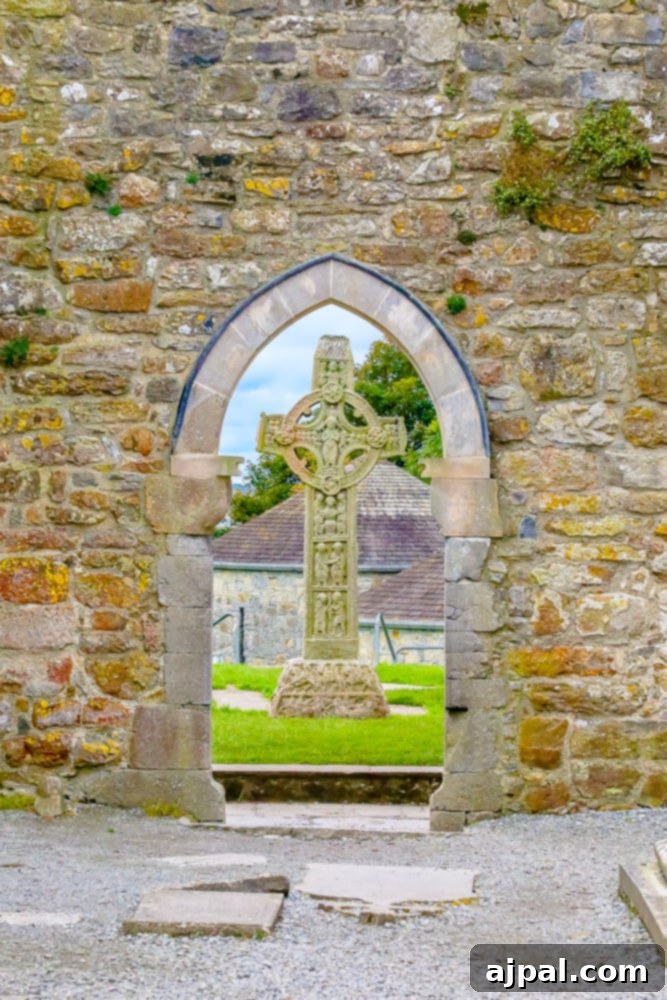
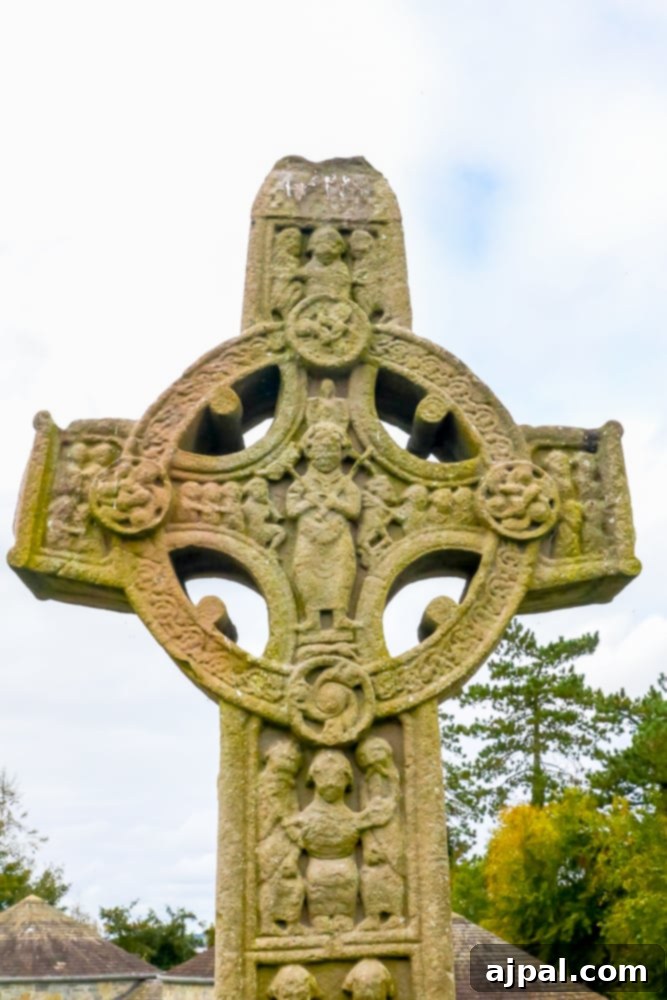
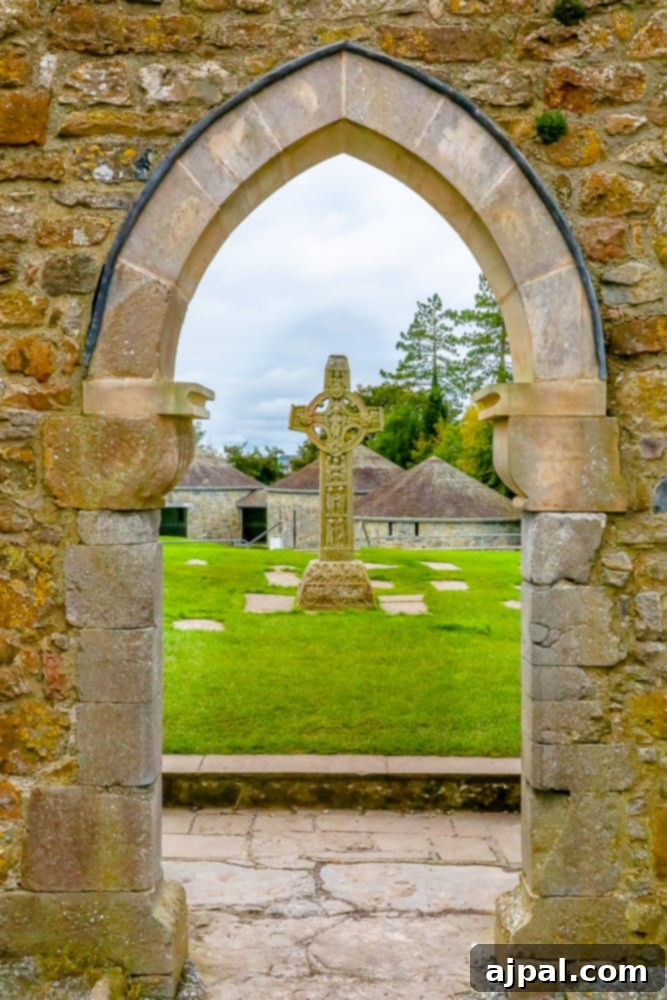
- The Cross of the Scriptures: This magnificent high cross, dating to the 9th or 10th century, is one of Ireland’s finest examples of early Christian sculpture. Standing at nearly four meters tall, its intricate carvings depict biblical scenes, including the Last Judgement and the Crucifixion, alongside scenes of everyday monastic life and Irish kings. These carvings served as visual sermons for a largely illiterate population and are a testament to the artistic sophistication of Clonmacnoise. While the original is protected in the visitor center, a replica stands proudly on the original site, inviting contemplation.
- The Clonmacnoise Crozier: A spectacular example of metalwork, this Viking-style gilded staff dates from the late 11th or early 12th century. Adorned with elaborate animal interlace and intricate filigree work, it embodies the fusion of native Irish and Norse artistic traditions. It served as a symbol of authority for the abbots of Clonmacnoise and is now a prized possession of the National Museum of Ireland.
- The Book of the Dun Cow (Leabhar na hUidre): This invaluable vellum manuscript, dating to the 12th century, is one of the oldest surviving manuscripts written entirely in Irish. It contains a collection of important early Irish sagas, myths, and historical texts, providing crucial insights into the literary and cultural heritage of ancient Ireland. Its preservation speaks to the intellectual dedication of the Clonmacnoise scribes.
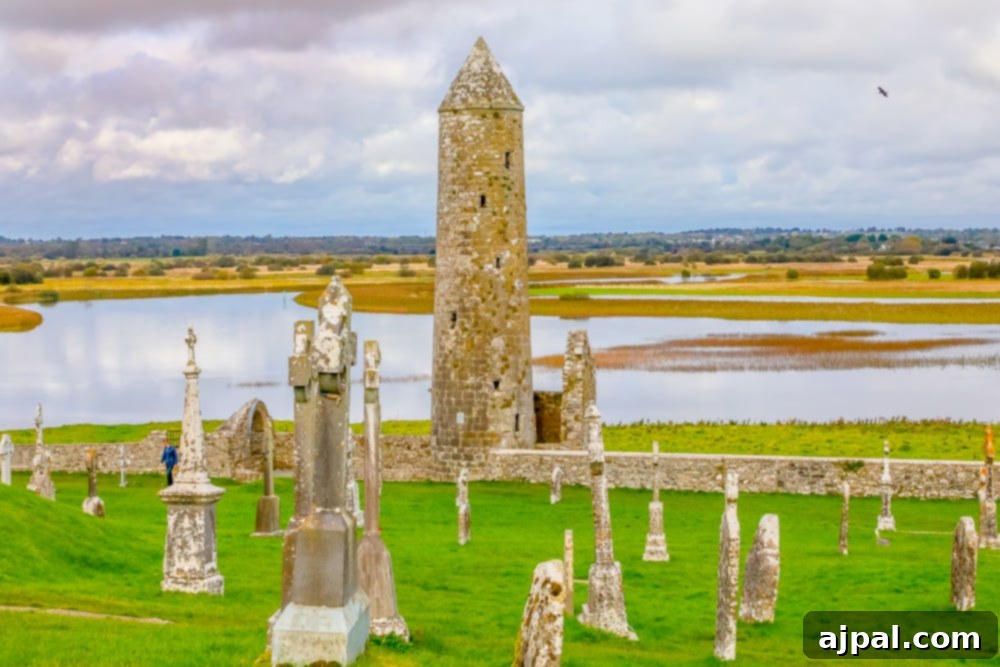
Beyond these individual artifacts, the Clonmacnoise site itself is an open-air museum of early Christian architecture. Visitors can explore the evocative ruins of a cathedral, seven distinct churches, two iconic round towers, and three impressive high crosses. The site is also home to what is considered the largest collection of early Christian grave slabs in Western Europe, many adorned with Ogham inscriptions and elaborate Celtic designs, offering a unique window into the funerary practices and artistic styles of the era. A small tea room on-site provides a pleasant spot for visitors to relax and reflect after exploring the extensive grounds.
Exploring the Historic Buildings of Clonmacnoise
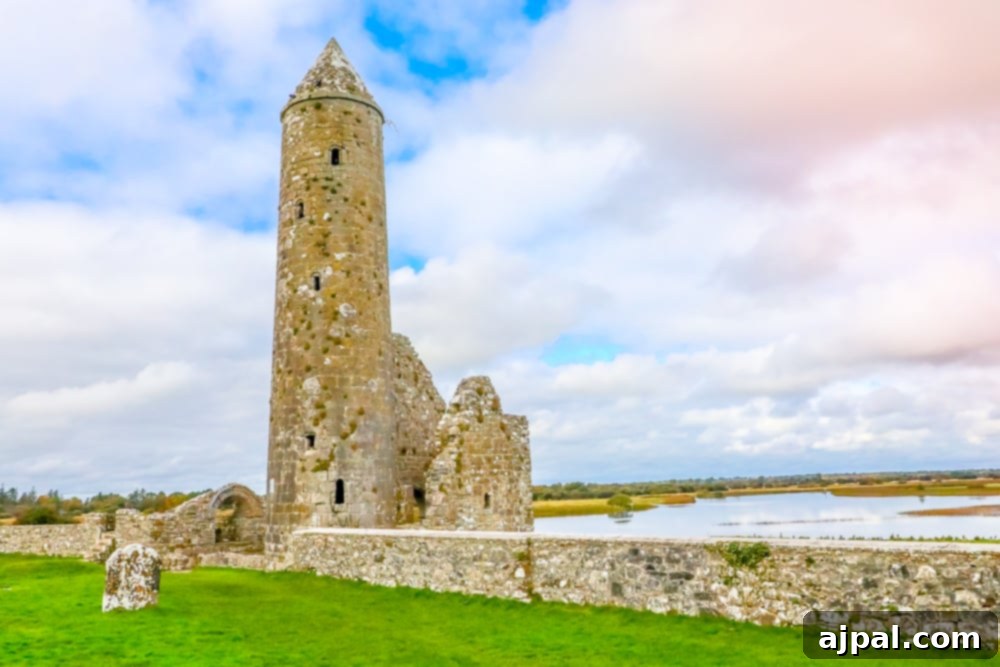
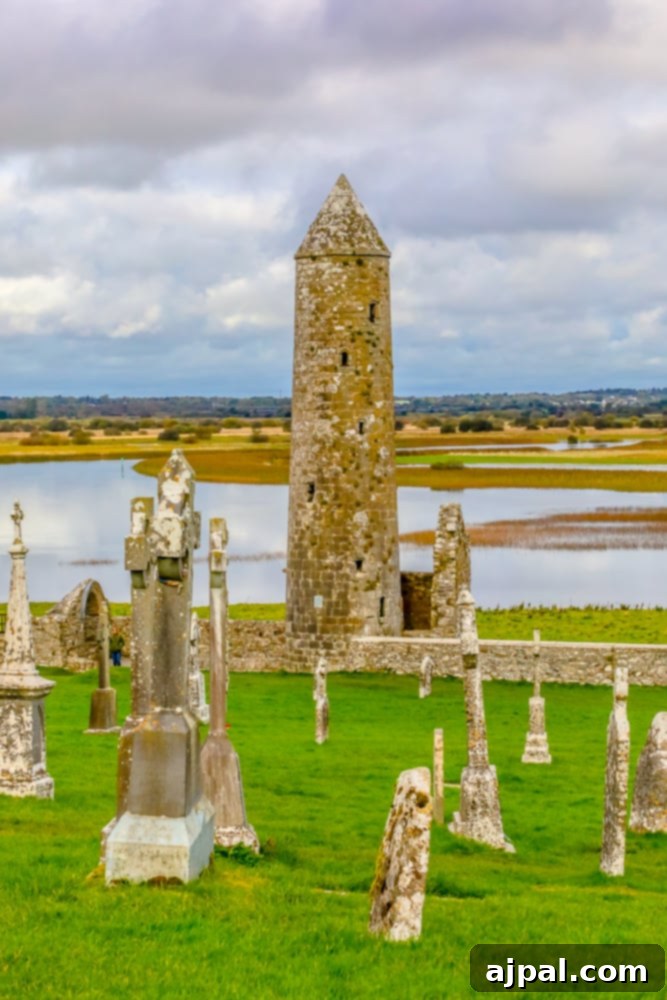
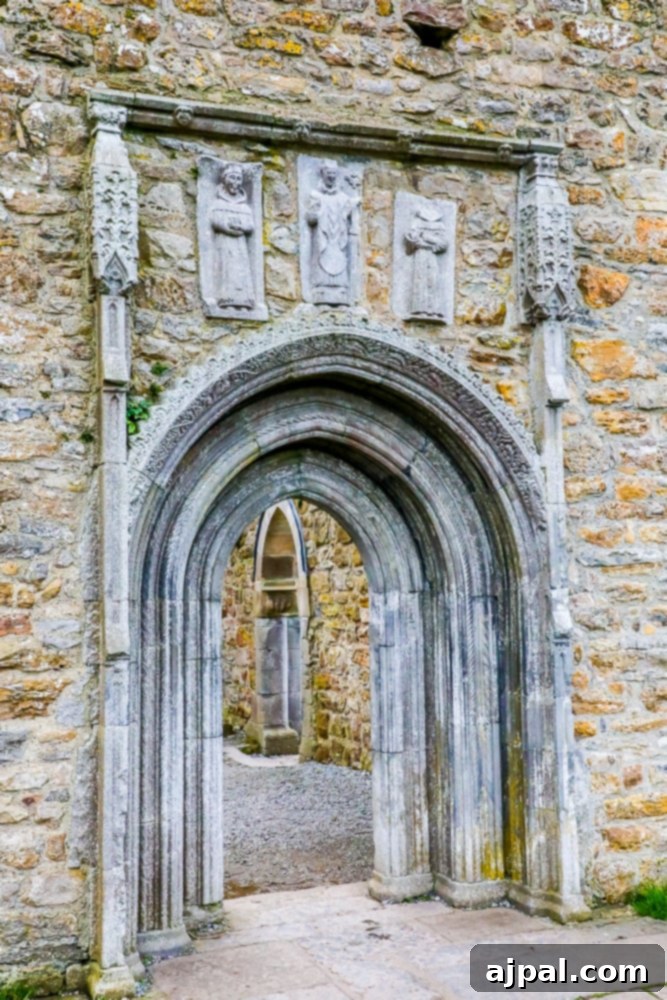
The Clonmacnoise monastic settlement is an expansive site, encompassing a rich collection of ruins that tell stories of centuries of faith, scholarship, and struggle. The remains of the **Cathedral** stand as a reminder of the site’s ecclesiastical importance, while the seven distinct churches – including **Temple Finghin & McCarthy’s Tower**, **Temple Ciaran**, and **Temple Kelly** – each offer a unique glimpse into the architectural evolution and spiritual practices of the community. The two iconic **Round Towers**, distinctive features of Irish monastic sites, served multiple purposes: bell towers, lookout points, and places of refuge during raids. Their slender, conical forms are engineering marvels of their time. Scattered throughout the grounds are the aforementioned high crosses and an extensive graveyard, which continues to be a sacred burial ground. Walking among these ancient stones, one can truly feel the weight of history and the enduring spirit of early Irish Christianity. A visit to Clonmacnoise is not just a tour of ruins; it is an immersive journey into the very soul of Ireland’s past.
Where to Stay Near Clonmacnoise for an Enchanting Experience
Enhancing your visit to Clonmacnoise often involves finding the perfect accommodation that complements the historical ambiance of the region. Ireland’s Midlands offer a variety of options, from historic castles to modern hotels. During my own exploration, I had the pleasure of staying at two distinct establishments:
Kinnitty Castle Hotel: A Royal Retreat
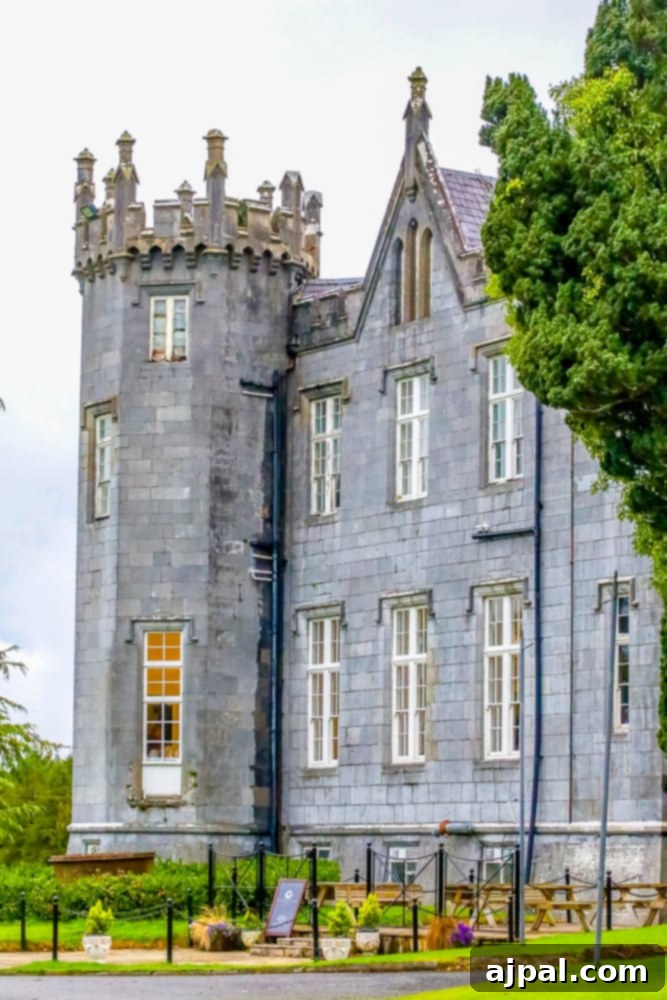
My first night in the area was spent at the magnificent Kinnitty Castle Hotel, a truly enchanting spot with its own deep-rooted history. The original castle on this site, dating back to 1209, was unfortunately destroyed but was swiftly rebuilt by the Normans in 1213. Echoes of its ancient past remain, with a High Cross and abbey wall still visible nearby. The current castle structure largely stems from a 1630 build by William O’Carroll, though it underwent numerous transformations and ownership changes over the centuries, including confiscation by the English, grants to military heroes, and expansion under the direction of prominent architects and noble families.
The castle’s journey through Irish history continued with its burning during the Irish Revolution in 1922, followed by a meticulous rebuilding in 1928 by the Barnard family. After changing hands again in the mid-20th century, it served as a forestry college until 1994. Today, Kinnitty Castle has been beautifully converted into a luxurious 37-room hotel and conference center, offering guests a unique opportunity to live within a piece of Irish heritage. Its grand interiors, stunning grounds, and historical charm make it an unforgettable stay. Kinnitty Castle is conveniently located roughly 45 minutes from the Clonmacnoise Monastery site, making it an ideal base for exploring the region’s ancient wonders.
Radisson Blu Hotel, Athlone: Modern Comfort by the Shannon
Following my visit to Clonmacnoise, I opted for a more contemporary stay at the Radisson Blu Athlone. While I regrettably didn’t capture photos of this stunning riverside hotel, its comfort and location were truly exceptional. Arriving in Athlone feeling quite exhausted, I appreciated the hotel’s inviting atmosphere, which led to an early and restful night’s sleep. The Radisson Blu offers spacious, immaculately clean rooms and convenient parking, making it a hassle-free choice for travelers. Its prime position on the banks of the Shannon River provides scenic views and easy access to Athlone town center. Moreover, its strategic location makes it an excellent halfway point for those traveling between Dublin and the western regions of Shannon or Galway, offering a comfortable and convenient stopover.
Essential Tips for a Memorable Tour of Clonmacnoise Abbey
Clonmacnoise Abbey is truly a magnificent destination, offering a more serene and reflective experience compared to some of Ireland’s more heavily trafficked tourist sites. Its peaceful atmosphere allows visitors to truly absorb the rich history and beautiful surroundings. To ensure you have the most rewarding and memorable visit to Clonmacnoise, consider these practical tips:
-
Understand Ticket Information.
Like many of Ireland’s cherished historical attractions, Clonmacnoise has an entrance fee. As of spring 2018, general admission was 8 Euros, with a family ticket (for two adults and two children) available for 20 Euros. It’s always a good idea to check the official Heritage Ireland website for the most current pricing and to potentially book your tickets online in advance to save time upon arrival. I found that credit cards were readily accepted for ticket purchases, so cash isn’t strictly necessary.
-
Dress Appropriately for Irish Weather.
A cardinal rule for any trip to Ireland is to be prepared for all types of weather, regardless of the season. The climate can be notoriously unpredictable, often swinging from sunshine to rain, wind, and chilly temperatures in a single day. This is especially true when you’re exploring sites located right on the Shannon River, like Clonmacnoise, where gusts can be significant. Dressing in layers is key. When I visited in late September, I wore a scarf, hat, a medium-weight rain jacket over a long-sleeved t-shirt, jeans, and waterproof hiking boots. While I started out quite cold, the weather eventually brightened, and I ended up shedding my jacket, scarf, and hat as it warmed up. Always pack a waterproof outer layer!
-
Exercise Caution Off Designated Walkways.
While Clonmacnoise provides accessible walkways throughout the former abbey grounds, remember that you are exploring a very ancient site. When venturing onto grassy areas, particularly within the historic graveyard, please exercise extreme caution. There are numerous old gravestones, uneven ground, and potentially slick areas that can be easily overlooked. Staying alert will prevent slips or trips and help preserve the delicate nature of the site.
-
Maintain Respectful Conduct.
Even though regular religious services at Clonmacnoise primarily occur during the summer months, the entire abbey grounds remain a sacred and historic burial site. Treat your visit with the same reverence you would afford a functioning church or graveyard. Keep voices low, prevent children from running and playing freely among the ruins and headstones, and never duck under ropes or enter areas that are clearly marked as closed or restricted. Respecting the sanctity of the site ensures a pleasant experience for everyone.
-
Utilize On-Site Guides and Information.
The visitor center at Clonmacnoise is an invaluable resource. It offers a wealth of informational texts, brochures, and books designed to help you fully grasp the abbey’s historical and spiritual significance. Be sure to pick up a guide or brochure to enhance your understanding as you explore. These resources can transform your walk through the ruins into a much deeper journey through Ireland’s Christian history.
-
Allocate Ample Time for Your Tour.
Don’t make the mistake of assuming Clonmacnoise is just a quick roadside stop. I initially thought I’d be in and out in under an hour, but I ended up spending a couple of hours fully immersed in the experience. The site encourages unhurried exploration: wander along the serene banks of the Shannon River, marvel at the ancient round towers, and take the short walk past the parking lot to glimpse the ruins of the former Clonmacnoise Castle. While you can’t get extremely close to the castle ruins, the perspective is certainly worth the extra effort.
-
Enjoy a Refreshment at the Small Cafe.
Should you find yourself in need of a warm cup of tea or coffee, a cold beverage, or a light snack or sandwich, there is a convenient small cafe located within the Clonmacnoise abbey grounds. It’s a perfect spot to take a brief pause, warm up, or simply refresh before continuing your exploration.
-
Consider Arriving Early or Late.
To truly experience the tranquil beauty of Clonmacnoise without the crowds, timing your visit strategically can make a significant difference. Upon my arrival, the parking lot was packed, and a long queue formed for tickets, as many tourists use it as a mid-point stop. However, by the time I departed closer to closing, I had the monastery almost entirely to myself. To avoid the peak tourist crush, aim to arrive either right when the abbey opens or in the late afternoon, closer to its closing time. If you choose the latter, consider staying overnight in nearby Athlone to fully enjoy the evening in the Midlands.
-
Explore the Unique Gift Shop.
While I often caution against generic tourist gift shops, the one at Clonmacnoise is an exception. It boasts an exceptional selection of books delving into both general Irish history and the specific history of the Christian church in Ireland. Beyond literature, you’ll find a delightful array of gorgeous local artisan goods, crafts, and artwork. A particular highlight for me was the wide selection of beautiful replica crosses, intricately carved from peat. I purchased several of these, including representations of Celtic High Crosses my family and I had visited on a previous trip in 2016. If my suitcase had more space, I would have certainly bought more! The gift shop also offers a selection of chips, drinks, and ice cream. Note that to access the gift shop, you’ll typically exit the main abbey grounds, walk through the parking lot, and head towards the adjacent farm. During peak summer season, some items might be sold within the abbey gates, but in the quieter off-season, the main shop is outside.
Continue Your Irish Journey: More Inspirations from My Travels
The magic of Ireland extends far beyond Clonmacnoise. If this glimpse into the Emerald Isle’s profound history and stunning landscapes has captivated your imagination, I invite you to explore more of my travel experiences across this enchanting country. Discover diverse facets of Irish culture, from bustling city life to serene natural wonders, through these additional guides:
Explore Killarney’s Charms:
Things to See in Killarney Ireland
Killarney National Park
A Taste of Dublin:
Dublin Ireland: What We Ate
Why You Should Visit Dublin; What to Do In Dublin
Discover Cork’s Delights:
English Market, Cork, Ireland
Cork, Ireland: Where to stay, what to eat, what to do
A Visit to Blarney:
Blarney Castle, Ireland