

Say goodbye to store-bought bagels and hello to your new obsession: incredible homemade sourdough discard bagels! Imagine biting into a bagel that’s wonderfully soft and chewy on the inside, with a perfectly crispy, golden-brown crust. Best of all, this recipe offers a delicious and satisfying way to put your leftover sourdough discard to fantastic use, transforming it into a gourmet breakfast or a delightful anytime snack. Whether you top them with a classic schmear, savory seasonings, or something sweet, these bagels are sure to become a staple in your kitchen.

We understand that sometimes you just want the recipe without all the extra details. For your convenience, we’ve included a “skip to recipe” button at the top left of this page, and a clickable table of contents just below, making it effortless to navigate directly to what you need. However, if you’re keen to master the art of bagel making and understand the science behind perfect sourdough discard bagels, we invite you to explore the full post!
At Sweet C’s, our mission is to empower every home cook. As someone who learned to cook without formal training, I’ve found that understanding “why” a recipe works, and the role each ingredient plays, builds immense confidence in the kitchen. My goal is to break down complex baking processes into simple, approachable steps, ensuring that even the most beginner home cook can create delicious, bakery-quality results right from their own kitchen. Let’s make baking beautiful and effortless together!
Table of Contents
- The Perfect Blend: Yeast and Sourdough Discard Bagels
- Essential Ingredients for Sourdough Discard Bagels
- Step-by-Step: How to Make Sourdough Discard Bagels
- Pro Tips and Tricks for Sourdough Discard Bagels
- Storing Your Homemade Sourdough Discard Bagels
- Frequently Asked Questions (FAQs) About Sourdough Bagels
- Delicious Ways to Serve Discard Sourdough Bagels
- Sourdough Discard Bagels Recipe

The Perfect Blend: Yeast and Sourdough Discard Bagels
There’s nothing quite like a weekend brunch, and for me, it simply isn’t complete without a fresh batch of my homemade sourdough bagels. Making bagels from scratch is a truly rewarding experience, opening up a world of customization. You can craft each one exactly how you like it – some generously topped with melted cheese, others speckled with nutty sesame seeds, or perhaps an everything bagel seasoning blend. This recipe shines because it smartly combines two powerful leavening agents: active dry yeast and sourdough discard. While some baking purists might label using yeast alongside sourdough as “cheating,” I see it as a clever technique that yields superior results.
Sourdough discard, when used as the sole leavening agent, often produces a denser texture, which is lovely for certain breads but not ideal for the distinct chewiness and slight crispness we crave in a perfect bagel. By integrating instant yeast, we ensure a reliable, lighter rise while still benefiting from the complex flavor profile that sourdough brings. The sourdough discard contributes a subtle yet distinct tangy depth, enhancing the overall taste without overwhelming it. Meanwhile, the yeast works its magic, creating a light, airy crumb that remains wonderfully chewy, perfectly contrasting with the bagel’s signature crispy exterior.
This dual-leavening approach not only speeds up the proofing process, making bagel-making more accessible, but it also guarantees a consistent texture and flavor that’s hard to achieve with sourdough alone, especially when using discard (which has less active leavening power than a fed starter). Trust me, once you experience the superior taste and texture of these homemade sourdough discard bagels, you’ll find it incredibly difficult to return to the bland, often rubbery, store-bought alternatives!
My Pro Tip
Scaling and Freezing for Future Enjoyment
If you find yourself with an abundance of sourdough discard, this recipe is perfect for scaling up! I highly recommend doubling or even tripling the recipe. Once your dough has completed its initial rise, you can easily portion off any dough you don’t need immediately. Simply place these portions into freezer-safe Ziplock bags. When freezing, ensure you press out as much air as possible and leave at least half the bag empty. This allows room for the dough to expand slightly when it thaws and begins its next rise, preventing any messy bursts. Thaw the frozen dough overnight in the refrigerator, then proceed with the shaping, boiling, and baking steps as usual for fresh, delicious bagels whenever the craving strikes!
Essential Ingredients for Sourdough Discard Bagels
Crafting the perfect sourdough discard bagel begins with understanding the role of each ingredient. Here’s what you’ll need to assemble:
- All-Purpose Flour (4 cups) – This forms the foundational structure of your bagels. Using all-purpose flour provides the ideal balance for a sturdy yet soft interior and contributes significantly to that satisfying chewiness that defines a great bagel. For an even chewier texture, you can substitute a portion of it with bread flour, which has a higher protein content.
- Granulated Sugar (4 tbsp, divided) – Sugar plays a dual role here. A portion helps activate the instant yeast, giving it the fuel it needs to kickstart fermentation. The remaining sugar is crucial for the boiling water bath, contributing to the signature shiny, crisp crust and enhancing the overall flavor of the bagel, adding a subtle sweetness that balances the tang.
- Instant Yeast (1 tsp) – Our powerful co-leavening agent. Instant yeast accelerates the fermentation process, ensuring a reliable and consistent rise for your bagels. It works in harmony with the sourdough discard to create a lighter, chewier texture than sourdough alone, making the bagel-making process more predictable and quicker.
- Sea Salt (2 tsp) – More than just a flavor enhancer, salt is vital for strengthening the gluten network in the dough. This results in a better-textured bagel with a firmer crumb and improved elasticity. It also balances the flavors of the flour and sourdough, preventing the bagels from tasting flat.
- Sourdough Discard (¾ cup or 200 grams, room temperature) – The star of our recipe! Unfed sourdough discard imparts a distinctive, slightly tangy flavor that elevates these bagels beyond ordinary. Using it at room temperature ensures it integrates smoothly into the dough and contributes effectively to the overall fermentation process, even if it’s not actively bubbling.
- Warm Water (1 ¼ cup, 110-115 degrees F) – The right temperature of water is critical. It properly hydrates the flour, allowing gluten to develop, and crucially, it activates the instant yeast without killing it. This ensures optimal fermentation and a well-risen dough.
- Egg Wash (1 egg, mixed with 1 tbsp water) – Applied just before baking, this simple mixture creates that beautiful, glossy, golden-brown crust we all love. It also helps toppings adhere perfectly to the bagel, ensuring they don’t fall off during baking.
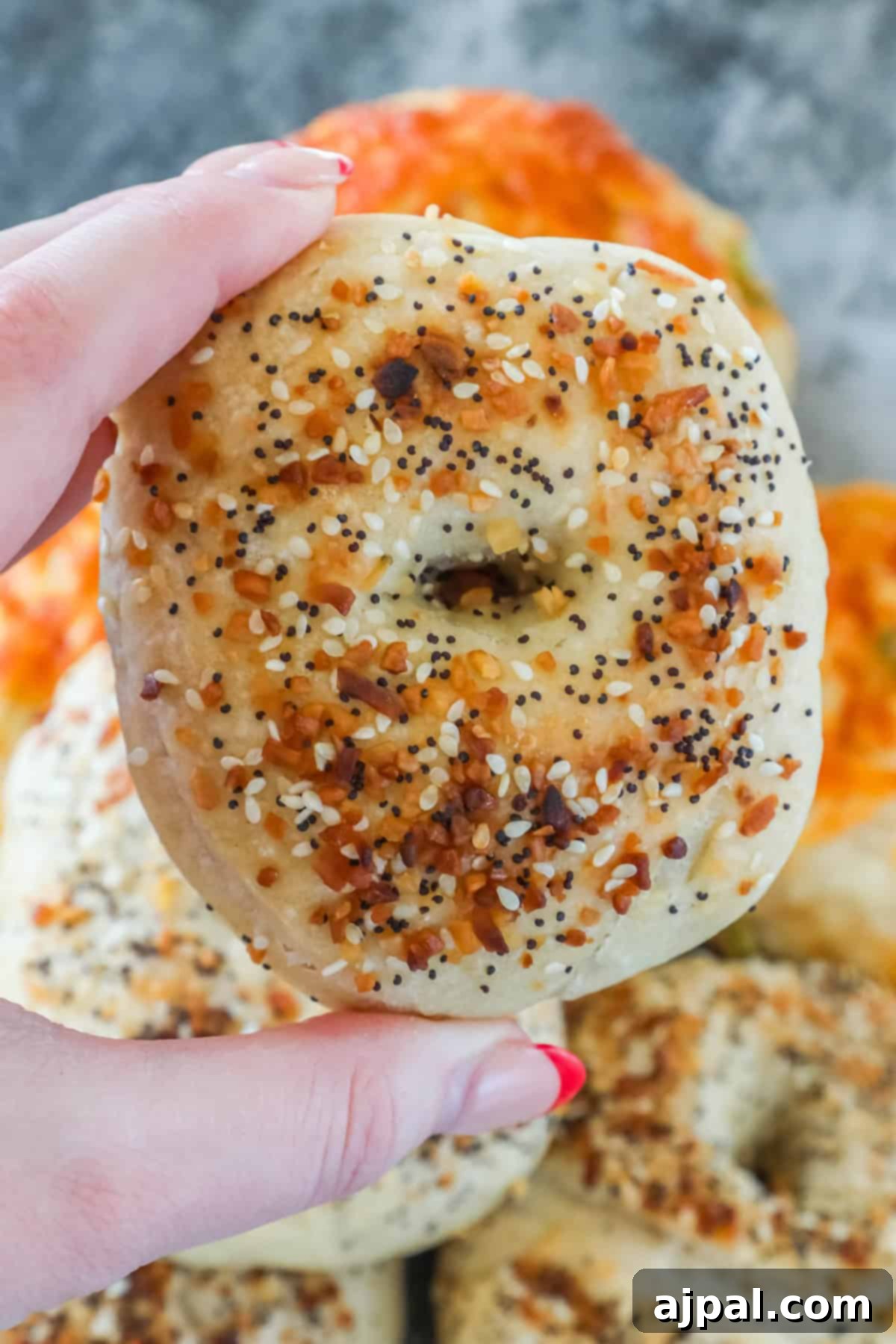
- Optional Toppings – This is where your creativity shines! Customize your bagels with classic options like everything bagel seasoning (a blend of sesame seeds, poppy seeds, dried garlic, and onion), simple poppy seeds, or sesame seeds. For a savory kick, try mixing in jalapeño and cheese directly into some dough portions. For a sweet treat, add fresh blueberries, cinnamon sugar, or dried fruits to others. The possibilities are endless!

Step-by-Step: How to Make Sourdough Discard Bagels
Follow this detailed method to create your irresistibly chewy and crispy sourdough discard bagels:
- Combine Dry Ingredients. In the bowl of a stand mixer fitted with a dough hook attachment, combine your all-purpose flour, 1 tablespoon of granulated sugar, instant yeast, and sea salt. Give these dry ingredients a quick mix on low speed to ensure they are well combined before adding the wet components.
- Add Wet Ingredients & Knead. With the mixer still on low speed, gradually add the room temperature sourdough discard and warm water. Once a shaggy dough forms, increase the mixer speed to medium-low and knead for 4-5 minutes. The dough should become smooth, elastic, and pull away from the sides of the bowl. It will be slightly firm, which is ideal for bagels.
- First Rise (Bulk Fermentation). Lightly grease a large bowl with a little oil. Transfer your kneaded dough to this bowl, turning it once to coat all sides. Cover the bowl tightly with cling wrap or a damp kitchen towel. Let the dough rise on your kitchen counter at room temperature for approximately 90 minutes. During this time, the dough should visibly increase in size, ideally doubling, indicating proper fermentation.
- Shape the Bagels. Gently punch down the risen dough to release the air. Turn the dough out onto a lightly floured surface. Divide the dough into 8-10 equal pieces. For each piece, roll it into a tight ball, then use your thumb to poke a hole directly in the center. Gently stretch and rotate the dough around your thumb, widening the hole to create the classic bagel shape. Aim for a hole that’s about 1-1.5 inches in diameter, as it will shrink during boiling and baking. Repeat this process for all dough pieces.
- Second Rise (Proofing). Arrange the shaped bagels on a lightly floured surface or a baking sheet lined with parchment paper. Cover them with a damp kitchen towel to prevent them from drying out. Allow them to proof at room temperature for another 20 minutes. They should look slightly puffy but not overly airy.
- Prepare for Boiling & Baking. Preheat your oven to a high temperature of 425ºF (220ºC). Place a large pot of water on the stove and bring it to a rolling boil. Add the remaining 2 tablespoons of granulated sugar to the boiling water – this is crucial for developing that beautiful golden crust and contributing to the chewy texture.
- Boil the Bagels. Carefully place the bagels into the boiling water, one or two at a time, making sure not to overcrowd the pot. Let them boil for 30 seconds on each side. This boiling step is essential; it gelatinizes the starches on the exterior, giving bagels their signature chew and crust. Using a slotted spoon or spider, remove the boiled bagels and transfer them to a baking sheet lined with parchment paper.
- Create Steam in the Oven. For a truly professional-style, crispy crust, place a separate sheet pan with about two cups of water into the preheated oven as it warms up. The steam created during baking will help achieve that desirable crispness.
- Add Toppings. In a small bowl, whisk together the egg and 1 tablespoon of water to create an egg wash. Lightly brush the tops of each boiled bagel with the egg wash. Immediately sprinkle your desired toppings—whether it’s everything seasoning, poppy seeds, or a generous layer of grated cheese—onto the wet surface, ensuring they adhere well.
- Bake to Perfection. Transfer the baking sheet of topped bagels to the preheated oven. Bake for 18-22 minutes, or until the bagels are a rich, golden-brown color and sound hollow when tapped on the bottom. Keep an eye on them, as oven temperatures can vary. Once baked, remove from the oven and transfer to a wire rack to cool slightly. Enjoy your freshly baked sourdough discard bagels warm!
Pro Tips and Tricks for Sourdough Discard Bagels
Achieving bakery-quality sourdough discard bagels is easier than you think with these expert tips:
- Embrace High-Protein Flour: While all-purpose flour works well, opting for bread flour (or high-gluten flour) will significantly enhance the chewiness. The higher protein content develops a stronger gluten network, which is essential for that classic bagel texture.
- Knead Thoroughly for Gluten Development: Don’t skimp on kneading! Developing a strong gluten structure is paramount for chewy bagels. Knead the dough for at least 8–10 minutes in a stand mixer, or 15-20 minutes by hand, until it passes the “windowpane test.” This means you can stretch a small piece of dough thin enough to see light through it without tearing.
- Prioritize Proper Resting and Proofing: Giving your dough adequate time to ferment and proof is critical for flavor and texture. While this recipe uses yeast for a faster rise, a slow, overnight cold fermentation in the refrigerator (after the first rise and shaping) can dramatically deepen the sourdough tang and improve the overall texture.
- Master the Bagel Shape: For consistently shaped bagels, roll each dough portion into a smooth, tight ball first. Then, gently poke a hole in the center with your thumb and carefully stretch the dough around it, rotating it to achieve an even ring. Aim for a hole that looks slightly larger than you think, as it will shrink during the boiling and baking process.
- Utilize Room Temperature Discard: For the best flavor contribution and seamless integration into the dough, ensure your sourdough discard is at room temperature. Even if it’s unfed, bringing it to room temp wakes up some of its flavor compounds.
- Cold Fermentation for Enhanced Flavor: If you have time, allowing the shaped bagels to rest in the refrigerator overnight (8-24 hours) after the second rise will significantly enhance that desirable tangy sourdough flavor. This slow fermentation also improves the dough’s workability and the final texture.
- Adjust Hydration as Needed: Sourdough discard can vary in consistency, affecting your dough’s hydration. If your dough feels too sticky to handle, add a small amount of flour (a tablespoon at a time) until it reaches a firm, workable consistency. Conversely, if it’s too dry, add a tiny bit more warm water.
- Malt Syrup Magic (Optional but Recommended): For an authentic New York-style bagel flavor and an even chewier crust, consider adding a tablespoon of barley malt syrup to both the dough and the boiling water bath. It contributes a distinctive flavor and a lovely sheen.
- Ensure Toppings Stick: The egg wash is your best friend here! Brush boiled bagels with a generous coating of egg wash immediately after boiling and before adding toppings like sesame seeds, poppy seeds, or everything seasoning. This creates a tacky surface that helps toppings adhere beautifully.
- Double Boiling for Maximum Chew: For an extra-chewy interior and a robust crust, extend the boiling time to 60–90 seconds per side. This longer bath allows the exterior to set more thoroughly, leading to a fantastic texture.
- Steam for a Crisper Crust: Don’t skip the pan of hot water in the oven! This simple step creates steam, which is critical for achieving a professional-style, shiny, and exceptionally crispy crust on your bagels.
Storing Your Homemade Sourdough Discard Bagels
Once baked, your delicious sourdough discard bagels are best enjoyed fresh. For optimal flavor and texture, store any leftovers at room temperature in an airtight container or a sealed plastic bag for up to 3 days. To refresh day-old bagels, a quick toast in a toaster or oven will bring back their lovely chewiness and crisp exterior. For longer storage, freezing is an excellent option to preserve their freshness for weeks.
Can I freeze sourdough discard bagels?
Absolutely, freezing sourdough discard bagels is a fantastic way to enjoy them anytime! I frequently bake extra batches specifically for freezing. For maximum convenience and to ensure they’re ready to eat in a hurry, allow your freshly baked bagels to cool completely, then slice them horizontally before freezing. Once sliced, place them in a freezer-safe bag or airtight container, removing as much air as possible to prevent freezer burn. When you’re ready to enjoy, you can pop a frozen, pre-sliced bagel directly into the toaster for a quick, delicious treat that tastes almost as good as fresh. This method eliminates the need for thawing beforehand, making them perfect for busy mornings!
Frequently Asked Questions (FAQs) About Sourdough Bagels
Yes, it is possible to make bagels using only sourdough discard as the leavening agent. However, be prepared for a significantly longer fermentation and rising time—typically 8–12 hours at room temperature, or even overnight in the fridge for a more developed flavor. For the best results with 100% sourdough, you’ll want to use an active, bubbly discard, ideally one that has been fed relatively recently, rather than a completely dormant one from the back of the fridge. The texture may also be slightly denser than with the yeast-assisted method.
For this recipe, unfed sourdough discard works perfectly. The ‘discard’ part means it’s not a freshly fed, highly active starter, but rather the portion you typically remove before feeding. Using it at room temperature will help it integrate better and contribute its characteristic tangy flavor more effectively. If your discard has been stored in the refrigerator for an extended period, it’s best to bring it to room temperature for a few hours before incorporating it into the dough. This allows it to relax and become more pliable.
Several factors contribute to that desirable bakery-style chew. First, use high-protein flour, like bread flour, as it forms a stronger gluten network. Second, ensure you knead the dough thoroughly until it’s smooth and elastic. Third, and perhaps most crucially, boil the bagels before baking. Boiling gelatinizes the outer starches, creating that unique chewy crust. For an extra-chewy texture, boil them for a full 30-60 seconds per side. Additionally, incorporating a touch of barley malt syrup into the dough and boiling water can further enhance both chewiness and flavor.
Sourdough discard can vary greatly in its hydration level depending on the flour used and how thin or thick your starter is. This directly impacts the consistency of your dough. If your dough is too sticky and difficult to handle, add a small amount of flour (half a tablespoon at a time) until it becomes firm yet pliable. If it’s too dry and crumbly, add warm water gradually (a teaspoon at a time) until it forms a smooth, cohesive, and workable dough. Always adjust slowly until you reach the correct consistency.
Yes, boiling the bagels before baking is a non-negotiable step for authentic bagels! This crucial process gelatinizes the starches on the surface of the dough, creating a firm, shiny skin that helps prevent the bagels from puffing up too much in the oven. The result is the signature chewy interior and glossy, crisp exterior that defines a true bagel. Skipping this step would yield more of a bread roll than a bagel. For maximum chewiness, boil for 60–90 seconds per side.
Flat bagels often indicate overproofing. If your dough rises too much or for too long, the gluten structure can weaken, causing the bagels to collapse during boiling or baking. Ensure your bagels are puffy but still firm and hold their shape before they go into the boiling water. Another potential culprit could be under-kneading, which results in weak gluten development, or even over-kneading, which can break down the gluten structure. Always aim for a dough that passes the windowpane test.
Absolutely, and it’s highly recommended for enhanced flavor! Cold fermentation, typically 8–24 hours in the refrigerator, slows down the yeast activity and allows the sourdough tang to develop more deeply. For best results, shape your bagels after the first rise, then place them on a parchment-lined baking sheet, cover them lightly, and refrigerate. When you’re ready to bake the next day, you can boil and bake them straight from the fridge without needing to bring them back to room temperature.

Delicious Ways to Serve Discard Sourdough Bagels
Once your homemade sourdough discard bagels are baked to perfection, the possibilities for serving are endless. Here are some of our favorite ways to enjoy them:
- Classic Cream Cheese Spreads: The quintessential bagel topping! Opt for plain whipped cream cheese, or get adventurous with savory variations like chive and onion, garlic & herb, or even a subtly sweet honey walnut cream cheese. The tang of the bagel perfectly complements the creamy richness.
- Savory Hummus Options: For a healthier and equally satisfying option, spread your toasted bagel with hummus. Classic chickpea hummus is always a winner, but don’t hesitate to try roasted red pepper or a zesty garlic hummus for an extra burst of flavor.
- Smoked Salmon & Cream Cheese (The Lox Bagel): Elevate your breakfast with a gourmet touch. Layer cream cheese, delicate slices of smoked salmon, capers, thinly sliced red onion, and fresh dill on a toasted bagel. It’s a timeless combination that feels luxurious.
- Morning Brew Pairings: A fresh bagel is best enjoyed with a warm beverage. Pair it with a steaming cup of coffee or a bold espresso to kickstart your day.
- Cozy Chai Latte Companion: For a comforting and spiced experience, a Chai Latte makes an excellent pairing, especially with a cinnamon-raisin or plain toasted sourdough bagel.
- Refreshing Juices or Smoothies: Balance the richness of your bagel with something light and invigorating. Freshly squeezed orange juice, apple juice, or a vibrant berry smoothie (like our raspberry beet smoothie) offers a refreshing contrast.
- Avocado Toast Twist: Mash ripe avocado with a squeeze of lemon, salt, and pepper, then spread it generously over a toasted bagel. Top with chili flakes, everything bagel seasoning, or even a fried egg for a hearty meal.
- Butter and Jam: Sometimes, simplicity is best. A dollop of good quality butter and your favorite fruit jam or marmalade can turn a plain sourdough bagel into a delightful treat.
Try these other fantastic sourdough recipes next:
Sourdough Muffins
Blueberry Sourdough Pancakes
Best Sourdough Discard Chocolate Chip Cookies
Sourdough Pancakes

If you’ve loved making and tasting this easy sourdough discard bagel recipe, we’d be thrilled if you could show your appreciation! Please take a moment to click the stars below to give it a five-star rating and share your thoughts in a comment. Your feedback truly helps our community of home cooks. We also encourage you to share your beautiful bagel creations on Instagram, Facebook, and Pinterest – don’t forget to tag @sweetcsdesigns so we can see what you’ve made!
Share on Facebook
Share
Pin this now to find it later
Pin It
Follow on Instagram
Follow
Only have 30 minutes to get dinner on the table? Sign up for my 30-minute dinner plans direct to your inbox!
Discover and shop my favorite kitchen products in my Amazon storefront here!
Sourdough Discard Bagels Recipe
Katherine
10
bagels
10 minutes
25 minutes
1 hour
50 minutes

Equipment
-
KitchenAid KSM150PSPT Artisan Series 5-Qt. Stand Mixer with Pouring Shield – Pistachio
-
USA Pan Bakeware Half Sheet Pan, Set of 2, Aluminized Steel
-
HexClad Hybrid Nonstick 10-Quart Stockpot with Tempered Glass Lid, Dishwasher Safe, Induction Ready, Compatible with All Cooktops
Ingredients
-
4
cups
all-purpose flour -
4
tbsp
granulated sugar, divided -
1
tsp
instant yeast -
2
tsp
sea salt -
200
grams
sourdough discard, room temp -
1 ¼
cup
warm water, 110 – 115 degrees F -
1
egg, mixed with 1 tbsp of water for egg wash -
Optional toppings: everything but the bagel seasoning, poppyseed, mix in jalapeno and cheese, blueberries, etc.
Instructions
-
Combine flour, 1 tbsp sugar, instant yeast, and salt in a standard mixer with a dough hook attachment. On low speed, combine sourdough discard. Increase speed and knead for 4-5 minutes until smooth and elastic.
-
Transfer dough to a greased large bowl, cover with cling wrap or a damp kitchen towel. Let rise on counter for 90 minutes (dough size should double).
-
Divide dough into 8-10 even pieces. Shape individual pieces into tight balls, then use your thumb to poke a hole in the middle and gently rotate the dough around to make a bagel shape with a 1-1.5 inch hole. Repeat for all pieces.
-
Cover shaped bagels with a damp kitchen towel and leave on the counter for 20 minutes for a second proof.
-
Preheat oven to 425ºF (220ºC). Bring a large pot of water with 2 tbsp sugar to a rolling boil. Place bagels in water one at a time and boil for 30 seconds on each side. Remove with a slotted spoon and transfer to a lined baking sheet.
-
For a crispy crust, place a sheet pan with about two cups of water into the preheated oven to create steam.
-
Create egg wash by whisking 1 egg with 1 tbsp of water. Lightly brush bagels with egg wash and sprinkle desired toppings evenly.
-
Bake for 18-22 minutes or until the bagels achieve a beautiful golden brown color and are cooked through. Enjoy your homemade bagels warm!
Nutrition
Carbohydrates: 43g
Protein: 6g
Fat: 1g
Saturated Fat: 0.2g
Polyunsaturated Fat: 0.3g
Monounsaturated Fat: 0.3g
Trans Fat: 0.002g
Cholesterol: 16mg
Sodium: 473mg
Potassium: 71mg
Fiber: 2g
Sugar: 5g
Vitamin A: 24IU
Vitamin C: 0.004mg
Calcium: 11mg
Iron: 2mg
Nutrition information is automatically calculated and should be used as an approximation.
Additional Info
Breakfast
American
Tried this recipe?
Mention @sweetcsdesigns or tag #sweetcsdesigns!