Unlock the secret to crafting the ultimate Eggs Benedict right in your own kitchen! This comprehensive guide reveals an incredibly easy recipe for perfect poached eggs and a luxurious, silky Hollandaise sauce, transforming what seems like a complicated dish into an effortless brunch masterpiece. Whether you’re a seasoned home cook or just starting your culinary journey, you’ll feel empowered to create restaurant-quality Eggs Benedict that will impress everyone. Plus, we’ve included simple adaptations to make this classic breakfast dish entirely keto-friendly!

For those eager to dive straight into the cooking, feel free to use the table of contents below to navigate directly to the recipe card or any specific section you’re interested in. However, we encourage you to explore the entire article, as we’ve packed it with valuable tips, insights, and answers to common questions, designed to make your Eggs Benedict experience truly exceptional.
Table of Contents
- The Ultimate Homemade Eggs Benedict
- Mastering the Perfect Poached Egg
- Step-by-Step Guide to Poaching Eggs
- Achieving Your Desired Poached Egg Doneness
- Poached Egg Tools for Effortless Perfection
- Choosing the Ideal Base for Eggs Benedict
- Keto and Low-Carb Bread Alternatives
- Effortless Hollandaise Sauce: A Beginner’s Guide
- Beyond Canadian Bacon: Creative Eggs Benedict Variations
- Perfect Pairings: What to Serve With Eggs Benedict
- Frequently Asked Questions About Eggs Benedict
- Easy Eggs Benedict Recipe Card
- Explore More Favorite Recipes
The Ultimate Homemade Eggs Benedict
Eggs Benedict stands as an undeniable icon in the realm of breakfast and brunch. Its elegant presentation and rich, harmonious flavors make it a staple order when dining out. However, many home cooks shy away from attempting this classic in their own kitchens, perceiving it as overly complex or requiring professional culinary skills. We’re here to shatter that misconception! With this deliciously straightforward recipe, you’ll discover that preparing show-stopping Eggs Benedict at home is not only achievable but also incredibly rewarding.
Imagine a leisurely weekend brunch, where you can savor every bite of this gourmet dish without leaving the comfort of your home. Paired with refreshing avocado toasts, an aromatic cup of cardamom coffee, and a vibrant fig and chevre salad or a zesty Lemon Poppyseed Glazed Fruit Salad, you’ll create a memorable culinary experience for your family and friends. This recipe is designed to demystify each component, ensuring even beginner home cooks can achieve perfect results every time.

Mastering the Perfect Poached Egg
The poached egg is arguably the most crucial element of Eggs Benedict, and while it might seem intimidating, it’s a remarkably simple technique once you understand the fundamentals. Poaching involves gently cooking an egg in simmering water, resulting in a delicate, fully set egg white that encases a gloriously runny, rich yolk. This delicate balance of textures is what elevates Eggs Benedict to its iconic status.
Many people struggle with “wispy” egg whites that disperse in the water. However, with a few simple tricks, you can achieve consistently perfect, beautifully shaped poached eggs. One of the most effective methods involves creating a gentle “vortex” in the water before carefully dropping in the egg. This swirling motion helps the egg white coalesce around the yolk, forming a neat, compact shape. We’ll walk you through this technique, along with other helpful tips, to ensure your poached eggs are impeccable every single time. For ultimate ease and consistent shape, we also highly recommend exploring the use of silicone egg poaching cups, which can simplify the process even further.
Step-by-Step Guide to Poaching Eggs
- Prepare Your Water: In a medium-sized pot, bring at least 4 cups of water to a gentle boil. Reduce the heat immediately so the water is barely simmering, with only tiny bubbles forming. Adding 1 tablespoon of white vinegar at this stage helps the egg whites set faster and prevents them from spreading too much.
- Create the Vortex: Using a wooden spoon or whisk, gently stir the water in a circular motion to create a slow-moving “tornado” or vortex in the center of the pot. The goal is a steady, gentle swirl, not a vigorous boil.
- Add the Egg: Crack one egg into a small bowl or ramekin first. This allows you to inspect the egg and carefully slide it into the very center of the water vortex. The swirling water will naturally help the egg white wrap itself around the yolk, creating a tidy shape.
- Cook Gently: Allow the egg to cook undisturbed. The movement of the water should keep the egg contained. If poaching multiple eggs, wait until the first egg’s whites have mostly solidified (about 1 minute) before creating another gentle swirl and adding the next egg. This prevents them from sticking together.
- Monitor Cooking Time: Cook each egg for approximately 3-4 minutes, depending on your desired yolk consistency.
- Remove and Drain: Once cooked to your preference, carefully lift the poached egg out of the water using a slotted spoon. Gently dab it on a paper towel to remove excess water before placing it on your Eggs Benedict.
Achieving Your Desired Poached Egg Doneness
The ideal poached egg in Eggs Benedict features a firm, fully set white and a gorgeously runny yolk that cascades over the other ingredients when pierced. To achieve this decadent texture, aim to poach your eggs for approximately 4 minutes. If you prefer a slightly firmer yolk, you can extend the cooking time by another 30-60 seconds, but be careful not to overcook, as a solid yolk will lose some of that signature Benedict appeal.
Poached Egg Tools for Effortless Perfection
While the vortex method is highly effective, for those seeking absolute ease and consistently perfect egg shapes, silicone egg poaching cups are a game-changer. These simple tools suspend the egg in simmering water, keeping it contained and ensuring a beautifully round, unbroken poached egg every time. They also prevent eggs from sticking to each other, a common challenge when poaching multiple eggs simultaneously. You can find excellent silicone poachers on Amazon, or simply use small ramekins or other silicone baking cups placed directly in the simmering water. Just remember to lightly grease them before adding your eggs.

Choosing the Ideal Base for Eggs Benedict
Traditionally, Eggs Benedict is served on toasted English muffins or crumpets, and for good reason! Their craggy texture and absorbent qualities make them the perfect vehicle for soaking up the rich Hollandaise and runny egg yolk. The nooks and crannies of an English muffin provide little pockets for all those delicious flavors to settle into, creating an irresistible bite.
However, the beauty of home cooking lies in its flexibility. Don’t feel limited by tradition! You can absolutely experiment with other bread varieties, buns, or rolls to create your own unique twist on this classic. Consider toasted sourdough, brioche, or even a savory scone for a different flavor profile and texture. For a lighter touch, you could use a slice of toasted artisanal bread. The key is to choose a base that is sturdy enough to hold the toppings but also soft enough to complement the delicate egg and sauce.
Keto and Low-Carb Bread Alternatives
For those following a ketogenic or low-carb lifestyle, enjoying Eggs Benedict is still entirely possible and equally delicious! Many excellent keto-friendly bread options are now available in grocery stores. We particularly love “Simple Truth Puff Bunz” for their texture and ability to mimic a traditional muffin. Alternatively, you can easily bake your own low-carb bases using one of our fantastic recipes:
- Easy Keto Sandwich Bread Recipe: A versatile option that can be toasted and cut into rounds.
- The Best Air Fryer Keto Rolls Recipe: These rolls offer a soft, airy texture perfect for absorbing flavors.
- The Best Easy Keto Garlic Butter Rolls Recipe: Infuse your base with savory garlic and butter for an extra layer of flavor.
- Easy Keto Everything Bagels Recipe: For a delightful bagel-style Benedict, offering a chewy texture and savory topping.
- Easy Keto Ham and Cheese Rolls Recipe: A great option that integrates some of the traditional Benedict flavors directly into the base.
Beyond bread, consider other keto-friendly bases like portobello mushroom caps, thick slices of grilled avocado, or even a crispy hash brown patty (ensure it’s low-carb if needed) for a truly innovative Eggs Benedict experience.

Effortless Hollandaise Sauce: A Beginner’s Guide
Hollandaise sauce, a cornerstone of classic French cuisine and an indispensable part of Eggs Benedict, often carries a reputation for being temperamental and difficult to master. Many envision a chef meticulously whisking over a double boiler, fearing the dreaded “broken” sauce. However, we’re here to tell you that creating a rich, creamy, and stable Hollandaise sauce is surprisingly simple, especially with modern techniques and a clear understanding of the process.
At its heart, Hollandaise is a luxurious emulsion made from just a few key ingredients: egg yolks, melted butter, and fresh lemon juice, seasoned with a touch of salt and usually a pinch of cayenne or paprika. The magic happens when the warm butter is slowly incorporated into the whisked egg yolks and lemon juice, creating a velvety, thick sauce. The trick is to apply gentle, consistent heat and to add the butter gradually, allowing the emulsion to form without scrambling the eggs.
While the traditional double boiler method is perfectly viable, an immersion blender can make this process virtually foolproof, yielding a perfect Hollandaise in minutes. Regardless of the method you choose, the result is a beautifully balanced sauce that is bright, tangy, and rich, perfectly complementing the poached eggs and savory bacon. Don’t let the mystique of Hollandaise intimidate you any longer; you’re just a few simple steps away from making this exquisite sauce a regular feature in your kitchen.

Beyond Canadian Bacon: Creative Eggs Benedict Variations
While Canadian bacon is the traditional choice for Eggs Benedict, don’t hesitate to get creative and experiment with other delicious proteins and flavors to personalize your dish. The versatility of Eggs Benedict makes it an ideal canvas for culinary exploration.
- Eggs Royale: For a touch of elegance, swap Canadian bacon for thinly sliced smoked salmon. The smoky, briny flavor of the salmon pairs exceptionally well with the rich Hollandaise and delicate poached egg.
- Eggs Florentine: A popular vegetarian option, Eggs Florentine replaces the meat with sautéed spinach or wilted greens. Season the spinach with a touch of garlic and nutmeg for an authentic flavor.
- Country Benedict: Use crispy bacon strips, breakfast sausage patties, or even sliced ham for a heartier, more rustic version.
- Crab Cake Benedict: Elevate your brunch by using savory crab cakes as the base, topped with poached eggs and Hollandaise.
- Steak Benedict: For a truly indulgent experience, thinly slice pan-seared steak and use it as your protein layer.
- Avocado Benedict: For a fresh and creamy twist, add slices of ripe avocado on your English muffin before the poached egg.
You can also infuse your Hollandaise sauce with different flavors. A pinch of cayenne pepper adds a subtle kick, a dash of hot sauce can provide a spicy depth, or a touch of fresh dill or chives can introduce an herbaceous note. The possibilities are endless, allowing you to tailor your Eggs Benedict to your specific taste preferences and dietary needs.
Perfect Pairings: What to Serve With Eggs Benedict
To complete your gourmet brunch, consider these delectable sides and beverages that beautifully complement the rich flavors of Eggs Benedict:
- The Best Air Fried Mushrooms: Earthy and savory, these mushrooms add a wonderful depth of flavor.
- Restaurant Style Instant Pot Pinto Beans: A hearty and flavorful side for a more substantial meal.
- Avocado Toasts: A fresh and vibrant side that balances the richness of the Benedict.
- Berries and Creme Anglaise: A light and sweet dessert to finish your meal on a high note.
- Israeli Cardamom Coffee: An aromatic and invigorating beverage.
- Easy Keto Dalgona Coffee Recipe: A trendy and creamy coffee option.
- Fresh Fruit Salad: A simple bowl of seasonal fruits offers a refreshing contrast.
- Roasted Asparagus or Broccoli: Healthy and delicious green vegetable sides.

Frequently Asked Questions About Eggs Benedict
Hollandaise sauce is best enjoyed fresh, immediately after preparation. However, if you have leftovers or wish to make it slightly ahead, transfer it to an airtight glass container and refrigerate promptly. It will typically last 1 to 2 days. Reheat gently over a double boiler or in a microwave at very low power, stirring constantly, to prevent it from splitting. It’s absolutely divine over roasted asparagus!
Absolutely! You can prepare several elements ahead of time to make assembly quicker. The Hollandaise sauce can be made 1-2 days in advance and gently reheated. Canadian bacon can be cooked and kept warm or reheated. English muffins can be toasted just before serving. Poached eggs are best fresh, but you can poach them up to a day ahead, store them in cold water in the fridge, and then reheat gently in warm water for about 30 seconds before serving.
Hollandaise typically splits due to either overheating (causing the egg yolks to scramble) or adding the butter too quickly. If your sauce splits, try whisking in a teaspoon of very hot water or a fresh egg yolk into the broken sauce. Slowly whisk vigorously as the sauce re-emulsifies. You can also start with a new egg yolk and slowly drizzle the broken sauce into it while whisking, treating the broken sauce like the melted butter.
Fresh eggs are always best for poaching. Fresher eggs have tighter whites that hold their shape better in the water, resulting in a neater poached egg. Older eggs tend to have looser whites that spread out more. If you only have older eggs, adding a bit more vinegar to the poaching water can help.
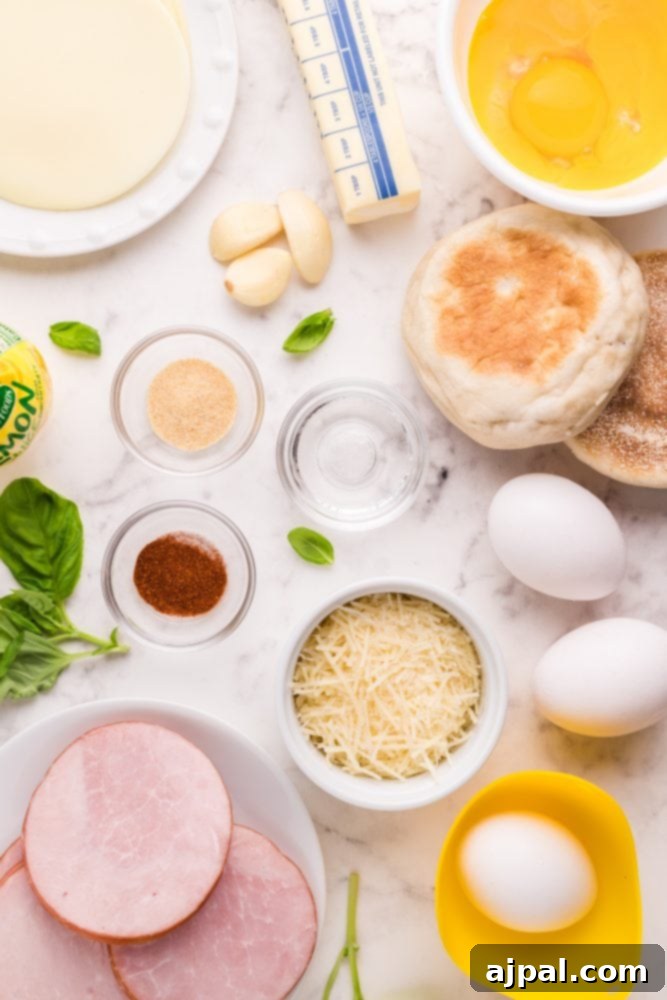





Easy Eggs Benedict Recipe Card
If you loved creating this easy and delicious Eggs Benedict, please consider leaving a five-star rating and a comment below! Your feedback helps us share these wonderful recipes with more home cooks. We’d also love to see your creations on Instagram, Facebook, and Pinterest – be sure to tag us!
Share on Facebook
Share
Pin this now to find it later
Pin It
Follow on Instagram
Follow
For a quick visual guide to this recipe, check out our web story here.

Only have 30 minutes to get dinner on the table? Sign up for my 30 minute dinner plans direct to your inbox!
Find and shop my favorite products in my Amazon storefront here!
Easy Eggs Benedict Recipe
Courtney O’Dell
4
10
15
25
Share by Email
Print Recipe

Equipment
-
Egg Poacher – COZILIFE Silicone Egg Poaching Cups (Pack of 4)
-
Medium Saucepan
-
Whisk
-
Wooden Spoon
-
Slotted Spoon
Ingredients
For the Hollandaise Sauce:
- 4 egg yolks
- 1 tsp garlic powder
- 1 tbsp water
- 1 tbsp lemon juice
- 1 tsp paprika
- 8 oz salted butter, softened (or 1 cup)
For the Eggs Benedict Assembly:
- 4 large eggs (for poaching)
- 1 tbsp white vinegar (for poaching water)
- 3 tbsp salted butter, melted (for English muffins)
- 1 tsp minced garlic
- 2 tsp chopped fresh basil
- 2 English muffins, halved
- ½ cup Parmesan cheese
- 4 slices provolone cheese
- 4 pieces Canadian bacon
- Fresh basil leaf and ground black pepper for garnish (optional)
Instructions
-
Preheat your oven to 350°F (175°C).
-
Prepare the Hollandaise Sauce: In a medium saucepan, combine the 4 egg yolks, 1 tablespoon of water, 1 tablespoon of fresh lemon juice, and garlic powder.
-
Place the saucepan over very low heat on the stove.
-
Whisk the mixture constantly to prevent the eggs from scrambling. As the eggs gently cook, the mixture will begin to thicken.
-
Once thickened to your liking, gradually add the 8 oz (1 cup) of softened salted butter, whisking continuously until it is fully melted and incorporated, forming a smooth, silky sauce.
-
Stir in the paprika, then remove the saucepan from the heat. Set aside, keeping it warm if possible, or refrigerate for later use (see FAQ for storage).
-
Poach the Eggs: If using egg cups, lightly grease them and place them in a pot of simmering water. Crack one egg into each cup and cook for 3-4 minutes, or until the whites are set and yolks are runny. Carefully remove the cups and eggs.
-
If you do not have egg cups, bring 4 cups of water to a gentle boil in a medium pot, then reduce to a simmer. Add 1 tablespoon of white vinegar.
-
Use a wooden spoon to stir the water in a circular motion, creating a gentle vortex in the middle of the pot.
-
Carefully crack one egg into the center of the vortex. The spinning water will help the egg white gather around the yolk, preventing wispy bits.
-
Cook the egg until the white starts to solidify (about 1 minute). If poaching more eggs, create another gentle swirl and add the next egg, being careful not to let them stick together. Cook each egg for approximately 3-4 minutes for a runny yolk.
-
Carefully remove the poached eggs with a slotted spoon and place them on a paper towel to drain excess water.
-
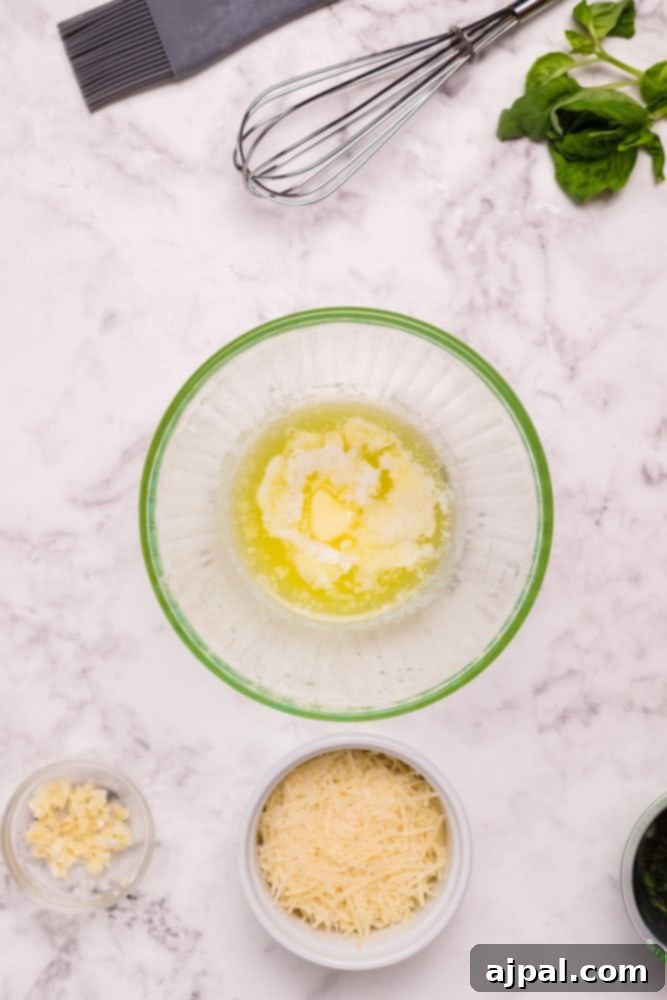
Prepare the English Muffins: In a small bowl, melt the 3 tablespoons of salted butter. Stir in the minced garlic and chopped fresh basil.
-
Split the English muffins in half and brush the cut sides generously with the garlic butter mixture.
-
Top each buttered muffin half with a sprinkle of Parmesan cheese and a slice of provolone cheese.
-
Place the muffins on a baking sheet and bake in the preheated oven for 5 minutes, allowing the cheese to melt and the muffins to toast lightly.
-
After 5 minutes, add the Canadian bacon slices to the baking sheet alongside the muffins and continue baking for another 5 minutes, or until the bacon is warmed through and the cheese is bubbly and golden.
-
Remove everything from the oven.
-
Assemble and Serve: Place a toasted English muffin half on a plate. Top with a piece of warm Canadian bacon, followed by a perfectly poached egg.
-
Generously drizzle the silky Hollandaise sauce over the poached egg and Canadian bacon.
-
Garnish with a fresh basil leaf and a sprinkle of ground black pepper. Serve immediately and enjoy your homemade Eggs Benedict!
Nutrition
Serving:
1
g
Calories:
446
kcal
Carbohydrates:
18
g
Protein:
26
g
Fat:
30
g
Saturated Fat:
16
g
Polyunsaturated Fat:
12
g
Cholesterol:
433
mg
Sodium:
890
mg
Fiber:
1
g
Sugar:
1
g
Nutrition information is automatically calculated, so should only be used as an approximation.
Additional Info
Breakfast, Brunch
American
Tried this recipe?
Mention @sweetcsdesigns or tag #sweetcsdesigns!
Explore More Favorite Recipes
If you’ve enjoyed this delightful Eggs Benedict recipe, be sure to delve into our collection of reader favorites! These tried-and-true recipes are packed with family-friendly flavors, guaranteeing delicious meals you’ll love preparing again and again.
Check out our top picks:
- The Best Crab Bloody Mary Deviled Eggs Recipe Ever
- Bacon and Onion Jam Deviled Eggs Recipe
- Easy Keto Everything Bagels Recipe
- Easy Keto Sandwich Bread Recipe
- Peach Blueberry Dutch Baby Oven Pancakes
- Very Berry Rose Lassi
- Raspberry Beet Smoothie
- Poblano Egg Breakfast Tacos
- Slow Cooker Sausage Hashbrown and Egg Breakfast Casserole
- Quick 30-Minute Dinner Ideas