
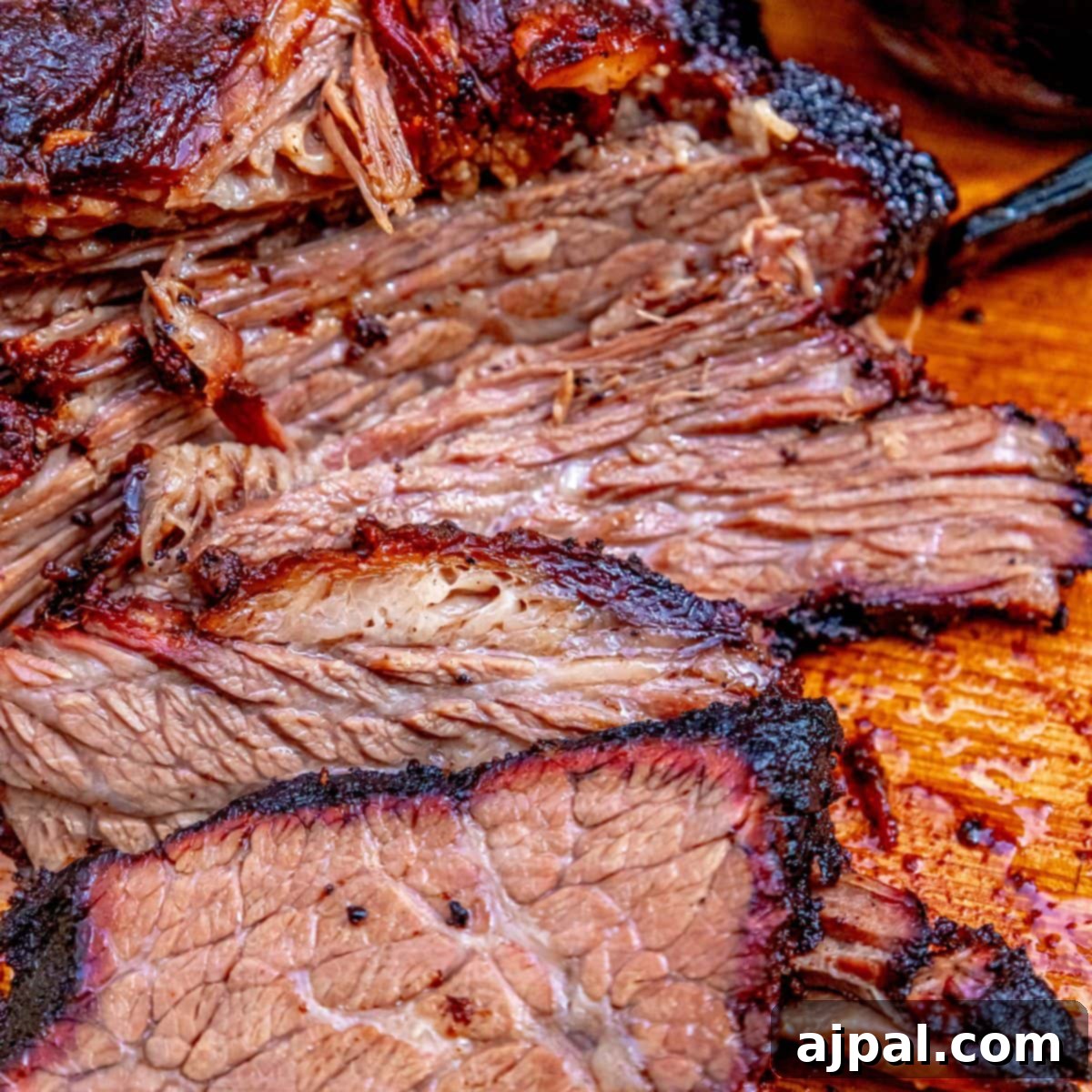
Unlock the secret to an incredibly flavorful and tender smoked beef brisket without committing an entire day to the smoker. Our innovative “Hot and Fast” brisket method revolutionizes traditional smoking, delivering all the rich, smoky taste you crave in a fraction of the time. Say goodbye to endless hours of low and slow cooking and embrace a technique that’s perfect for weekend gatherings or even weeknight dinners when a craving for perfectly smoked meat strikes.
This streamlined approach to smoking brisket is a game-changer for any barbecue enthusiast, from novice home cooks to seasoned pitmasters. We’ll guide you through every essential step, from selecting the ideal cut of meat and mastering the art of trimming, to preparing your smoker and achieving that coveted probe-tender finish. Get ready to impress your family and friends with a succulent smoked brisket that boasts a beautiful bark and melts in your mouth, all made possible with our easy-to-follow hot and fast method.
Navigating This Delicious Journey: We understand you’re eager to get cooking! For your convenience, you’ll find a ‘skip to recipe’ button at the top left of your screen. Below, a clickable table of contents will help you jump directly to sections like ingredients, cooking instructions, or FAQs. We believe in empowering every home cook. As a self-taught chef, I always strive to explain the “why” behind each step and ingredient, ensuring even beginners feel confident and capable in the kitchen. Let’s create some amazing barbecue together!
Table of contents
- How to Make a Hot and Fast Brisket
- Selecting and Preparing Your Brisket
- The Ultimate Hot and Fast Brisket Smoking Method
- FAQs: Your Brisket Questions Answered
- What to Serve With This Smoked Beef Brisket Recipe
Discover visual highlights of this incredible brisket method in our web story!
How to Make a Hot and Fast Brisket: A Smoker’s Guide
While the “low and slow” method has its charm, the hot and fast approach offers a significantly reduced cooking time without sacrificing flavor or tenderness. Instead of 12-18 hours, you can achieve a phenomenal smoked brisket in approximately 6-8 hours, making it an accessible option for weekend entertaining or even a mid-week feast. This method focuses on maintaining a higher, consistent temperature in your smoker, ensuring efficient cooking while still allowing the meat to absorb that deep, smoky essence.
Selecting and Preparing Your Brisket for Optimal Flavor
To embark on this culinary journey, you’ll need the right ingredients and equipment. The success of your hot and fast brisket begins long before it hits the smoker, starting with the quality of your meat and a thoughtfully crafted rub.
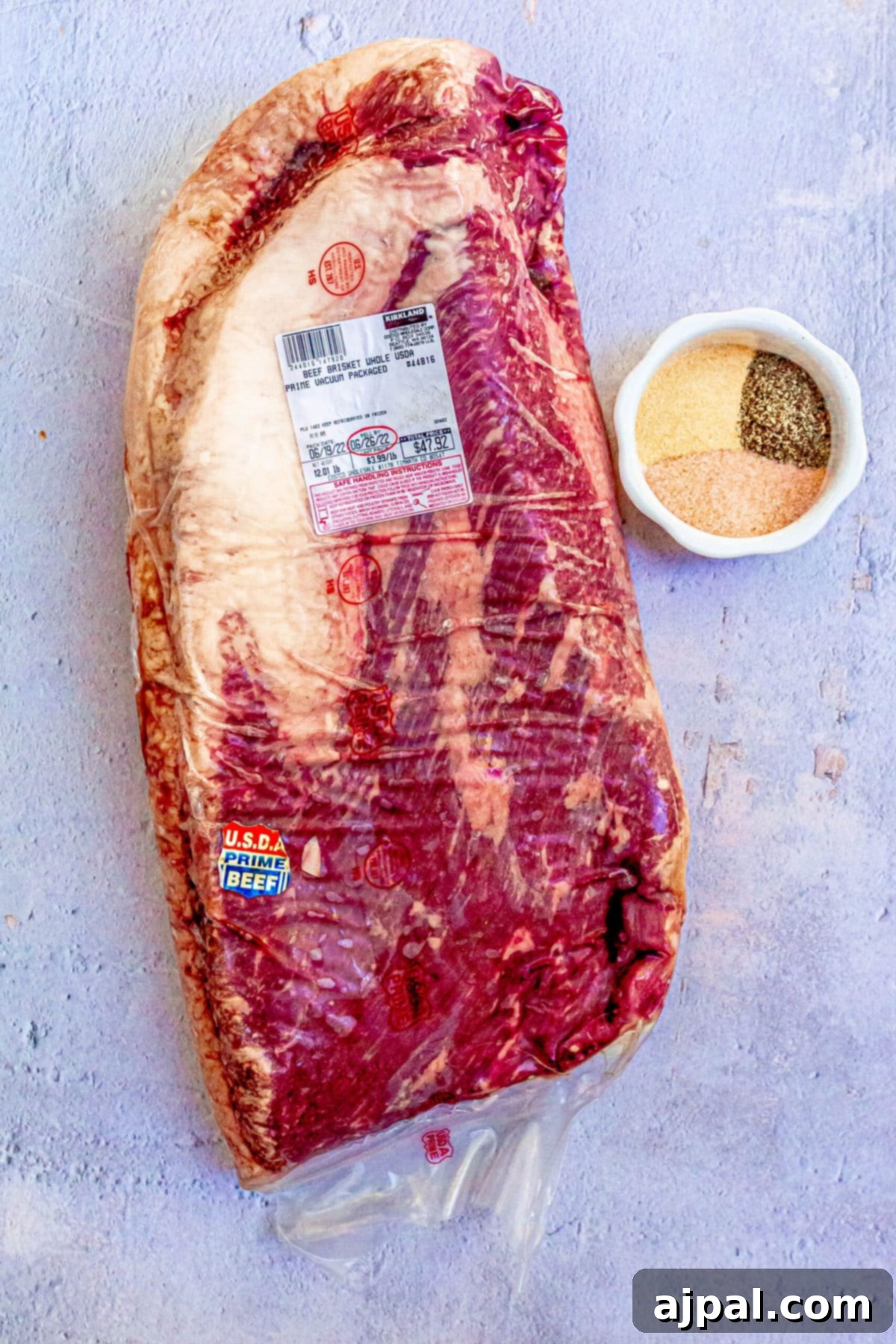
- Whole Beef Brisket (Packer Brisket): This is the cornerstone of your masterpiece. A “packer” brisket includes two distinct parts: the “point” and the “flat.” The point is the thicker, fattier, and more marbled end, prized for its rich flavor and succulent texture, often destined for delicious burnt ends. The flat, leaner and more uniform, yields those classic, tender slices perfect for sandwiches. Cooking a whole packer brisket ensures you cater to everyone’s preference and maximizes flavor. Aim for a USDA Choice or Prime grade for superior marbling and a more forgiving cook.
- The Essential Rub: Salt, Pepper, and Garlic Powder: Simplicity often yields the best results, especially with beef. A “Texas-style” rub, consisting primarily of coarse salt, coarse black pepper, and garlic powder, enhances the natural beef flavor and promotes the formation of a dark, crispy “bark.” Crafting your own rub allows you to control the quality of ingredients, avoiding the stabilizers, anti-caking agents, or excessive sugars often found in pre-packaged blends. The coarse grind of salt and pepper is crucial for creating a substantial bark that adheres beautifully to the meat.
- Wrapping Material: Pink Butcher Paper or Heavy-Duty Aluminum Foil: These materials play a critical role in the “Texas Crutch” technique, helping the brisket power through the “stall” and tenderize. Pink butcher paper, breathable yet protective, allows for continued smoke penetration while preserving the bark’s crispness. Heavy-duty aluminum foil creates a tighter seal, trapping moisture more effectively and speeding up the cooking process, though it can soften the bark slightly. Choose what’s readily available and suits your preference for bark texture.
- Smoking Wood: Oak is King for Brisket: The type of wood you choose profoundly impacts the brisket’s flavor profile. Oak is a beloved workhorse wood for beef, offering a medium, clean smoke flavor that complements the richness of the brisket without overpowering it. It’s consistently reliable and a staple in many pitmasters’ arsenals. While hickory is another excellent choice for beef, it can impart a stronger, sometimes more intense or even acrid flavor if not managed carefully. Pecan or a fruitwood blend (like cherry or apple) can also be used for a milder, sweeter smoke.
- High-Quality Hardwood Charcoal: No Briquettes Allowed! The foundation of your fire matters immensely. Opt for large lump hardwood charcoal, which burns cleaner, hotter, and imparts a more authentic smoky flavor. Avoid pressed briquettes, as they often contain petroleum-based binders and additives that can impart an undesirable chemical off-flavor to your meat. Many experienced smokers, like my husband, swear by brands like Jealous Devil’s Premium XL hardwood charcoal for its consistent heat and clean burn.
The Ultimate Hot and Fast Brisket Smoking Method
With your ingredients and equipment ready, it’s time to bring that beautiful brisket to life. Follow these steps meticulously for a truly unforgettable barbecue experience.
Preparation: Trimming and Smoker Setup
A full packer brisket is a substantial piece of meat, and proper trimming is essential for even cooking and optimal bark formation. Using a sharp boning knife on a cold brisket, meticulously remove as much of the soft, white surface fat as possible, leaving a uniform 1/4 inch fat cap. Also, remove any hard, un-renderable fat and silver skin. Square off the edges of the brisket to promote even smoke circulation and a consistent bark.
Next, prepare your smoker. Ignite your chosen hardwood charcoal and allow it to burn for 15-20 minutes. You’re looking for the initial thick, grey/black smoke to subside and be replaced by a thin, wispy blue smoke, indicating a clean-burning fire. Gradually bring your smoker’s temperature up to 300-325°F (149-163°C) for this hot and fast session, adding your oak wood chunks once the desired temperature is stable.
Seasoning Your Brisket for the Perfect Bark
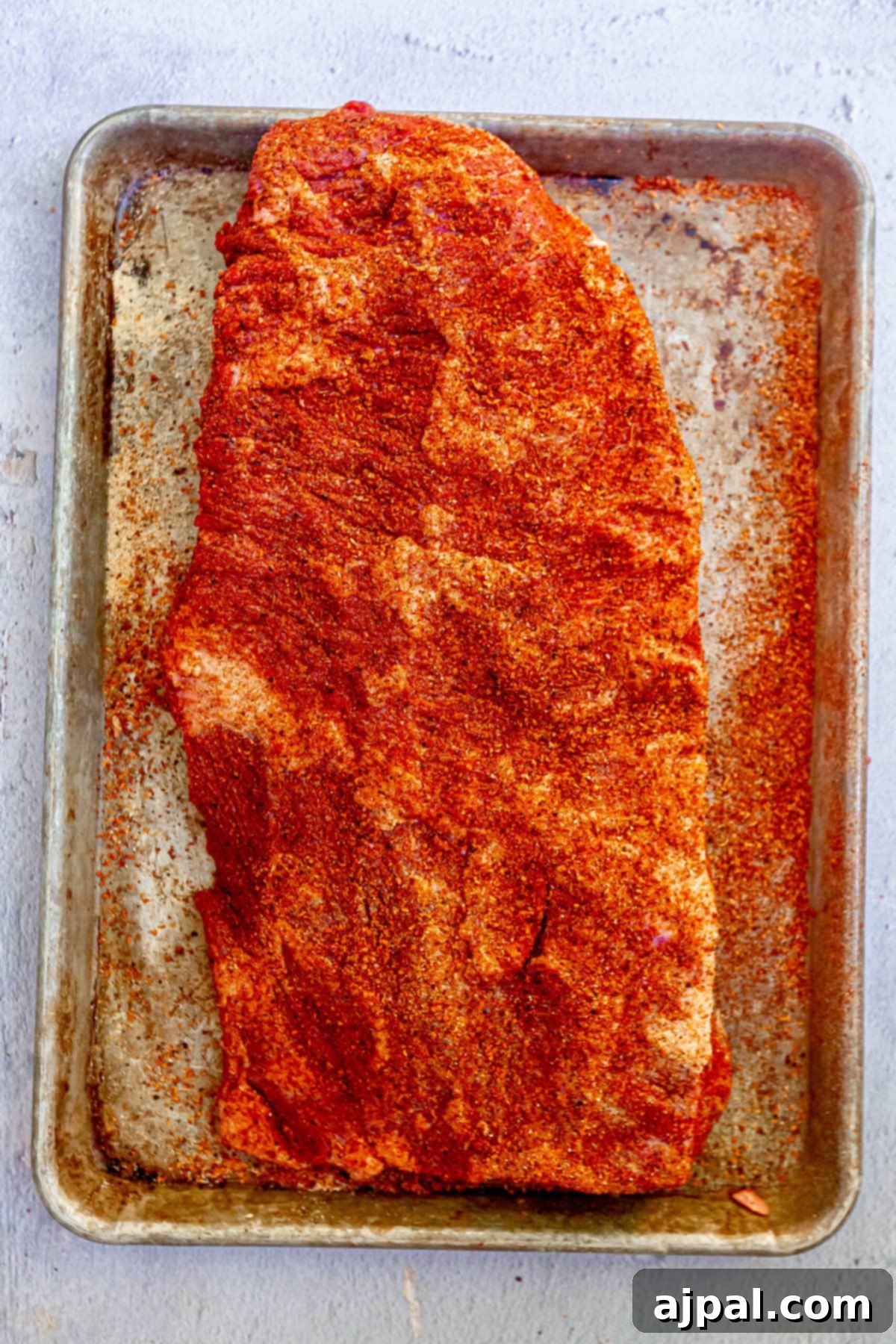
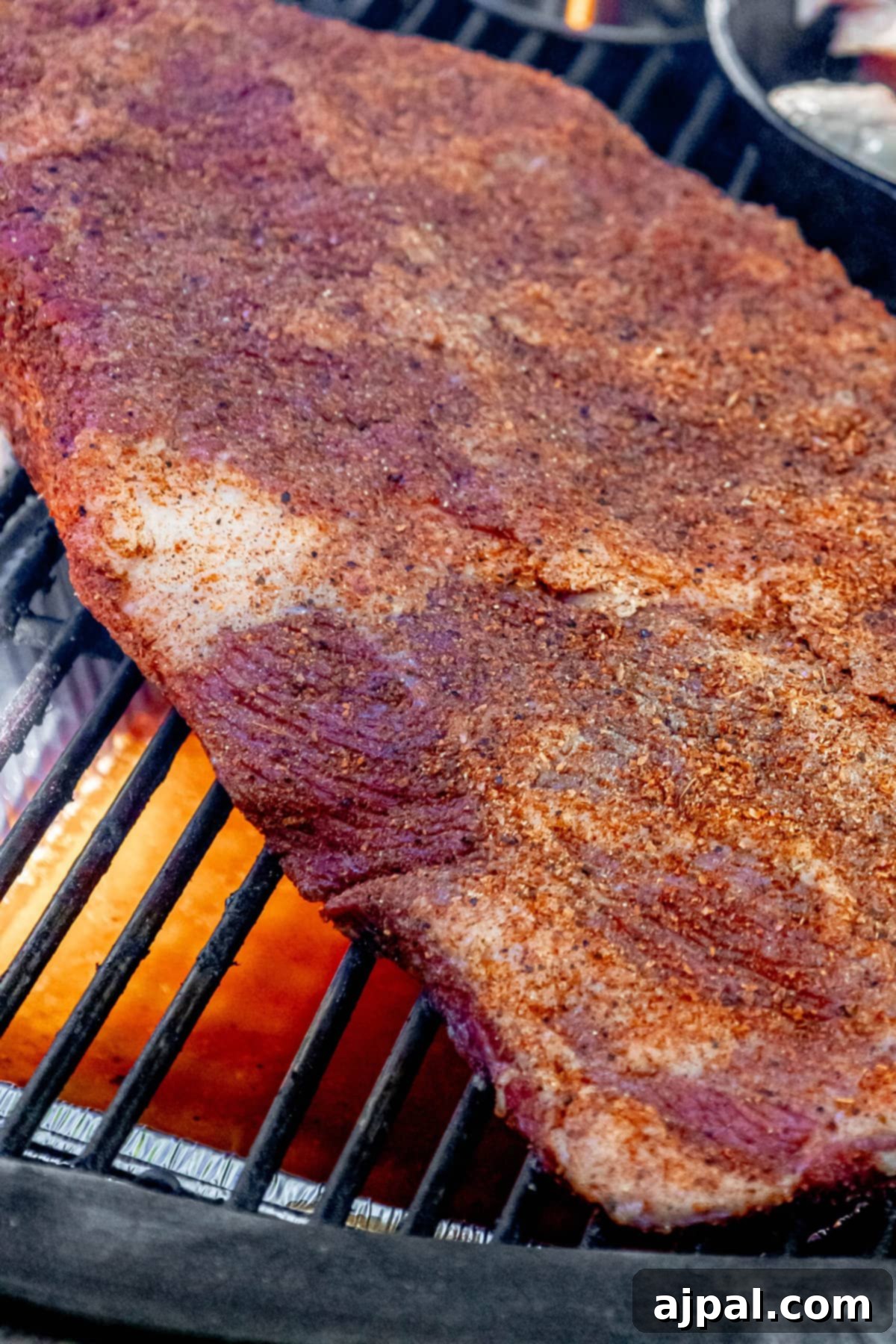
Generously season your trimmed brisket with your chosen rub. Remember, a brisket is a large, thick piece of meat, so don’t be shy with the seasoning. For a true Texas-style flavor, a simple blend of coarse salt, coarse black pepper, and garlic powder is unbeatable. The coarse grind creates a robust texture that contributes to the bark. For best results, season the brisket up to 36 hours in advance and allow it to sit in the refrigerator. This dry brining helps the rub adhere, draws out moisture, and enhances the bark formation when it hits the heat.
The Initial Smoke Phase and Bark Development
Carefully place your seasoned brisket on the smoker grates, fat side down. This positioning is particularly important for hot and fast cooking, as the fat cap acts as a protective barrier against the higher heat, allowing it to render slowly and baste the meat. To manage fat drippings and maintain moisture, we highly recommend placing a disposable foil pan filled with water beneath the brisket. This not only prevents flare-ups but also contributes to a humid environment, which helps the smoke adhere to the meat and keeps it from drying out. This initial smoking phase will typically last for 2-3 hours, depending on the brisket’s thickness, your smoker’s efficiency, and ambient conditions. During this time, the brisket will begin to develop its deep, flavorful bark.
The Texas Crutch: Wrapping Your Brisket
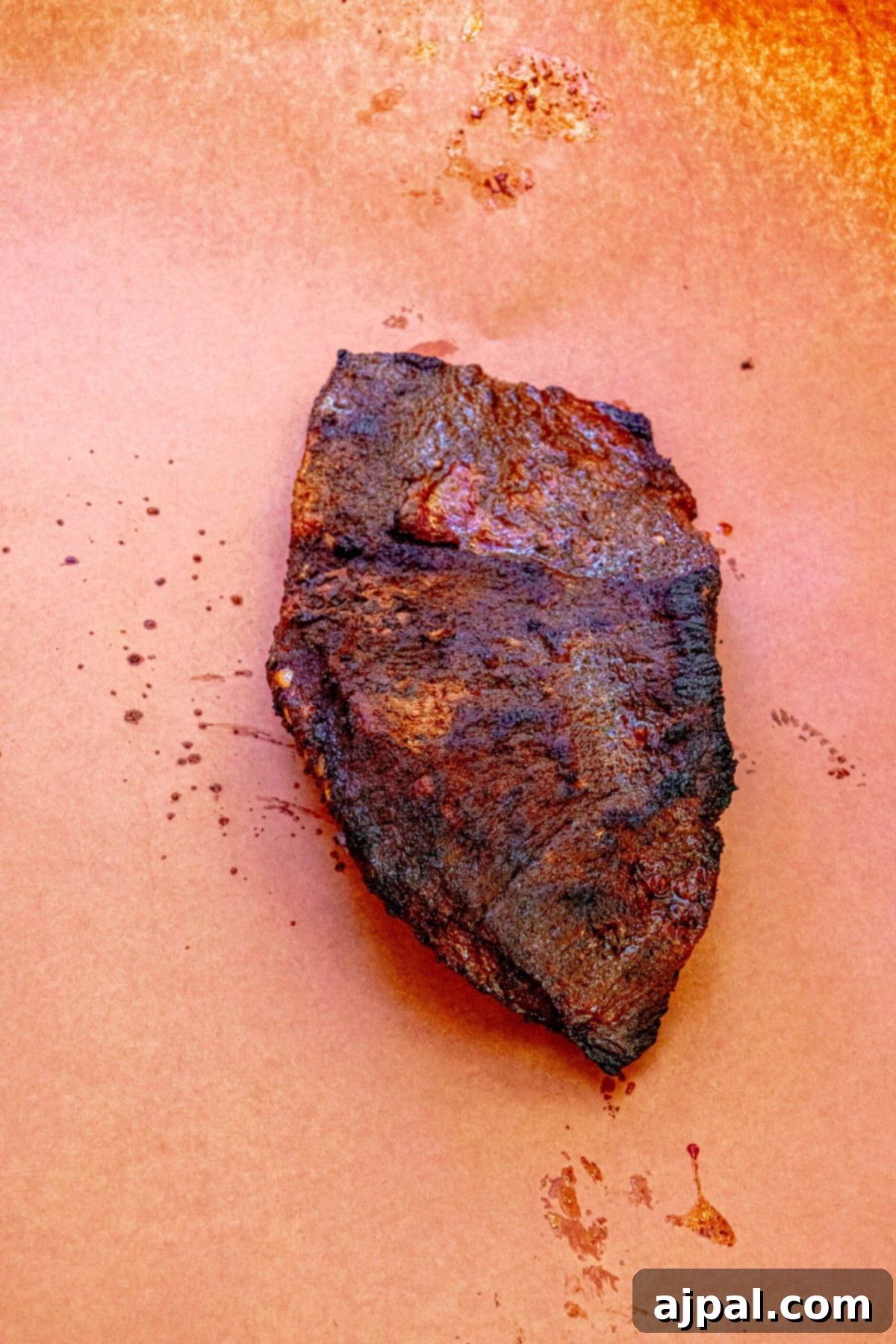
Once your brisket reaches an internal temperature of 160-170°F (71-77°C) and has developed a beautiful, dark bark, it’s time for the “Texas Crutch.” Carefully remove the brisket from the smoker and wrap it tightly in either pink butcher paper or heavy-duty aluminum foil. This crucial step serves multiple purposes: it protects the precious bark from getting overly dark or acrid from excessive smoke, helps the meat power through the infamous “stall” (where evaporation cools the meat, causing the temperature to plateau), and most importantly, it tenderizes and softens the brisket by trapping moisture and steam, rendering tough connective tissues into succulent goodness.
The Final Push: Smoking to Tenderness
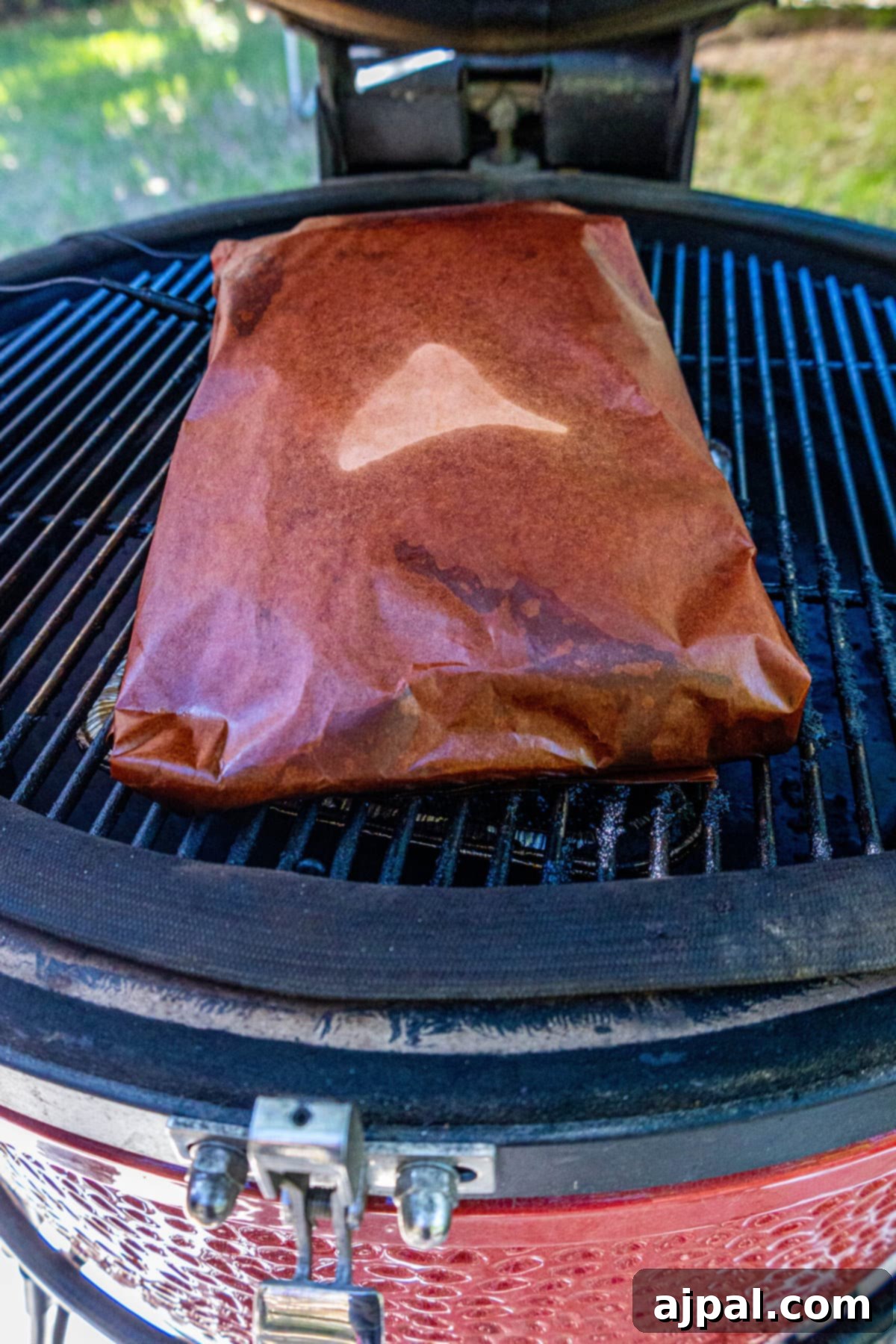
Return the wrapped brisket to the smoker. The wrapping will significantly help in pushing through the “stall” and accelerating the cooking process. Continue smoking until the internal temperature reaches 200-205°F (93-96°C). This phase typically takes an additional 2-2.5 hours. However, temperature is only part of the story; true doneness is determined by “probe tenderness.” The rule of thumb: your brisket is perfectly cooked when a sharp thermometer probe slides into the meat with virtually no resistance, feeling like it’s piercing hot butter. This indicates that the collagen has fully broken down, yielding an incredibly tender texture.
The Essential Rest: Maximizing Juiciness and Tenderness
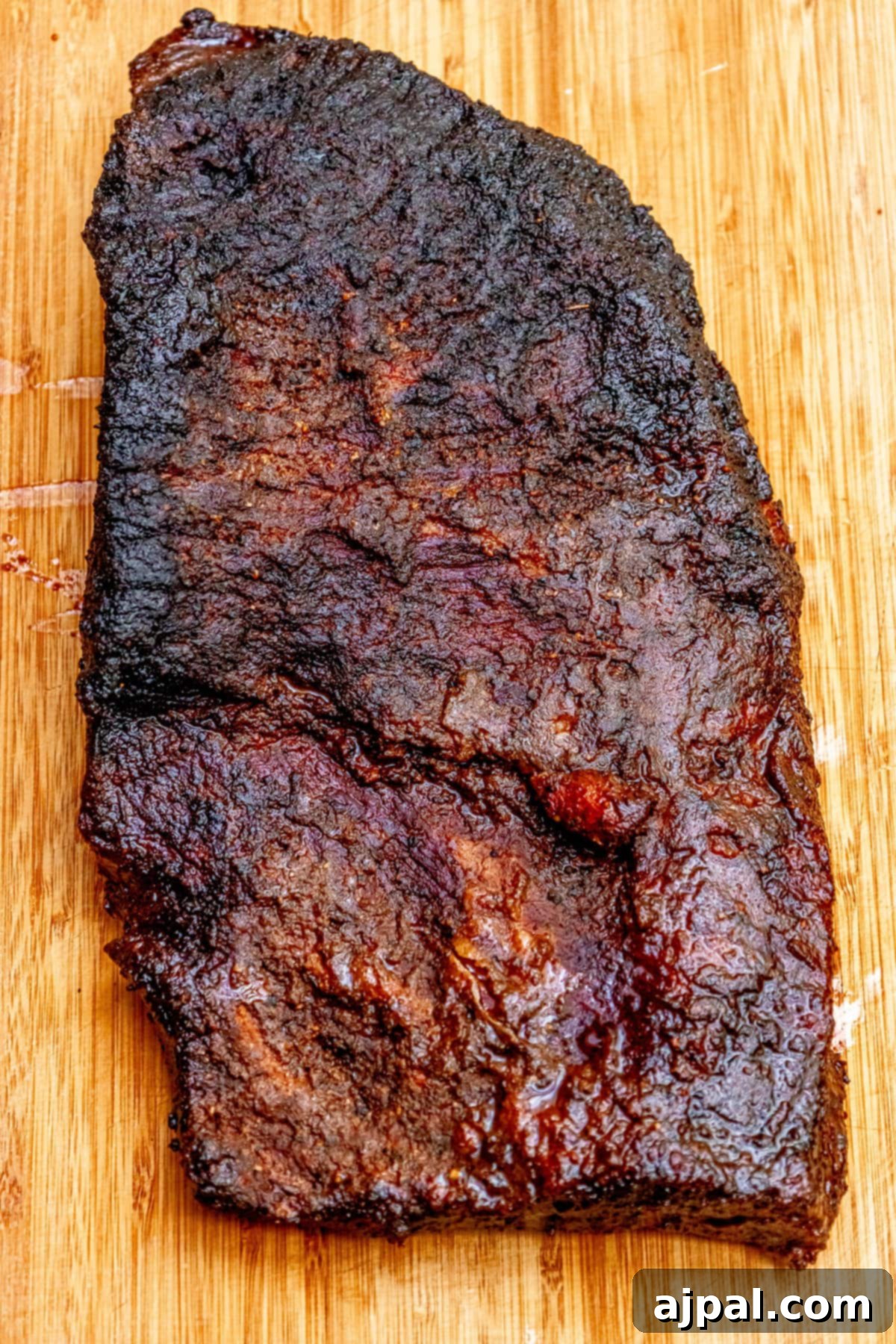
Once your brisket reaches its target temperature and probe tenderness, immediately remove it from the smoker. Keep it tightly wrapped in its foil or butcher paper, then wrap the entire package snugly in a clean towel. Transfer this bundled brisket to an insulated cooler. This resting period is non-negotiable and one of the most critical steps for juicy, tender brisket. Resting for at least one hour (and ideally 2-4 hours) allows the muscle fibers to relax and reabsorb the flavorful juices that have been pushed to the center during cooking. Skipping this step will result in dry, tough meat. The cooler maintains the brisket’s temperature, ensuring it stays warm and continues to tenderize gently.
Slicing for Tenderness and Presentation
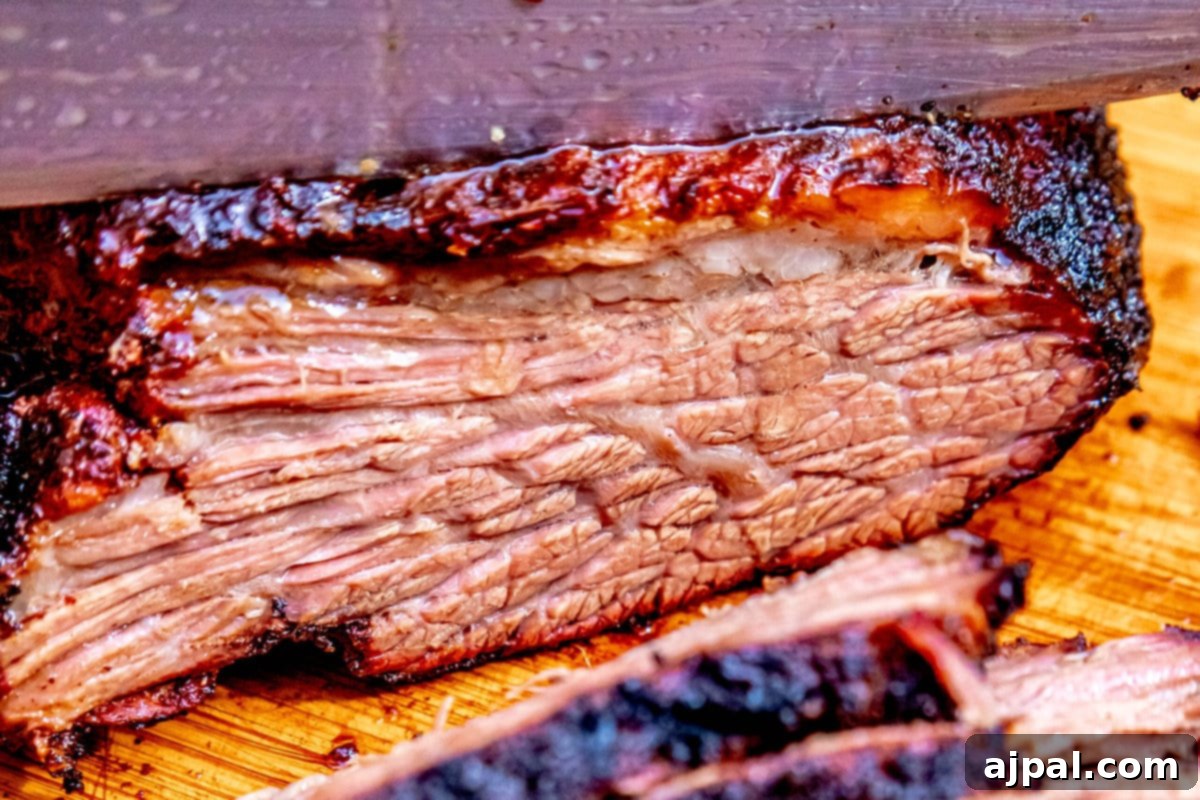
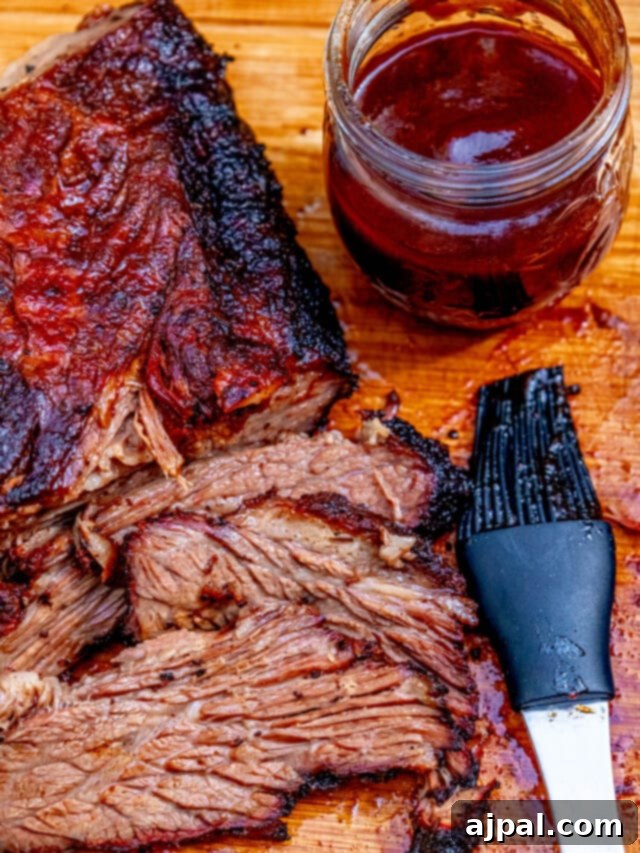
Once fully rested, unwrap your brisket. For optimal tenderness, always slice beef against the grain of the meat. This technique shortens the muscle fibers, making each bite incredibly tender and easy to chew. We recommend separating the point from the flat. Slice the flat into pencil-thick slices, ensuring you cut perpendicular to the grain. The point, being fattier and more marbled, can be cubed and returned to the smoker for an hour or two to create delectable burnt ends, or simply sliced and served as is. A long, sharp slicing knife is essential for clean, even cuts.
Serve and Enjoy!
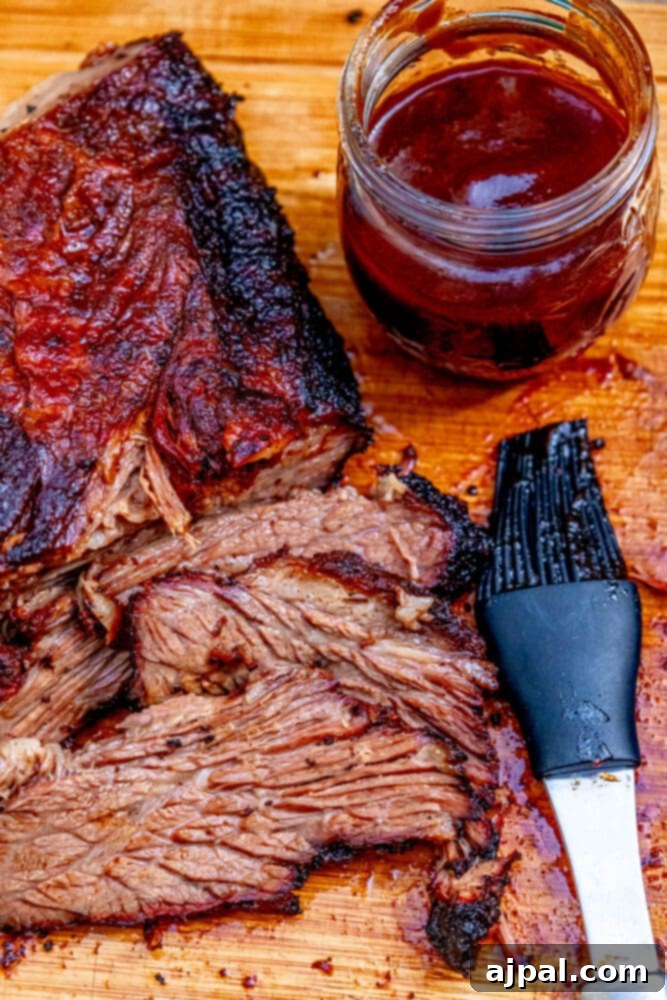
Your perfectly smoked, hot and fast brisket is now ready to be savored. Serve it with your favorite barbecue sauce, a selection of classic sides, and watch as it disappears. Each slice offers a symphony of smoky flavor, tender texture, and that unmistakable bark that makes homemade smoked brisket an unparalleled treat.
Expert Tips and Tricks for Perfect Hot and Fast Brisket:
Achieving barbecue perfection with the hot and fast method is simpler than you think. These insights, gathered from years of home smoking, will help you master your brisket and ensure it’s juicy, tender, and incredibly flavorful every time.
Trust Your Thermometer, Not Just the Clock: The most crucial rule in smoking is to cook to temperature and tenderness, not to a fixed time. Cooking times are merely estimates. Every brisket is unique, and external factors like ambient temperature, humidity, and smoker efficiency will affect the cook. Always use a reliable, instant-read meat thermometer to monitor internal temperature, and prioritize “probe tenderness” as your ultimate indicator of doneness.
Understand the Art of the Bark: The bark is that beautiful, dark, crispy exterior that forms during the initial smoke phase. It’s a combination of rendered fat, caramelized rub, and smoke adherence. To achieve a great bark, ensure your brisket is well-trimmed and aggressively seasoned. Avoid opening your smoker too frequently during the first few hours, as this releases precious smoke and heat, hindering bark development.
Choose Your Wrapping Wisely: Foil vs. Butcher Paper: Both aluminum foil (the “Texas Crutch”) and pink butcher paper are effective for wrapping, but they offer slightly different results. Foil creates a tight seal, steaming the meat and significantly speeding up the cook, making it ideal if you’re truly pressed for time. However, this steaming can soften the bark. Butcher paper, being porous, allows some moisture and smoke to escape, preserving more of that crispy bark while still tenderizing the meat. Experiment to find your preferred texture.
The Power of the Rest: Don’t Rush It! Resting your brisket is non-negotiable for a truly sublime result. This period allows the muscle fibers to relax, reabsorbing the flavorful juices that were displaced during the high-heat cooking. Skipping the rest will result in dry, less tender meat. Aim for at least 1-2 hours, but 3-4 hours in an insulated cooler can yield even better results. The brisket will stay safely above serving temperature for several hours.
Selecting the Right Brisket is Paramount: A quality brisket sets the stage for success. Always opt for a full packer brisket (containing both the point and the flat) with excellent marbling throughout. USDA Prime or Choice grades are highly recommended, as the intramuscular fat renders down to create an incredibly moist and flavorful finished product. Leaner “Select” cuts are less forgiving, especially with the hot and fast method, and can easily dry out.
Aggressive Trimming for Even Cooking and Bark: Before seasoning, meticulously trim your brisket. Reduce the fat cap to a uniform ¼ inch thickness across the entire surface. This ensures even rendering and prevents the fat from insulating too much. Remove any hard, thick pieces of fat that won’t render, as well as silver skin, which can create a tough, rubbery bite. Square the edges of the brisket to promote uniform airflow and smoke circulation, leading to a consistent bark around the entire cut.
Maintain a Consistent Smoker Temperature of 300–325°F (149-163°C): This temperature range is key to the “hot and fast” philosophy. Use good quality lump charcoal and your chosen wood (oak, hickory, pecan) to establish a stable environment. Consistent temperature control is vital for efficient cooking and preventing the brisket from drying out. A good digital thermometer for your smoker grate temperature is invaluable here.
Utilize a Water Pan for Moisture and Smoke Adherence: Placing a water pan in your smoker helps maintain a moist cooking environment. This humidity reduces moisture evaporation from the brisket’s surface, preventing it from drying out at higher temperatures. Furthermore, a moist surface is more receptive to smoke, helping to develop a richer and more robust bark.
Consider Spritzing During the Initial Cook: Once the bark starts to form (typically after the first hour or two), consider spritzing the brisket every hour with a liquid like apple cider vinegar, beef broth, or even just water. This practice keeps the surface moist, preventing it from burning or getting too dark, and helps to create a deeper, more luscious bark.
Wrap at the Perfect Internal Temperature (165–175°F / 74-79°C): The timing of the wrap is critical. You want to wrap when the internal temperature hits approximately 165–175°F (74-79°C) and the bark has set and achieved its desired color. Wrapping too early can prevent good bark formation, while wrapping too late can result in an overly dark or bitter crust.
Prioritize Probe Tenderness Over Exact Temperature for Doneness: While aiming for an internal temperature of 200–205°F (93-96°C) is a good guideline, the ultimate test for brisket doneness is “probe tenderness.” The probe of your thermometer should slide into the thickest part of the flat with very little resistance, much like pushing it into warm butter. This indicates that the collagen has fully broken down, yielding tender, melt-in-your-mouth results. Different briskets will hit this tenderness at slightly different temperatures.
Master the Art of Slicing Against the Grain: After the essential rest, correct slicing is key to serving tender brisket. Brisket muscle fibers run in different directions for the point and the flat. Identify the grain for each section and slice directly against it. For the flat, aim for pencil-thick slices. This shortens the muscle fibers, making each bite incredibly tender.
FAQs: Your Brisket Questions Answered
For the hot and fast method, wrap your brisket when its internal temperature reaches 160-170°F (71-77°C) and the bark (the delicious crust on the outside) has set to your liking. Wrapping serves two main purposes: it protects the bark from getting too dark or burnt, and it helps tenderize the meat by trapping steam and moisture, pushing it through the “stall” phase where the temperature plateaus.
Absolutely! Pellet smokers are fantastic tools for precise temperature control, making them ideal for the hot and fast method. Ensure your pellet hopper is full and your smoker is clean before starting. For excellent smoke flavor, we recommend using high-quality pellets, such as Jealous Devil Legendary Blend pellets, which offer a clean burn and robust smoke profile.
For a hot and fast brisket cook, aim to maintain your smoker’s temperature between 295-325°F (146-163°C). Pellet smokers excel at holding a precise 300°F (149°C), but with charcoal or wood burners, it requires more active management and experience to keep the temperature consistent within this range.
For the hot and fast method, especially if using a kettle or Kamado-style smoker where heat often comes from below, we recommend starting your cook with the fat side down. This layer of fat acts as a protective shield between the intense heat source and the lean meat, preventing it from drying out. It also slowly renders, basting the meat as it cooks.
A good rule of thumb is to plan for approximately 1/2 pound of cooked brisket per person. This accounts for appetite and allows for some leftovers, which are always a welcome bonus!
When buying a whole packer brisket, factor in a significant amount of weight loss due to trimming fat and moisture evaporation during cooking. As a general guideline, purchase a packer brisket that weighs roughly the same as the number of people you plan to feed. For example, for 15 guests, aim for a 15-pound packer brisket. This typically yields enough cooked meat for generous servings.
What to Serve With This Smoked Beef Brisket Recipe
A perfectly smoked beef brisket deserves an array of classic barbecue sides that complement its rich, smoky flavor. While the brisket is undoubtedly the star, these accompanying dishes will elevate your meal to a true feast.
For traditional pairings, consider our crowd-pleasing Best Ever Bean Bake, offering a sweet and savory counterpoint. A vibrant, tangy Best Easy Four-Ingredient Coleslaw adds a refreshing crunch, while fluffy, homemade Yeast Rolls are perfect for soaking up any lingering juices. And, of course, a creamy Easy Potato Salad is an indispensable barbecue classic that always hits the spot.
Feeling adventurous with your leftovers? Smoked brisket is incredibly versatile! Shred or chop the leftover meat to create incredibly flavorful brisket chili, adding a depth that canned beans can’t match. Or, transform it into epic brisket tacos, topping with fresh salsa, pickled onions, and a squeeze of lime for a Tex-Mex twist.
For an indulgent upgrade to a comfort food favorite, swap out the lobster in our Best Easy Mac and Cheese for tender, smoky brisket. This beefy, cheesy delight is guaranteed to be a showstopper!
Explore more of our favorite BBQ Sides to round out your meal:
Loaded Twice Baked Potatoes
Homemade French Fries in Air Fryer
Creamy Garlic Butter Beans
Best Easy Pasta Salad
If you loved creating this easy hot and fast brisket, please show your appreciation by clicking the stars below to give it a five-star rating and leave a comment! Your feedback is invaluable. Don’t forget to share your delicious creations on Instagram, Facebook, and Pinterest – tag @sweetcsdesigns so we can see your amazing work!
Share on Facebook
Share
Pin this now to find it later
Pin It
Follow on Instagram
Follow
Only have 30 minutes to get dinner on the table? Sign up for my 30 minute dinner plans direct to your inbox!
Find and shop my favorite products in my Amazon storefront here!
Brisket Hot and Fast
Equipment
-
Jealous Devil All Natural Hardwood Lump Charcoal – 35LB
-
Kamado Joe BJ24RHC Big Joe II Charcoal Grill, 24 inch, Blaze Red
-
Brown Kraft Butcher Paper Roll – Long 24 Inch x 175 Feet (2100 Inch) – Food Grade Brown Wrapping Paper for Smoking Meat of all Varieties – Unbleached, Unwaxed and Uncoated – Made in USA
-
Flame Boss 500-WiFi Smoker Controller (Ceramic/Kamado)
-
Kamado Joe KJ-IKAMANDNA Classic II Ikamand
-
Aluminum Pans 9×13 Disposable Baking Tin Foil Pan Half Size, (10 Pack) Cooking, Roasting, Broiling, Bakeware, Storing, Prepping Food, Heating, Crawfish Trays
Ingredients
- 14 lb brisket
- Brisket Rub:
- 2 tbsp garlic powder
- 2 tbsp onion powder
- 2 tbsp paprika
- 2 tbsp chili powder
- 2 tbsp kosher salt
- 2 tbsp coarse ground black pepper
- 1 tbsp brown sugar
Instructions
-
Prepare your smoker: Light your charcoal and allow it to burn for 15-20 minutes until the initial thick, grey/black smoke is replaced with thin, wispy blue smoke. Bring the smoker temperature to a stable 300-325°F (149-163°C).
-
Trim brisket: Using a sharp knife on a cold brisket, remove excess soft, white fat, leaving a uniform 1/4 inch fat cap. Remove any hard fat or silver skin and square the edges.
-
Season brisket: Season your brisket generously with your preferred rub. For a classic Texas style, use coarse salt, pepper, and garlic powder. You can season up to 36 hours in advance and refrigerate for deeper flavor and bark development.
-
Initial Smoke: Place the seasoned brisket on the smoker grates, fat side down. If desired, place a disposable foil pan with water beneath the brisket to catch drippings and add moisture. Smoke until the brisket reaches an internal temperature of 160-170°F (71-77°C), which should take approximately 2-3 hours, depending on thickness and smoker performance.
-
Maintain Smoker Temperature: Throughout the cook, strive to keep your smoker temperature consistently between 295-325°F (146-163°C). Pellet smokers make this easy, while charcoal/wood burners require more attention to maintain precision.
-
Wrap Brisket: Once the brisket reaches 160-170°F (71-77°C) internally and has a good bark, remove it from the smoker and wrap it tightly in either pink butcher paper or heavy-duty aluminum foil.
-
Finish Cooking: Return the wrapped brisket to the smoker and continue cooking until it reaches an internal temperature of 200-205°F (93-96°C). This usually takes another 2-2.5 hours. Crucially, test for “probe tenderness” – the probe should slide through the meat with very little resistance, like hot butter.
-
Rest the Brisket: Once probe tender, remove the brisket from the smoker. Keep it wrapped in its foil or butcher paper, then wrap it securely in a clean towel. Place the bundled brisket in a clean, dry cooler to rest for at least 1 hour (ideally 2-4 hours). This resting period is vital for reabsorbing juices and achieving maximum tenderness.
-
Slice and Serve: After resting, unwrap the brisket. Separate the point from the flat if desired. Always slice the meat against the grain into pencil-thick slices for optimal tenderness. Serve immediately and enjoy!
Nutrition
Nutrition information is automatically calculated, so should only be used as an approximation.