
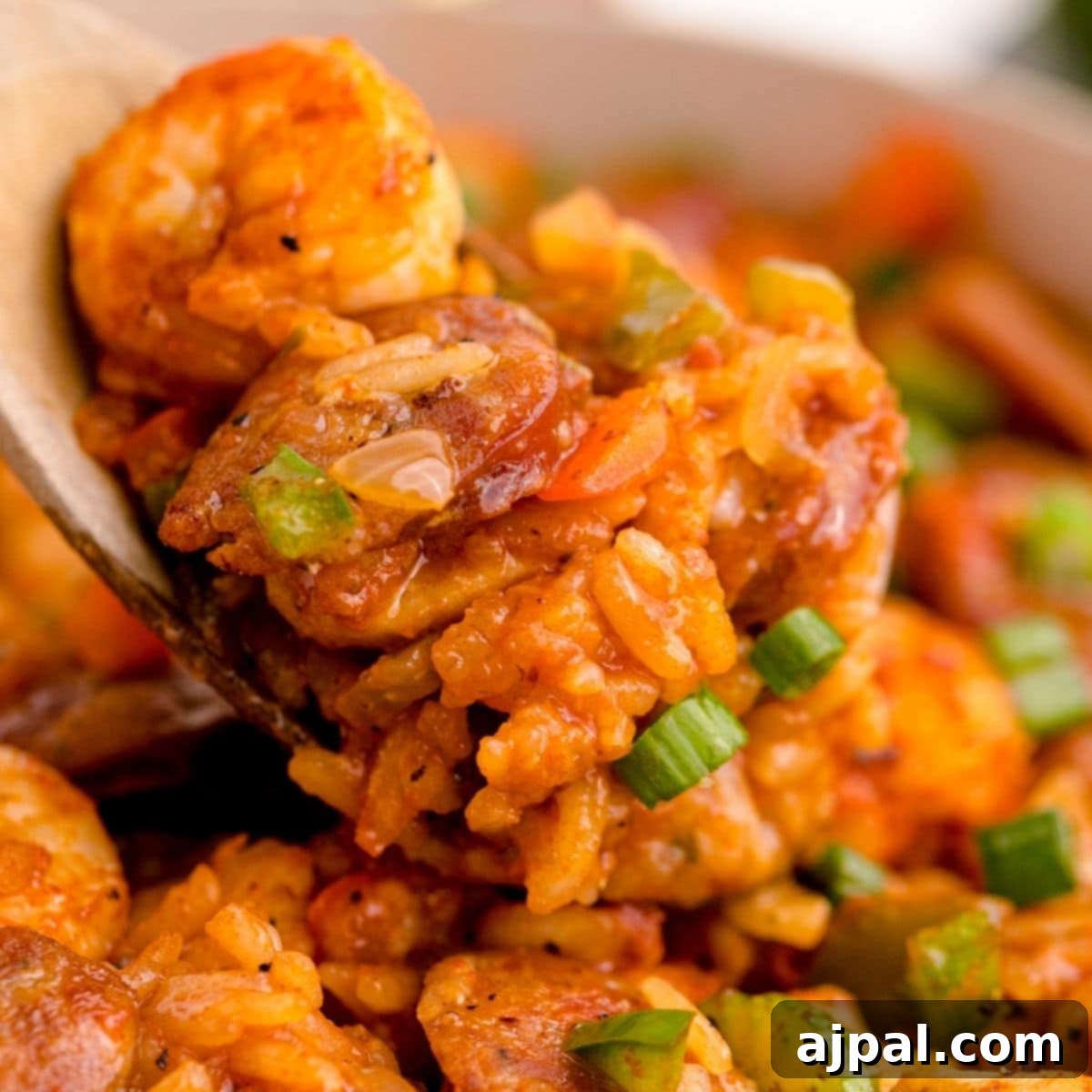
Hearty One-Pot Stovetop Jambalaya: A Flavorful Journey to Louisiana
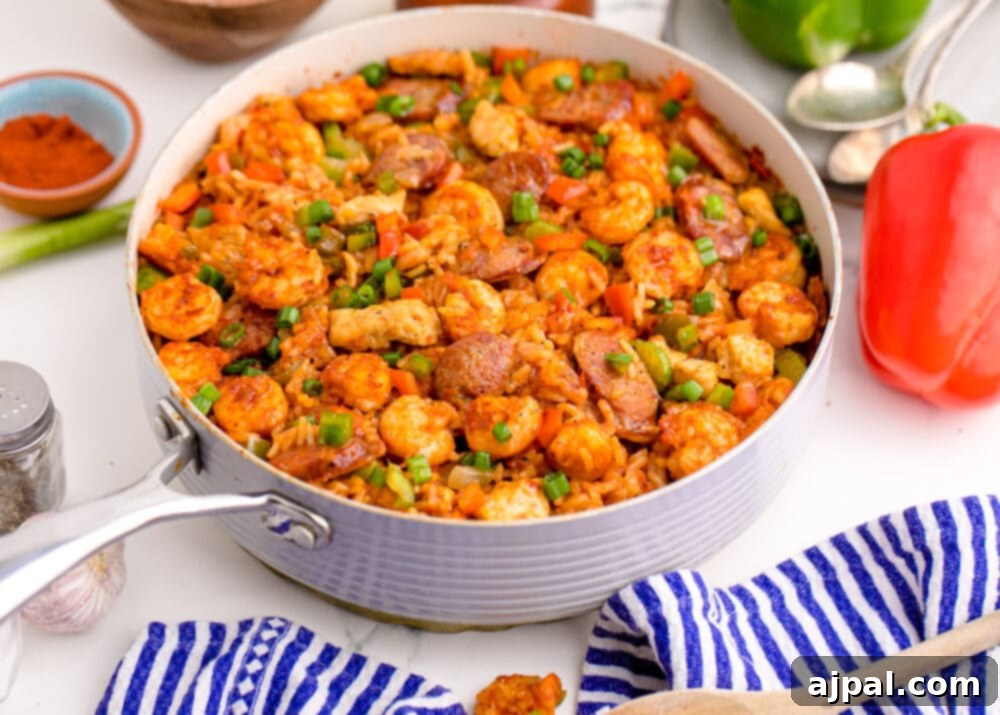
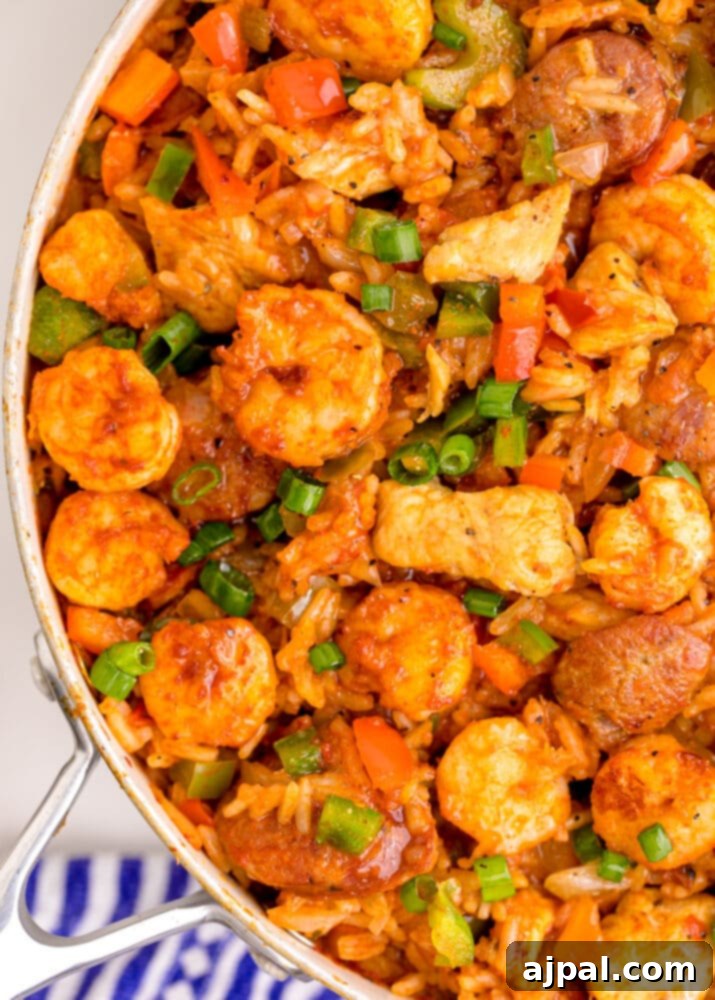
Embark on a culinary adventure with this incredible one-pot stovetop jambalaya! Packed with savory andouille sausage, tender chicken, succulent shrimp, and a medley of fresh vegetables, all perfectly blended with fluffy rice in a rich, aromatic broth, this dish is the epitome of comforting and wholesome home cooking. It’s a complete meal that promises robust flavors and easy cleanup, making it an instant family favorite for any weeknight.
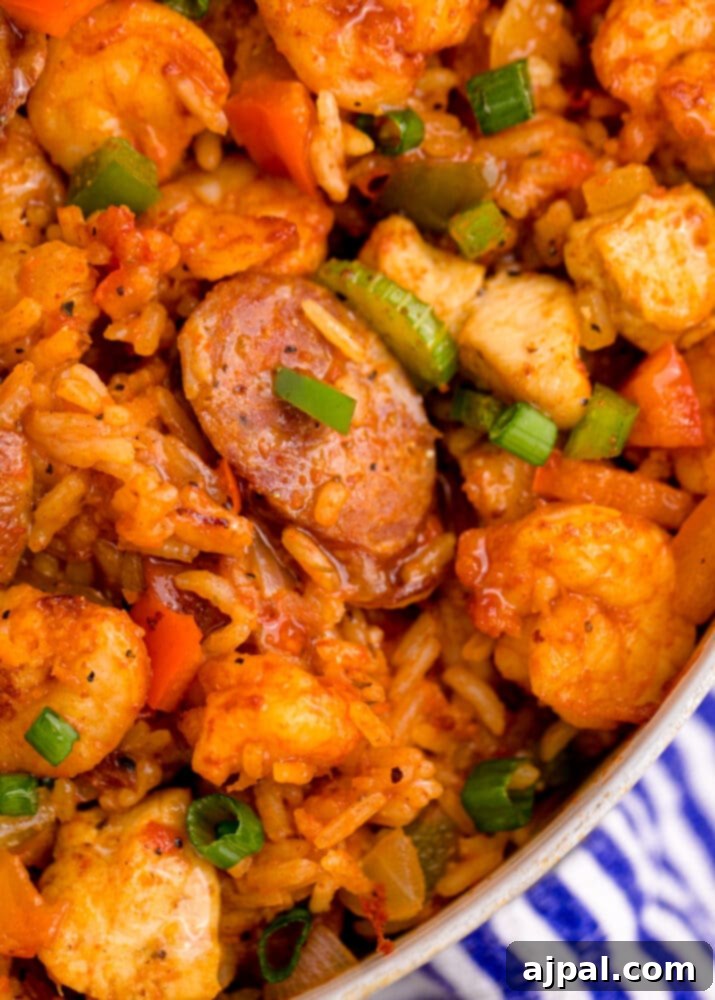
For those who prefer to dive straight into the cooking, feel free to scroll down to the recipe card below. Otherwise, explore this comprehensive guide where I share all my kitchen wisdom, tips, and tricks to ensure your jambalaya turns out perfectly every time.
As a passionate home cook without formal culinary training, I believe understanding the ‘why’ behind each step and ingredient empowers anyone in the kitchen. My goal is to make cooking accessible and enjoyable, especially for beginners. Join me as we uncover the secrets to mastering this authentic and delicious jambalaya.
Table of contents
- What is Jambalaya?
- Why This Stovetop Jambalaya Recipe is a Must-Try
- Essential Jambalaya Ingredients
- How To Master One-Pot Jambalaya
- Expert Tips for Perfect Jambalaya
- Common Questions About Cajun Jambalaya (FAQs)
- What To Serve Alongside Jambalaya
- The Easy Cajun Jambalaya Recipe
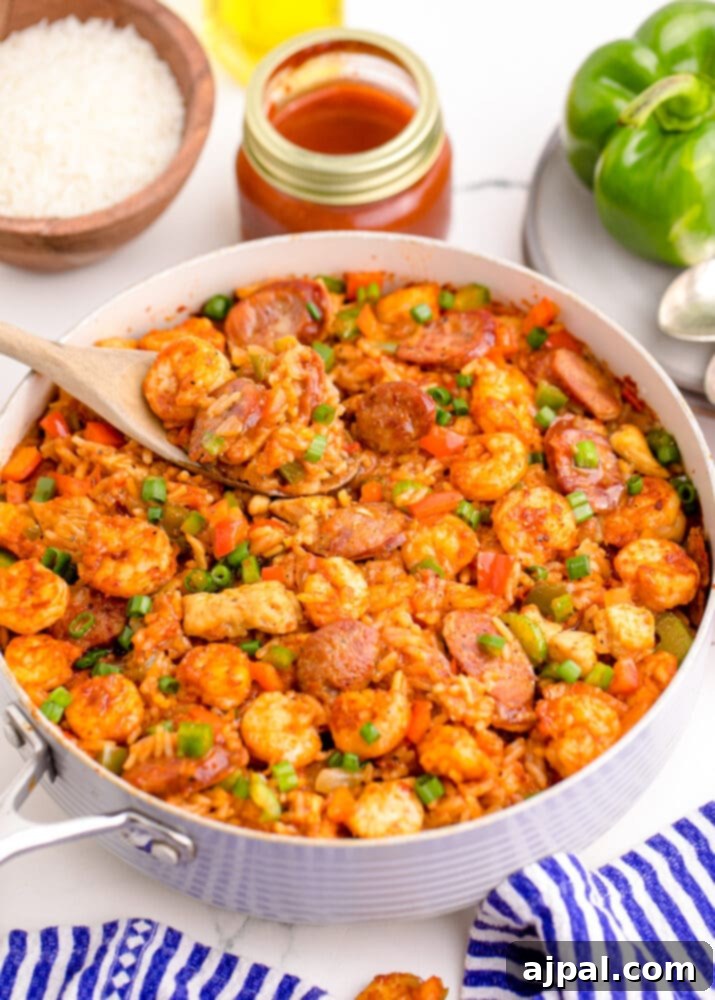
What is Jambalaya?
Jambalaya is a celebrated rice dish with deep roots in Louisiana cuisine, particularly renowned in both Creole and Cajun traditions. While often confused, Creole jambalaya (originating in New Orleans) typically includes tomatoes and sometimes a roux, resulting in a reddish hue, whereas Cajun jambalaya (from rural Louisiana) is often smokier, browner, and omits tomatoes. Our recipe leans towards the Creole style, incorporating crushed tomatoes for a vibrant, rich base.
At its heart, jambalaya is a hearty mix of meat, vegetables (the “holy trinity” of onion, celery, and bell pepper), rice, and spices, all cooked together in one pot. This dish beautifully embodies the “dump and stir” cooking philosophy, making it incredibly accessible yet undeniably flavorful. It’s a testament to the resourcefulness and rich culinary heritage of the South, transforming simple ingredients into a meal that feeds both body and soul.
This particular rendition is loaded with a colorful array of fresh vegetables – including aromatic celery, vibrant bell peppers, sweet onion, and rich crushed tomatoes – making it a wholesome and satisfying comfort food. Bursting with bold Cajun-inspired flavors, every spoonful is designed to be devoured, leaving your family completely content.
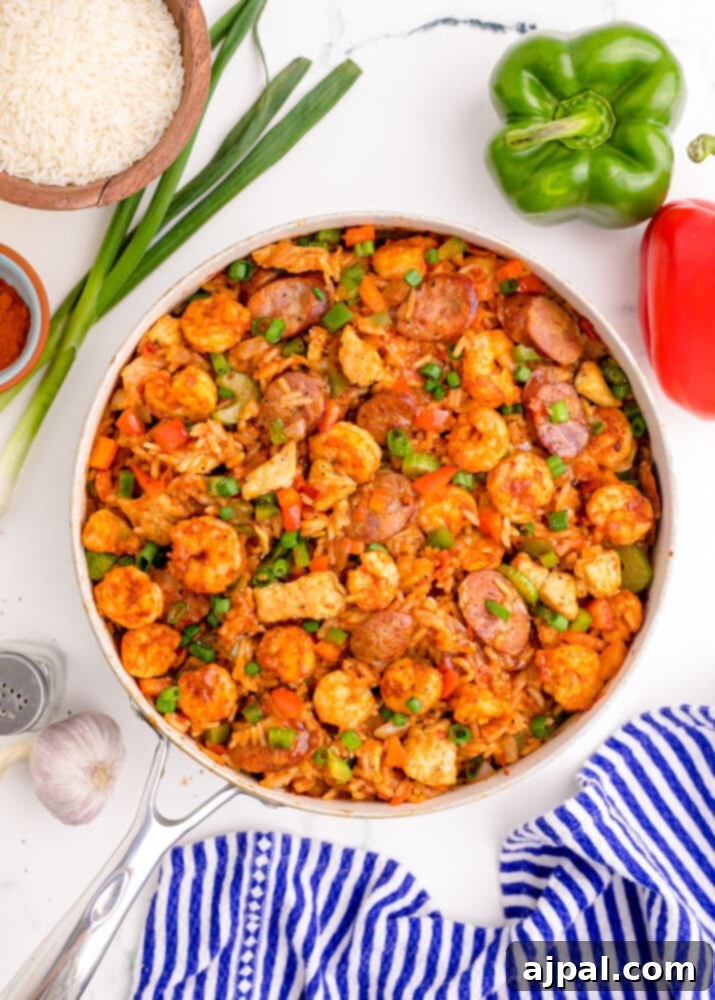
Why This Stovetop Jambalaya Recipe is a Must-Try
Beyond its delicious taste, this jambalaya offers several compelling reasons to make it a staple in your recipe rotation:
- Effortless One-Pot Wonder: Say goodbye to stacks of dirty dishes! This entire meal comes together in a single Dutch oven or large pot, significantly cutting down on cleanup time. It’s perfect for busy weeknights when you crave a homemade meal without the fuss.
- Quick & Convenient: With just 15 minutes of active prep and about 40 minutes of cooking, you can have a piping hot, satisfying dinner on the table in under an hour. This speed doesn’t compromise on flavor, making it ideal for impromptu gatherings or last-minute meal decisions.
- Bursting with Flavor: The combination of smoky andouille sausage, tender chicken, plump shrimp, and a carefully selected blend of Cajun spices creates a symphony of flavors that will tantalize your taste buds. Each ingredient contributes to a complex, savory profile that’s both comforting and exciting.
- Wholesome & Hearty: Packed with lean proteins and a generous portion of vegetables, this jambalaya is a well-balanced meal that’s both nutritious and filling. It’s a smart choice for feeding your family something substantial and delicious.
- Customizable: Whether you prefer more heat, different proteins, or specific vegetables, this recipe is incredibly adaptable. It’s a fantastic base for experimentation, allowing you to tailor it to your family’s preferences and what you have on hand.
Essential Jambalaya Ingredients
Crafting the perfect jambalaya begins with selecting the right ingredients. Each component plays a crucial role in building the dish’s signature flavor and texture. Here’s a closer look at what you’ll need:
- Cooking Oil: A neutral oil like canola or vegetable oil is best for searing the meats without imparting extra flavor.
- Andouille Sausage: This spicy, smoked pork sausage is a cornerstone of authentic jambalaya. Its rich, smoky flavor and slightly coarse texture add depth and an essential kick.
- Chicken: Boneless, skinless chicken thighs or breasts, cut into bite-sized pieces, provide lean protein and a tender contrast to the sausage.
- Onion, Green Bell Pepper, Red Bell Pepper, Celery: This trio (plus the added red bell pepper for color and sweetness) forms the “holy trinity” of Cajun and Creole cooking. They create the aromatic foundation for the entire dish.
- Garlic: Freshly minced garlic is indispensable for its pungent aroma and flavor, enhancing the overall savory profile.
- Crushed Tomatoes: A 14-ounce can of crushed tomatoes adds tanginess, a beautiful reddish hue, and a comforting depth to the broth, characteristic of Creole-style jambalaya.
- Spices (Smoked Paprika, Salt, Cumin, Oregano, Basil, Thyme, Pepper, Cayenne Pepper): This blend is carefully chosen to deliver that distinctive Cajun flavor. Smoked paprika adds a deep, smoky note; cayenne pepper brings the heat; and the herbs contribute earthy, aromatic layers.
- White Rice: Long-grain white rice is preferred for jambalaya as it absorbs flavors beautifully and maintains a good texture, becoming fluffy rather than mushy. Avoid quick-cooking rice, as it will overcook.
- Chicken Broth: Provides the liquid base for cooking the rice and helps distribute the rich flavors throughout the dish.
- Shrimp: Peeled and deveined shrimp (fresh or frozen) are added towards the end of cooking, offering a delicate seafood sweetness and vibrant color.
- Optional Garnish: Freshly chopped green onions or parsley add a touch of freshness and brightness when serving.
How To Master One-Pot Jambalaya
This incredible jambalaya comes together quickly in your favorite Dutch oven or a large, heavy-bottomed pot. With just about 15 minutes of prep and 40 minutes of simmering, you’ll have a delightful meal ready to serve. Let’s gather our ingredients and get cooking!
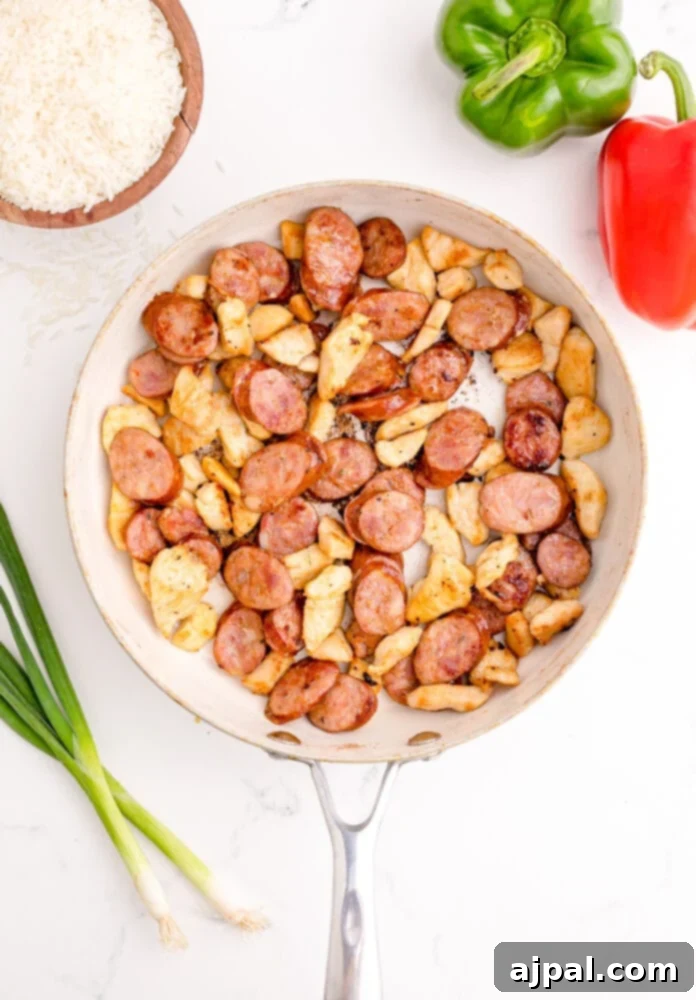
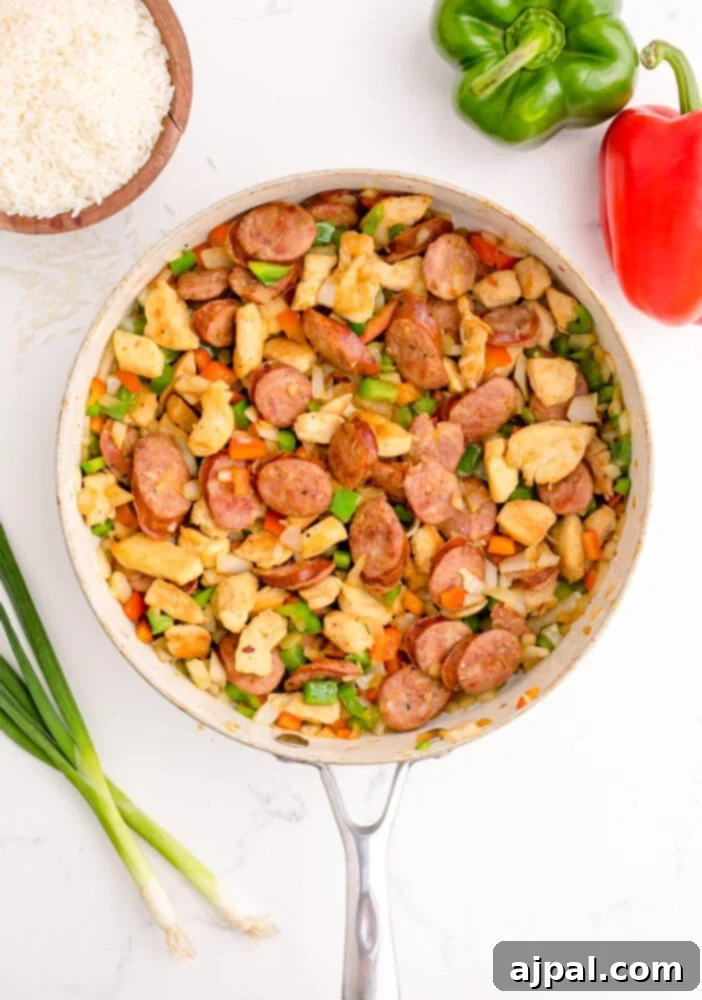
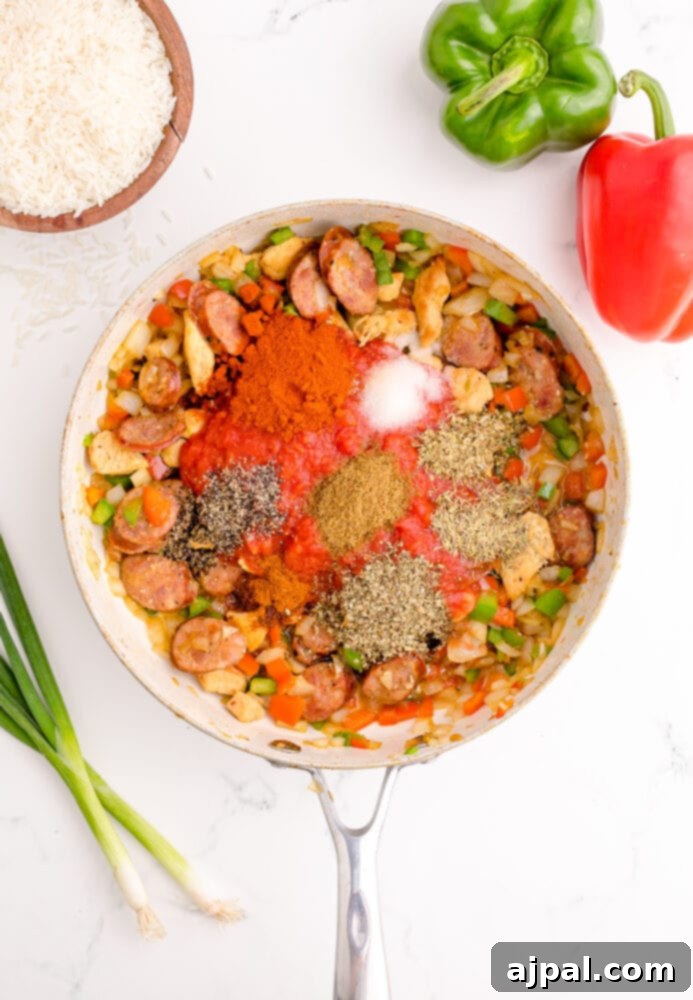
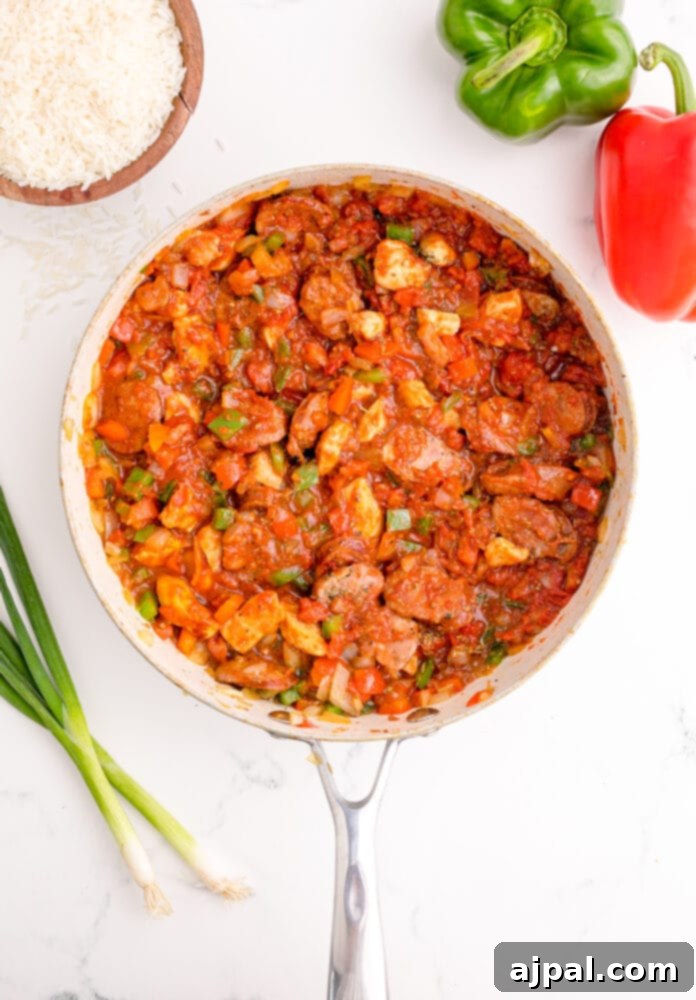
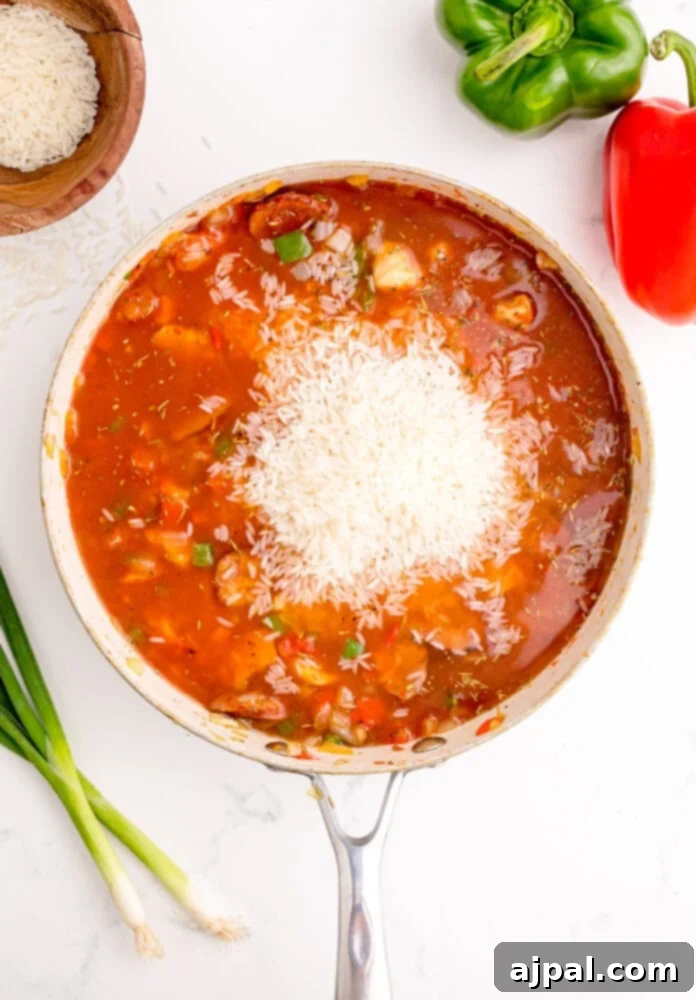
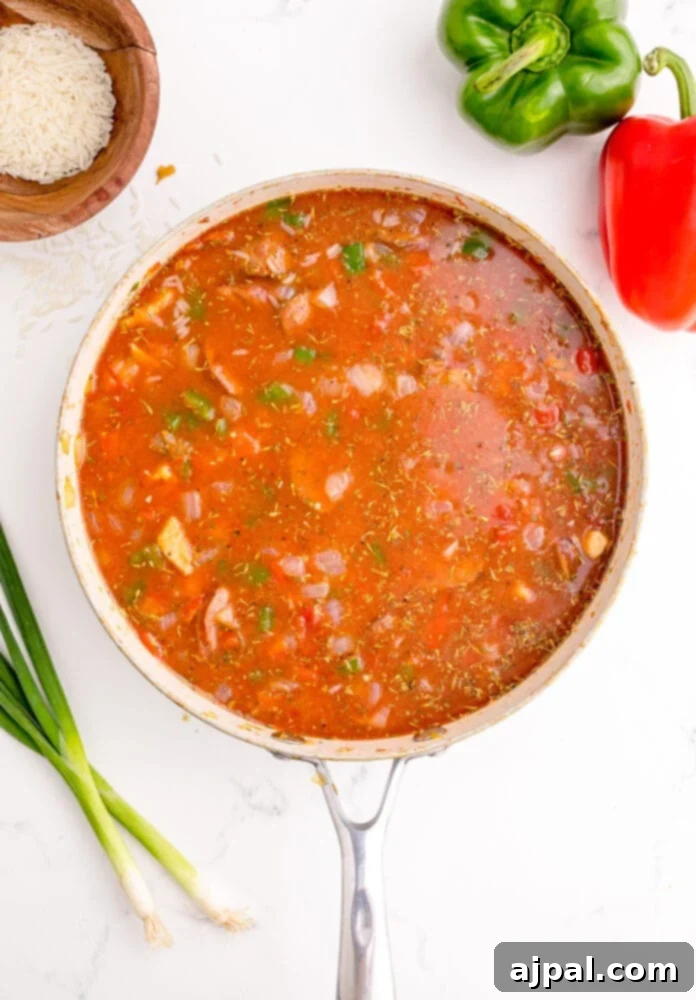
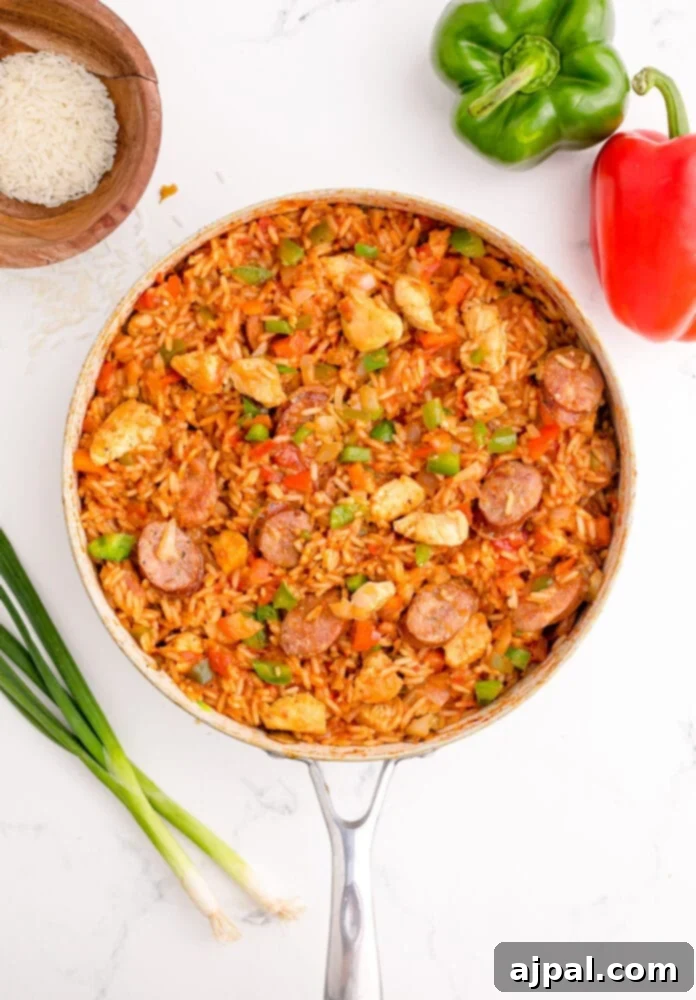
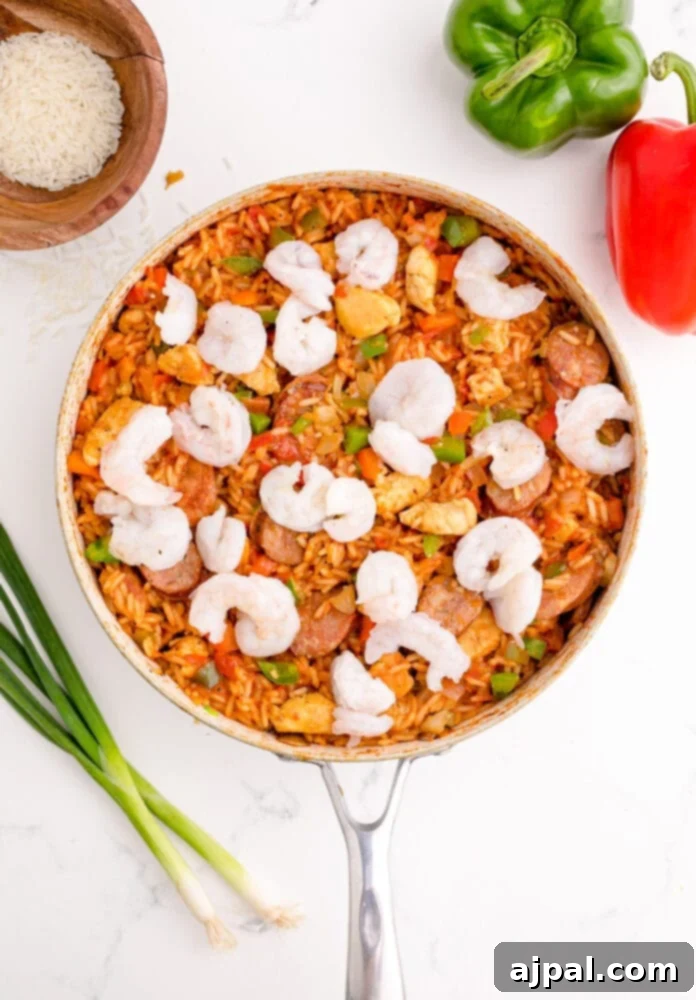
- **Sear the Meats:** Begin by heating a tablespoon of cooking oil over medium heat in a large Dutch oven. Add the sliced andouille sausage and cubed chicken. Cook for about 5 minutes, stirring occasionally, until the meats are lightly seared and browned. You don’t need to cook them through at this stage; just develop some delicious color and flavor. Remove the browned meat from the pot and set aside.
- **Sauté the Trinity:** In the same pot, add a little more oil if needed. Toss in the diced onion, green bell pepper, and celery. Cook these aromatic vegetables for about 5-7 minutes, stirring until the onion becomes soft and translucent, and the peppers have slightly softened. This step builds the foundational flavor of your jambalaya.
- **Add Garlic:** Stir in the minced garlic and cook for just one additional minute until fragrant. Be careful not to burn the garlic, as it can turn bitter quickly.
- **Build the Flavor Base:** Return the seared sausage and chicken to the pot. Pour in the crushed tomatoes and add all the dry spices: smoked paprika, salt, cumin, oregano, basil, thyme, pepper, and cayenne pepper. Stir everything thoroughly to ensure the meats and vegetables are well coated with the flavorful tomato and spice mixture. Let it simmer for a couple of minutes to allow the flavors to meld.
- **Introduce Rice and Broth:** Stir in the uncooked white rice and chicken broth. Bring the entire mixture to a rolling boil over medium-high heat.
- **Simmer to Perfection:** Once boiling, reduce the heat to medium-low, cover the Dutch oven tightly, and let it simmer for approximately 20 minutes. During this time, the rice will absorb the flavorful liquid and cook. It’s crucial to stir the jambalaya every few minutes to prevent the rice from sticking to the bottom of the pot and ensure even cooking. Continue until the rice is just cooked and most of the liquid has been absorbed.
- **Add Shrimp:** Finally, stir in the peeled and deveined shrimp. Cover the pot again and simmer for another 5 minutes, or until the shrimp turn opaque and pink, indicating they are fully cooked. Avoid overcooking the shrimp, as they can become tough.
- **Rest and Serve:** Remove the pot from the heat and let the jambalaya rest, covered, for a few minutes before serving. This allows the flavors to settle and the rice to fully fluff up. Garnish with fresh green onions or parsley, if desired, and serve hot!
Expert Tips for Perfect Jambalaya
- Don’t Overcook the Meat (Initially): When searing the chicken and sausage, you’re looking for a nice brown crust and rendered fat, not to cook them all the way through. They will finish cooking with the rice, ensuring they remain tender and juicy.
- Stir Regularly While Simmering: Rice can easily stick and burn to the bottom of the pot, especially with a thick sauce. Stirring every few minutes helps prevent this and ensures the rice cooks evenly, absorbing all the delicious flavors.
- Shrimp Timing is Key: Shrimp cooks very quickly. Adding it too early will result in tough, rubbery seafood. Only add it in the final 5 minutes of cooking, just until it turns pink and opaque. Larger shrimp might need a minute or two longer.
- Celery is Optional, but Recommended: While some prefer to omit it, celery is a classic component of the “holy trinity” and adds a subtle, earthy flavor and crunchy texture that enhances the dish’s complexity. Feel free to adjust based on your preference.
- Adjust Spice Level to Taste: The amount of cayenne pepper can be increased or decreased depending on your desired heat level. For a milder version, reduce or omit the cayenne. For extra kick, add more!
- Proper Rice Selection: Always use long or medium-grain white rice for jambalaya. Short-grain rice can become too sticky, and instant rice will overcook and turn mushy. Rinsing your rice before cooking can also help prevent stickiness.
- Let it Rest: Once the jambalaya is cooked, remove it from the heat and let it sit, covered, for 5-10 minutes. This allows the rice to steam and absorb any remaining moisture, resulting in a perfectly fluffy texture.
Common Questions About Cajun Jambalaya (FAQs)
Initially, you will cook your jambalaya over medium heat to sear the meats and sauté the vegetables. Once the rice and broth are added, you’ll bring the mixture to a boil. Then, the temperature is reduced to medium-low, and the dish simmers gently until the rice is cooked through.
This one-pot jambalaya recipe is quite efficient! It requires about 15 minutes of active preparation time and approximately 40 minutes of cooking. This means you can have a complete, satisfying meal on your table in under an hour, making it ideal for busy evenings.
While both are iconic Louisiana dishes, the main difference lies in their preparation and consistency. Rice is a key ingredient in both, but in gumbo, cooked rice is typically served separately, and the gumbo itself is a stew-like dish often thickened with a dark roux and/or okra. Jambalaya, on the other hand, cooks the rice directly within the pot, absorbing all the flavors of the meats and vegetables, resulting in a more cohesive, drier rice dish. Gumbo generally has a thinner consistency due to its stew nature, while jambalaya is more like a flavorful pilaf.
Absolutely! Jambalaya adapts wonderfully to a slow cooker. You can add all your ingredients, except for the shrimp, to the slow cooker and cook on low for 6-8 hours or on high for 3-4 hours. Add the shrimp in the last 30 minutes of cooking. Always ensure the rice is fully cooked and the liquid is absorbed before serving. For specific slow cooker instructions, consult a dedicated slow cooker jambalaya recipe.
No, while andouille sausage provides a distinct and authentic flavor, you have options. You could substitute it with another smoked pork sausage, like kielbasa, or even a spicy Mexican chorizo for a different flavor profile. If you’re not a fan of sausage or want a lighter dish, you can certainly omit it, and the remaining ingredients will still deliver plenty of delicious flavor.
Yes, you can definitely use a pre-made Cajun spice blend for convenience! If you opt for a store-bought blend, use about 2 tablespoons and omit the individual spices listed in the recipe (paprika, oregano, basil, thyme, pepper, and cayenne). Be sure to check the sodium content of your Cajun blend, as you may need to adjust the added salt.
If your rice is still too firm after the initial cooking time and all the liquid has been absorbed, don’t worry! Add an additional ½ cup of chicken broth or water to the pot, cover it, and continue to simmer on low heat for another 5-10 minutes. Check again and repeat the process if needed, adding liquid gradually until the rice reaches your desired tender consistency.
Leftover jambalaya is wonderful! Store it in an airtight container in the refrigerator for up to 3-4 days. For longer storage, jambalaya freezes exceptionally well. Transfer cooled leftovers to a freezer-safe container or a heavy-duty freezer bag, and it will keep for up to 4 months. Thaw overnight in the refrigerator before reheating gently on the stovetop or in the microwave, adding a splash of broth or water if it seems dry.
What To Serve Alongside Jambalaya
Jambalaya is often considered a complete meal on its own, but a few complementary sides can elevate the dining experience. Here are some fantastic pairings:
- Easy Sour Cream Cornbread: The slightly sweet and tangy cornbread is perfect for soaking up the flavorful sauce.
- Creamy Broccoli Cauliflower Salad: A cool, crisp, and creamy salad provides a refreshing contrast to the hearty, warm jambalaya.
- Air Fryer Corn on the Cob: Sweet corn offers a delightful crunch and natural sweetness that complements the savory spices.
- Easy Jalapeno Cheddar Bread: For those who love an extra kick, this cheesy, spicy bread is an excellent choice.
- Bloody Mary Oysters: If you’re looking to embrace more of a seafood theme, these oysters add a gourmet touch.
- A simple green salad with a light vinaigrette also works wonderfully to balance the richness of the dish.
Explore more delicious accompaniments on our The Best Easy Side Dishes page to find your perfect match.
More Southern-Inspired Sides You’ll Love
Dilly Bread Recipe
Cabbage and Noodles
Bacon Rye Stuffing
Roasted Potatoes and Sauerkraut
Brussels Sprouts Hash
Roasted Brussels Sprouts and Onions
Peas with Mint and Garlic
Easy Everything Low Carb Bagel
The Easy Cajun Jambalaya Recipe
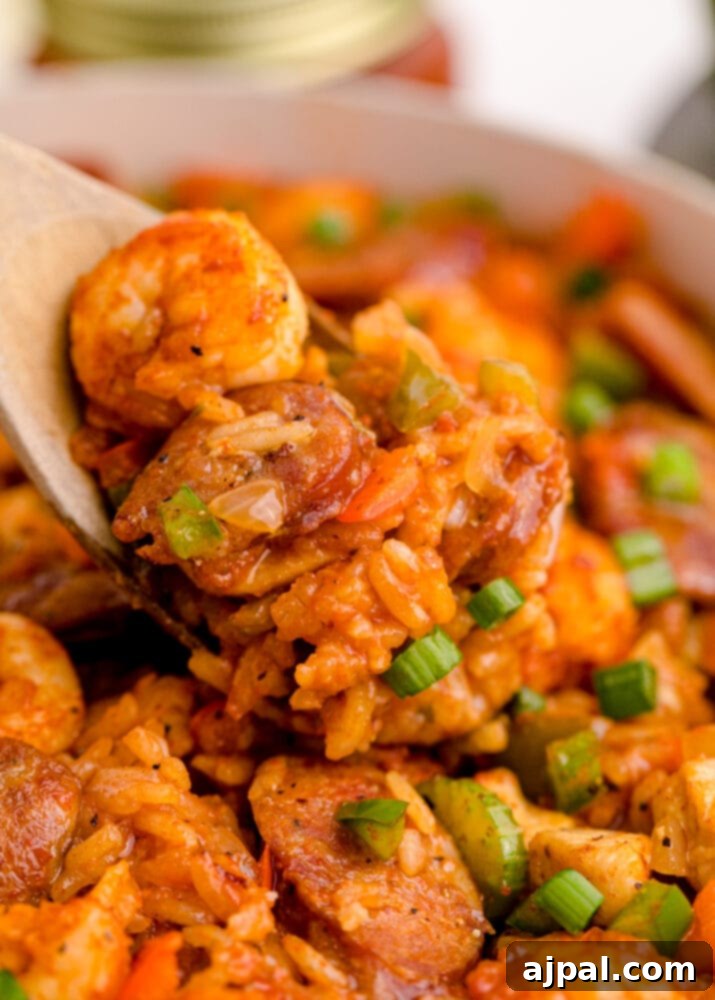
This easy one-pot jambalaya recipe delivers authentic Southern flavors with minimal fuss. It’s truly a delight to make and even more so to share!
Share on Facebook
Share
Pin this now to find it later
Pin It
Follow on Instagram
Follow
Only have 30 minutes to get dinner on the table? Sign up for my 30 minute dinner plans direct to your inbox!
Find and shop my favorite products in my Amazon storefront here!
Easy Cajun Jambalaya
Share by Email
Print Recipe
Ingredients
- 1 Tablespoon cooking oil
- 8 ounces 227 grams andouille sausage, cut into ¼ inch slices
- 1 pound 500 grams boneless, skinless chicken cut into 1 inch pieces
- 1 onion, diced
- 1 green bell pepper, seeds removed, diced
- 1 red bell pepper, seeds removed, diced
- 3 stalks celery, chopped
- 2 cloves garlic, minced
- 1 – 14 ounce can crushed tomatoes
- 1 Tablespoon smoked paprika
- 1 teaspoon salt
- 1 teaspoon cumin
- ½ teaspoon oregano
- ½ teaspoon basil
- ½ teaspoon thyme
- ½ teaspoon pepper
- ¼ teaspoon cayenne pepper
- 1 cup uncooked white rice, long or short grain- not quick cooking rice
- 2 cups chicken broth
- 1 pound