
Unlock the secrets to perfectly cooked pork chops every single time with this comprehensive guide. Whether you’re a seasoned home cook or new to the kitchen, discover how to select, prepare, cook, freeze, and thaw pork chops to achieve maximum flavor and tenderness. Say goodbye to dry, tough pork and hello to incredibly juicy, satisfying meals that fit your family’s budget.
Pork chops are a beloved classic, known for their versatility, affordability, and delicious flavor. They offer a fantastic source of lean protein, often at a more economical price point than beef, making them a go-to for many households. Despite their popularity, achieving that ideal juicy, tender texture can be a challenge. Many home cooks struggle with pork chops turning out dry and tough.
This ultimate guide is designed to empower you with all the knowledge you need to master pork chops. From understanding the different cuts to employing expert cooking techniques, you’ll learn how to transform this humble cut of meat into a culinary masterpiece your family will rave about. Prepare to elevate your weeknight dinners with the best pork chops you’ve ever tasted!
Throughout this guide, we’ll delve into finding the right type of pork chops for your culinary needs, mastering the art of perfect cooking, smart strategies for saving money, and essential tips for freezing and thawing. We’ll also highlight some of our favorite pork chop recipes to inspire your next meal.
Understanding the Pork Chop: A Culinary Staple
A pork chop is a prime cut of meat taken perpendicularly from the spine of a pig’s loin. Similar to other meat chops, it typically includes a rib or a section of a vertebra, contributing to its distinct structure and flavor. Unlike some heavily processed pork products, pork chops are a lean, natural cut. Their lighter flavor profile and excellent nutritional value make them a healthy and delicious choice that has become a dietary cornerstone for countless families worldwide.
They are prized for their tender texture when cooked correctly and their ability to absorb a wide array of marinades and seasonings, making them incredibly adaptable to various cuisines and cooking styles.
Exploring Pork Chop Cuts: From Loin to Plate
To truly master cooking pork chops, it’s essential to understand their origin on the pig. All pork chops are derived from the loin, a long, lean muscle running along the pig’s back from the hip to the shoulder. This region also yields the highly prized tenderloin, a small, exceptionally tender strip of meat.
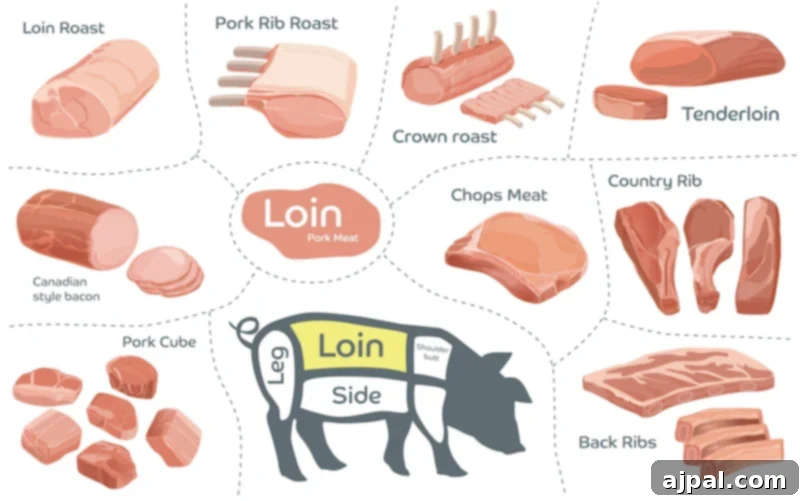
While many chops found in butcher shops originate from the rib and loin sections due to their widespread popularity, which can often drive up their price, it’s worth exploring the full range. As you move from the shoulder towards the hindquarter of the pig, you’ll encounter four primary categories of pork chops:
- Shoulder or Blade Chops: Found closer to the pig’s shoulder, these cuts often contain more fat and connective tissue, offering a richer flavor when cooked properly.
- Rib Chops: Located further back from the shoulder, these are known for their tenderness and often have a curved rib bone.
- Loin Chops: Situated in the middle of the loin, these can be identified by their T-bone shape, separating the loin eye from the tenderloin.
- Sirloin Chops: Coming from the hip end of the loin, these chops are typically larger and contain more varied muscle structures.
Each cut possesses unique characteristics that influence its ideal cooking method, a detail we will explore further to ensure your pork chops are always succulent.
Savvy Shopping: Enjoying Pork Chops on a Budget
Pork chops are an ideal solution for a busy weeknight dinner – they’re simple, delicious, and incredibly versatile. While pork is a widely consumed meat in America, its cost can accumulate quickly. However, with a bit of strategic planning and smart shopping, you can incorporate delightful pork chop dinners into even the tightest family budget.
By implementing a few simple strategies, you can significantly reduce your cost per pound for pork chops, transforming them from a mid-range expense to an incredibly budget-friendly meal. Imagine cutting the price from an average of $6-7 per pound down to around $1.90!
- Buy Pork Chops in Bulk: A golden rule for budget-conscious cooks. Many grocery stores offer large packages or “flats” of pork chops in their bulk meat sections. Purchasing in larger quantities almost always leads to a lower price per pound. This allows you to stock up and enjoy significant savings compared to buying smaller, pre-packaged portions.
- Opt for Bone-in Cuts: Bone-in pork chops are often less expensive per pound than their boneless counterparts. While they require slightly different cooking considerations (which we’ll cover later), the bone helps to lock in moisture and flavor, often resulting in a juicier chop. Don’t shy away from bone-in for the sake of savings and enhanced taste.
- Become Your Own Butcher: For the truly adventurous and budget-savvy, buying a whole pork loin and butchering it yourself can offer the greatest savings. Large pork loins are frequently sold at a much lower price per pound than individual chops. With a little practice and a sharp knife, you can cut your own chops to your desired thickness, taking full advantage of bulk pricing and customizing your cuts.
Embracing these tips will not only save you money but also ensure you always have tender, flavorful pork chops on hand for effortless, delicious meals. And for ultimate convenience, consider using grocery delivery services – many offer sign-up bonuses and can streamline your meal prep even further.
Mastering the Freeze: Preserving Pork Chop Quality
When you take advantage of bulk buying to save money on pork chops, proper freezing techniques become paramount. Incorrect freezing can lead to dreaded freezer burn, resulting in tough, dry meat. To maintain the succulent tenderness and juicy flavor of your pork chops for future meals, follow these essential steps:
- Pat Dry Thoroughly: Moisture is the enemy of frozen meat. Any surface water will form ice crystals, which can damage the meat fibers, leading to a tough, dry texture and freezer burn. Before freezing, use paper towels to pat each pork chop thoroughly dry, removing all excess moisture from the surface and packaging.
- Vacuum Seal (If Possible): A vacuum sealer is an invaluable tool for freezing meat. By removing all air from the packaging, it prevents oxygen exposure and ice crystal formation, which are the primary causes of freezer burn. If using a vacuum sealer, arrange chops so they are not touching, allowing the machine to create individual seals around each chop within the same bag for easier separation later.
- Eliminate Extra Air (Without a Vacuum Sealer): If you don’t own a vacuum sealer, you can still achieve excellent results. Place pork chops in high-quality freezer bags, removing as much air as possible before sealing. A good trick is to partially seal the bag, then use a straw to suck out the remaining air, or gently press the bag against a counter while sealing from the bottom up to force air out.
- Separate Chops for Even Freezing and Thawing: To facilitate even freezing and easier thawing, prevent chops from touching each other in the freezer bag. Placing a small sheet of wax paper or parchment paper between each chop before sealing helps tremendously. This prevents them from freezing into a solid block, allowing you to remove just the number of chops you need without having to thaw the entire batch.
By following these guidelines, your frozen pork chops will emerge from the freezer as tender and flavorful as the day you bought them, ready for your next culinary adventure.
Safe Thawing: Preparing Pork Chops for Cooking
Proper thawing is just as critical as proper freezing for maintaining the quality and safety of your pork chops. Avoid the common mistake of thawing at room temperature, which can promote bacterial growth. Here are the recommended methods for safely thawing your pork chops:
-
Thawing Pork Chops in Cold Water:
- This method offers a faster alternative to refrigerator thawing without the risks of uneven heating and tough meat associated with microwave thawing.
- Ensure your frozen pork chops are tightly sealed in their original packaging or an additional plastic wrap/freezer bag. It is crucial that no raw pork touches the water to prevent contamination. Remove any excess air bubbles from the bag before submerging.
- Place the sealed chops in a sink, large pot, or bowl and submerge them completely in cold tap water.
- To maintain a safe temperature and facilitate thawing, refresh the cold water every 20-30 minutes.
-
How Long to Thaw Pork Chops in Water:
- The thawing time depends on the size and thickness of your pork chops. A typical 1-inch thick chop may take 30-60 minutes.
- If chops were not frozen individually and are stuck together, the thawing process will take longer. Once they have thawed enough to be pulled apart, separate them to allow for quicker, more even thawing.
- Always cook pork chops immediately after thawing with this method.
-
Thawing Pork Chops In the Refrigerator:
- This is the safest and most recommended method, though it requires foresight. Simply transfer your frozen pork chops from the freezer to the refrigerator and allow them to thaw completely on their own.
- Resist the temptation to speed up this process with a microwave, as it can partially cook the meat and result in dry, tough spots.
- Thawing times vary, but typically, a pound of pork chops will take a full 24 hours to thaw in the refrigerator. Larger quantities or thicker chops will require more time.
- Once thawed in the refrigerator, pork chops can be safely stored for an additional 3-5 days before cooking.
Achieving Perfection: Tips for Tender, Juicy Pork Chops
The quest for tender, juicy pork chops often feels elusive, but it doesn’t have to be. Many people complain about dry and tough baked pork chops, yet with the right knowledge and a few simple techniques, you can consistently achieve culinary excellence. The key lies in understanding your specific cut of pork chop and employing the optimal cooking method designed for it. Forget everything you thought you knew about overcooked pork – your journey to perfectly succulent pork chops starts here.
By following these expert tips and understanding the nuances of each pork chop type, you’ll be well-equipped to prepare flavorful, moist pork chops that will become a regular favorite in your home.
Timing is Everything: How Long to Cook Pork Chops
When it comes to cooking pork chops, a crucial guideline is “hot and fast” for most cuts. Pork is lean meat, and overcooking it even slightly can rapidly strip it of moisture, leading to a tough, dry texture. Conversely, some cuts benefit from a longer, slower cook. This might sound contradictory, but the distinction lies in the type of pork chop you’re preparing.
Boneless pork chops, for instance, are best cooked quickly over high heat to prevent them from drying out due to their minimal fat content. Pork steaks, however, with their richer marbling and connective tissues, often become wonderfully tender when cooked slowly over lower heat for an extended period. The good news is, once you grasp the characteristics of your specific chop, you’ll confidently create delicious, never-dry, and intensely flavorful pork chops every time.
The single most important tool in your arsenal for cooking any type of pork perfectly is an accurate, quick-read meat thermometer. Overcooked pork is the primary reason for complaints about its flavor and texture. The ideal internal temperature for pork, according to USDA guidelines, is 145°F (63°C), followed by a three-minute rest. Exceeding 150°F (66°C) can cause pork to dry out almost instantly, so precise temperature monitoring is essential for achieving that desirable juicy outcome.
Tailoring Your Technique: How to Cook Different Types of Pork Chops
It might surprise you to learn just how many different types of pork chops exist, each with its own flavor profile and optimal cooking method. The culinary landscape of pork can be intimidating, especially since chops are often simply labeled “pork chop” at the grocery store, without specifying the exact cut. This lack of clear identification can lead to frustration, resulting in tough, dry, or bland results for even experienced cooks.
Understanding precisely where your pork chop comes from on the pig and, consequently, the best cooking methods for that specific cut, is absolutely critical. This knowledge transforms pork chop cooking from a guessing game into a precise art, ensuring you achieve perfectly delicious, never-dry pork chops every single time.
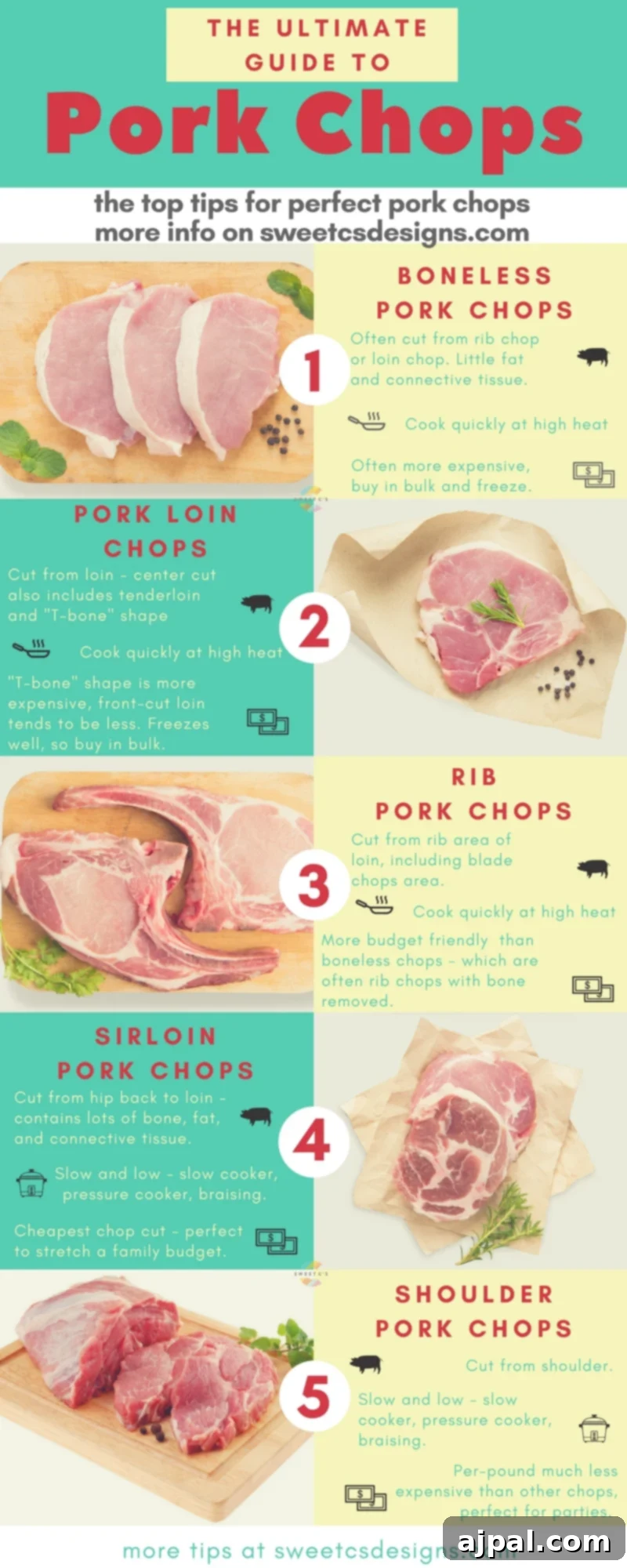
Let’s break down the distinct characteristics and ideal cooking approaches for each major type of pork chop:
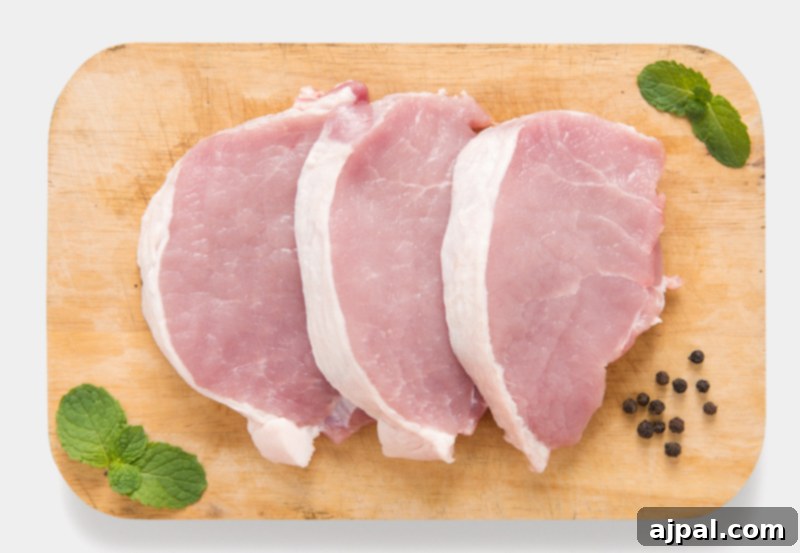
-
Boneless Pork Chop (America’s Cut / Loin Filet)
- Characteristics: Often marketed as “America’s Cut” or “loin filets,” these are among the most popular but also the trickiest chops to cook perfectly. Lacking bones and possessing very little fat or connective tissue, they are prone to drying out. They are typically trimmed, thinner cuts commonly found in bulk grocery store sections.
- Flavor & Texture: Lean, mild flavor. Without proper technique, they can become tough and dry.
- Best Cooking Methods: Boneless chops thrive with quick, high-heat cooking methods. Marinating beforehand is highly recommended as it helps lock in moisture and infuse flavor. Pan-searing, grilling, or baking at higher temperatures are excellent choices. Ensure rapid cooking and precise temperature monitoring.
- Why Marinate: The absence of bone and significant fat means these chops rely heavily on external moisture and flavor. A good marinade tenderizes the meat and keeps it juicy during the fast cooking process.
- Recipe Ideas: One-pot lemon garlic pork chops with asparagus, one-pot Tuscan pork chops.
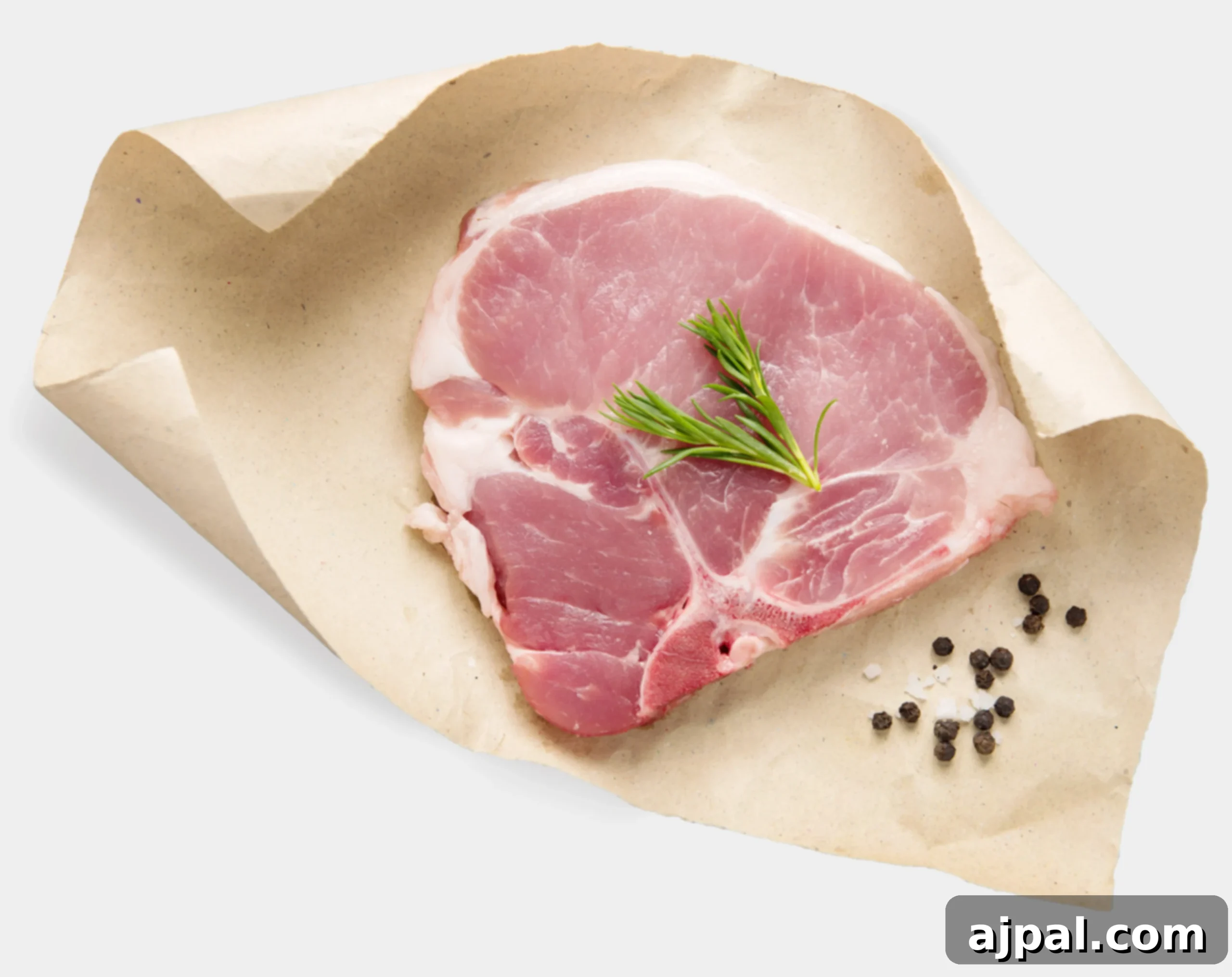
-
Loin Chop (Center-Cut Loin Chop / T-Bone / Porterhouse)
- Characteristics: These chops are recognizable by their “T-bone” shape, which separates the larger loin muscle from the smaller, more tenderloin portion. Top-cut loin chops, further from the bone, might not have the distinct “T.” Chops with a very visible T-bone often command a slightly higher price.
- Flavor & Texture: Offers both the lean loin and the incredibly tender tenderloin, presenting a unique challenge as they cook at different rates.
- Best Cooking Methods: Loin chops require quick, high-heat cooking to prevent drying out either the loin or the tenderloin. Pan-frying, searing, grilling, roasting, or broiling are ideal. It is crucial to use a fast-read meat thermometer to monitor the internal temperature in both sections, pulling the chop off the heat as soon as the tenderloin reaches 145°F (63°C).
- Key to Success: Avoid overcooking at all costs. The dual nature of this cut demands vigilant temperature management.
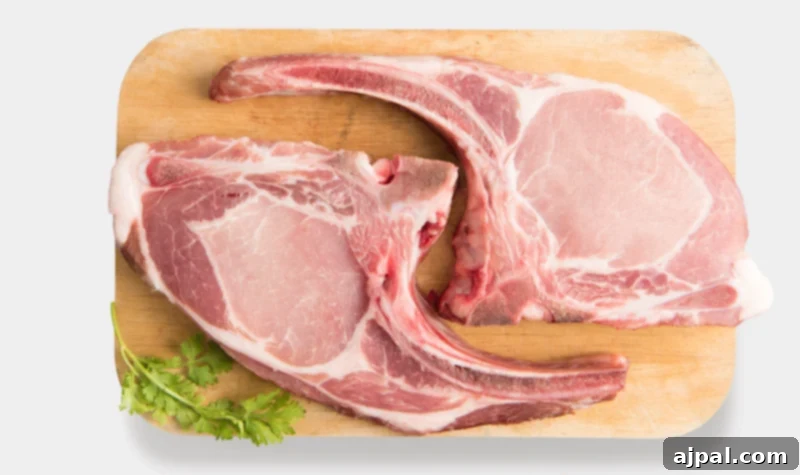
-
Rib Chop (Center-Cut Rib Chop / Rib Pork Chop)
- Characteristics: These chops are cut from the rib section of the loin, typically featuring a curved rib bone. They possess a good balance of lean meat and a slightly higher fat content than loin chops, making them a bit more forgiving to cook.
- Flavor & Texture: Tender with a light, mild flavor. The extra fat content contributes to a juicier result compared to boneless or loin chops, providing a safety net against slight overcooking.
- Best Cooking Methods: Similar to loin chops, rib chops excel with quick, high-heat cooking methods such as pan-searing, grilling, broiling, or high-heat roasting. While more forgiving, they still benefit from careful temperature monitoring to avoid becoming dry. Consider brining for an extra layer of moisture and flavor.
- Why they’re great: Their natural marbling helps ensure a juicy outcome, making them a favorite for many cooks.
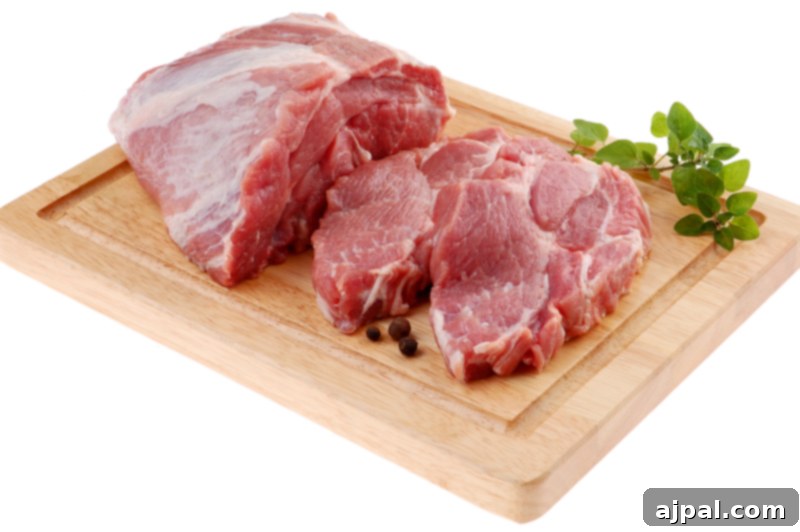
-
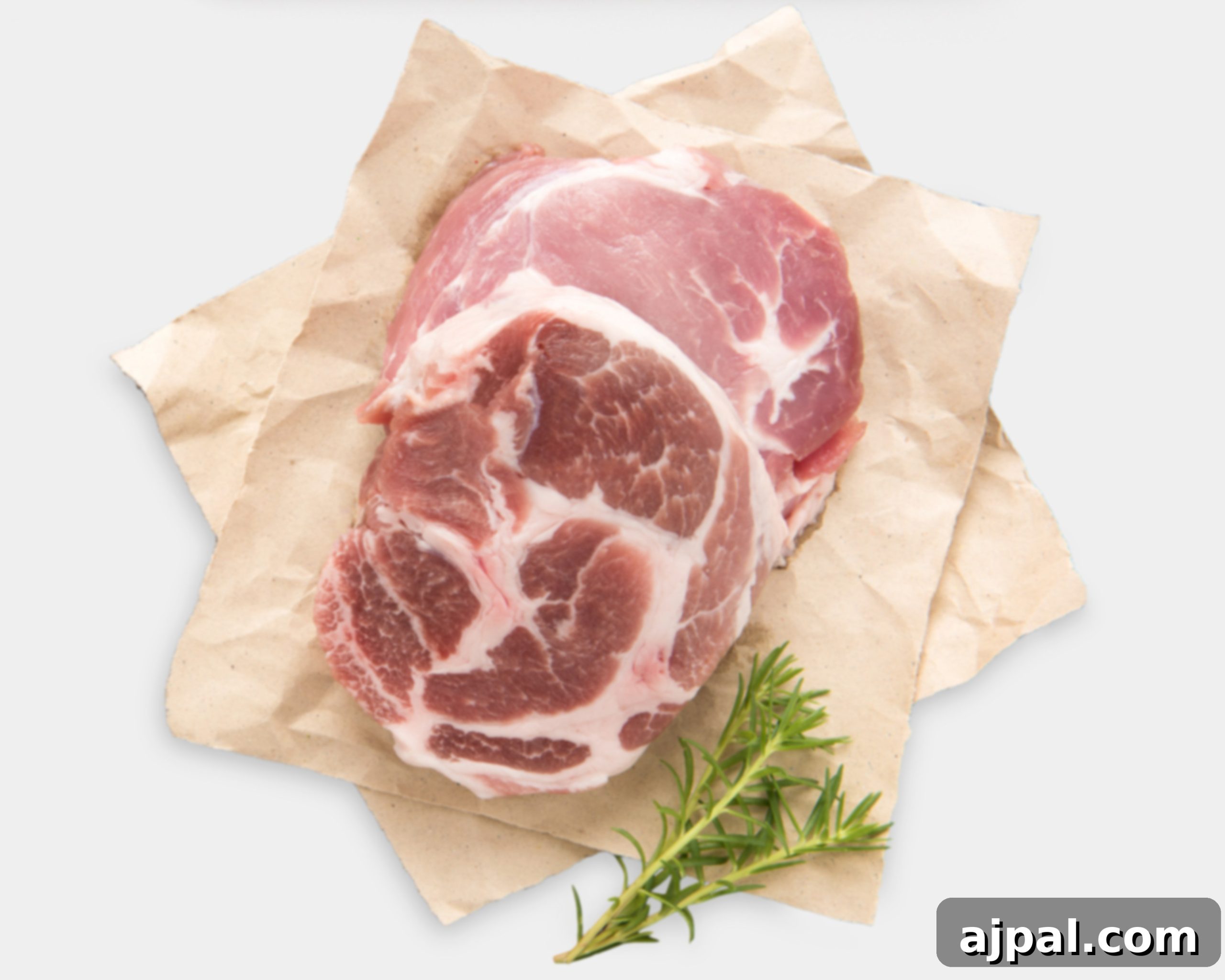
Shoulder Pork Chop (Blade Chop / Pork Shoulder Steak)
- Characteristics: Also known as blade chops or pork shoulder steaks, these cuts come from the shoulder region. They are darker in color, contain more fat, connective tissue, and sometimes parts of the blade bone. They can be a bit harder to find consistently in all grocery stores.
- Flavor & Texture: Rich, deeply meaty flavor. Due to higher amounts of connective tissue and fat, these chops will be tough if cooked quickly. They transform into incredibly tender, fall-off-the-bone deliciousness with the right cooking method.
- Best Cooking Methods: Shoulder chops are NOT suitable for high-heat, fast cooking. They demand slow, moist-heat methods like braising, stewing, or barbecuing. This extended cooking time allows the tough connective tissues to break down and the fat to render, resulting in a supremely tender and flavorful dish.
- Key to Success: Patience is paramount. Slow cooking unlocks their full potential, letting the meat pull away from the bone and absorb rich flavors.
- Recipe Ideas: Ideal for pulled pork, stews, or recipes like Ranch Diced Pork Lettuce Wraps using diced shoulder chops.
-
Sirloin Chop / Steak (Pork Sirloin Chop / Pork Steak)
- Characteristics: These chops are cut from the hip end of the loin. They are often less popular than boneless or center-cut loin chops and may be less consistently available. However, they are typically very budget-friendly.
- Flavor & Texture: Can be flavorful but benefit greatly from cooking methods that break down their slightly tougher texture and render fat effectively.
- Best Cooking Methods: Sirloin chops and steaks excel in slow cooking environments. They are fantastic in a slow cooker or when cooked at longer, lower temperatures in the oven. This allows the fat and connective tissue to melt into the meat, yielding tender and moist results.
- Budget-Friendly Choice: Don’t overlook these chops! With the right slow cooking approach, they offer incredible value and delicious meals.
- Recipe Ideas: Perfect for a hearty Slow Cooker Pork Steak Recipe.
Armed with this detailed understanding of each pork chop cut and its ideal preparation, you are now ready to confidently tackle any pork chop recipe and achieve consistently delicious results. Experiment with different cuts and methods to discover your personal favorites!