
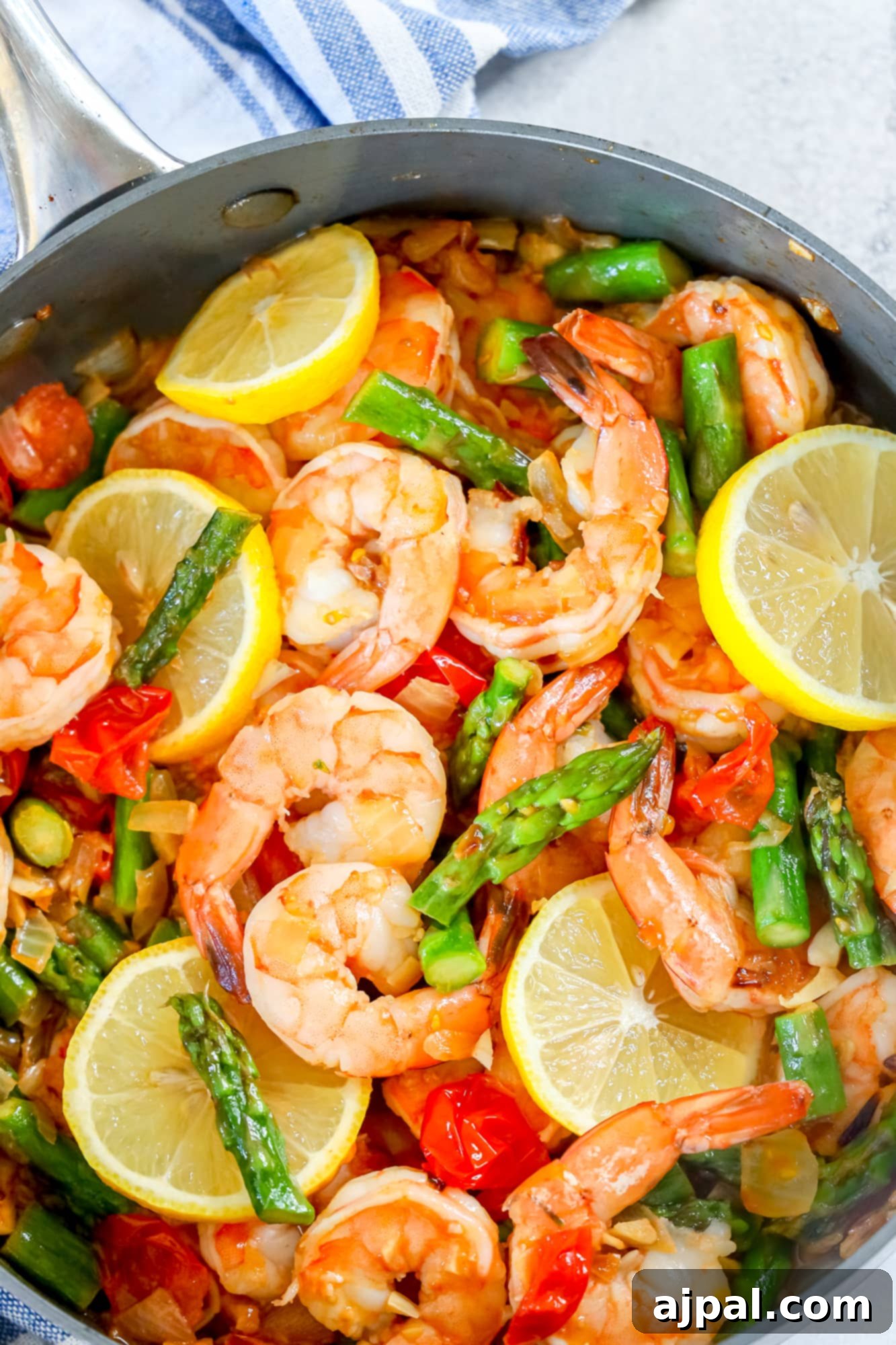
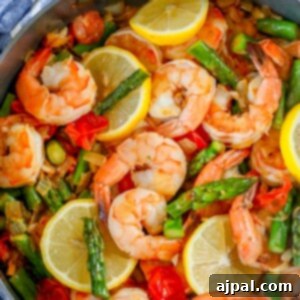
If you’re searching for a healthy, incredibly flavorful, and effortlessly quick meal, look no further! This one-pan recipe delivers perfectly cooked shrimp and crisp asparagus, all infused with a vibrant garlic lemon butter sauce. It’s a low-calorie, low-carb wonder that proves healthy eating can be both delicious and convenient, making it an ideal choice for busy weeknights or a light, impressive dinner.
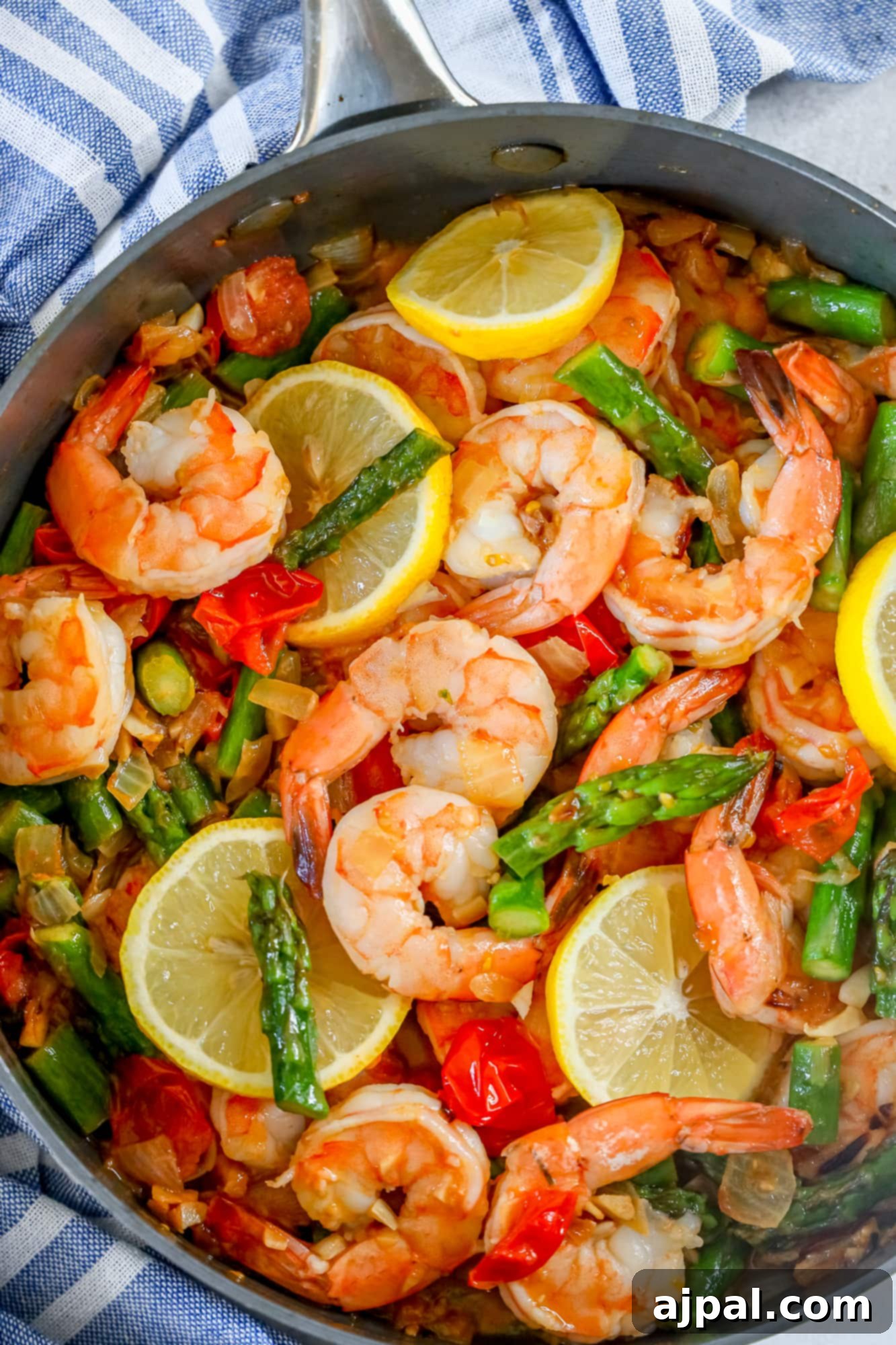
Looking for a quick recipe? Use the table of contents below to jump straight to the recipe card or specific sections. We’ve packed this post with valuable tips and insights to help even beginner home cooks master this dish. Understanding the ‘why’ behind each step and ingredient can significantly boost your confidence in the kitchen, turning you into a more empowered and intuitive cook.
Table of Contents
- One-Pan Lemon Garlic Butter Shrimp and Asparagus Skillet
- Essential Kitchen Tools for Shrimp and Asparagus
- Expert Tips for Perfect Shrimp and Asparagus
- Frequently Asked Questions About Shrimp and Asparagus Skillet
- What to Serve with Shrimp and Asparagus Skillet
- The Best Easy Shrimp and Asparagus Skillet Recipe
One-Pan Lemon Garlic Butter Shrimp and Asparagus Skillet
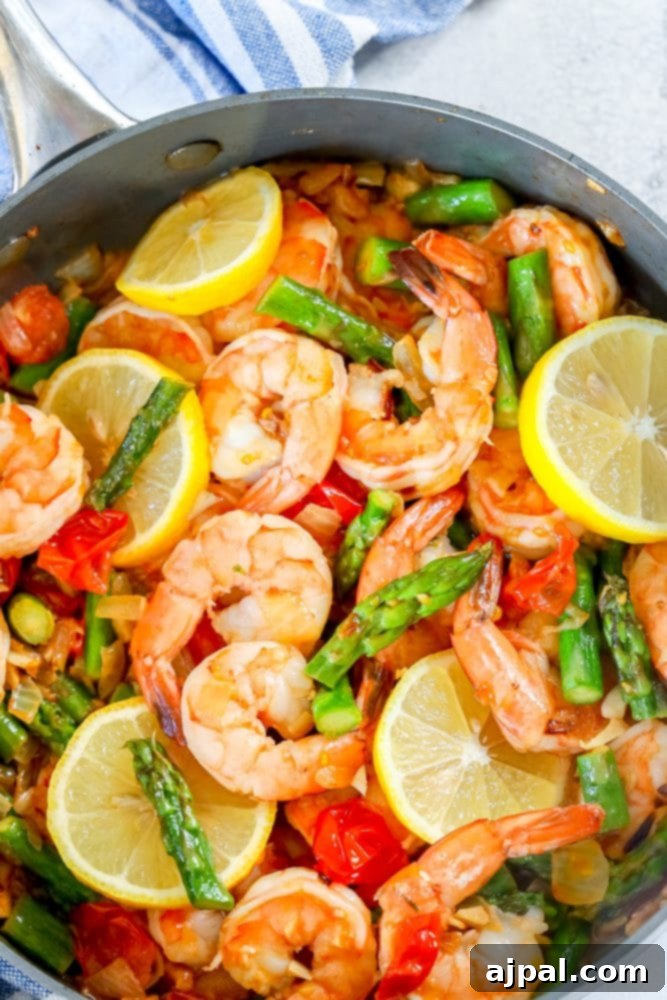
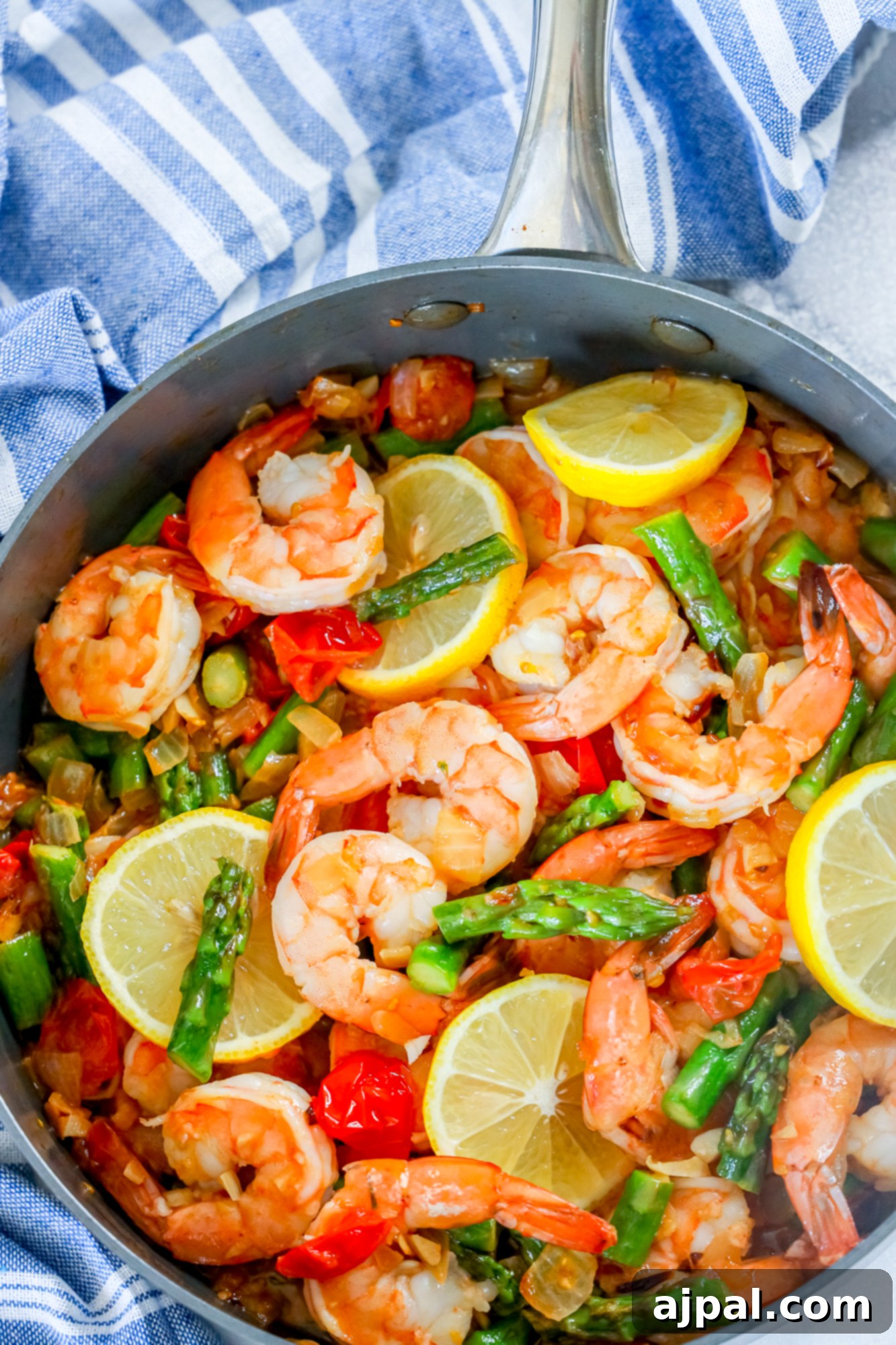
This exquisite shrimp dish is a delightful spin-off from our beloved Lemon Garlic Butter Shrimp Skillet, offering a fresh twist with the addition of vibrant asparagus. It’s incredibly flavorful, yet astonishingly quick to prepare, coming together in less than 20 minutes from start to finish. If you adore the bright, zesty notes of lemon, the robust depth of garlic, and the rich smoothness of butter, but are also mindful of your carbohydrate and calorie intake, this recipe is tailor-made for you!
Our One-Pan Lemon Garlic Butter Shrimp and Asparagus Skillet is a low-calorie, low-carb champion, bursting with an irresistible flavor profile that will satisfy everyone at your table. Its simple elegance makes it perfect for a variety of occasions, whether you’re hosting guests or enjoying a quiet meal at home. Much like our popular Shrimp Florentine, Bang Bang Shrimp, and easy Cilantro Lime Shrimp recipes, this dish stands beautifully on its own. However, its versatility truly shines when paired with your favorite sides such as fluffy rice, nutritious cauliflower rice, classic noodles, low-carb zoodles, or traditional pasta.
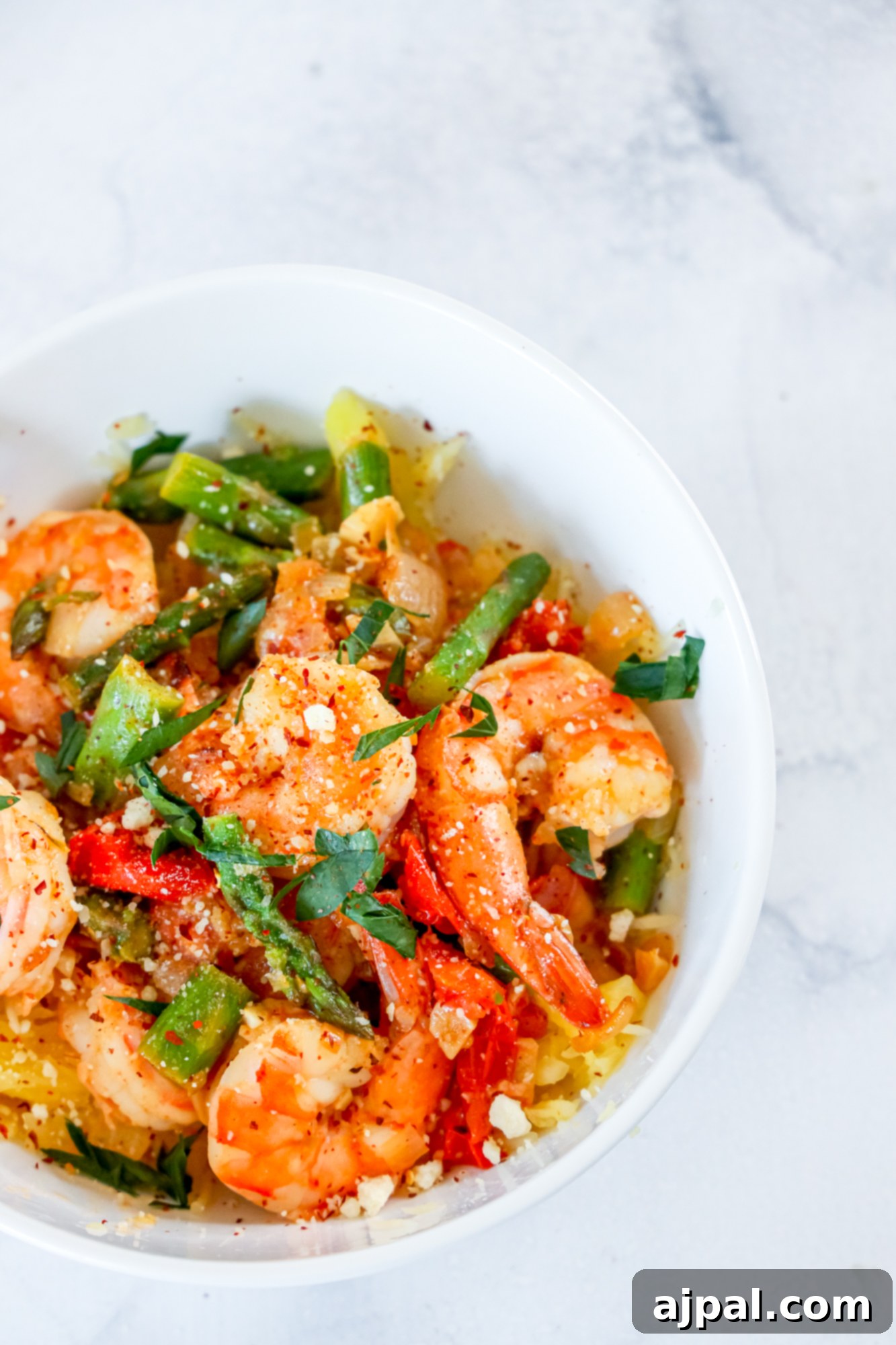
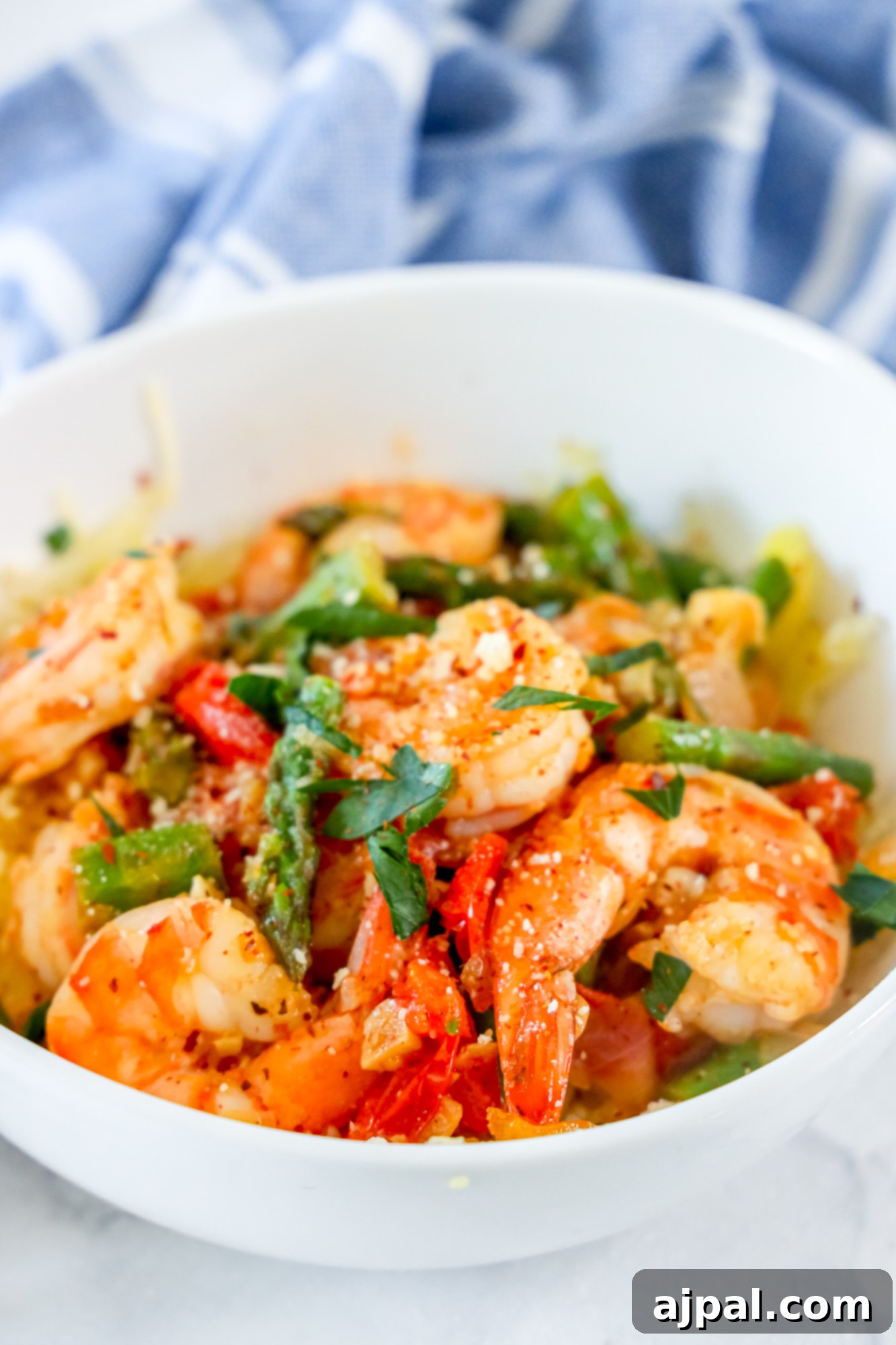
In this post, we’ll guide you through one of our favorite ways to enjoy this incredible shrimp dish: served over tender spaghetti squash, reminiscent of our Spaghetti Squash Shrimp Scampi. This pairing creates a fulfilling and healthy meal that doesn’t compromise on taste. Of course, you can easily substitute spaghetti squash with regular spaghetti, linguine, or even zucchini noodles to suit your preference and dietary needs. This shrimp skillet recipe is wonderfully adaptable, inviting you to experiment and make it uniquely yours. We are confident you’ll cherish this recipe as much as we do!
Essential Kitchen Tools for Shrimp and Asparagus
Gathering the right tools before you begin cooking makes the process smoother and more enjoyable. For this simple yet elegant shrimp and asparagus skillet, you won’t need anything fancy, just a few kitchen staples:
- Nonstick Frying Pan: A good quality nonstick pan, ideally with a metal or oven-safe handle for maximum versatility, is essential for a mess-free experience when stir-frying and preparing delicate seafood like shrimp. It ensures ingredients cook evenly without sticking, making cleanup a breeze. We highly recommend brands like GreenPan for their affordability and natural nonstick properties.
- Spatula: A large, wide, nonstick spatula is your best friend for tossing stir-fries and skillet dishes. Its nonstick surface helps prevent delicate shrimp and lemon slices from sticking, allowing you to easily move and flip ingredients without damaging them.
- Sharp Knife or Shrimp Knife: A small, sharp utility knife or a specialized shrimp knife is invaluable for quickly and efficiently removing the shell and vein from your shrimp, if they aren’t already pre-prepped. This ensures a cleaner eating experience.
- Chef’s Knife: A large, heavy, and sharp chef’s knife is indispensable for slicing lemons, dicing onions, mincing garlic, and trimming asparagus. A well-maintained chef’s knife makes prep work safer and more efficient.
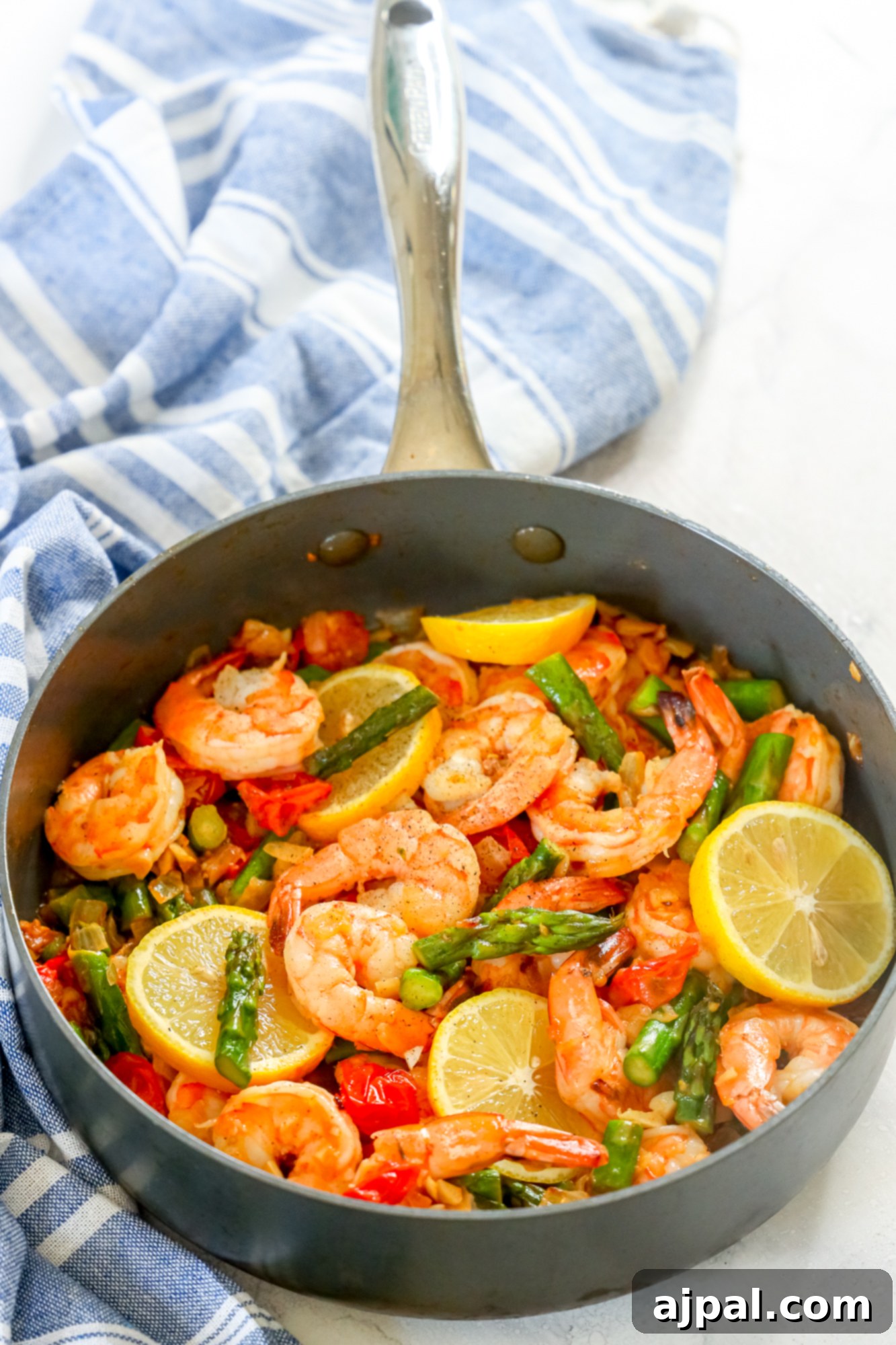
Expert Tips for Perfect Shrimp and Asparagus
This recipe is designed to be straightforward, making it perfect for even beginner cooks. It’s an excellent opportunity to learn the ideal cooking times for shrimp and vegetables, with no complex instructions or specialized tools required. Follow these tips for consistently delicious results:
Don’t Overcook Shrimp: The Golden Rule. The most crucial tip for cooking shrimp is to avoid overcooking them. Shrimp continue to cook in the residual heat of the pan for a few minutes even after being removed from the burner. Therefore, pull them off the heat the very second they turn from their raw gray, translucent state to an opaque, pink color. Overcooked shrimp become tough, rubbery, and can develop an unpleasant fishy taste. Perfectly cooked shrimp, on the other hand, are tender, subtly sweet, and possess a delicate texture without any hint of fishiness.
Keep Tails On or Take Them Off: Your Choice. Whether to leave the shrimp tails on or remove them is a matter of preference and presentation. We often leave the tails on when serving this dish for a more elegant presentation, especially for dinner parties or when we want to impress guests. Keeping the tails on can also impart a little extra shrimp flavor to the dish as it cooks. However, for quick weeknight dinners, romantic meals, or when serving children, removing the tails beforehand can make eating much easier and tidier. There’s no right or wrong answer; choose what suits your occasion best!
Emulsify Sauce for Pasta: A Chef’s Secret. If you’re planning to serve your shrimp and asparagus skillet over pasta, here’s a fantastic trick to create a rich, clinging sauce: Before draining your cooked pasta, reserve about 1 cup of the starchy pasta water. At the very end of cooking your shrimp and asparagus, add this starchy water to the skillet. The starches in the water will help thicken and emulsify the garlic butter sauce, allowing it to beautifully coat every strand of pasta. Add the water just before the shrimp are fully cooked to prevent overcooking the shrimp.
Heating and Reduction: Bring the sauce and starchy water to a rapid boil while tossing the shrimp into the dish. Cook briefly until the shrimp turn pink. Most of the water will have reduced and thickened, resulting in a glossy sauce that adheres perfectly to your pasta.
How To Store Leftover Shrimp and Asparagus. Once cooked, this shrimp and asparagus skillet can be stored in an airtight container in the refrigerator for up to four days. To reheat, melt 2 tablespoons of butter in a pan over medium-high heat until it becomes foamy. Add the leftovers to the pan and cook for approximately 5-8 minutes, stirring occasionally, until the dish is piping hot throughout. This method helps maintain the flavor and texture.
How To Freeze Shrimp and Asparagus Skillet. We generally do not recommend freezing this particular cooked recipe. Both shrimp and asparagus can become mushy, watery, and grainy in texture after being frozen and thawed, significantly affecting the dish’s quality. If you wish to prep ahead for easy meals, we suggest preparing all the individual ingredients (shrimp, asparagus, garlic, onions, etc.) and freezing them separately. Lay the prepped ingredients on a baking sheet lined with parchment or freezer paper until frozen solid, then transfer them to a freezer-safe plastic bag. When ready to cook, remove the frozen ingredients and prepare them in a frying pan with 2 tablespoons of butter over medium-high heat until the shrimp are pink and the vegetables are tender-crisp. This preserves the best possible texture.
Frequently Asked Questions About Shrimp and Asparagus Skillet
No, leaving shrimp tails on is entirely optional. While they can add a touch of visual appeal for plating and contribute a subtle extra depth of flavor to the cooking liquid, most home cooks prefer to remove them for easier eating. Feel free to remove them if you find them inconvenient or when serving to children.
The primary reason shrimp can taste fishy is overcooking. When shrimp are overcooked, their proteins tighten excessively, leading to a gummy, grainy texture and an undesirable strong, fishy flavor. Properly cooked shrimp, on the other hand, should have a delicate, slightly sweet taste and a tender bite, never fishy. Always monitor your shrimp closely and remove them from the heat as soon as they are cooked through.
Shrimp are cooked when they change from their raw, translucent gray color to an opaque, bright pink with white accents. Their shape will also curl into a loose C-shape. As soon as you observe this transformation, immediately remove the shrimp from the heat. Remember, they will continue to cook slightly from residual heat, so pulling them off just as they turn pink ensures they remain perfectly tender and succulent.
What to Serve with Shrimp and Asparagus Skillet
This garlic lemon butter shrimp and asparagus skillet is so incredibly delicious, you might find yourself wanting to eat it straight from the pan – it’s truly that good! However, it pairs beautifully with a variety of sides, allowing you to transform it into a complete and satisfying meal. Here are some of our favorite easy serving suggestions, from low-carb options to classic pasta dishes:
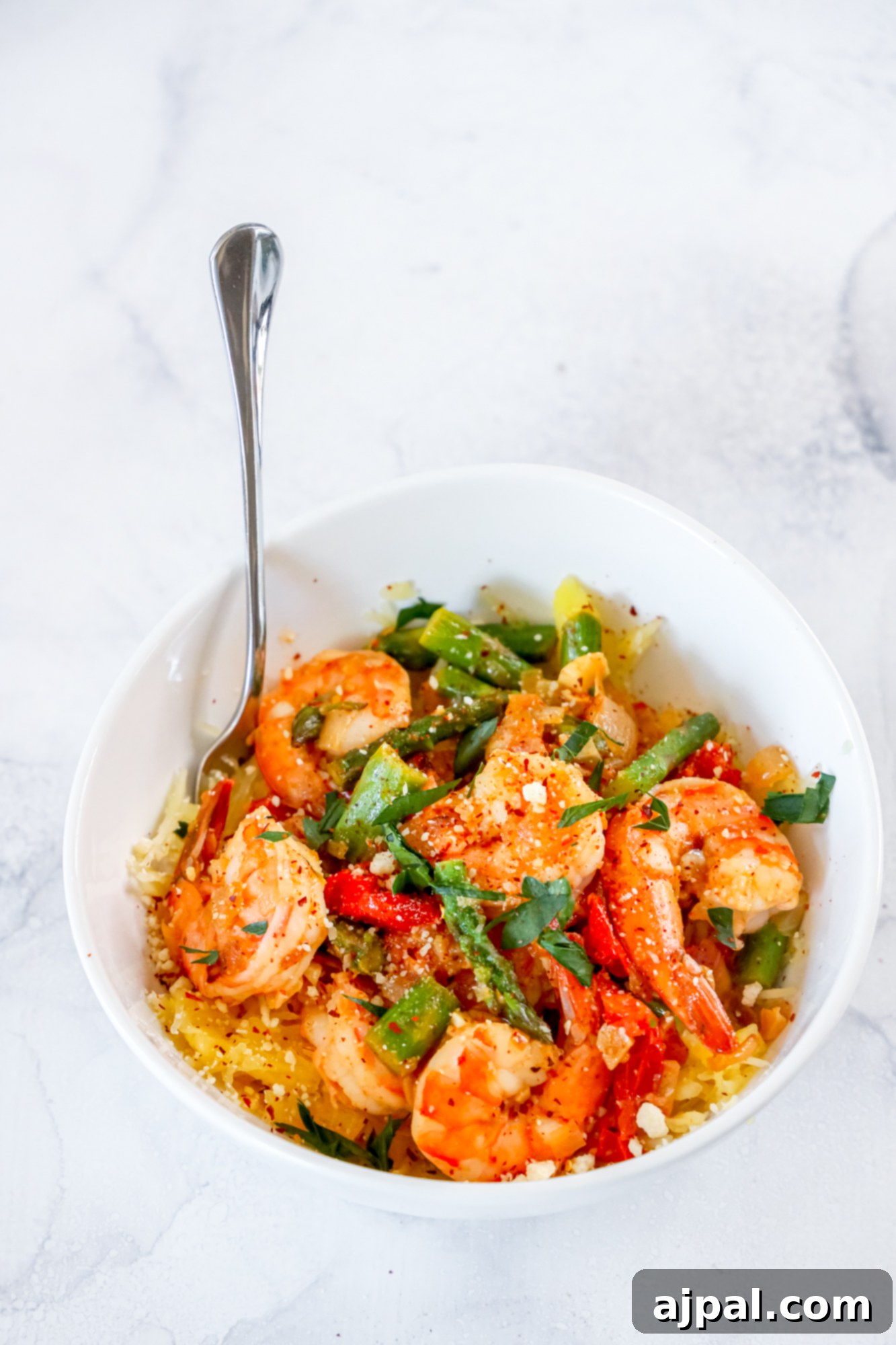
Spaghetti Squash: A Healthy Noodle Alternative. For a low-carb and vegetable-rich option, prepare 4 cups of spaghetti squash. Many grocery stores offer pre-prepped spaghetti squash in bags that can be microwaved in just 6 minutes, then easily pulled apart into tender, spaghetti-like strands. If you prefer to prepare a whole spaghetti squash from scratch, you can find detailed instructions in our Spaghetti Squash Scampi recipe. Its mild flavor and firm texture make it an excellent base for the flavorful shrimp.
Zoodles (Zucchini Noodles): Fresh and Light. If serving over zoodles, you’ll typically need two medium zucchini for about 1/2 to 1 zucchini per person, depending on appetite. We recommend adding the zucchini noodles to the pan during the final minutes of cooking the shrimp and asparagus. This allows them to briefly soften and absorb some of the delicious sauce without becoming overly watery or mushy. The beauty of zoodles is that you can cook them to your preferred tenderness – some enjoy them barely cooked for a crisp bite, while others prefer them softer or even raw.
Shirataki Noodles: The Ultimate Low-Carb Choice. For an ultra-low-calorie and low-carb option, shirataki noodles are fantastic. Prepare 1 package of noodles for every two people, following the package directions. If you’re particularly hungry, one package per person is also a viable option due to their minimal calorie count. It’s crucial to drain the noodles very well and rinse them thoroughly, at least twice, to minimize their fermented smell. After rinsing, pan-fry them in 2 tablespoons of olive oil for 2-3 minutes to improve their texture. You can then add them to the shrimp and asparagus skillet during the last few minutes of cooking to infuse them with the sauce’s robust flavors.
Classic Pasta: Comforting and Hearty. For a more traditional and hearty meal, serve your shrimp and asparagus over your favorite pasta. Plan for about 1.5 cups of cooked pasta per person, which equates to roughly 4 ounces of dry pasta or half a standard pasta box. Boil your pasta simultaneously while preparing the shrimp and asparagus skillet for a perfectly timed meal. This dish is especially delicious when topped with a drizzle of spicy Zhoug (Skhug) Sauce, or stirred into our Lemon Zucchini Pasta for an extra layer of freshness.
For more vegetable dishes that pair wonderfully with this skillet, explore our recent favorites below:
Try these other favorites:
Herb Roasted Turkey in a Bag
Cranberry Bars
Dilly Bread Recipe
Cabbage and Noodles
Lemon Chicken Tortellini Soup
Cranberry Chutney
The Best Easy Shrimp and Asparagus Skillet Recipe
If you’ve enjoyed this easy shrimp and asparagus recipe, please consider rating it five stars in the recipe card below! Your feedback helps us reach more home cooks looking for delicious, healthy, and simple meal ideas. Don’t forget to share your culinary creations on social media and tag us – we love to see what you’re cooking!
Only have 30 minutes to get dinner on the table? Sign up for our 30-minute dinner plans delivered straight to your inbox!
Find and shop our favorite products in our Amazon storefront here!
Best Easy Shrimp and Asparagus Skillet Recipe
Equipment
-
HexClad Chef’s Knife, 8-Inch Japanses Damascus Stainless Steel Blade, Full Tang Construction, Pakkawood Handle
-
HexClad Hybrid Nonstick Frying Pan, 12-Inch, Stay-Cool Handle, Dishwasher and Oven Safe, Induction Ready, Compatible with All Cooktops
Ingredients
- 4 tbsp unsalted butter, divided
- 1 large shallot, minced
- ½ white onion, diced
- 6 cloves garlic, minced
- 1 bunch asparagus, woody stalks removed and cut into 1″ pieces
- 1 cup cherry tomatoes, halved
- 1 tsp good quality sea salt
- 1 tsp fresh cracked black pepper
- 2 tsp italian herbs seasoning
- 1 tsp red pepper flakes, optional
- 1 lemon, cut into thin rounds
- 1 lb shrimp, peeled and de-veined (I prefer 16-20 count but any size is fine)
Instructions
-
In a heavy nonstick pan, melt 2 tablespoons of butter over medium-high heat until it begins to foam.
-
Add the diced onion to the pan and cook, stirring occasionally, until it softens and becomes translucent, which usually takes about 4 minutes.
-
Stir in the minced garlic and shallot, and cook for about 1 minute until fragrant. Be careful not to burn the garlic.
-
Add the asparagus pieces and halved cherry tomatoes to the pan.
-
Continue cooking for another 4 minutes, or until the tomatoes begin to soften and break down slightly, and the asparagus turns a vibrant bright green and is tender-crisp.
-
Add the peeled and de-veined shrimp along with the lemon slices to the pan, then toss everything to combine.
-
Generously season the mixture with sea salt, fresh cracked black pepper, and Italian herbs. Add red pepper flakes now if you desire a touch of heat.
-
Add the remaining 2 tablespoons of butter to the pan, allowing it to melt and coat the ingredients.
-
Continue cooking, stirring frequently, until the shrimp turn opaque pink and white (no longer translucent and gray). This typically takes about 3-5 minutes, depending on the size of your shrimp.
-
Do not overcook the shrimp. The moment they are fully cooked, remove the pan from the heat immediately to prevent them from becoming rubbery.
-
Remove the lemon slices before serving, as they are primarily for infusing flavor during cooking. Serve hot and enjoy!
Nutrition
Nutrition information is automatically calculated, so should only be used as an approximation.