

There’s a special charm to Budapest, Hungary – a city I’ve fallen in love with, renowned not just for its breathtaking architecture and vibrant culture, but especially for its incredible cuisine. Among the culinary treasures, nothing quite captures my heart like a steaming bowl of Authentic Hungarian Goulash. This classic Hungarian beef stew is the epitome of comfort food: rich, hearty, and deeply satisfying, making it a perennial favorite in my family, particularly on chilly winter evenings.
To make your culinary journey seamless, we’ve included a clickable table of contents below, ensuring you can easily navigate through this comprehensive guide to crafting the perfect Hungarian Goulash. At Sweet C’s, my mission is to empower every home cook. As someone who learned in my own kitchen without formal training, I understand the value of knowing *why* a recipe works. That’s why I pack my posts with detailed tips, explaining the role of each ingredient and technique, helping even beginners feel confident and inspired.
Table of Contents
- Traditional Hungarian Goulash Recipe Ingredients
- How to Make Authentic Hungarian Goulash
- Expert Tips for Perfect Hungarian Goulash
- Recipe Tip: Thicken Goulash with Tomato Paste
- About Gulyás – The Heart of Hungarian Cuisine
- Hungarian Goulash Variations
- Enhancing Flavor with Piros Paste
- The Fiery Kick of Eros Pista
- Frequently Asked Questions about Hungarian Goulash
- Finding Authentic Goulash in Budapest, Hungary
- What to Serve with Traditional Hungarian Goulash
- Authentic Hungarian Goulash Recipe
Traditional Hungarian Goulash Recipe Ingredients
Crafting a truly authentic Hungarian Goulash requires quality ingredients that build layers of flavor. Here’s a breakdown of what you’ll need and why each component is essential:
- Pork Lard or Butter: Traditionally, pork lard is preferred for its superior flavor and browning capabilities, creating a richer base for sautéing onions and meat. Butter is a suitable alternative for those who prefer it.
- Onions: The foundation of any great goulash. Slowly sautéing onions until deeply caramelized unlocks their natural sweetness and savory depth, forming the aromatic core of the stew.
- Hungarian Paprika: This is the soul of the dish. Unlike generic paprika, authentic Hungarian paprika (either sweet, noble sweet, or hot, depending on preference) provides a distinct, rich, earthy, and sometimes subtly spicy flavor, along with the signature deep red hue. Its quality profoundly impacts the final taste.
- Stew Meat: Typically, beef chuck or shin, cut into 1/2-inch pieces, is used. These tougher cuts break down beautifully during long, slow simmering, becoming incredibly tender and absorbing all the delicious flavors of the broth.
- Garlic: Adds an essential pungent and aromatic layer, complementing the savory beef and sweet onions.
- Bell Peppers (Red & Yellow, optional): These contribute natural sweetness, vibrant color, and a mild, fresh pepper flavor, enhancing the overall vegetable profile of the goulash.
- Celery (optional): Provides an earthy, slightly salty note and additional texture, balancing the sweetness from carrots and capsicum flavors from bell peppers.
- Tomato Paste: A crucial thickening agent, tomato paste also adds a concentrated, rich umami depth to the goulash, helping to create a substantial stew-like consistency and a more complex flavor profile.
- Tomatoes (Diced): Fresh or canned diced tomatoes introduce a welcome acidity and bright, tangy tomato essence that cuts through the richness of the meat and paprika.
- Carrots: Diced carrots offer natural sweetness and bulk, contributing to the stew’s heartiness and texture.
- Potatoes (optional): Many authentic goulash recipes include potatoes, which absorb the stew’s flavors and release starch to naturally thicken the broth, making it even more satisfying.
- Beef Broth: The primary liquid base, beef broth infuses the entire dish with a deep, savory, meaty essence, allowing all the ingredients to meld beautifully.
- Bay Leaf: Imparts a subtle, classic herbal note and an aromatic depth that rounds out the stew’s complex flavors.
- Salt and Pepper: Essential for seasoning and balancing all the robust flavors in the dish. Adjust to your personal taste.
- Dried Marjoram: A traditional Hungarian herb that harmonizes wonderfully with paprika, adding a pleasant, slightly floral and savory aroma.
- Eros Pista Chili Paste (optional): For those who love a kick, this Hungarian chili paste adds significant heat and a unique spicy depth. It’s an optional addition, allowing you to customize the spice level.
How to Make Authentic Hungarian Goulash
Once you’ve gathered your high-quality ingredients, follow these steps to create a truly memorable Hungarian Goulash:

1. Sear the Beef in Batches
In a large, heavy-bottomed pot or Dutch oven, brown your stew meat in batches over medium-high heat. Avoid overcrowding the pot, as this will steam the meat instead of searing it. Searing creates a delicious crust (Maillard reaction) that locks in flavor. While beef usually releases some fat, you can add a small amount of oil or lard if needed. Once beautifully browned on all sides, remove the beef and set it aside in a bowl.

2. Sauté Aromatics and Vegetables
In the same Dutch oven, melt the pork lard or butter over medium-high heat. Add the chopped onions, carrots, and bell peppers (if using). Cook them until they begin to soften and lightly brown, which usually takes about 7-10 minutes. As they cook, make sure to scrape up any browned bits from the bottom of the pot – these are packed with flavor and will enrich your goulash broth.
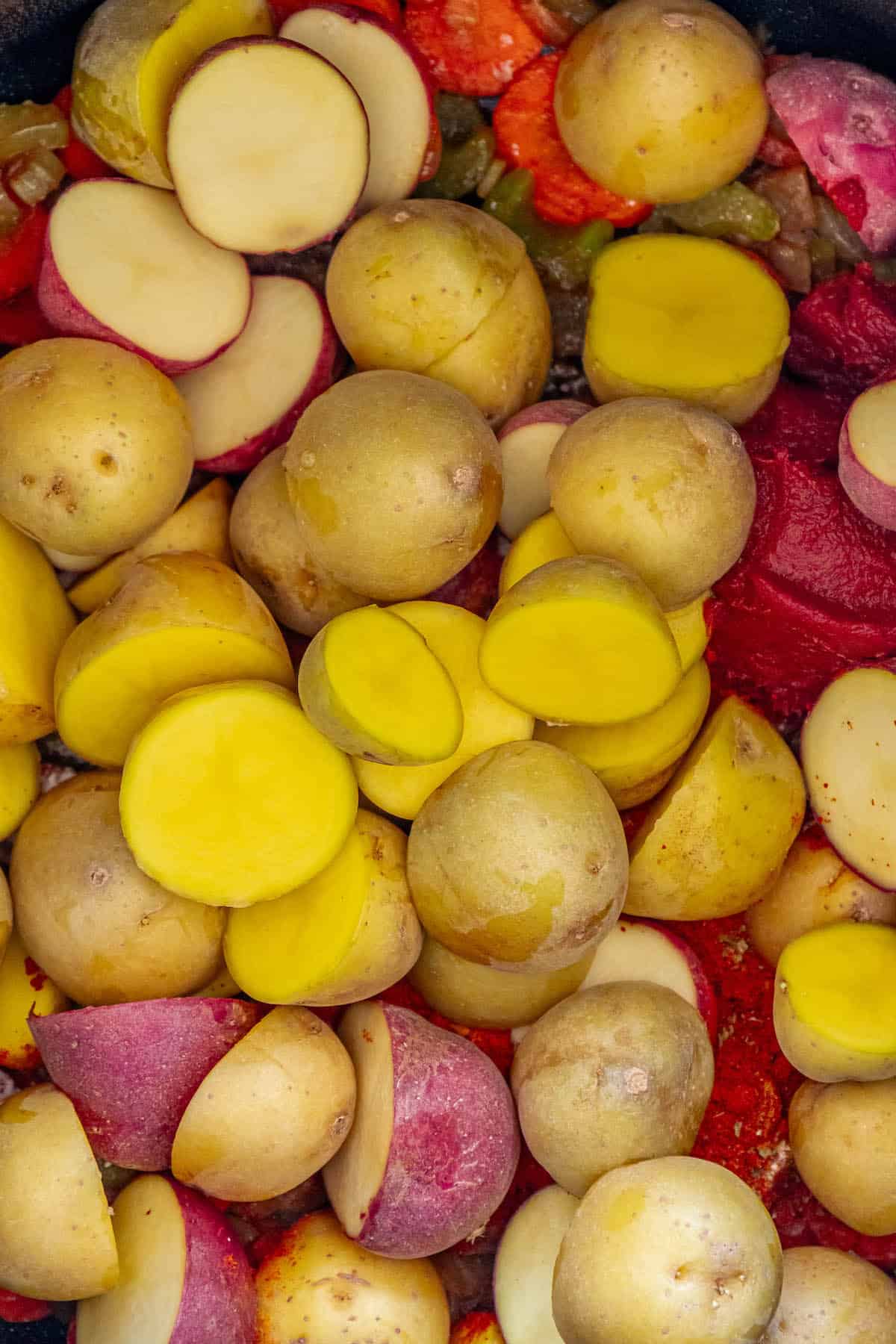
3. Incorporate Spices and Beef
Remove the pot from the heat. This is a crucial step to prevent the paprika from burning, which can make it bitter. Stir in the Hungarian paprika, dried marjoram, salt, and black pepper. Return the browned beef to the pot, tossing everything well to ensure the meat is thoroughly coated with the aromatic spices.
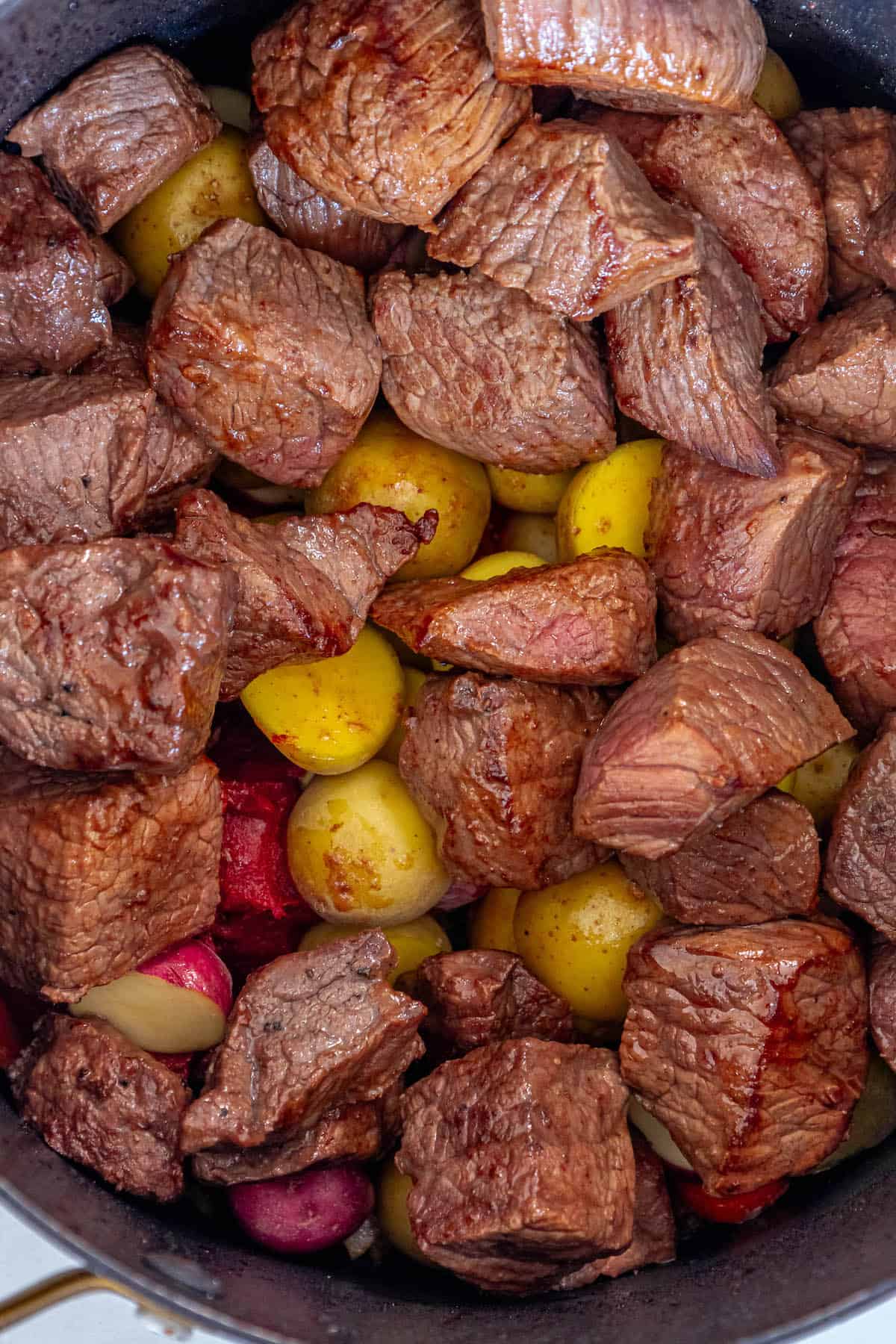
4. Add Liquid and Simmer
Next, add the diced tomatoes, tomato paste, potatoes (if using), beef broth, and the bay leaf to the pot. Stir everything gently to combine.
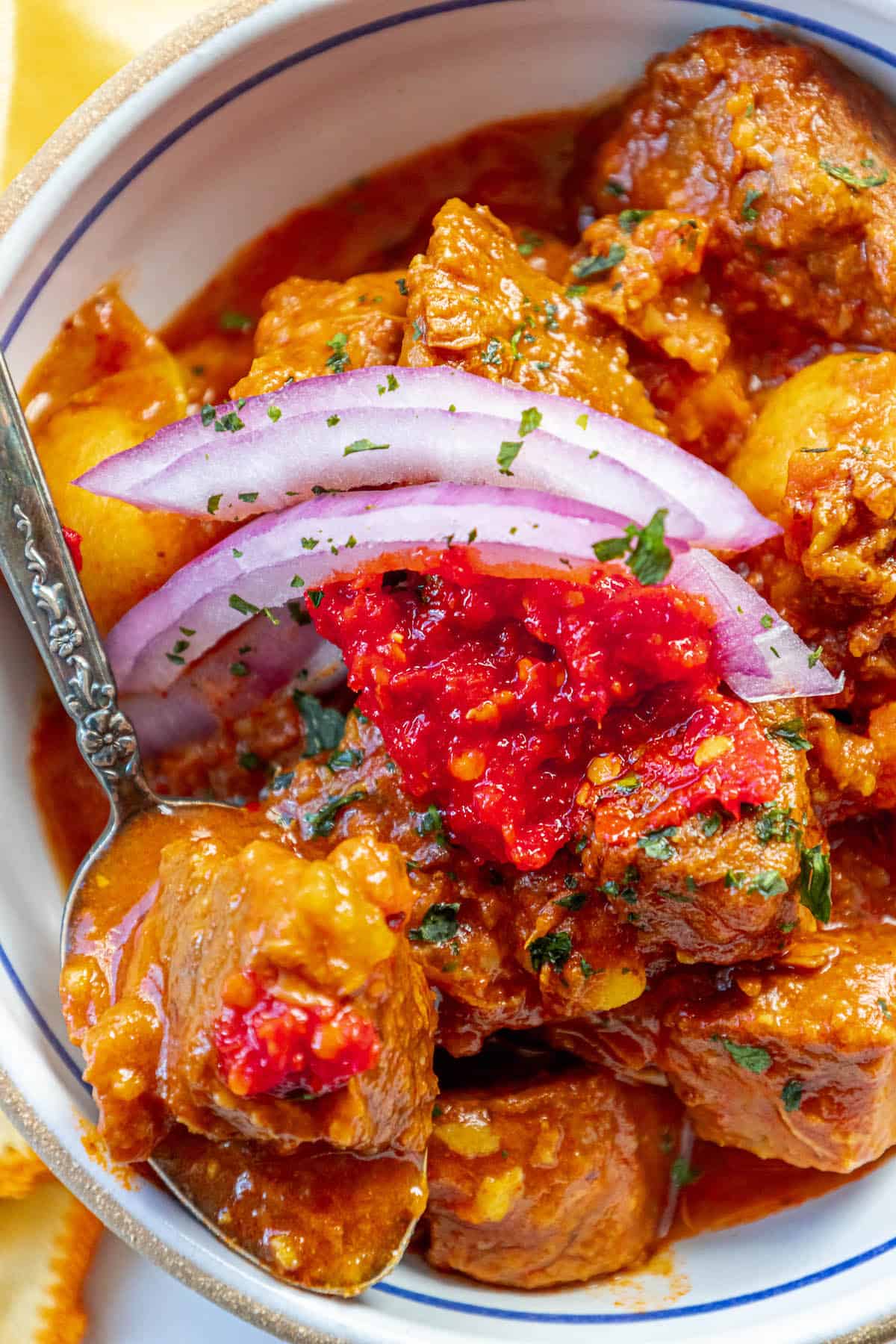
5. Cook to Perfection
Bring the stew to a boil, then immediately reduce the heat to medium-low, cover the pot, and let it simmer. While the goulash can be technically ready in about 40 minutes, for truly tender meat and a deeply developed flavor, I highly recommend simmering for at least 2-3 hours. This slow cooking allows the beef to become incredibly fork-tender and the flavors to meld beautifully, creating a richer, thicker stew as the vegetables slowly break down. Remember to check occasionally and add more beef broth or water if it becomes too thick.
6. Serve and Savor!
Once your goulash has reached your desired consistency and the beef is perfectly tender, remove the bay leaf. Taste and adjust seasoning as needed. For an authentic kick, you can stir in a dash of Eros Pista chili paste or a dollop of sour cream for a creamy contrast. Serve hot and enjoy this magnificent taste of Hungary!
Expert Tips for Perfect Hungarian Goulash
Achieving a truly outstanding Hungarian goulash goes beyond just following a recipe. These insider tips will help you elevate your stew to an authentic culinary masterpiece:
- Embrace Hungarian Paprika: This is arguably the most critical ingredient. Do not substitute with generic paprika. Invest in high-quality Hungarian paprika, readily available in sweet (édes), noble sweet, or hot (csípős) varieties. Its vibrant color and distinctive earthy, slightly sweet flavor profile are what define goulash. The rich oils in authentic paprika are crucial for that deep flavor you crave.
- Render Fat for Flavor Depth: Starting with pork lard or even bacon fat isn’t just traditional; it’s a flavor secret. Rendering the fat slowly in your pot provides an incredibly rich and savory base for sautéing your onions and meat. This foundational layer of flavor is key to the goulash’s complexity.
- Sauté Onions Slowly and Patiently: Resist the urge to rush the onions. They need time to soften, turn translucent, and then gently caramelize to a golden-brown hue. This slow process unlocks their natural sugars, adding a crucial sweetness and depth that permeates the entire stew. Burnt onions, however, will introduce bitterness, so keep the heat moderate.
- Don’t Rush Browning the Meat: Searing the beef in batches is essential. Overcrowding the pot lowers the temperature, steaming the meat instead of browning it. Browning, or the Maillard reaction, creates hundreds of new flavor compounds, adding incredible depth and savory notes to your goulash. Ensure a good crust forms on all sides of the beef before setting it aside.
- Master Balanced Spices: While paprika is the undisputed star, don’t overlook the supporting cast. Garlic, marjoram, salt, and pepper all play vital roles in creating a harmonious flavor profile. These spices balance the paprika’s richness and add layers of aromatic complexity. Always taste and adjust seasonings towards the end of cooking.
- Embrace Low and Slow Cooking: Goulash is a dish that rewards patience. A long, gentle simmer over low heat is crucial for two reasons: it allows the tough beef cuts to break down into fork-tender perfection, and it gives all the flavors ample time to meld, deepen, and concentrate. My personal preference is to cook it for 3 hours, even though it’s technically done in about an hour, for a truly profound and rich stew.
- Proper Liquid and Tomato Incorporation: The diced tomatoes and beef broth form the flavorful foundation of your goulash. Ensure the liquid generously covers the meat and vegetables, allowing them to stew gently. The acidity from the tomatoes balances the richness and helps tenderize the beef.
- Simmer Until Meat is Truly Tender: The defining characteristic of a good goulash is meat that practically melts in your mouth. Continue simmering until the beef can be easily shredded with a fork. This tenderness signifies that the collagen has broken down, enriching the stew.
- Adjust Seasoning to Your Liking: Always taste your goulash before serving. It’s a personal preference, so don’t hesitate to add more paprika, salt, pepper, or a pinch of caraway seeds to fine-tune the flavor to your palate.
- Serve with Traditional Accompaniments: In Hungary, goulash is often enjoyed with traditional sides like nokedli (small egg dumplings) or crusty bread for soaking up the delicious sauce. A dollop of sour cream (tejföl) on top is also a popular and delightful addition, offering a creamy, tangy contrast.
- Reheat for Enhanced Flavor: Like many stews, Hungarian goulash often tastes even better the next day. The flavors continue to meld and deepen overnight, resulting in a more complex and satisfying dish. Reheat gently on the stovetop or in the oven.
My Pro Tip
Recipe Tip: Thicken Goulash with Tomato Paste
If your goulash feels a bit too thin for your liking, don’t overlook the power of tomato paste. It’s an excellent natural thickener and flavor enhancer. For best results, incorporate it before the long simmering process, allowing it ample time to cook down and contribute to the stew’s hearty, substantial texture.
About Gulyás – The Heart of Hungarian Cuisine
Goulash, known as “gulyás” in its homeland, is far more than just a stew; it’s a culinary emblem of Hungary, celebrated for its exquisite blend of paprika and tender beef. While the core ingredients of beef and paprika remain constant, goulash is truly a family-cherished dish, with recipes passed down through generations, leading to delightful variations from one cook to another.
If you’ve yet to experience the sheer delight of authentic Hungarian Goulash, you are truly missing out on one of the world’s most comforting and flavorful dishes! This Authentic Hungarian Goulash boasts a rich, meaty profile with a subtle sweetness, its flavor meticulously built from tender stew meat, vibrant bell peppers (both green and red), sweet Hungarian paprika, and aromatic garlic.
Hungarian Goulash Variations
One of the beautiful aspects of goulash is its incredible adaptability, making it suitable for various dietary needs and preferences. For instance, it can easily be made into a delicious keto Hungarian goulash by simply omitting the potatoes and any added noodles. Alternatively, it can be served traditionally with tender egg noodles, topped with a generous dollop of sour cream, or given an extra layer of salty richness with a sprinkle of caraway seeds.
While this recipe focuses on a one-pot stovetop method, goulash is also perfectly suited for a slow cooker or Crock-Pot. To adapt, simply brown the meat and vegetables on the stovetop first to develop essential flavors, then transfer them to your slow cooker along with the beef broth and other ingredients. Let it simmer on low heat for an all-day, fuss-free meal, allowing the flavors to deepen even further.
My journey to this recipe began during a trip to Budapest, where I savored many versions of this iconic dish. The version presented here is my American adaptation, refined to capture the authentic flavors I experienced. I wholeheartedly recommend browning the meat and vegetables in pork lard, as is traditional in Hungary. This technique imparts an unparalleled richness and depth of flavor that is simply not achievable with butter or olive oil alone. However, if lard isn’t an option, olive oil will still yield a delicious stew.
Regarding seasoning, I’ve kept the initial salt and pepper modest in the recipe, allowing the profound paprika flavors to shine. Please remember to adjust the seasoning to your own taste preferences at the end of cooking.
Enhancing Flavor with Piros Paste
For an authentic flavor boost that truly makes your goulash stand out, consider adding Piros paste (meaning “red” in Hungarian). This vibrant paprika paste, made from Hungarian peppers, offers a concentrated burst of flavor that can elevate your stew to new heights. I often stir this in instead of or in addition to paprika powder for an unbelievably deep and complex taste. You can conveniently order Piros Arany, Hungary’s most popular paprika paste, on Amazon.
The Fiery Kick of Eros Pista
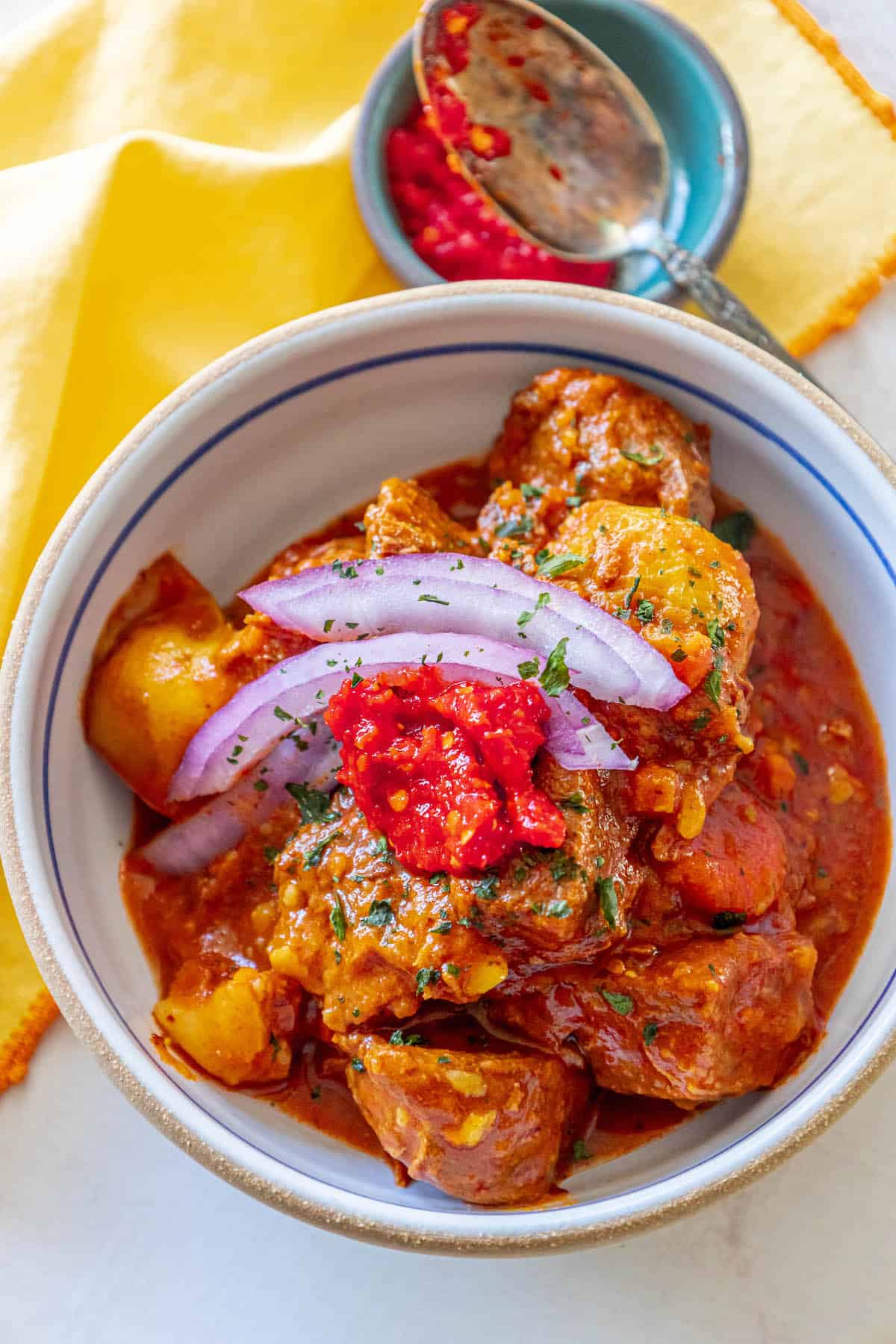
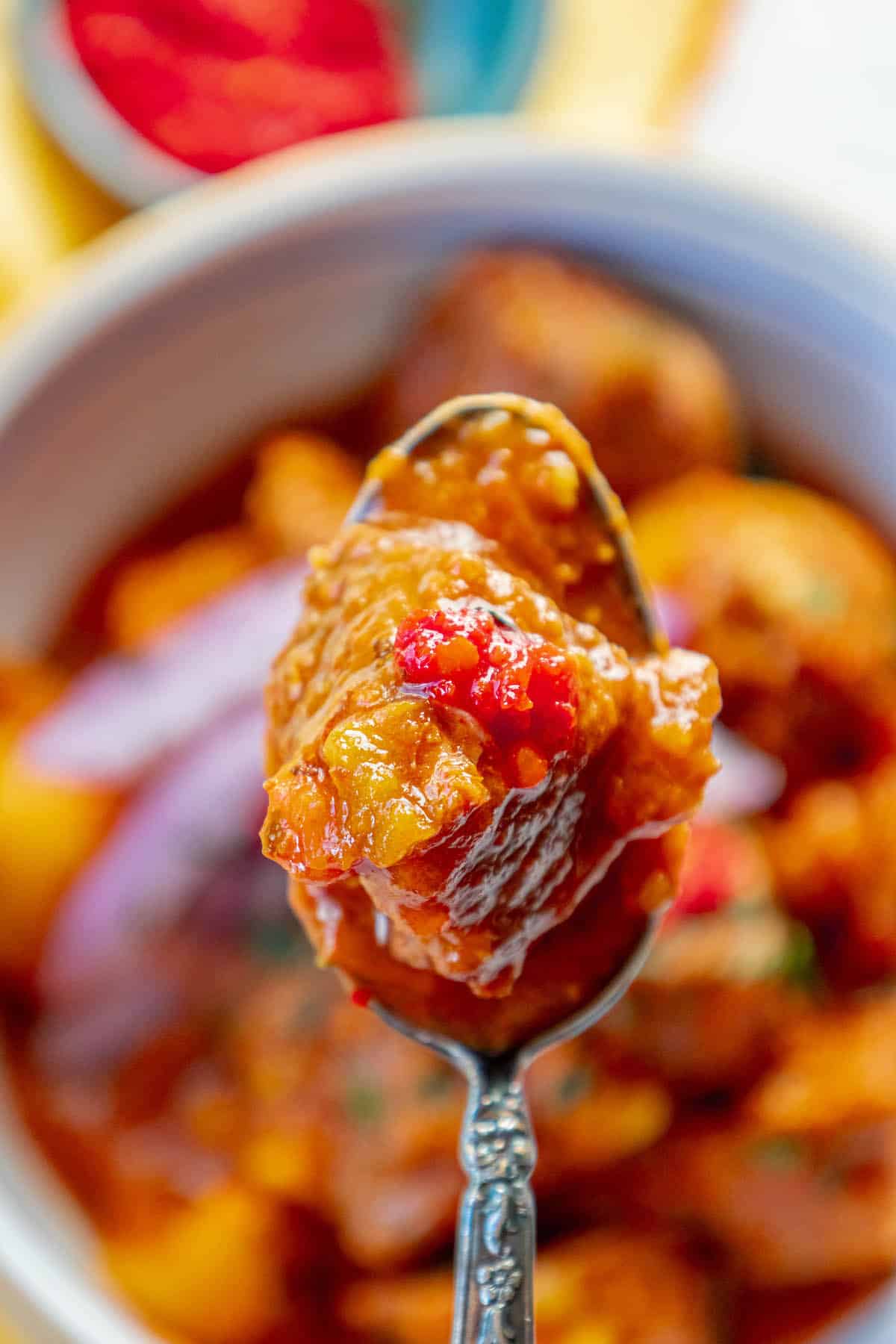
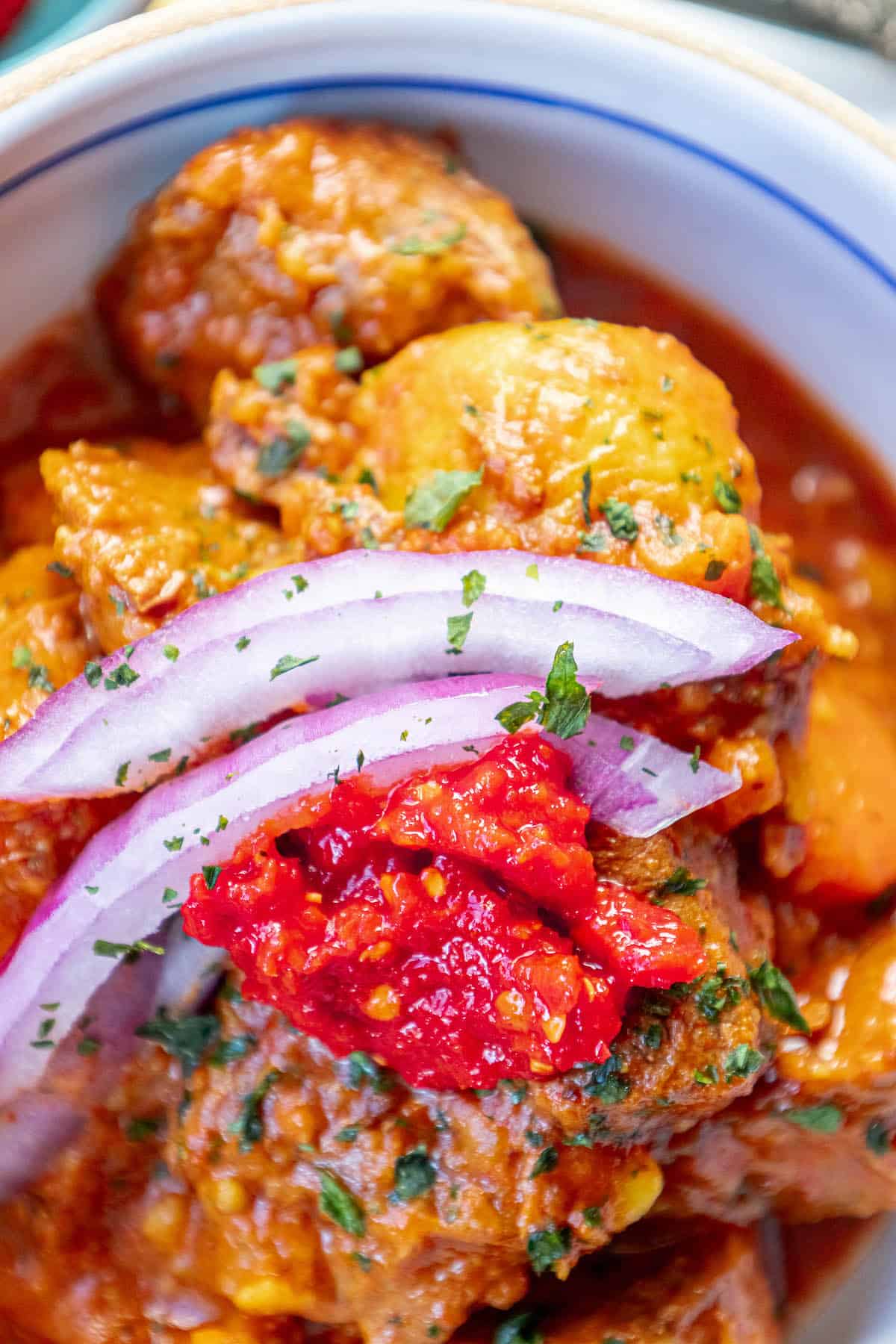
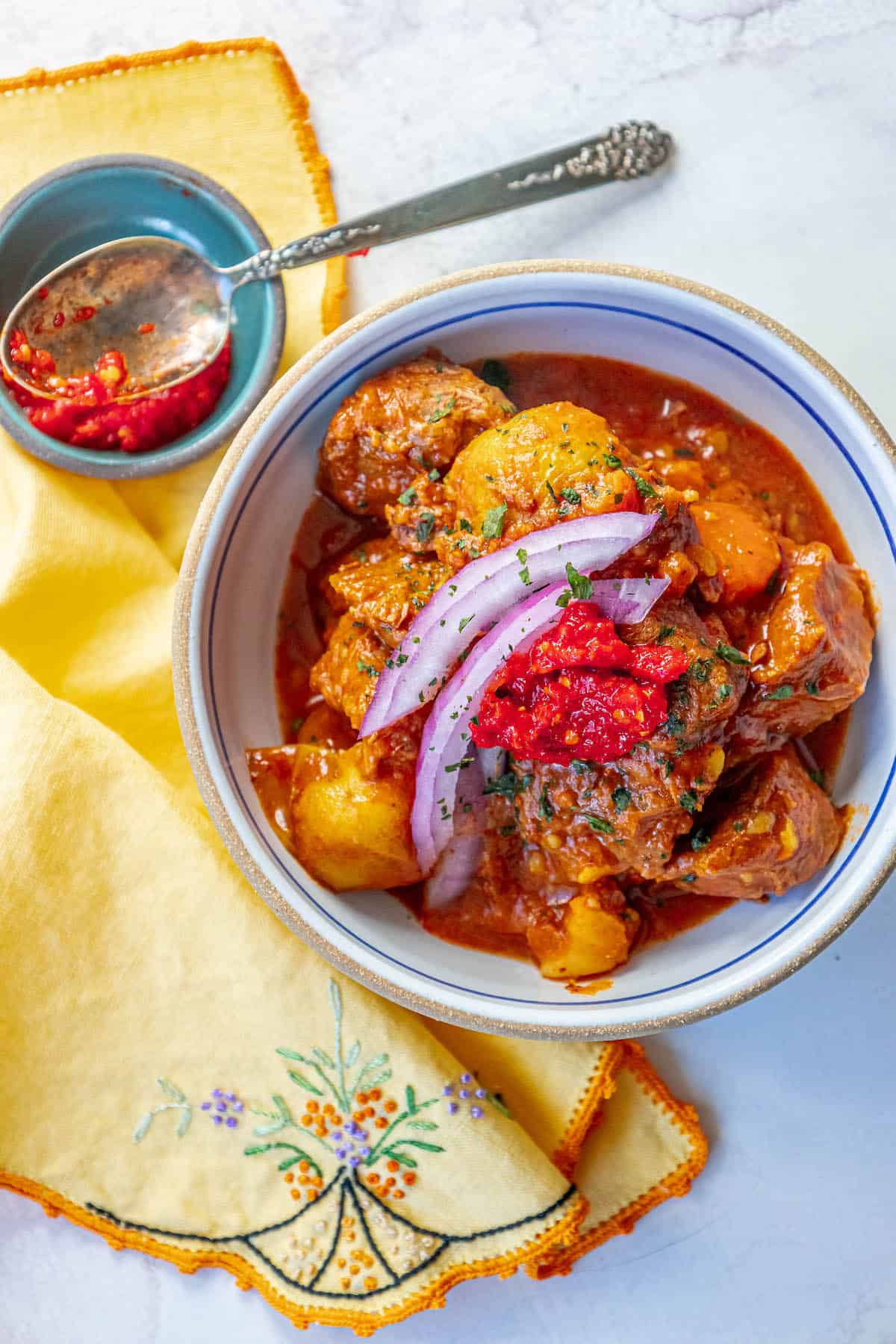
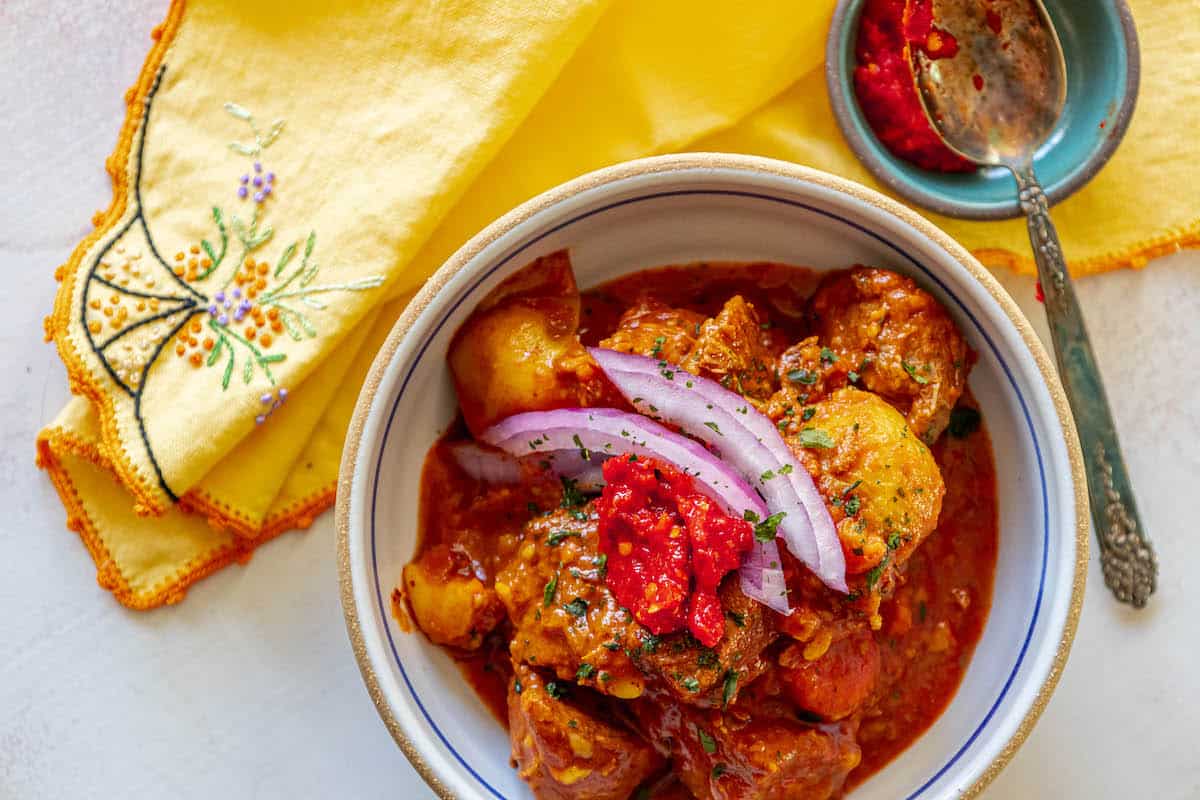
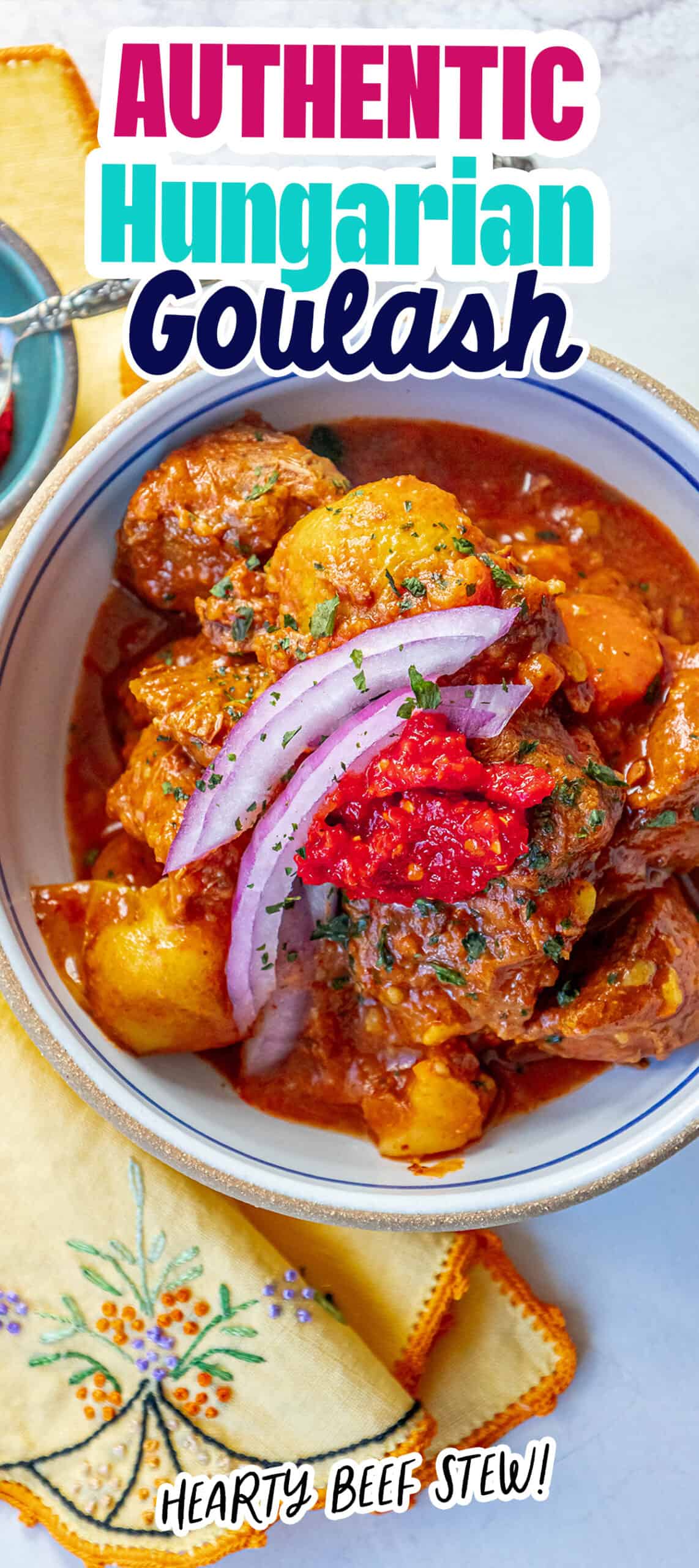
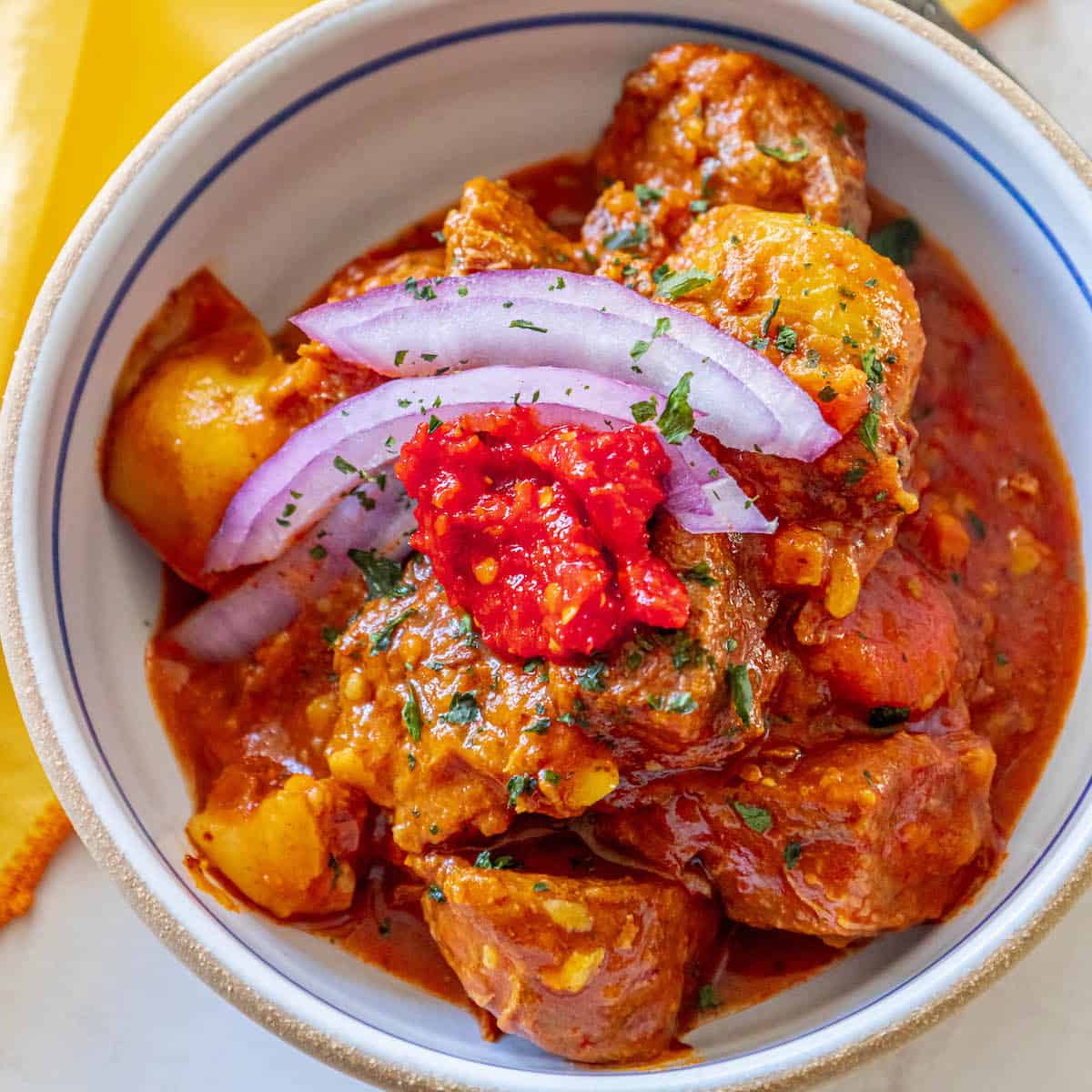
Eros Pista is a remarkable Hungarian condiment – not quite a paste or a sauce, but a thick, potent blend of spicy red Hungarian chiles and salt, nothing more. It’s incredibly pungent, spicy, and salty, creating an addictive flavor profile. My daughter and I frequently use it on everything from steaks and chicken to fish as an alternative to salt or hot sauce. It’s particularly fantastic swirled into or served alongside goulash, adding a bright, fiery counterpoint that truly awakens the palate (you can spot its vibrant red dab in the photos). You can easily order Eros Pista on Amazon.
Fun fact: “Eros Pista” literally translates to “Strong Steve” in Hungarian – though hardly anyone refers to it by that name!
Frequently Asked Questions about Hungarian Goulash
Hungarian goulash, known locally as “gulyás,” is a celebrated traditional Hungarian stew. It typically features tender pieces of slow-cooked beef, generous amounts of onions, and a rich, deeply flavored broth infused with high-quality Hungarian paprika. It’s a hearty, warming dish that holds a special place in Central and Eastern European cuisine.
Historically, and most commonly today, authentic Hungarian goulash is prepared with beef. Tougher cuts that benefit from long, slow cooking, such as beef chuck, beef shin, or stewing beef, are ideal. While less common, pork or veal can sometimes be used, but beef remains the classic choice for its robust flavor and texture.
The quintessential flavor of Hungarian goulash primarily comes from Hungarian paprika. This vibrant spice, available in sweet, noble sweet, and hot varieties, is responsible for the dish’s deep red color and its signature rich, slightly sweet, and earthy taste. The quality and type of paprika are paramount to achieving an authentic flavor profile.
Hungarian goulash is a deeply personal and familial dish, meaning almost every family has its own cherished version. Some recipes may include bell peppers, while others omit them. Variations might involve small dumpling noodles (nokedli) or potatoes, and some are more soup-like, while others are thick and rich stews. The consistent elements in truly authentic Hungarian goulash are high-quality Hungarian paprika, tomatoes, and usually beef, accompanied by a selection of root vegetables.
Absolutely! Vegetarian and vegan adaptations of Hungarian goulash are entirely possible. Plant-based proteins such as seitan, tofu, or hearty mushrooms can replace the meat. These versions still rely on the signature Hungarian paprika and other traditional spices to capture that beloved goulash flavor. When using vegetable stock and meat substitutes, I often add a tablespoon of cumin to impart a robust, earthy, and almost meaty depth to the dish.
Adjusting the spiciness is simple. You can control the heat by choosing between sweet Hungarian paprika (for mildness) or hot Hungarian paprika (for a kick). The level of heat can also be fine-tuned by adding more or less paprika or incorporating a touch of chili paste or flakes to your taste. For an authentic and intense spicy flavor, I love to stir in Eros Pista – a Hungarian salt and chili paste.
Yes, traditional Hungarian goulash is naturally gluten-free, provided no wheat-based thickeners are used. However, it’s always wise to double-check ingredient labels, especially for store-bought beef broth or other pre-packaged components, to ensure they don’t contain hidden gluten.
Hungarian goulash is an excellent make-ahead meal! In fact, many believe it tastes even better the day after it’s made, as the flavors have more time to fully develop and meld. Simply prepare it the day before, allow it to cool, then refrigerate. Reheat gently on the stovetop or in the oven when you’re ready to serve.
Macaroni is a common ingredient in what is known as “American-style goulash,” which is a distinct dish and not traditional in Hungary. Authentic Hungarian goulash is characterized by its rich, deep red color and complex flavors derived from paprika and tomatoes, often featuring tender beef and vegetables, but typically without pasta. American goulash, by contrast, often relies primarily on tomatoes for color and includes pasta.
The best cuts for Hungarian goulash are those rich in connective tissue that become incredibly tender and flavorful with slow cooking. Beef chuck, beef shin, and brisket are excellent choices. These cuts break down beautifully, releasing collagen that enriches and slightly thickens the stew, contributing to its signature hearty texture.
Finding Authentic Goulash in Budapest, Hungary
My recent journey through Europe’s enchanting Christmas Markets, my second annual trip, kicked off in Budapest – a city I had yearned to visit my entire life. Budapest, beautifully split into Buda and Pest by the majestic Danube River, sits gracefully in Western Hungary, not far from the Austrian and Slovakian borders.
Our adventure began with a road trip from Paris, an incredible experience in itself. We wove through the picturesque landscapes of France, made an unexpected detour through Belgium and Luxembourg (a long story for another time!), and then continued through Germany and Austria before finally arriving in Budapest late at night. Waking up to the bustling energy of Budapest meant one thing: it was time for FOOD!

Our first stop was the vibrant Christmas market, where my top priority was finding a warm, comforting goulash. Over the course of our city exploration, I had the delightful opportunity to sample several versions of this iconic stew – a dream come true for a food enthusiast like me. The sunsets along the Danube were truly breathtaking, painting Budapest’s skyline in dreamy, romantic hues. I could have easily spent hours along the riverbank, mesmerized by the view.
One of my absolute favorite sights was the Hungarian Parliament building. Its grandeur is absolutely stunning and impressive, especially when twinkling with Christmas lights. Unfortunately, I wasn’t able to take an internal tour of the Parliament, which remains a major regret for me. Having worked in the Senate and as a lobbyist before starting my blog, I always seize the chance to explore other nations’ government buildings whenever possible. However, we did get to tour the Parliament grounds, which offer one of the most magnificent panoramic views across the Danube towards the historic Fishermen’s Bastion – an absolutely spectacular spot to witness a sunset.
For more insights into my unforgettable trip to Budapest, you can explore these detailed posts:
- What To Do In Budapest
- Epic Christmas Market Trip – Paris, Reims, Budapest, Bratislava, Vienna, Prague, Heidelberg, Michaelstadt



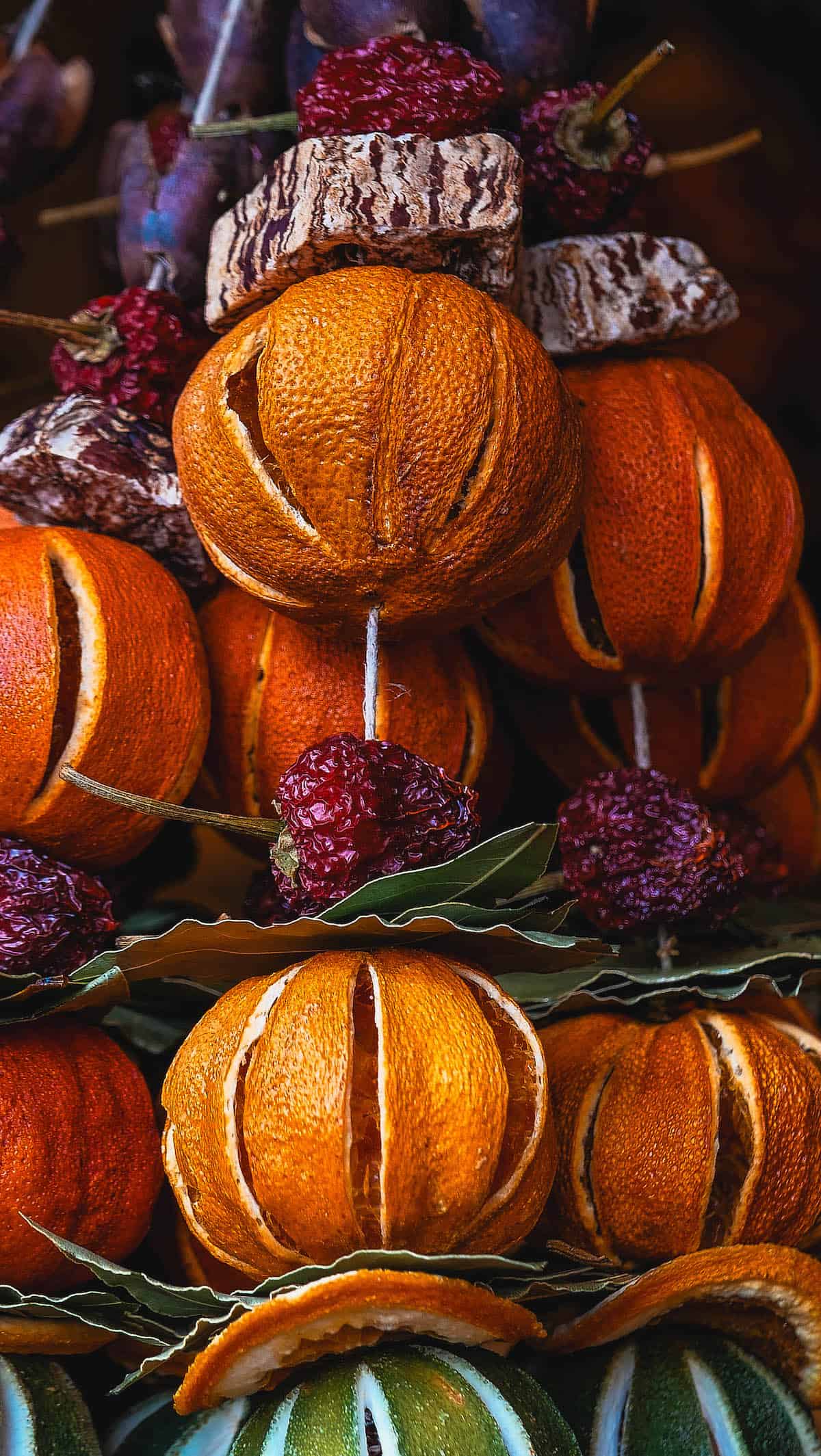






Another item on my Budapest bucket list, the Budapest Eye, also eluded me during my all-too-brief visit – another regret! Yet, it promises a truly spectacular 360-degree panoramic view of the entire city skyline.
I knew I’d enjoy Budapest, but I hadn’t anticipated just how deeply I would fall in love with the city. Its streets teem with amazing food around every corner, some of the finest coffee in Europe, and a genuinely warm and welcoming spirit from its locals. Budapest offers an abundance of incredible experiences and some of my favorite culinary delights. But for me, goulash will forever remain the #1 must-eat dish in this magnificent city!
I have a particular fondness for hearty, rich, and smoky-sweet beef stews, and the complex, irresistible paprika flavors in authentic Hungarian goulash always hit the spot. The wonderful thing about goulash is its versatility – it’s a fantastic “catch-all” recipe. You can easily swap potatoes for noodles, adjust the liquid for a thicker stew or a thinner soup, and incorporate whatever vegetables you have on hand. It truly adapts beautifully to your ingredients and personal preferences, making it a perfect meal for any occasion.
What to Serve with Traditional Hungarian Goulash
One of my favorite ways to enjoy this Authentic Hungarian Goulash is without potatoes or noodles, making it a naturally grain-free and gluten-free stew that’s perfect for paleo or keto diets. Its inherent richness and satisfying depth mean it stands wonderfully on its own.
During my travels, I encountered a slightly different, equally delightful variation of goulash at the Bratislava Christmas Market, proving the diverse charm of this regional dish.
Beyond being a standalone meal, traditional Hungarian goulash pairs beautifully with a variety of sides that enhance its flavors and hearty nature:
- Nokedli (Hungarian Dumplings): These small, soft egg noodles are a classic accompaniment, perfect for soaking up the rich paprika-infused sauce.
- Crusty Bread: A thick slice of fresh, crusty bread is ideal for mopping up every last drop of the delicious gravy.
- Sour Cream (Tejföl): A dollop of sour cream on top adds a creamy texture and a tangy counterpoint that brightens the rich flavors of the stew.
- Pickled Vegetables: Tangy pickled cucumbers or cabbage provide a refreshing contrast to the hearty meat and rich sauce.
- Boiled or Mashed Potatoes: If not cooked directly in the stew, simple boiled or mashed potatoes are a comforting and absorbent side.
Try these recipes next:
Homemade French Fries in Air Fryer
Quick Pickled Apple Cider Beets
German Potato Salad
The Best Easy No Knead Bread
If you’ve enjoyed this easy and authentic recipe, please consider leaving a five-star rating by clicking the stars below and sharing your thoughts in a comment! Your feedback is invaluable. Don’t forget to share your culinary creations on Instagram, Facebook, and Pinterest – I absolutely love seeing what you cook up!
Share on Facebook
Share
Pin this now to find it later
Pin It
Follow on Instagram
Follow
Only have 30 minutes to get dinner on the table? Sign up for my 30-minute dinner plans direct to your inbox!
Find and shop my favorite products in my Amazon storefront here!
Authentic Hungarian Goulash
Equipment
-
Food Grade Stainless Steel Kitchen Tongs for Cooking,BBQ – 7 & 9 and 12 Inch,Set of 3 Heavy Duty Locking Metal Food Tongs Non-Slip Grip
-
Lodge 6 Quart Enameled Cast Iron Dutch Oven with Lid – Dual Handles – Oven Safe up to 500° F or on Stovetop – Use to Marinate, Cook, Bake, Refrigerate and Serve – Blue
-
3 x Eros Pista Hungarian Paprika Paste, 3x200g
Ingredients
- 3 tablespoons pork lard or butter, pork fat is traditionally used for richer flavor
- 2 large yellow onions, chopped
- ¼ cup Hungarian paprika, ensure good quality, ideally imported from Hungary
- 2 pounds stew meat, cut into 1/2 inch pieces
- 8 cloves garlic, minced
- 2 red bell peppers, seeded/membranes removed, cut into 1/2 inch chunks (optional)
- 1 yellow bell pepper, seeded/membranes removed, cut into 1/2 inch chunks (optional)
- 1 can tomatoes, diced (14.5 oz)
- 6 oz tomato paste
- 4 carrots, diced
- 2 potatoes, medium, cut into 1/2 inch chunks (optional)
- 5 cups beef broth
- 1 bay leaf
- 1 teaspoon salt
- ½ teaspoon freshly ground black pepper
- 1 teaspoon dried marjoram
- 1-2 tablespoons Eros Pista chili paste, optional for heat
Instructions
-
In a large, heavy pot or Dutch oven, brown beef in batches over medium-high heat. You may add a little oil or lard if desired, though beef often has enough fat. Once browned, set the beef aside in a bowl.
-
Melt the lard or butter in the same Dutch oven over medium-high heat. Cook the onions, carrots, and bell peppers (if using) until they begin to brown and soften, about 7-10 minutes. Be sure to scrape up any browned bits of beef from the bottom of the pot.
-
Remove the pot from the heat and stir in the paprika, marjoram, salt, and pepper. This prevents the paprika from burning.
-
Add the browned beef back into the pot, tossing well to coat thoroughly with the spices.
-
Add the diced tomatoes, tomato paste, potatoes (if using), beef broth, and the bay leaf to the pot. Stir to combine.
-
Bring the mixture to a boil, then cover the pot, reduce the heat to medium-low, and simmer for at least 40 minutes, or ideally 2-3 hours for a richer flavor and more tender beef (see note).
-
Remove the bay leaf. Serve hot and adjust seasoning with additional salt or Eros Pista chili paste to taste.
Notes
This stew is technically ready after about an hour of simmering. However, for a truly richer, heartier, and thicker stew with super-tender beef and intensely melded flavors, I highly recommend letting it simmer for a minimum of 2-3 hours. The longer simmering time allows the potatoes and peppers to break down, contributing to a wonderfully thick consistency. If cooking longer, monitor the liquid level and add more water or broth as needed.
Feel free to customize your goulash by skipping certain vegetables like bell peppers or carrots, or by adding others such as celery or cauliflower. While diced tomatoes can be omitted based on preference, the tomato paste is crucial for both flavor and thickening, so do not skip it.
Nutrition
Nutrition information is automatically calculated, so should only be used as an approximation.
Additional Info