Recipes
Best Couscous Recipe
Cous cous is the perfect side dish – its flavorful, easy to make, and pairs with almost everything – I’m
- Serves 4
- Prep 4 minutes
- Cook 5 minutes
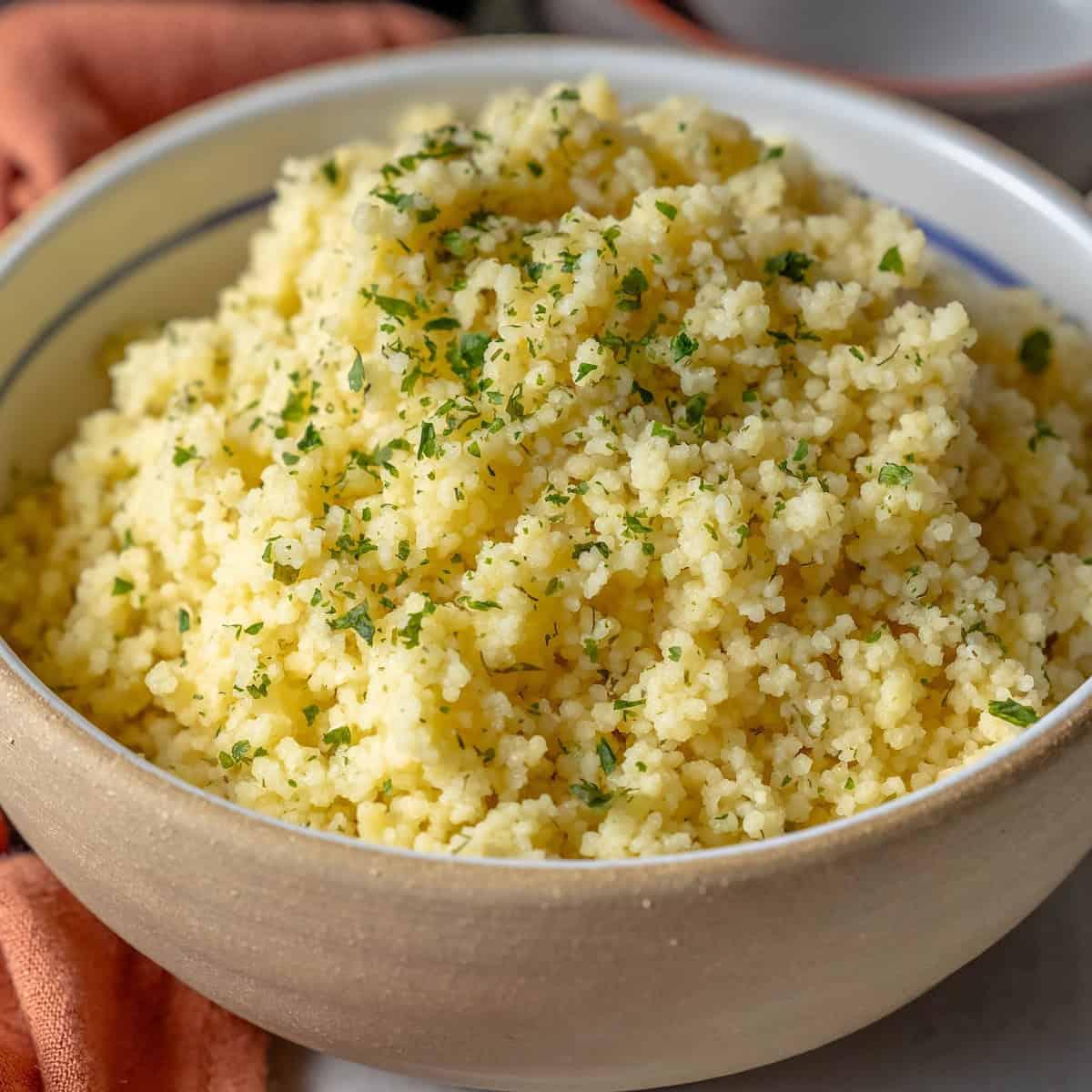
We love serving cous cous often – it is so quick to make and easy to adapt, it is one of our favorite side dishes.

At Ajpal, I add lots of tips in all of my recipes – because I am a home cook without any formal training, and I find I am more confident making dishes when I understand why it works, and what each ingredient means to the flavor of a recipe. My goal is for even the most beginner home cook to feel empowered in the kitchen.

The Best Couscous Recipe
This recipe is really, really simple – but is the perfect base for tons of you own cous cous creations. We’re bringing water to a rapid boil, placing the pasta in the pot (yes, cous cous is a type of pasta) – then turning off the heat to let the cous cous absorb all of our liquid (and seasonings!)
It’s a simple dish, with an ancient history. Cous cous originated in Northern Africa (Morocco, Libya, Algeria, Tunisia) and spread throughout the Arab world, even to Sicily, during periods of Islamic rule – becoming a staple at celebrations and hearty dinners to serve with stews and roasted meats.
There are a few regional styles of making cous cous now (we’re just preparing a base recipe to expand upon, but look into some of these styles that are incredibly delicious), including differences in other ingredients added to the semolina. Different regions of North Africa have developed their own styles and methods of preparing couscous:
- Morocco: Often paired with sweet and savory combinations, like raisins and almonds, or with rich tagines.
- Algeria: Couscous can be served with a tomato-based sauce, spiced with harissa, and accompanied by lamb or chicken.
- Tunisia: Known for its fiery and spicier versions, often including seafood and harissa sauce.
Cous cous remains incredibly popular, and is often served as a huge sign of hospitality – it’s easy to make and quick to cook, and you can flavor it any way you like – I love to add pine nuts, sauteed vegetables, and different herbs and spices depending on what else I’m making. Use this recipe as a great base to find your own style of making cous cous exactly how you like it!

Couscous Recipe Ingredients
To make this recipe, we will need the following ingredients:
- 1 cup stock (or water, but use stock for more flavor!): Stock (whether vegetable, chicken, or beef) adds a rich, savory base to the couscous, enhancing its flavor compared to plain water. The stock infuses the couscous with depth and complexity.
- Juice of 1 lemon: The lemon juice brightens the dish with a fresh, tangy flavor, balancing the richness from the stock and olive oil. It also adds a hint of acidity that elevates the overall taste.
- 2-3 cloves garlic, minced: Garlic provides a robust, aromatic flavor, adding depth and a slightly spicy, savory note to the couscous. The garlic also enhances the Mediterranean vibe of the dish. This is optional, but I love lots of garlic and usually end up doubling it.
- 1 teaspoon Italian herbs seasoning (or other herb mix): This herb mix (often containing basil, oregano, thyme, and rosemary) adds an earthy, fragrant flavor to the couscous, making it more aromatic and flavorful. It enhances the overall complexity of the dish.
- 1 tablespoon olive oil: Olive oil adds richness and a smooth texture to the couscous, preventing it from clumping together. It also brings a subtle flavor that complements the herbs and garlic.
- 1 cup couscous: The base of the dish, couscous provides a light, fluffy texture that soaks up the flavors of the stock, herbs, and garlic. Its neutral taste allows the other ingredients to shine while offering a comforting, hearty element.
How to Cook Couscous


Once you’ve gathered your ingredients, we will use the following method:
- Boil. In a small pot with a lid, bring all ingredients except for cous cous to a boil.
- Add cous cous. Add cous cous, stir, and turn off heat.
- Sit. Let sit at least 5 minutes.
- Fluff. Stir to fluff.
- Enjoy.

Tips for Cooking Couscous
Boil Water with Seasoning: Add flavor by seasoning the water before pouring it over the couscous. Use broth (chicken, vegetable, etc.) instead of plain water, and toss in salt, olive oil, or butter for extra taste.
Don’t Skimp on Olive Oil or Butter: Drizzle olive oil or melt butter into the couscous before fluffing to prevent clumping. About 1 tablespoon of oil or butter per cup of couscous helps coat the grains for the best texture.
Cover and Let Steam: Once the water or broth is boiling, pour it over the couscous, stir once to ensure even distribution, then cover tightly with a lid or plastic wrap and let it sit for 5-10 minutes. This allows the couscous to steam and absorb the liquid.
Fluff with a Fork: After the couscous has steamed, use a fork (never a spoon) to gently fluff the grains, separating them as much as possible. This helps create a light, fluffy texture instead of dense clumps.
Add Herbs and Vegetables: For extra flavor and freshness, fold in chopped herbs (like parsley, mint, or cilantro) and cooked vegetables (like roasted peppers, zucchini, or onions). Couscous absorbs flavors easily, making it a great canvas for different add-ins.
Optional Toasting for Flavor: For a nuttier flavor, lightly toast the dry couscous in a pan with a bit of olive oil or butter before adding the boiling water.
Don’t Overcook: Couscous cooks quickly and can become mushy if left too long in the hot water. Stick to the steaming time for perfect, tender grains.
Serving Ideas: Serve couscous with a drizzle of olive oil, sprinkle of nuts (like almonds or pine nuts), dried fruits (such as raisins or apricots), or a side of yogurt for Middle Eastern-inspired dishes.
Use the Right Water-to-Couscous Ratio: A typical cous cous to water ratio is 1:1 (one cup of water for one cup of couscous).
What to serve with this Cous Cous Recipe
Cous cous is the perfect side dish, because it goes well with everything. Serve with salads like fattoush, fish like roasted branzino, steak, or whole roasted chicken.
FAQs
Couscous is made from semolina wheat, which is the coarse part of durum wheat. Traditional couscous grains are formed by rolling semolina with water, then steaming it. There are also variations made from barley, millet, or cornmeal in different parts of the world. The most common variety found in stores today is made from wheat semolina.
No, traditional couscous is not gluten-free because it is made from wheat, which contains gluten. However, there are gluten-free alternatives available, often made from ingredients like corn, rice, or quinoa, that mimic the texture and taste of traditional couscous.
While couscous and quinoa may look similar, they couldn’t be more different: Couscous is a pasta made from semolina wheat, whereas quinoa is a seed and considered a pseudograin.
Quinoa is naturally gluten-free, higher in protein, and more nutrient-dense, while couscous is lighter in texture and quicker to cook.
Couscous can be a healthy option as part of a balanced diet. It is low in fat and a source of carbohydrates, which provide energy. It also contains some fiber, protein, and B vitamins. However, because it is primarily made from wheat, it’s not as nutrient-dense as whole grains like quinoa or brown rice. For a healthier option, choose whole wheat couscous, which has more fiber.

Easy Chicken Shawarma Pitas
Roasted Tahini Pomegranate Eggplants
Baked Cod Recipe with Lemon and Garlic
Tuna and Tomato Salad
Share on Facebook
Pin this now to find it later

The recipe
How to Make Cous Cous
Perfect light, fluffy cous cous with a subtle flavor.
- Serves 4
- Prep 4 minutes
- Cook 5 minutes
Ingredients
- 1 cup stock (or water, but use stock for more flavor!)
- Juice of 1 lemon
- 2-3 cloves garlic (minced.)
- 1 teaspoon Italian herbs seasoning (or other herb mix)
- 1 tablespoon olive oil
- 1 cup couscous
Method
- 1
In a small pot with a lid, bring all ingredients except for cous cous to a boil.
- 2
Add cous cous, stir, and turn off heat.
- 3
Let sit at least 5 minutes.
- 4
Stir to fluff.
- 5
Enjoy.
Nutrition
- Calories800 kcal
- Carbohydrates140 g
- Protein23 g
- Fat15 g
- Saturated Fat2 g
- Polyunsaturated Fat2 g
- Monounsaturated Fat10 g
- Sodium959 mg
- Potassium337 mg
- Fiber10 g
- Sugar2 g
- Vitamin A535 IU
- Vitamin C2 mg
- Calcium84 mg
- Iron3 mg
Questions
What is cous cous made from?
Couscous is made from semolina wheat, which is the coarse part of durum wheat. Traditional couscous grains are formed by rolling semolina with water, then steaming it. There are also variations made from barley, millet, or cornmeal in different parts of the world. The most common variety found in stores today is made from wheat semolina.
Is cous Cous Gluten Free?
No, traditional couscous is not gluten-free because it is made from wheat, which contains gluten. However, there are gluten-free alternatives available, often made from ingredients like corn, rice, or quinoa, that mimic the texture and taste of traditional couscous.
Is cous cous the same as quinoa?
While couscous and quinoa may look similar, they couldn’t be more different: Couscous is a pasta made from semolina wheat, whereas quinoa is a seed and considered a pseudograin. Quinoa is naturally gluten-free, higher in protein, and more nutrient-dense, while couscous is lighter in texture and quicker to cook.
is cous cous healthy?
Couscous can be a healthy option as part of a balanced diet. It is low in fat and a source of carbohydrates, which provide energy. It also contains some fiber, protein, and B vitamins. However, because it is primarily made from wheat, it’s not as nutrient-dense as whole grains like quinoa or brown rice. For a healthier option, choose whole wheat couscous, which has more fiber.