Appetizers
Lemon Shallot Confit
The Easy Lemon and Shallot Confit You’ll Want to Spoon on Everything: The ultimate bread spread – caramelized shallots and
- Serves 12 servings
- Prep 5 minutes
- Cook 3 hours
- Total 3 hours
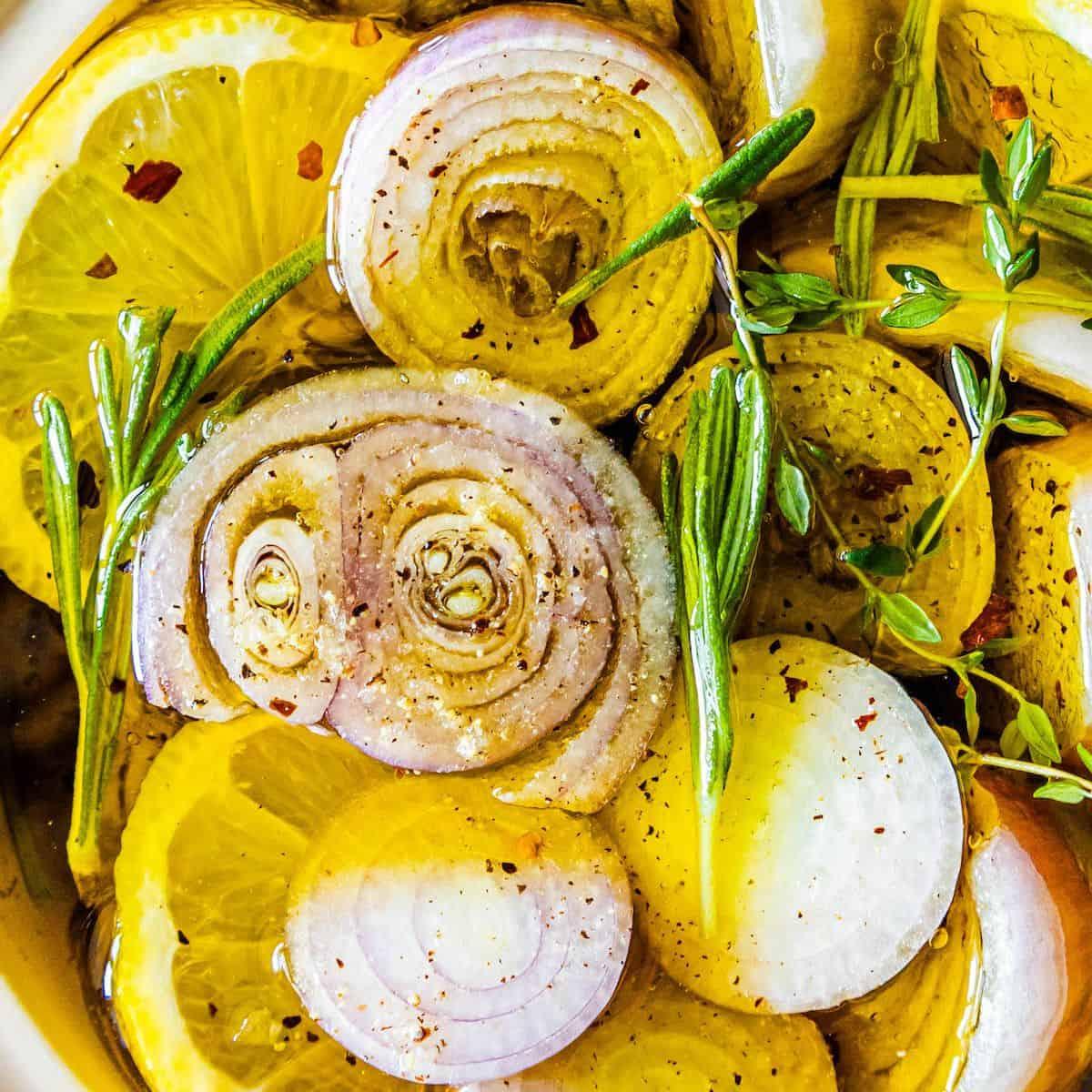
This Lemon and Shallot Confit Instantly Makes Any Dish Better – from bread to pasta, and even Steak andRoast Chicken! Its great as a bread spread for dinner parties, to jar and give as a gift, great for adding extra flavor for meal prep dishes – or just to elevate a weeknight dinner! I love this recipe so much I try to keep some on hand anytime I think a dish could use a little extra irresistible bright and savory flavor!


At Ajpal, I add lots of tips in all of my recipes – because I am a home cook without any formal training, and I find I am more confident making dishes when I understand why it works, and what each ingredient means to the flavor of a recipe. My goal is for even the most beginner home cook to feel empowered in the kitchen.
How to Make Lemon Shallot Confit
Lemon and Shallot Confit Is the Secret Ingredient You’ll Use on Everything: Slowly cooked in olive oil until soft, sweet, and fragrant, the shallots mellow beautifully while the lemon adds brightness without sharpness. It’s incredibly simple to make and endlessly useful, just the kind of thing you’ll find yourself reaching for all week long!
Shallot Confit With Lemon Ingredients:
To make this recipe, we will need the following ingredients:
- Olive Oil (2 cups): Olive oil serves as the base for this confit, infusing the lemon and shallots with a rich, fruity flavor. It also helps preserve the ingredients.
- Lemon (1 lemon, sliced into thin rounds): The lemon rounds provide a bright and citrusy flavor to the confit. As they simmer in the olive oil, they release their zest and juice, infusing the entire mixture with a delightful lemony aroma and taste.
- Shallots (5-7 large shallots, sliced thin): Shallots add a subtle oniony sweetness and depth of flavor to the confit. They become soft and caramelized during the cooking process, enhancing the overall taste.
- Red Pepper Flakes (1 teaspoon, optional): Red pepper flakes are optional but can be added to introduce a hint of heat and spiciness to the confit. Adjust the amount to your preferred level of heat.
- Celtic Sea Salt (1 teaspoon): Celtic sea salt not only enhances the flavor but also helps to preserve the ingredients. It provides a balanced salinity to the confit.
- Fresh Cracked Pepper (1 teaspoon): Freshly cracked black pepper adds a subtle but noticeable peppery note and complements the other flavors in the confit.
- Fresh Rosemary (Sprig) or Dried (1/2 teaspoon): Rosemary contributes an earthy and aromatic quality to the confit. Whether using fresh sprigs or dried rosemary, it adds a herbaceous dimension to the overall flavor.
- Fresh Thyme (Sprig) or Dried (1/2 teaspoon): Thyme provides a fresh, savory, and slightly minty flavor that enhances the herbal aspect of the confit. Like rosemary, you can use fresh sprigs or dried thyme.
Steps to Confit Shallots and Lemons
Once you’ve gathered your ingredients, we will use this process:

Prep & Season
Place lemons and shallots in ovensafe crock or pot with lid. Season generously.

Cook to Soft
Drizzle olive oil over the top until completely submerged. Slowly caramelize until soft – either in the oven or in a pot on the stove on a low temp.
Tips and Tricks to Perfect Lemon Shallot Confit
Choose High-Quality Ingredients: Select fresh, firm lemons and shallots. Organic or unwaxed lemons are ideal for zest. Use a good-quality extra-virgin olive oil for the best flavor.
Thinly Slice Lemons and Shallots: Slice the lemons and shallots as thinly as possible. Thin slices will soften and infuse the oil more effectively.
Remove Lemon Seeds: Be sure to remove any seeds from the lemon slices to avoid bitterness.
Zest the Lemons: Use a microplane or fine grater to zest the lemons. The zest adds bright citrus flavor to the confit.
Use Low Heat:Start with low heat when cooking the confit. This helps gently infuse the flavors without overcooking.
Cook Slowly and Gently:Slowly cook the lemon and shallots in the olive oil until they become soft and translucent. Stir occasionally to prevent sticking or burning.
Avoid Browning: Do not let the lemon or shallots brown during the cooking process. Browning can lead to a bitter taste.
Add Salt Sparingly: Be cautious with salt, especially if you plan to use the confit with dishes that already contain salt. You can always add more salt later.
Store Properly: Transfer the cooled confit to a clean, airtight jar or container. Cover the ingredients with olive oil to seal and preserve them. Store it in the refrigerator.
Let Flavors Meld: Allow the confit to sit in the refrigerator for at least 24 hours before using it. This time allows the flavors to meld and develop fully.
Experiment with Herbs and Spices: Customize your confit by adding herbs like thyme, rosemary, or bay leaves, as well as spices such as black peppercorns or red pepper flakes. These additions can enhance the flavor profile.
Serve at Room Temperature: For the best flavor, let the lemon and shallot confit come to room temperature before using it. This allows the oil to become more fluid and the flavors to be fully appreciated.
Try These Other Favorite Dips and Spreads Next:
Pico de Gallo
Lemon Shallot Confit
The Best Cheese Fondue
Million Dollar Dip
Use as a Versatile Condiment: Get creative with how you use the confit. It can be a delicious addition to a variety of dishes, from salads and roasted vegetables to grilled meats and seafood.
Share on Facebook
Pin this now to find it later
Slow Simmered Lemon and Shallot Confit FAQs
Lemon and shallot confit is a condiment made by slow-cooking thinly sliced lemons and shallots in olive oil until they become soft, translucent, and infused with flavor. It’s a versatile and flavorful addition to various dishes.
Toss it with roasted vegetables for extra flavor.
Drizzle it over grilled chicken, fish, or seafood.
Mix it into pasta dishes for a zesty twist.
Spread it on bread or use it as a sandwich condiment.
Stir it into salad dressings for a citrusy kick.
Use it to brighten up sauces or marinades.
While shallots are the traditional choice for this confit, you can experiment with other onions like red onions or sweet onions if you prefer. Keep in mind that different onions may impart slightly different flavors to the confit.
Absolutely! You can customize the confit by adding herbs such as thyme, rosemary, or bay leaves, as well as spices like black peppercorns or red pepper flakes. These additions can enhance and personalize the flavor profile to your liking.
Yes, lemon and shallot confit can be used as a marinade for meats, seafood, or vegetables. Its bright and zesty flavor makes it an excellent choice for enhancing the taste of various dishes.
While it’s not common to freeze lemon and shallot confit, you can extend its shelf life by freezing small portions in an ice cube tray and then transferring the cubes to a sealed freezer bag. This allows you to use smaller amounts as needed without thawing the entire batch.
No, lemon and shallot confit and preserved lemons are different condiments. Preserved lemons are made by fermenting whole lemons in a salt and lemon juice mixture, resulting in a unique, salty-sour flavor. Lemon and shallot confit, on the other hand, is cooked in olive oil and has a milder, aromatic flavor profile.
Yes, lemon and shallot confit can be used to add flavor and a citrusy kick to salads. You can either mix it into salad dressings or drizzle it directly over the salad ingredients for a burst of freshness.
Lemon and shallot confit pairs well with grilled or roasted meats, seafood, pasta dishes, roasted vegetables, sandwiches, and more. Its versatility allows you to get creative with your culinary creations.

The recipe
Lemon Shallot Confit
Delicious soft caramelized shallot confit with lemon, rosemary, thyme, and red pepper.
- Serves 12 servings
- Prep 5 minutes
- Cook 3 hours
- Total 3 hours
Ingredients
- 2 cups olive oil
- 1 lemon (sliced into thin rounds)
- 5-7 large shallots (sliced thin)
- 1 teaspoon red pepper flakes (optional)
- 1 teaspoon celtic sea salt
- 1 teaspoon fresh cracked pepper
- sprig fresh rosemary or 1/2 teaspoon dried)
- sprig fresh thyme (or 1/2 teaspoon dried)
Method
- 1
Preheat oven to 225 degrees.
- 2
In a small, oven-safe crock with a lid (or an oven-safe pan), layer sliced lemons and shallots. Top with herbs, salt, and pepper. Slowly drizzle olive oil over lemon and shallots until fully submerged.
- 3
Place in oven (I recommend keeping baking sheet under crock) and let cook 2-3 hours, until soft.
- 4
Remove from oven and let cool. Store in a jar with a tight fitting lid in the refrigerator for up to 3 weeks.
Equipment
- WÜSTHOF Crafter 7″ Hollow Edge Santoku Knife
- Lodge 6.5 Quart Enameled Cast Iron Dutch Oven with Lid – Dual Handles – Oven Safe up to 500° F or on Stovetop – Use to Marinate, Cook, Bake, Refrigerate and Serve – Indigo
Nutrition
- Serving1 g
- Calories339 kcal
- Carbohydrates5 g
- Protein1 g
- Fat36 g
- Saturated Fat5 g
- Polyunsaturated Fat30 g
- Sodium180 mg
- Fiber1 g
- Sugar2 g
Questions
What is lemon and shallot confit?
Lemon and shallot confit is a condiment made by slow-cooking thinly sliced lemons and shallots in olive oil until they become soft, translucent, and infused with flavor. It’s a versatile and flavorful addition to various dishes.
How do I use lemon and shallot confit?
Toss it with roasted vegetables for extra flavor. Drizzle it over grilled chicken, fish, or seafood. Mix it into pasta dishes for a zesty twist. Spread it on bread or use it as a sandwich condiment. Stir it into salad dressings for a citrusy kick. Use it to brighten up sauces or marinades.
Can I use other types of onions instead of shallots?
While shallots are the traditional choice for this confit, you can experiment with other onions like red onions or sweet onions if you prefer. Keep in mind that different onions may impart slightly different flavors to the confit.
Can I customize the flavors in lemon and shallot confit?
Absolutely! You can customize the confit by adding herbs such as thyme, rosemary, or bay leaves, as well as spices like black peppercorns or red pepper flakes. These additions can enhance and personalize the flavor profile to your liking.
Can I use lemon and shallot confit as a marinade?
Yes, lemon and shallot confit can be used as a marinade for meats, seafood, or vegetables. Its bright and zesty flavor makes it an excellent choice for enhancing the taste of various dishes.
Can I freeze lemon and shallot confit?
While it’s not common to freeze lemon and shallot confit, you can extend its shelf life by freezing small portions in an ice cube tray and then transferring the cubes to a sealed freezer bag. This allows you to use smaller amounts as needed without thawing the entire batch.
Is lemon and shallot confit the same as preserved lemons?
No, lemon and shallot confit and preserved lemons are different condiments. Preserved lemons are made by fermenting whole lemons in a salt and lemon juice mixture, resulting in a unique, salty-sour flavor. Lemon and shallot confit, on the other hand, is cooked in olive oil and has a milder, aromatic flavor profile.
Can I use lemon and shallot confit in salads?
Yes, lemon and shallot confit can be used to add flavor and a citrusy kick to salads. You can either mix it into salad dressings or drizzle it directly over the salad ingredients for a burst of freshness.
What pairs well with lemon and shallot confit?
Lemon and shallot confit pairs well with grilled or roasted meats, seafood, pasta dishes, roasted vegetables, sandwiches, and more. Its versatility allows you to get creative with your culinary creations.