
Crispy, crunchy on the outside with a light, fluffy, and incredibly moist inside – Salt Baked Sweet Potatoes are an effortlessly delicious dish, simple to prepare, and bursting with natural flavor!



Welcome to Sweet C’s, where deliciousness meets simplicity in the kitchen! As a passionate home cook without formal culinary training, my mission is to empower every cook, from novice to seasoned, to feel confident and inspired. I believe understanding the ‘why’ behind each ingredient and technique is key to creating fantastic dishes. This comprehensive guide to salt-baked sweet potatoes will not only walk you through the steps but also share the secrets to unlocking their incredible flavor and texture, ensuring you master this delightful side dish.
Table of Contents
- The Art of Salt-Baked Sweet Potatoes
- Essential Ingredients
- Step-by-Step Method
- Mastering the Perfect Salt Baked Sweet Potato
- Expert Tips for Success
- Frequently Asked Questions
- Delightful Serving Suggestions
- Full Recipe Card
The Art of Salt-Baked Sweet Potatoes: A Culinary Journey
Salt baking is a simple yet transformative cooking method that elevates sweet potatoes to new culinary heights. The salt crust creates a natural oven, gently steaming the potatoes while drawing out excess moisture and infusing a subtle, balanced seasoning. The result is a sweet potato with an unbelievably creamy, tender interior and a slightly chewy, flavorful skin – a stark contrast to the often-dry texture of conventionally baked potatoes. This technique not only delivers exceptional taste but also highlights the natural sweetness of the potato without overwhelming it with additional fats or sugars.
Essential Ingredients for Flawless Salt-Baked Sweet Potatoes
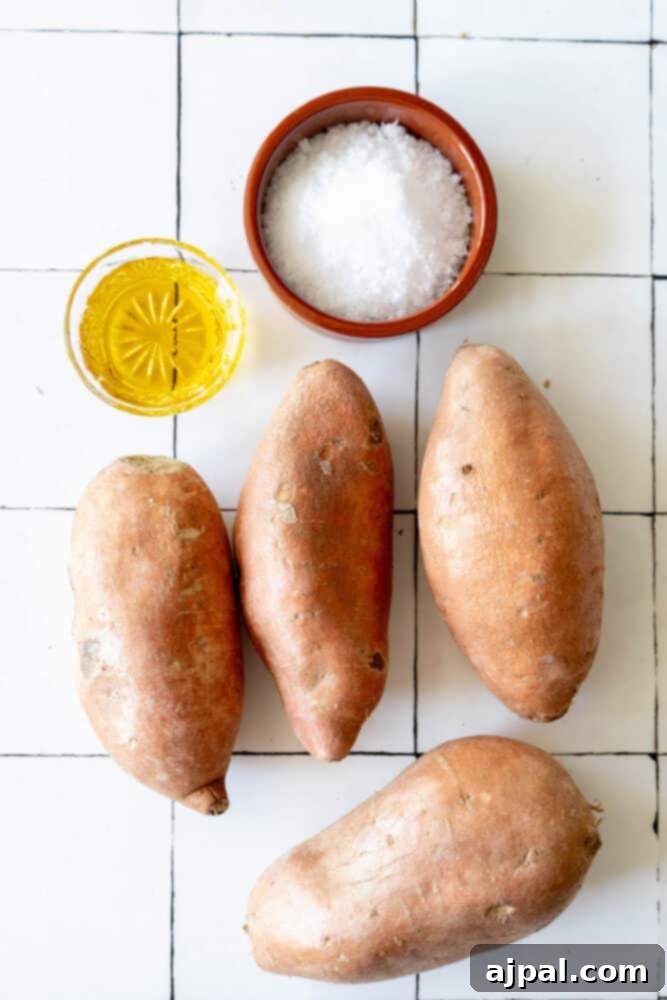
Crafting these perfectly baked sweet potatoes requires just a few key ingredients. Understanding the role each plays will help you achieve the best possible outcome, enhancing both flavor and texture. Selecting high-quality ingredients is the first step toward a truly outstanding dish.
- Sweet Potatoes (4 medium-sized): These vibrant root vegetables are the star of our dish. Their natural sugars caramelize beautifully during the baking process, yielding a rich, sweet, and creamy interior. When selecting sweet potatoes, look for ones that are firm, smooth-skinned, and free of blemishes. Opting for medium-sized, uniformly shaped potatoes ensures even cooking, a crucial factor for achieving that consistent fluffy texture throughout. Varieties like Beauregard or Jewel are excellent choices for their balanced sweetness and moist flesh.
- Kosher Salt (or Coarse Sea Salt, 4 cups): More than just a seasoning, the salt creates a protective crust around the sweet potatoes, acting as an insulator. This unique method provides several benefits that fine table salt cannot:
- Even Heat Distribution: The dense salt crust envelops the potatoes, ensuring heat is distributed uniformly from all sides. This prevents hot spots and guarantees a consistently cooked interior without any hard or undercooked sections, allowing the potatoes to cook gently and thoroughly.
- Enhanced Flavor Profile: While the salt crust is not meant for consumption, it subtly seasons the sweet potatoes, drawing out their natural sweetness and creating a perfect sweet-and-savory balance that tantalizes the taste buds. The gentle infusion of salt deepens the potato’s inherent flavors.
- Optimal Moisture Control: The salt plays a vital role in regulating moisture. It absorbs excess moisture from the potato’s surface, preventing a soggy texture, while simultaneously trapping steam within the crust. This dual action results in an incredibly tender, moist, and fluffy interior that melts in your mouth, far surpassing what simple foil-wrapping can achieve.
- Olive Oil (2-3 tablespoons): Drizzled over the sweet potatoes after they emerge from their salt cocoon, good quality olive oil is essential. Its purpose extends beyond mere lubrication, adding both flavor and a beautiful finish:
- Depth of Flavor: A fruity, robust extra virgin olive oil complements the sweet notes of the potato, adding a layer of richness and a subtle herbaceous aroma that elevates the overall taste. It introduces a complex counterpoint to the sweetness.
- Texture and Finish: The olive oil helps to rehydrate the skin slightly after the salt baking, contributing to a pleasant, slightly chewy exterior and providing a beautiful sheen. It also prepares the potato to absorb any additional seasonings or toppings more effectively, making them more appealing.
- Freshly Ground Black Pepper (to taste): A sprinkle of freshly ground black pepper adds a gentle warmth and a hint of spiciness, cutting through the sweetness of the potatoes. It provides a delightful counterpoint, enhancing the complexity of the dish and making each bite more exciting. Always opt for freshly ground pepper for the most potent aroma and flavor, as pre-ground pepper quickly loses its pungency.
Step-by-Step Method: Achieving Sweet Potato Perfection
Follow these straightforward steps to create beautifully salt-baked sweet potatoes that are sure to impress. The process is simpler than you might think, yielding consistently perfect results every time with minimal effort.
- Step 1: Preheat Your Oven with Precision. Begin by preheating your oven to a consistent 400°F (200°C). Accurate oven temperature is crucial for the salt crust to work its magic, ensuring even cooking and optimal caramelization of the sweet potatoes’ natural sugars. Allow at least 15-20 minutes for your oven to reach the desired temperature and stabilize before placing anything inside.
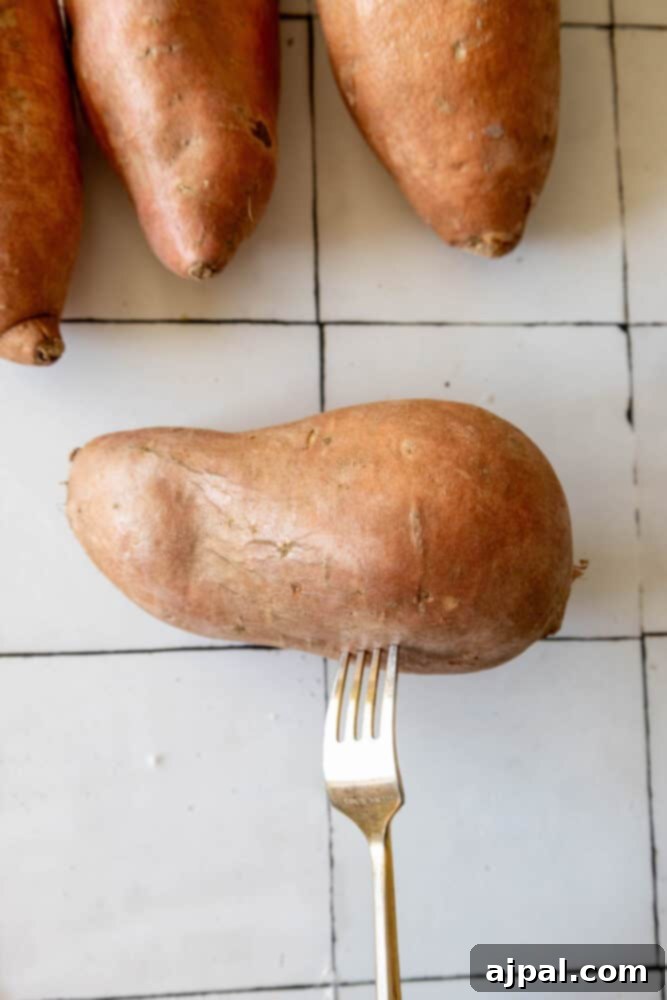
- Step 2: Prepare the Sweet Potatoes with Care. Thoroughly wash and scrub your sweet potatoes under running water to remove any dirt or impurities. Since the skin will become delightfully crisp and flavorful, it’s important to get it impeccably clean. Pat them completely dry with a kitchen towel. Next, using a fork, gently pierce the skin of each sweet potato several times all around. This allows steam to escape during baking, preventing them from bursting. Finally, lightly coat each potato with a thin layer of olive oil and a sprinkle of salt. This pre-seasoning adds an initial layer of flavor and helps create that desirable crispy skin during the baking process.
- Step 3: Create the Ideal Salt Bed. In a large mixing bowl, combine the 4 cups of kosher salt (or coarse sea salt) with just enough water – typically about 2-4 tablespoons – to achieve a consistency similar to wet sand. The goal is a pliable mixture that can be easily spread and formed, not a runny paste. Spread a thin, even layer of this salt mixture across the bottom of a sturdy baking dish or a rimmed baking sheet. This forms the foundational bed upon which your sweet potatoes will rest. The salt bed plays a critical role in insulating the potatoes and evenly distributing heat.
- Step 4: Nest the Sweet Potatoes for Baking. Gently place the prepared sweet potatoes directly on top of the salt bed. Ensure they are spaced adequately, not touching each other, to allow for proper air circulation and even baking. If potatoes touch, they might not cook as evenly. The surrounding salt will form a cocoon, helping to uniformly cook the potatoes, draw out superficial moisture, and infuse them with a subtle, savory saltiness that beautifully contrasts their inherent sweetness.
- Step 5: Bake to Tender Perfection. Transfer the baking dish or sheet with the sweet potatoes into your preheated oven. Bake for approximately 45 minutes to 1 hour. The exact baking time will depend largely on the size and thickness of your sweet potatoes. Larger potatoes will naturally take longer. To check for doneness, carefully insert a fork or a small paring knife into the center of a potato. It should slide in effortlessly, indicating a tender, fully cooked interior. If there’s any resistance, continue baking for another 10-15 minutes and re-test.
- Step 6: Remove from Oven and Cool Slightly. Once tender, carefully remove the sweet potatoes from the oven. The salt crust will be firm and dry, possibly even slightly cracked and lightly browned. Allow them to cool on the baking sheet for a few minutes. This brief resting period helps the internal temperature to equalize, resulting in a more consistently moist texture and makes the next step easier and safer to handle.
- Step 7: Crack Open the Flavorful Crust. Using a sturdy knife or the back of a spoon, gently tap and crack open the hardened salt crust surrounding each sweet potato. Exercise caution during this step, as hot steam may be released from within the potato. Once the crust is broken, carefully peel or brush away any excess salt clinging to the potato skin. Remember, the salt crust itself is not intended for consumption, but its magic lies entirely in its unique cooking process.
- Step 8: Season, Garnish, and Serve. With the salt crust removed, your beautifully baked sweet potatoes are ready for their finishing touches. Drizzle each warm potato generously with high-quality olive oil. A fresh grind of black pepper will add a pleasant kick. This is also the perfect moment to add your favorite toppings! Consider classic additions like a dollop of sour cream or Greek yogurt, a sprinkle of fresh chopped chives, crispy crumbled bacon, or a generous helping of grated cheese for an extra layer of indulgence.
- Step 9: Savor the Moment. Serve your salt-baked sweet potatoes immediately while they are piping hot. The contrast between the wonderfully soft, sweet interior and the subtle hint of saltiness from the baking process is truly exquisite. Enjoy this healthy, flavorful, and incredibly satisfying side dish as a standalone treat or as a perfect accompaniment to your main course.
Mastering the Perfect Salt Baked Sweet Potato: Tips & Troubleshooting
Achieving the ideal salt-baked sweet potato is simple with a few expert tips. These insights will help you avoid common pitfalls and ensure your potatoes turn out perfectly moist, fluffy, and full of flavor every single time. Elevate your cooking with these handy tricks and considerations.
Expert Tips for Success
- Uniform Sizing for Even Cooking: Always select sweet potatoes that are similar in size and shape. This is critical for consistent baking results. If you have a mix of small and large potatoes, the smaller ones will be overcooked and potentially dry by the time the larger ones are tender. Aim for consistency to ensure every potato is done at the same moment, providing a harmonious texture throughout.
- Thorough Cleaning is Key: Because you’ll be cooking and enjoying the sweet potato with its skin on (which becomes delightfully crisp!), it’s vital to wash and scrub them meticulously. Remove all dirt and debris under running water. A clean skin enhances both the taste and the eating experience, especially when it’s part of the crispy exterior.
- Choose Coarse Salt Wisely: Kosher salt or coarse sea salt are the best choices for the salt crust. Their larger crystal size creates a more effective insulating barrier, distributes heat more evenly, and is easier to brush off the cooked potatoes compared to finer table salt, which can absorb too much moisture and cling excessively. The coarse texture also helps create a sturdy crust.
- Salt Reuse for Sustainability: Don’t discard your salt crust after baking! Once it has completely cooled, you can easily break it apart and store it in an airtight container. This salt can be reused multiple times for future salt-baked dishes, making the method more economical and sustainable. While it might absorb a faint sweet potato aroma, its effectiveness remains unchanged.
- Preheat Oven Fully: Patience is a virtue when preheating your oven. Ensure it reaches the specified temperature (400°F/200°C) and stabilizes before introducing the sweet potatoes. A properly preheated oven provides consistent heat from the start, which is essential for uniform baking and achieving the desired tender, fluffy texture. Opening the oven door too frequently can also drop the temperature significantly.
- Monitor Baking Time Closely: Baking times are approximate and can vary based on potato size, oven calibration, and specific potato variety. Begin checking for doneness around the 40-minute mark. The goal is fork-tender flesh, not mushy. Overcooking can lead to a dry, mealy texture, while undercooking will result in a hard center.
- Avoid Puncturing During Cracking: When gently cracking open the salt crust, be careful not to puncture the sweet potato itself. Puncturing the skin can release valuable steam and moisture, which are crucial for keeping the interior wonderfully moist and fluffy. Aim to crack only the hardened salt layer.
- Quality Olive Oil Makes a Difference: The final drizzle of olive oil is more than just a garnish. Using a high-quality extra virgin olive oil enhances the overall flavor profile, adding fruity notes and a silky finish that complements the sweet potato beautifully. It also adds a desirable richness to the final dish.
- Seasoning to Personal Preference: While olive oil and black pepper are excellent starting points, don’t hesitate to customize your seasoning. A pinch of flaky sea salt (after removing the crust), a dash of smoked paprika, or a sprinkle of chili flakes can all add intriguing dimensions to your baked sweet potatoes, catering to different taste preferences.
- Creative Topping Combinations: Salt-baked sweet potatoes are incredibly versatile. Beyond the classic sour cream and chives, consider a drizzle of maple syrup and toasted pecans for a sweeter take, a dollop of guacamole and a squeeze of lime for a savory twist, or even a sprinkle of crumbled feta cheese and fresh dill for a Mediterranean flair.
- Serve Immediately for Best Experience: For the ultimate taste and texture, serve your salt-baked sweet potatoes straight from the oven. Their warmth and tender, moist interiors are at their peak freshness when hot, delivering the most satisfying culinary experience.
- Experiment with Varieties: Sweet potatoes come in various types, including orange-fleshed (like Beauregard or Jewel), purple-fleshed (like Okinawan), and white-fleshed (like Hannah). Each offers a slightly different sweetness and texture profile. Experimenting with different varieties can open up a world of new flavor experiences and help you find your favorite.
- Storage and Reheating Tips: Leftover salt-baked sweet potatoes can be stored in an airtight container in the refrigerator for up to 3-4 days. To reheat them for optimal texture, wrap them loosely in foil and warm in a 350°F (175°C) oven for about 15-20 minutes, or until heated through. Microwaving is an option for quick reheating, but may result in a softer texture.
Frequently Asked Questions About Salt-Baked Sweet Potatoes
No, the salt crust is not intended for consumption; it is extremely salty and hard. Its primary role is to create a sealed environment for even cooking and to subtly season the sweet potatoes through osmosis. After baking, gently crack the crust open and remove it completely before serving the potatoes.
Absolutely! Once the salt has fully cooled, you can break it apart and store it in an airtight container. It can be reused for future salt-baked dishes, although it might take on a very faint sweet potato aroma. This makes the method quite economical and reduces waste.
While technically possible, it’s highly recommended to use kosher salt or coarse sea salt. Table salt’s finer grains tend to absorb more moisture and can stick too much to the potato, making it harder to remove. Coarser salts provide better insulation and are easier to brush off, leading to a superior texture and taste, and a less messy process.
The sweet potatoes are perfectly cooked when a fork or small paring knife can easily pierce the flesh and slide through without resistance. This indicates a tender, fully cooked interior. Depending on their size and your oven, this typically takes between 45 minutes to 1 hour. Always test the largest potato for doneness to ensure all are cooked through.
Yes, you can certainly experiment! Mixing dried herbs like rosemary or thyme, or spices like smoked paprika or garlic powder into the salt mixture can infuse subtle aromatic flavors into your sweet potatoes. Just be mindful that the salt is for baking, not for direct eating, so the flavor infusion will be gentle and complementary.
For the freshest flavor and best texture, salt-baked sweet potatoes are ideally enjoyed immediately after baking. However, if you need to prepare them ahead, you can reheat them in a 350°F (175°C) oven for about 15-20 minutes, or until thoroughly warmed through. Be aware that the texture might be slightly different than freshly baked, potentially a bit softer.
Absolutely! The salt-baking method is wonderfully versatile and works beautifully with other potato varieties, such as Russet or Yukon Gold. The cooking times may vary slightly, but the principle remains the same, yielding incredibly tender and flavorful results. For a detailed guide on classic salt-baked potatoes, you can refer to our salt-baked potato recipe with herbed butter.
Salt-baked sweet potatoes are indeed a very healthy option! This cooking method requires minimal added fats, making them a lighter alternative to deep-frying or roasting with excessive oil. Additionally, by baking them in their skins within the salt crust, they retain more of their natural vitamins, minerals, and fiber, ensuring a nutritious and satisfying dish.
The beauty of salt-baked sweet potatoes lies in their versatility for toppings! Popular choices include a classic dollop of sour cream, a sprinkle of fresh chopped chives, crispy crumbled bacon, or a melty layer of grated cheese. For a sweeter profile, consider cinnamon butter, toasted pecans, a drizzle of maple syrup, or a dollop of whipped cream. Don’t be afraid to get creative and customize them to your personal taste!
Delightful Serving Suggestions for Salt-Baked Sweet Potatoes
Salt-baked sweet potatoes are a wonderfully versatile side dish that complements a wide array of main courses. Their sweet and savory balance, coupled with a fluffy texture, makes them an excellent pairing for both hearty meats and lighter protein options. Here are some fantastic dishes to serve alongside your perfect sweet potatoes, transforming any meal into a culinary delight. The earthy sweetness of the potatoes offers a refreshing contrast and a satisfying starch component.
Pair Your Perfect Sweet Potatoes With:
Honey Soy Slow Cooker or Dutch Oven Asian Country Ribs
The rich, savory, and slightly sweet notes of these tender ribs are a phenomenal match for the earthy sweetness of salt-baked sweet potatoes. The contrasting textures and complementary flavors create a satisfying and well-rounded meal, perfect for a cozy dinner.
One Pot Cheesy Chicken and Green Chile Skillet
The creamy, spicy, and cheesy flavors of this hearty skillet dish find a delicious partner in the comforting sweetness of a baked sweet potato. It’s a robust combination that feels both indulgent and balanced, offering a delightful interplay of warmth and flavor.
The Best Baked Pork Tenderloin Recipe
Garlic-infused pork tenderloin offers a savory and robust flavor that beautifully contrasts with the natural sweetness of the potatoes, creating a balanced and highly satisfying meal. The tender textures of both dishes create a harmonious dining experience that is both comforting and gourmet.
Lemon Caper Butter Chilean Seabass
For a lighter yet equally flavorful meal, the delicate and buttery Chilean seabass with its zesty lemon-caper sauce provides a refreshing contrast to the hearty sweet potatoes. The flavors beautifully complement each other without overpowering, making it an elegant and wholesome combination.
If you loved creating and enjoying this easy recipe, please help us spread the word! Share your culinary creations on Instagram, Facebook, and Pinterest – and don’t forget to tag us!
Share on Facebook
Share
Pin this now to find it later
Pin It
Follow on Instagram
Follow
Click here to view the web story for this recipe!
Only have 30 minutes to get dinner on the table? Sign up for my 30 minute dinner plans direct to your inbox!
Find and shop my favorite products in my Amazon storefront here!
Perfect Salt Baked Sweet Potatoes
Courtney O’Dell
4 potatoes
10 minutes
45 minutes
55 minutes
Email Recipe
Print Recipe

Equipment
-
Coarse Grain Sea Salt or Kosher Salt
-
Baking Dish or Sheet Pan
Ingredients
- 4 medium-sized sweet potatoes
- 2-3 tablespoons olive oil
- 4 cups kosher salt, or coarse sea salt
- Freshly ground black pepper, to taste
Instructions
-
Start by preheating your oven to 400°F (200°C).
-
Wash and scrub the sweet potatoes thoroughly to remove any dirt. Pat them dry with a kitchen towel, poke them all over with a fork then generously coat with olive oil and salt.
-
Spread a thin layer of the salt in the bottom of a baking dish or on a baking sheet to create a bed for the sweet potatoes. Place the sweet potatoes on top of the salt bed. The salt will help evenly cook the potatoes and draw out moisture while infusing them with a subtle salty flavor.
-
Place the sweet potatoes in the preheated oven and bake for about 45 minutes to 1 hour, depending on their size. You’ll know they’re done when you can easily insert a fork into the center, and they feel tender.
-
Carefully remove the sweet potatoes from the oven. The salt crust should be firm and dry.
-
Using a knife or the back of a spoon, gently crack open the salt crust on each sweet potato. Be cautious, as there may be hot steam released. Brush off any excess salt from the potatoes, it is not meant to be eaten.
-
Drizzle each sweet potato with olive oil and sprinkle with freshly ground black pepper. You can also add your favorite toppings like sour cream, chopped chives, crumbled bacon, or grated cheese.
-
Serve the salt-baked sweet potatoes immediately while they’re hot. The insides will be wonderfully soft and sweet, with a hint of saltiness from the crust.
Nutrition
Calories: 194kcal
Carbohydrates: 24g
Protein: 2g
Fat: 10g
Saturated Fat: 1g
Polyunsaturated Fat: 9g
Sodium: 41mg
Fiber: 4g
Sugar: 7g
Nutrition information is automatically calculated, so should only be used as an approximation.
Additional Info
Sweet Potatoes
American
Tried this recipe?
Mention @sweetcsdesigns or tag #sweetcsdesigns!